0 Comments
0 Shares
16 Views
Directory
Elevate your Sngine platform to new levels with plugins from YubNub Digital Media!
-
Please log in to like, share and comment!
-
WWW.THEHISTORYBLOG.COMSection of Eiffel Tower staircase goes under the hammerA section of the helical staircase trod by millions of visitors to reach the summit of the Eiffel Tower is going under the hammer at Artcurial in Paris in May.Eiffel Tower staircase sections have been sold at auction before. There are 24 of them from when the top two floors of the helical staircase were removed to install an elevator in 1983. Theres one exhibited on the first floor of the Tower today and three more in French museums. The remaining 20 sections, ranging in size from 6.5 to 30 feet high, were sold at auction in December 1983.The one on sale at Artcurial now is lot no. 1 of the 1983 staircase auction. It is 2.75 meters (9 feet) high with 14 steps spiraling around a riveted sheet metal cylinder mounted on a cross-shaped base. It has been in the same private collection since the sale, and has been restored by the workshops charged with the continuing maintenance of the Eiffel Tower. It is painted brown to match the color it was when the staircase was removed.Of the twenty sections sold in 1983, few have remained in France and are still in the possession of their original buyers. Several elements have joined prestigious collections and sites around the world. One of them can be seen in the gardens of the Yoishii Foundation in Yamanashi, Japan, another near the Statue of Liberty in New York, and even at Disneyland. Others now belong to major international private collections.The pre-sale estimate is 40,000 50,000 ($46,000-58,000), but its sure to go for much more than that. The last time Artcurial sold an Eiffel stair section in 2020, the pre-sale estimate was 30,000-40,000 and it ended up selling for 274,475. It also holds the record for the most expensive set ever sold, section no. 17 which sold in 2016 for 523,800.The Eiffel Tower took only two years and 200 men to build. The finished structure was 300 meters (984 feet) high and had 1,710 stairs from bottom to top. It was built for the Exposition Universelle, the 1889 Worlds Fair in Paris, which coincided with the 100th anniversary of the French Revolution. It was intended to be demolished after the Exhibition just like all the other pavilions, but Gustave Eiffel managed to convince the government to let it stand on the grounds that it was a great lookout tower in wartime and the ideal meteorological station in peacetime. Thus the temporary showpiece launched a new era in engineering and iron construction and became the forever icon of the city of Paris.0 Comments 0 Shares 16 Views -
WWW.THEHISTORYBLOG.COMNew gold foil old man found in NorwayA rare Nordic Iron Age gold man, a tiny piece of gold foil stamped with the image of a man and a woman, has been discovered in southwestern Norway. It dates to between 550 A.D. and the beginning of the Viking age in 793 A.D. The piece was discovered by metal detectorist Kjetil Srheim on his family farm in Klepp. It is just 1cm (.4 inches) long and made of such thin foil that Srheim was surprised that it even registered on the detector.Gullgubbe (literally gold little old man) have typically been found at important centers of power in Scandinavia. Most of the 3600 or so known examples have been found in Denmark. Only about 50 have been found in Norway, and this is the first one discovered in the southwestern Rogaland province in 127 years.They often appear in connection with hall buildings, and archaeologists believe they were laid down as part of religious rituals.We believe they were used in ritual contexts, and that they were laid down as sacrifices in these hall buildings, says [Sigmund Oehrl, professor of archaeology at the Archaeological Museum at the University of Stavanger].In 1897, a total of 16 such golden men were found at Hauge in Klepp, not far from this latest discovery.The Hauge gold men were unearthed by a farmer during agricultural work, so the details about the find site are unknown. The new discovery in Klepp gives archaeologists a precise find site close to the 19th century finds, a useful departure point for further research. The area is already recognized as archaeologically significant because several burial mounds and a ring-shaped courtyard have been found there. The gold man may indicate there was a large hall or gods court at the site as well, which would have given it great cultural importance in Nordic Iron Age.The 16 gold men found in Hauge were transferred to the University Museum in Bergen because there was no museum in Stavanger yet in the late 19th century. The Klepp gold man will therefore be the first one in the possession of the museum closest to where they were found.0 Comments 0 Shares 16 Views -
WWW.THEHISTORYBLOG.COMIntact 17th c. storage barrels found in NorwayThree intact wooden storage barrels and a large wood rammer from the 17th century have been unearthed in the medieval center of Skien, Norway. They were covered in moist soil and trash fill which preserved the wood in excellent condition for 400 years.Skien was one of only eight towns that existed in Norway during the Middle Ages. It was founded, perhaps as a small trading post, in the 9th century and grew into a thriving market town. Located on the lowest point of the Skien River system, it was conveniently located for trade and shipping, receiving goods like grain, whetstones and lumber from the northern parts of Telemark county and then exporting them to England and northern continental Europe.Archaeological surveys have been conducted in the city center due to upgrades in the water and sewage systems. It is the largest excavation of the medieval city since the 1970s. The barrels were found in the excavation of Torggata, one of the main streets of the city whose current level overlays previous iterations. (Sections of the 18th century wooden street were uncovered in the excavation; it had a slightly different orientation, running almost exactly north-south.) They were on the west side of the 17th century road in an area that had been subject to extensive land reclamation.The barrels were made of oak with bands of wood (hazel or beech) wrapped around the circumference. Those slim bands are now as soft as cheese. Unlike other wooden remains like road planks, the barrels and rammer were untouched by the many fires that ravaged the city (documented in 1671, 1732, 1766, 1777, 1779 and 1886).The barrels and the ram were dug down to the ground level of the time from the 17th century. Around them was a layer of lime. Inside the barrels, cakes of lime were found at the bottom and some demolition material at the top.The fact that the barrels are buried may indicate that they were used for safe and frost-free storage of finished slaked lime, before it was mixed with sand and water to make lime mortar. The barrels and pestle have probably been used for storing building lime over a long period of time.Each time the barrels have been emptied, a little lime has been left at the bottom. The lime around the barrels tells archaeologists that they have been completely buried.The find provides insight into the citys construction activity and craft community, and is an indication of urban growth, infrastructure and business. Lime mortar was a key building material during the period, both for masonry and plaster, and was probably used in the reconstruction of stone buildings in the city center after a city fire.The barrels and rammer have been dismantled and removed before the site is altered by the infrastructure work. Archaeologists hope they can be reassembled and placed on public display in the future.0 Comments 0 Shares 16 Views -
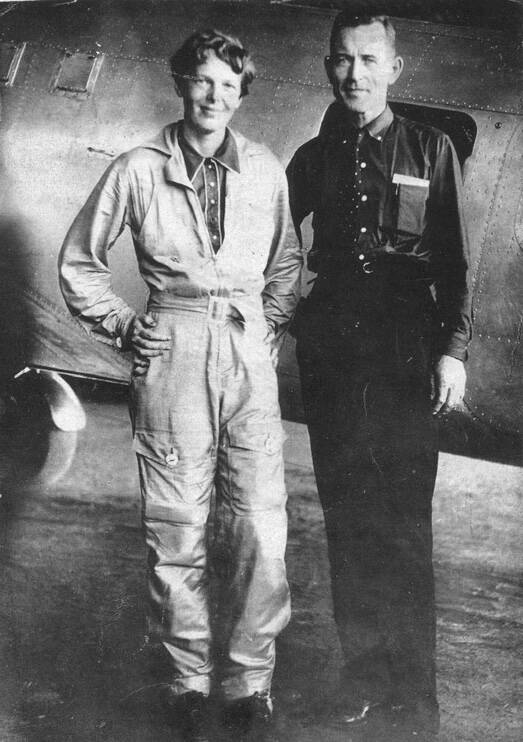
ALLTHATSINTERESTING.COMFred Noonan, The Navigator Who Vanished Alongside Amelia EarhartSan Diego Air and Space MuseumA sailor and air navigator, Fred Noonan accompanied Amelia Earhart on her flight around the world. On July 2, 1937, Amelia Earharts plane vanished over the Pacific during her attempt to circumnavigate the globe. At the time, Earhart was on the final leg of her journey. But she wasnt alone on her historic flight. Earhart was flying with an experienced navigator named Fred Noonan. A longtime air navigator, Noonan was trained in navigating long distance flights with no electronic equipment. He was a former sea captain whod gone on to work at Pan Am, and his sterling credentials had drawn the attention of Earhart and her husband, George Putnam.But in the decades since he and Earhart disappeared, some have speculated that Noonan may have made a fatal navigational error during their flight. How Fred Noonan Become An Air NavigatorLong before he crossed paths with Amelia Earhart, Fred Noonan was a boy living in Chicago. Born in 1893, Noonan was effectively orphaned at a young age and, when he was around the age of 13, the International Group for Historic Aircraft Recovery reports that he made his way west to Seattle. Before long, Noonan found work as a merchant marine. During World War I, Noonan served aboard munition ships. In 1917, he narrowly escaped death after he missed the departure of the S/S Cairnhill, which was later torpedoed and sank. [Everything] was lost, Noonan later recalled, including my passport.After the war, Noonan continued his seafaring career and rose through the ranks to become a sea captain. But in the early 1930s, Noonan changed his trajectory. After acquiring his pilots license, he become an air navigator.National Air and Space Museum, Smithsonian InstitutionFred Noonan began his career on the sea before transitioning into aviation. At this time, before electronic navigation, air navigators like Noonan used cues from the ground, radio signals, or even the moon and the stars to chart their course. Noonan was good at it, and soon got a job as a navigator with Pan American Airways (PAA). In 1935, Noonan served as the navigation officer on the China Clipper seaplane, and completed the first flight from San Francisco to Honolulu that April. Later that year, Fred Noonan also helped navigate the China Clipper from San Francisco to the Philippines. His profile as an air navigator was rising. And Fred Noonan was soon tapped for a historic mission: to help navigate Amelia Earharts attempt to become the first female pilot to circumnavigate the globe.Amelia Earharts Historic Attempt to Circumnavigate The GlobeLibrary of CongressAmelia Earhart in 1936, the year before she vanished over the Pacific Ocean.The year of 1937 was one of transition for Fred Noonan. Noonan and his first wife divorced, he left Pan Am, married his second wife, and crossed paths with Amelia Earhart, who invited him to join her flight around the world.At first, the voyage was planned to fly east to west. And it was supposed to include another navigator, Harry Manning. But while the first leg of this flight from Oakland, California, to Hawaii on March 17, 1937, occurred without a hitch, problems arose just a few days later. While taking off for the next leg, toward Howland Island, Earhart lost control of her Lockheed Electra, causing the plane to skid across the runway.No one was hurt, though the plane was damaged. And Earhart was impressed by how coolly Noonan reacted to the accident. She related that when the first men reached the plane and opened the door they found Fred methodically folding up his charts. He says that when I fly again he is ready to go along.However, Manning then decided to abandon the mission. Conflicting reports claim that he was spooked by the accident, that he was fed up with Earharts domineering personality, or that he simply was unable to extend his leave of absence from work. In any case, it meant that Amelia Earhart and Fred Noonan would make their attempt alone.In May, they flew from Oakland, California, to Miami, Florida, where Earhart announced the beginning of their around-the-world flight. Though Earhart had originally planned to fly east to west, she had decided to instead fly west to east, and would next head to Puerto Rico. Bettmann/Getty ImagesAmelia Earhart and Fred Noonan, with a map of their planned route.[My] Electra is fit once more to fly and she and I hope to cover 28,000 miles as originally planned, Earhart stated, but heading into dawns instead of sunsets and ending our flight at Oakland.But the historic flight would take a terrible turn and both Amelia Earhart and Fred Noonan would disappear over the Pacific Ocean.The Disappearance of Fred Noonan And Amelia Earhart And The Theories That Have EmergedAt first, Amelia Earhart and Fred Noonans flight went smoothly. After a number of stops, they arrived in Lae, New Guinea, on June 29, 1937. On July 2, they took off toward Howland Island as part of the final leg of their trip. But then their plane disappeared. Wikimedia CommonsFred Noonan and Amelia Earhart in Port Darwin, Australia, just before their flight to Lae, New Guinea. Within an hour of their final transmission on July 2, 1937, the Coast Guard began a search and rescue mission. But they found no sign of the Lockheed Electra near Howland Island. Despite vigorous searches in the months that followed, no evidence of Earhart, Noonan, or their plane was ever found, and they were ultimately declared dead. So what happened? Some blame Fred Noonan. In the years since he and Earhart disappeared, some have claimed that he was an alcoholic. That said, though Noonan was in a car crash in 1937 and cited for driving in the wrong lane, theres little other evidence of his alcoholism. As PBS points out, reports about his drinking didnt emerge until the 1960s, and seem to be based on a police report about drunk driving that has since disappeared. However, it does seem that Earhart and Noonans flight was likely doomed because of a navigational error. The U.S. Navys official conclusion was that Earhart and Noonan ran out of fuel while searching for Howland Island, a tiny speck just two miles long in the vast Pacific Ocean. They possibly crashed in the ocean, though other theories have suggested that they overshot the island, and ended up on the island of Nikumaroro or the Marshall Islands.Stranded, with no way to communicate, they likely perished. However, one theory suggests that they were captured and killed by the Japanese. But if they did overshoot Howland Island, it perhaps wasnt all Noonans fault;PBS reports that he was likely working off a map that showed Howland Island five miles away from its actual location. Regardless of the cause of their disappearance, Fred Noonan became a footnote to history when he lost his life along with Amelia Earhart. But until then, he seemed energized by their mission. Days after he disappeared, a letter hed sent to his second wife arrived in Oakland. Noonan had written: Amelia is a grand person for such a trip. She is the only woman flier I would care to make such a trip with because, in addition to being a fine companion, she can take hardships as well as a man and work like one.After reading about Fred Noonan, Amelia Earharts navigator, see how the Wright Brothers carried out the worlds first airplane flight in 1903. Or, look through these stories about some of the worst plane crashes in history. The post Fred Noonan, The Navigator Who Vanished Alongside Amelia Earhart appeared first on All That's Interesting.0 Comments 0 Shares 17 Views -
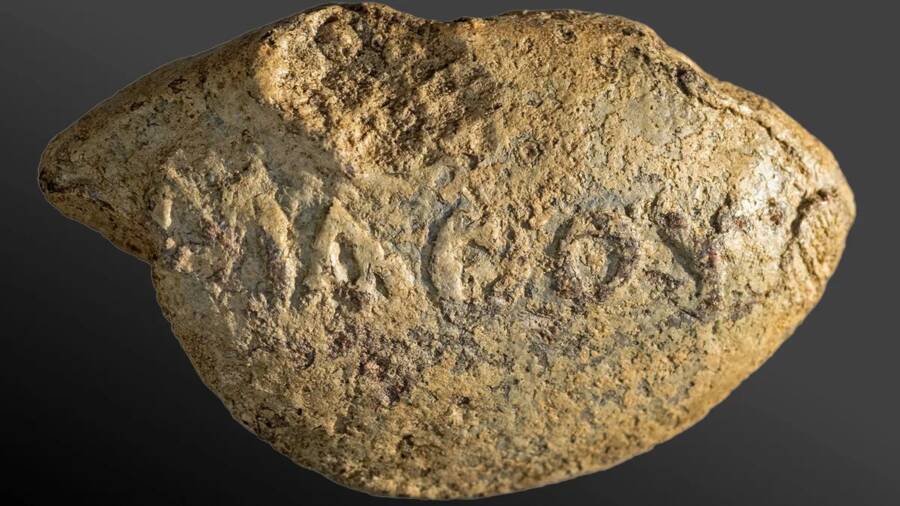
ALLTHATSINTERESTING.COMArchaeologists Just Uncovered A 2,100-Year-Old Sling Bullet Inscribed With The Message Learn Your LessonMichael Eisenberg/University of HaifaThe 2,100-year-old sling bullet has a Greek inscription reading , translated as learn your lesson.During excavations in the ancient city of Hippos (also known as Sussita) in the Golan Heights, archaeologists found a small sling bullet that dates back 2,100 years. Such ancient relics have been unearthed many times in this area, but this one stood out. Upon closer examination, archaeologists realized that it bore an inscription.On the side of the bullet, written in Greek, someone had carved out the letters . This is Greek for learn, and researchers believe that a defender of Hippos fired the sling bullet at an enemy invader in order to convey the message learn your lesson.The Inscribed Sling Bullet Found Among Ancient Ruins In The Golan HeightsAccording to a study from the University of Haifa, archaeologists came across the sling bullet during excavations in Hippos in late 2025. The bullet was found with a metal detector near the riverbed of the Sussita Stream, and though 70 sling bullets had already been found, this one stood out.Almond-shaped and made of lead, the bullet is roughly 1.3 inches long and weighs 1.6 ounces. On its side is an inscription in Greek: , translated as learn. Though sling bullets inscribed with words have been found elsewhere, the sling bullets in Hippos have so far only had threatening images, like scorpions or thunderbolts. This is the first bullet found in Hippos to bear a linguistic inscription, and archaeologists believe it was a sarcastic taunt for the enemy.AVRAM GRAICER/Wikimedia CommonsAn aerial view of the ancient city of Hippos, where the inscribed sling bullet was found.They believe that this particular usage of the word, as well as the context, suggests that would translate as learn your lesson! This lines up with other documented sling bullets from this era with inscriptions like take a taste, take it, and receive this.But who fired this bullet and why? Researchers suspect that it was launched by a Greek-speaking defender of Hippos some 2,100 years ago. But questions remain about who exactly the bullet was fired upon.Sling Bullets In The Ancient MediterraneanA popular projectile in the ancient world, sling bullets were originally made from stone or clay, but lead soon became more popular because it was cheap and easy to produce. Attackers would swirl the bullet aloft, held in a leather pouch, before flinging it at an enemy.Such projectiles could easily strike an individual at a short distance, or a group of people at a longer distance. Perhaps most famously, such a bullet was said to be used by David to defeat Goliath.Like the bullet found in Hippos, they sometimes bore inscriptions, including the names of cities, gods, military units, or wartime commanders, like Julius Caesar.Michael Eisenberg/University of HaifaAnother example of a sling bullet found at Hippos, this one inscribed with a scorpion.Sling bullets were a popular weapon in Hippos, as evidenced by the dozens of examples found in the area but the exact origin of the inscribed sling bullet is difficult to pinpoint.Hippos itself was founded by descendants of captains of Alexander the Great in 199 B.C.E. as part of the Decapolis (a confederation of 10 Hellenistic cities) following the Battle of Paneion. It was perched on the frontier of the Greek, then Roman, empire until Pompeys conquest of Syria in 64 B.C.E.As such, there are many possible battles in Hippos history where the sling bullet could have been fired.The inscribed bullet, as well as other slingshots found at the site, could have been used in any of the several battles during the Hellenistic period in which Hippos was involved, the researchers wrote in their study. The first was before the citys establishment, during the Ptolemaic rule, when a fortress stood atop the hill.That said, researchers believe that the bullet was fired by a Greek defender, and that it was fired over the city walls toward the streambed. This streambed route, they noted, is also the most convenient point of attack towards the citys main gate on the east for any besieging forces.But though the circumstances of the bullets final battle remain lost, its final message rings clear through the centuries: Learn your lesson!After reading about the 2,100-year-old sling bullet inscribed in Greek that was found in the Golan Heights, learn about the story of the Schwerer Gustav gun, the biggest gun in world history. Then, go inside the strange story of the Panjandrum, a wheel-weapon propelled by rockets that was designed during World War II, but was ultimately deemed too dangerous and unwieldy to use.The post Archaeologists Just Uncovered A 2,100-Year-Old Sling Bullet Inscribed With The Message Learn Your Lesson appeared first on All That's Interesting.0 Comments 0 Shares 17 Views -
ALLTHATSINTERESTING.COMHow Sable Starr Became The Groupie Queen Of 1970s Los Angeles Then Discovered The Dark Side Of Rock N RollA lot of people dream of being rock stars. Often, its not the music that makes the idea so appealing, but the lifestyle. For some, the groupies are a big part of the allure, though like with many things about the rock star lifestyle, the stereotypical image of the groupie isnt exactly the truth.In the 1970s, there was a far darker side to the groupie scene. And Sable Starr, often described as the Queen of the Groupies, was at the heart of it. While underage, she claimed to have dated or slept with nearly every big-name rocker who visited Los Angeles. To other baby groupies, her life seemed glamorous, especially since she was known for her outrageous style.Michael Ochs Archives/Getty ImagesSable Starr, left, and fellow groupie Lori Mattix, right, posing with Dave Hill, the guitarist from Slade.But then, she said she entered a relationship with one rocker that was marred by violent abuse, drug addiction, and turmoil. She later remembered, After I was with him, I just wasnt Sable Starr anymore.Who Was Sable Starr?Born in 1957 or 1958, Sabel Hay Shields got into the rock scene at an early age. By 12, she was frequently attending concerts with her friends. At one concert, she said she lost her virginity to the guitarist of the band Spirit. She found the rock n roll lifestyle intoxicating, and before long, she began frequenting trendy clubs in Los Angeles and calling herself Sable Starr.Starr later claimed that she was nuts to begin with as a young girl and then added, I always liked getting into trouble.The clubs she attended were frequent hangouts of some of the biggest names in 70s rock, like David Bowie and Robert Plant. Dressed up in flamboyantclothing, Starr and her friends hoped to attract rock stars who came to town. Starr became the leader of the baby groupies, a name that came from the girls shockingly young ages. Starr herself was just 14.Wikimedia CommonsSable Starr, pictured at a concert in 1973.One night, she and her friend Lori Mattix, also 14, met David Bowie, who allegedly invited the two girls up to his hotel room. Bowie wouldve been in his mid-20s at the time.According to Mattix, Starr demanded that Mattix keep her hands off Bowie, which Mattix was fine with. But once in the hotel room, Mattix said that Bowie invited Mattix to his bathtub and the two had sex. After seeing how upset Starr was, Bowie purportedly invited her into the bedroom as well.Soon, Sable Starr became acquainted with more of the biggest names in rock. It was a wild scene, full of drugs and sex, and few of the rock stars she met seemed to bothered by Starrs young age. Starr, meanwhile, said she enjoyed her position as Queen of the Groupies, controlling the social scene on Hollywoods Sunset Strip. She was even interviewed by Star magazine, where she discussed some of the famous men she was reportedly involved with, including Mick Jagger, Iggy Pop, and Rod Stewart.Some stars backed up her claims. Iggy Pop even referenced his controversial relationship with Starr in the song Look Away, in which he sang: I slept with Sable when she was 13 / Her parents were too rich to do anything / She rocked her way around L.A. / Til a New York Doll carried her away. The Rocker Who Pushed Her Too FarBy the age of 16, Sable Starr had met Johnny Thunders, the guitarist for the New York Dolls. Starr ran away from home to be with Thunders in New York. At first, it seemed like a dream come true for Starr.But the dream turned into a nightmare. According to Starr, her relationship with Thunders became abusive. Thunders, like many rock stars, had a serious drug problem. He was also said to be violently jealous and possessive of Starr, leading Starr to question whether she should stay with him.Michael Ochs Archives/Getty ImagesThe rock band Led Zeppelin in a limo with various groupies outside of Rodney Bingenheimers English Disco in June 1972. Sable Starr is on the far right.At one point during their relationship, Starr became pregnant. This inspired Thunders to propose marriage, but Starr ultimately decided against it. Instead, she had an abortion and left him, soon returning to Los Angeles.She spent a few more years meeting and sleeping with celebrities, enjoying the rise of punk rock. But before long, she retired from the groupie scene.Starr eventually reflected on how her relationship with Thunders had affected her: He tried to destroy my personality. After I was with him, I just wasnt Sable Starr anymore. He really destroyed the Sable Starr thing.Later in life, Starr moved to Nevada and became an employee at the Carson Valley Inn, a casino hotel in Minden. Her later years were relatively calm, as she pursued new hobbies like golf and focused on spending time with her loved ones. She died on April 18, 2009 of brain cancer. She was just 51.In many ways, Sable Starr has a complicated legacy. She never seemed to have been regretful about her life as a groupie, and she spoke fondly about most of her relationships and flings with rock stars, with Thunders being an exception. But today, most view her early relationships as predatory. After all, she was a young teenager involved with older men, many of whom were wealthy and powerful and had seemingly unlimited access to drugs.The fact that most of her earliest relationships were with popular rock icons who were many years her senior makes it even more disturbing. While some still view Starr herself in a positive light, to others, she represents a lasting reminder of the darker side of rock n roll and its tragic impact.After learning about the tumultuous life of Sable Starr, read about Cynthia Albritton, the groupie who made dozens of plaster casts of rock stars penises. Then, take a look at the story of Connie Hamzy, the groupie who alleged that she had an encounter with Bill Clinton. The post How Sable Starr Became The Groupie Queen Of 1970s Los Angeles Then Discovered The Dark Side Of Rock N Roll appeared first on All That's Interesting.0 Comments 0 Shares 16 Views -
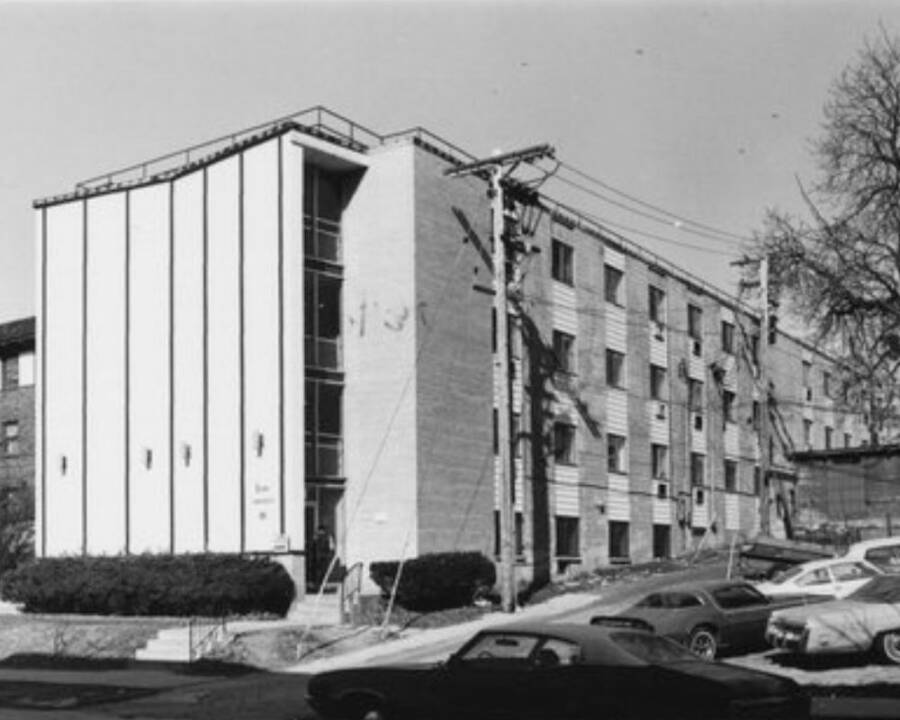
ALLTHATSINTERESTING.COMInside Jeffrey Dahmers Apartment, The Chilling Lair Where The Serial Killer Murdered 12 Of His 17 VictimsWisconsin Historical SocietyOxford Apartments in Milwaukee, where Jeffrey Dahmer killed 12 of his 17 victims.Few crime scenes in American history were as horrifying as Jeffrey Dahmers apartment. When two police officers stepped into the serial killers Milwaukee residence on July 22, 1991, they were horrified by what they saw.A freshly severed human head stared back at them from the refrigerator. A drawer full of Polaroid photos showed Dahmers victims in various stages of dismemberment. And three torsos were disintegrating in a giant vat of acid.Dahmer killed 17 men and teenage boys between 1978 and 1991, and 12 of those murders took place in Apartment 213 at 924 North 25th Street in Milwaukee. He also kept the corpses of many of his victims, prompting his neighbors to complain about the smell.But they never imagined what the foul odor emanating from Jeffrey Dahmers apartment really was.The Horrors Of Apartment 213By the time Jeffrey Dahmer moved into Milwaukees Oxford Apartments in May 1990, he had already murdered five people. His first victim, 18-year-old Steven Hicks, was a hitchhiker Dahmer picked up three weeks after high school graduation in 1978. He took Hicks back to his childhood home in Bath Township, Ohio, and strangled him because he didnt want him to leave. Dahmer then masturbated over Hicks corpse before disposing of it.He didnt kill again for nearly a decade. Indeed, Dahmer claimed that his second murder in November 1987 was an accident. He invited a man named Steven Tuomi to the Ambassador Hotel in Milwaukee, intending to drug and molest him. But when he woke up the next morning, Tuomi had seemingly been beaten to death.Dahmers next three murders were certainly intentional, though. He killed James Doxtator, Richard Guerrero, and Anthony Sears at his grandmothers house, luring them there for sex before strangling them. Dahmer even preserved Sears head and genitals in acetone and he took these macabre souvenirs with him when he moved into Oxford Apartments a year later. Milwaukee Police DepartmentJeffrey Dahmers bedroom, where he tortured, sexually assaulted, and killed many of his victims.Within a week, Jeffrey Dahmers apartment was officially a crime scene. He killed Raymond Smith and took the first of what would become a chilling collection of dozens of Polaroid photos of his victims bodies in suggestive positions.Over the next year, Dahmer would murder six more men and boys in his lair. Then, in May 1991, the serial killers reign of terror almost came to an end. Dahmer had invited 14-year-old Konerak Sinthasomphone to his apartment and offered him money to pose for semi-nude photos. Once the boy was inside, he drugged him with sleeping pills, drilled a hole in his skull, and injected hydrochloric acid into his brain. Dahmer then left the apartment to drink at a nearby bar.When he returned, Sinthasomphone had escaped and was standing naked with three women in the street outside Jeffrey Dahmers apartment. The police soon arrived, but Dahmer convinced them that Sinthasomphone was his boyfriend and had simply had too much to drink. The officers allowed Dahmer to lead the boy back inside, where he met a grisly end.Dahmer ramped up the frequency of his murders after this incident, killing four more victims over the next two months. On July 22, 1991, he lured a fifth man back to his place, again offering him money for nude photos. His name was Tracy Edwards, and he would soon be known as the lone survivor of Jeffrey Dahmer.The Horrific Scene Inside Jeffrey Dahmers ApartmentAs soon as Tracy Edwards entered Jeffrey Dahmers apartment that July night, he had a feeling that something was amiss. And after his captor handcuffed him, Edwards knew he had to escape by any means necessary. So, he convinced Dahmer to remove one of the cuffs and later took the first chance he got to punch him in the face and run out the door.Milwaukee Police DepartmentJeffrey Dahmers final intended victim, Tracy Edwards, escaped from Dahmers living room.Once he was outside, Edwards flagged down two police officers, Robert Rauth and Rolf Mueller. Although they were skeptical, they followed Edwards back to Jeffrey Dahmers apartment. They never could have expected what they would find inside.Mueller first noticed a knife beneath Dahmers bed. Investigating further, he opened a drawer and spotted 74 Polaroid photos of nude males and dismembered bodies. Mueller and Rauth quickly handcuffed Dahmer and called for backup. While waiting for their colleagues to arrive, Mueller opened the refrigerator and found the head of Oliver Lacy, a man Dahmer had killed a week earlier.A subsequent search of Jeffrey Dahmers apartment revealed even more horrors: three additional severed heads, seven skulls, two human hearts, bags of organs, severed hands, two preserved penises, a torso in the freezer, and three more torsos in a blue 57-gallon drum full of acid in the corner of Dahmers bedroom. It was more like dismantling someones museum than an actual crime scene, Dr. Jeffrey Jentzen, Milwaukees chief medical examiner at the time, later told Medicine at Michigan magazine.Milwaukee Police DepartmentPolice found 74 Polaroid photos of Jeffrey Dahmers victims in his drawer and three torsos disintegrating in acid in a blue barrel.Dahmer was later sentenced to life behind bars for his crimes, and he was murdered in prison in 1994. But by that time, the lair where hed taken so many lives himself was long gone.What Happened To Jeffrey Dahmers Apartment?As the news of Dahmers chilling crimes broke, his neighbors at Oxford Apartments were disturbed by what had taken place right next door. Some of them had noticed a bad smell coming from Dahmers place and had even confronted him about it, but he always had an explanation.Milwaukee Police DepartmentA 1991 mugshot of serial killer Jeffrey Dahmer.Pamela Bass, who lived across the hall from the serial killer, said she sometimes noticed the odor of garbage or bad meat. I would go tell him, Jeff, somethings stinking again,' she told The New York Times two days after Dahmers arrest. He would say it was the rotten meat in his freezer. He even bought a bunch of Pine Sol once like he was really going to get rid of it this time. But it didnt help.Maybe we should have thought something, Bass continued. But how could anybody know he was collecting dead bodies? I didnt know what a dead body smells like.Jeffrey Dahmers apartment quickly became a macabre landmark. Curious crowds gathered outside, and the media flocked to Milwaukee. City officials, concerned about safety and the potential for morbid tourism, soon made a plan to erase the site from public view.In August 1992, the Campus Circle Project, a non-profit organization sponsored by Marquette University, purchased the property for $325,000, as reported by the United Press International (UPI) at the time. By that November, the apartment building had been demolished. Google MapsAn empty lot stands at the former location Oxford Apartments today.Art Murchison, a spokesperson for Career Youth Development, another agency involved in the transformation of the property, told UPI at the time, The land it is on will be made a grassy area with flowers to represent life rather than death and pain which the building represents.Today, the lot where Jeffrey Dahmers apartment once stood remains empty. But while the building itself has been erased, the memory of what once happened in that spot haunts the residents of Milwaukee to this day.After reading about the chilling crimes that took place in Jeffery Dahmers apartment, go inside the disturbing story of Gary Heidnik, the House of Horrors killer who inspired Buffalo Bill from The Silence of the Lambs. Then, look through 21 haunting photos of Ed Geins house.The post Inside Jeffrey Dahmers Apartment, The Chilling Lair Where The Serial Killer Murdered 12 Of His 17 Victims appeared first on All That's Interesting.0 Comments 0 Shares 17 Views -
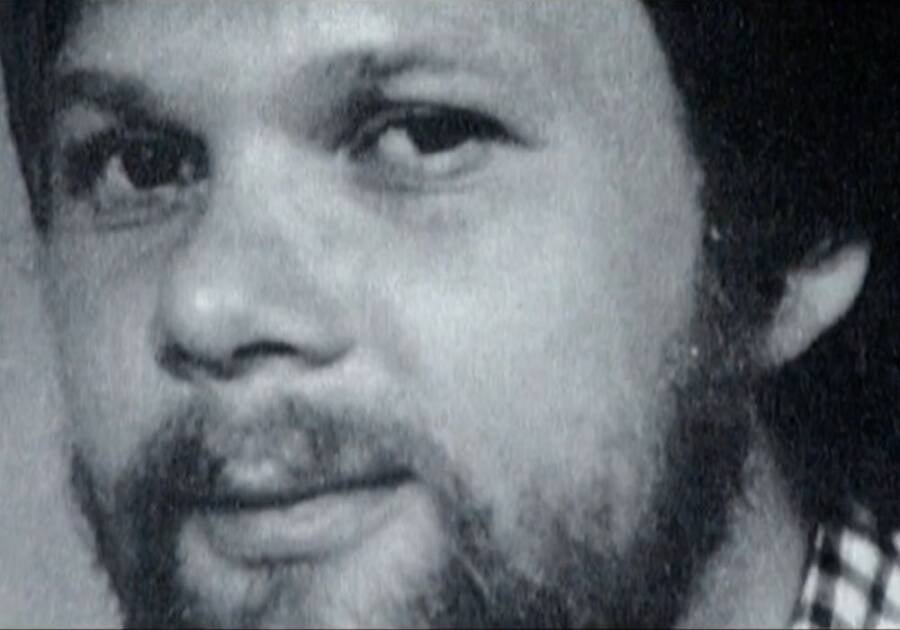
ALLTHATSINTERESTING.COMKlaus Grabowski, The Killer Who Was Fatally Shot By The Mother Of His Young VictimKabel Eins Doku/YouTubeKlaus Grabowski was a 35-year-old butcher from West Germany who brutally murdered seven-year-old Anna Bachmeier.On March 6, 1981, Klaus Grabowski sat in a courtroom in Lbeck, West Germany, awaiting judgment for the murder of Anna Bachmeier. A year earlier, hed sexually assaulted the seven-year-old girl in his apartment before strangling her and dumping her body along a nearby canal.Grabowskis lawyers built their defense around hormones and psychological instability. They argued that his voluntary castration in 1976 had left him unbalanced and that his crime was the product of chemical forces beyond his control.But on the third day of his trial, the case took a turn that no one in the room could have predicted. Seven shots rang out, and Klaus Grabowski dropped dead.His killer was Marianne Bachmeier, Annas mother. She had smuggled a pistol into the courtroom to avenge her daughters death and she had no remorse for her actions. As she would later state, I did it for you, Anna.Klaus Grabowskis Violent PastKlaus Grabowski, a butcher from Lbeck, was known to the police long before the murder of Anna Bachmeier. In 1973, the same year Anna was born, he was sentenced to probation for trying to strangle a six-year-old girl. Two years later, he sexually abused two other children. However, in 1976, Grabowski was released from custody after agreeing to be castrated. To some, this was proof that he was trying to control himself. It was a radical measure, but an effective one or, at least, it seemed to be.Find A GraveAnna Bachmeier was just seven years old when she was murdered by Klaus Grabowski.But Grabowski then began hormone treatment to reverse some of the impacts of the castration, claiming that he was experiencing physical side effects. He was supposed to be receiving psychiatric care at the same time, but he reportedly failed to do so.Then, in May 1980, Klaus Grabowski did the unthinkable.The Murder Of Anna BachmeierKlaus Grabowski knew of Anna Bachmeier prior to his deadly attack on the young girl. She lived nearby and had previously visited his apartment to play with his cats. On May 5, 1980, seven-year-old Anna had an argument with her mother, Marianne Bachmeier, and decided to skip school. She ended up at Grabowskis apartment and she wouldnt leave alive.Grabowski reportedly held Anna captive for hours while sexually assaulting her. He then strangled her with a pair of his fiances tights, tied her up, stuffed her body into a box, and left it on the shore of a local canal.Kabel Eins Doku/YouTubeMarianne Bachmeier with her daughter, Anna.When Grabowskis fiance discovered what hed done, she turned him in to the police. He confessed to killing young Anna, but his version of events was much different. He claimed that Anna had tried to extort money from him and threatened to tell her mother that hed molested her if he didnt hand it over. He was worried that hed go back to jail, so he killed Anna instead.This was Klaus Grabowskis attempt to shift blame onto a child who could no longer speak for herself. His trial began on March 4, 1981 but he would be dead before it came to a close.The Death Of Klaus Grabowski In A German CourtroomBy the time Klaus Grabowski went to trial, he had already admitted to killing Anna Bachmeier. Prosecutors wanted to discover why.Grabowskis attorneys centered their defense on his medical history. They argued that hormone therapy administered after his voluntary castration had impaired his judgment. If the treatment had destabilized him, they suggested, then the crime was not solely the act of a calculating predator but of a man who was chemically unbalanced.The argument became a national debate in West Germany. If voluntary castration was meant to prevent repeat sexual violence, how had Grabowski reoffended?For Annas mother, Marianne Bachmeier, the discussion felt detached from the reality of her daughters death. She sat in the courtroom and listened as Grabowski prepared to address the court in his own defense.He never got the chance.On the third day of the trial, Bachmeier rose from her seat in the gallery. From beneath a green coat, she pulled a .22-caliber Beretta pistol and fired seven shots at the defendants table.Wulf Pfeiffer/picture alliance via Getty ImagesMarianne Bachmeier leaves the courtroom after being sentenced to six years in prison for killing Klaus Grabowski.Six bullets struck Grabowski. He immediately collapsed onto the floor and died. In that moment, Klaus Grabowski became an anomaly in criminal history: He was a confessed murderer who was executed before his verdict could even be read.As reported by the United Press International at the time, Bachmeier told Judge Guenther Kroeger in the immediate aftermath, I wanted to kill him I wanted to shoot him in the face but I shot him in the back I hope hes dead.A police officer who was present at the scene also claimed that he heard Bachmeier say, Unfortunately I only got the pig from behind.Later, during a court-ordered handwriting test, she wrote, I did it for you, Anna, and drew seven hearts: one for each year of her daughters short life.The Aftermath Of Marianne Bachmeiers Revenge KillingKlaus Grabowskis death did not bring the legal proceedings surrounding Anna Bachmeiers murder to an end. Marianne Bachmeier was arrested at the scene and later convicted of premeditated manslaughter.Her actions split public opinion across Germany and around the world. To some, she was a grieving mother who had taken justice into her own hands. To others, she was a vigilante who had crossed a dangerous line and undermined the law.After serving three years of her six-year sentence, Bachmeier moved to Nigeria and then Sicily before returning to a newly unified Germany. There, her own life would soon come to an untimely end, too. She died from pancreatic cancer in 1996 at age 46 and was buried next to Anna. She never expressed remorse for killing Klaus Grabowski.Gmofhl/Wikimedia CommonsMarianne and Anna Bachmeier are buried side-by-side in Lbeck.Even decades later, Grabowskis story demonstrates the dangers posed by repeat offenders. Years before young Annas murder, he had already been convicted of sexual abuse and strangling a young girl. His voluntary castration and subsequent hormone treatments did little to stop his violent impulses, and his defense at trial would later frame these medical interventions as the cause of his actions.In the end, Grabowski never truly answered for his crimes in court. While he confessed to Annas murder, he also tried to shift blame onto the child he had victimized.Today, Klaus Grabowskis name is rarely mentioned on its own. It is almost always tied to the little girl whose life he took and the mother who got her public revenge.After reading about Klaus Grabowski, go inside the story of Gary Plauch, the father who killed his sons abuser on live TV. Then, learn about these real-life vigilantes who took revenge into their own hands.The post Klaus Grabowski, The Killer Who Was Fatally Shot By The Mother Of His Young Victim appeared first on All That's Interesting.0 Comments 0 Shares 17 Views -
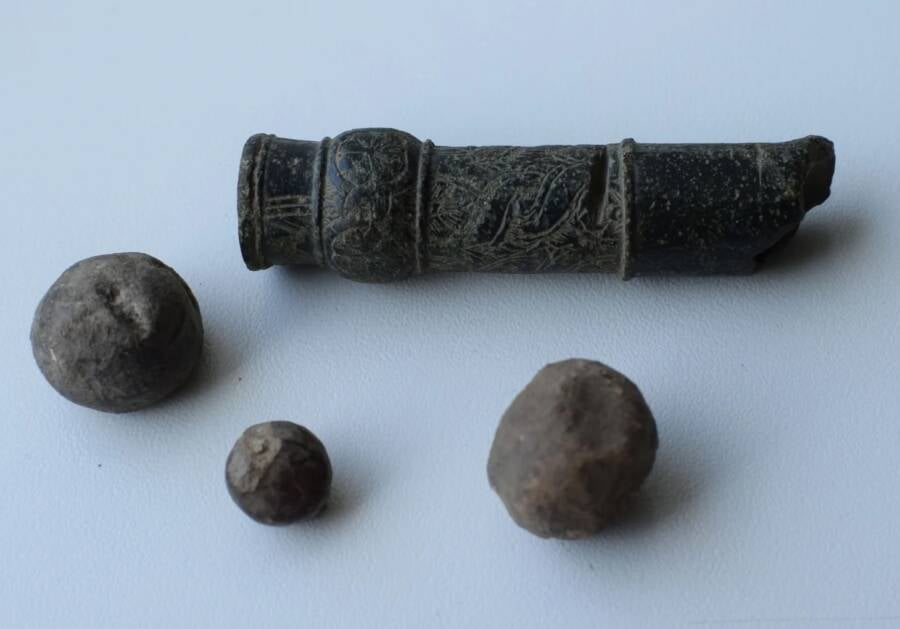
ALLTHATSINTERESTING.COMArchaeologists In Germany May Have Just Identified The Oldest Handgun Ever Found In EuropePrignitz DistrictThe bronze fragment of the hand cannon found near Germanys Kletzke Castle.When a volunteer archaeologist working near Kletzke Castle in Brandenburg, Germany spotted some fragments of bronze, he suspected that they could be important. But these bronze pieces have proven to be even more significant than anyone could have thought. Not only did they belong to a medieval weapon, but they seem to be from the oldest known European handgun ever documented.Whats more, researchers suspect that this 600-year-old hand cannon could have played a role in an especially violent and dramatic moment in Brandenburgs history.The Discovery Of What May Be The Oldest Handgun Ever Found In EuropeAccording to a statement from the Prignitz District, the handgun was found in several pieces at Kletzke Castle by a volunteer named Matthias Dasse during a field survey in 2023. Dasse quickly turned in this artfully decorated bronze fragment, which was then identified as the front part of a rudimentary firearm.While the find itself is undoubtedly exciting, its the age of this handgun that has proven to be the most significant aspect of this discovery. Archaeologists believe that it dates back to 1390, which would make it nine years older than the Tannenberg rifle, currently considered the oldest firmly-dated handheld firearm ever found in Europe. If the Kletzke Castle gun is indeed from 1390, however, that would make it Europes earliest known archaeological evidence of the use of portable black powder weapons.Furthermore, archaeologists suspect that this firearm may have been used in a bloody siege of Kletzke Castle that occurred in 1390.Germanisches NationalmuseumPreviously, the so-called Tannenberg rifle (above) has been considered the oldest firmly-dated handheld firearm in Europe, but the Kletzke Castle rifle now appears to be nine years older.If this rifle dates back to the siege of 1390, it would be spectacular for Brandenburg, said Christof Krauskopf of the Brandenburg State Office for Heritage Management and Archaeological State Museum. We have no written or archaeological evidence of firearm use from that period; until now, we could only assume it in general terms.The Handguns Likely Role In The 1390 Siege Of Kletzke CastleAt the end of the 14th century, Germany was a scattered collection of disparate states, a far cry from the unified country it is today. The siege of Kletzke Castle came out of this chaos, when the stronghold became the nexus of a violent regional conflict that broke out in 1390.Axel Bublitz/Wikimedia CommonsThe ruins of Kletzke Castle in Brandenburg, where the handgun fragments were found by a volunteer.As recorded by a Franciscan monk named Detmar of Lbeck, the siege began when two dukes, Henry I of Brunswick-Lneburg and Eric IV of Saxe-Lauenburg, joined forces and marched to the castle with 1,100 men. The castle was held by the von Quitzow family, who had been gifted the stronghold by Emperor Charles IV in 1375.The von Quitzow family which would grow so powerful in the 14th and 15th centuries that this period became known in Brandenburg as the Age of the von Quitzows defended their castle and repelled the attacking dukes. This victory helped cement their power in the region.They would go on to acquire other castles, though the original Kletzke Castle from the 1390 siege no longer exists. A new castle was built at the site of the old one in 1520, and this castle was replaced by another one in the 19th century. However, it was demolished in 1931, and only ruins now remain.And what about the handgun found at the site?Because analysis shows that it was not made locally, archaeologists suspect that the bronze handgun was brought to Kletzke Castle by the attackers. Given its decorative elements, and the relative novelty of handguns in Europe at the time, it was undoubtedly a flashy weapon in its day.While the exact fate of the guns owner is unknown, it seems that something ultimately went very wrong for them. During the failed siege of Kletzke Castle, the bronze handgun was left behind, perhaps when its owner was killed.In the end, the von Quitzow family triumphed, and the bronze fragments of what may be Europes oldest handgun would be swallowed by the surrounding woods for the next 633 years.After reading about the medieval handgun that was found by a volunteer at a ruined castle in Germany, discover the story of the Schwerer Gustav gun, the fearsome Nazi cannon that was the biggest in the world. Then, learn about the Paris Gun, the largest weapon to be used during World War I.The post Archaeologists In Germany May Have Just Identified The Oldest Handgun Ever Found In Europe appeared first on All That's Interesting.0 Comments 0 Shares 17 Views