• WWW.THECOLLECTOR.COM
    6 Trailblazing Women Scientists in STEM Who Shaped Our Future
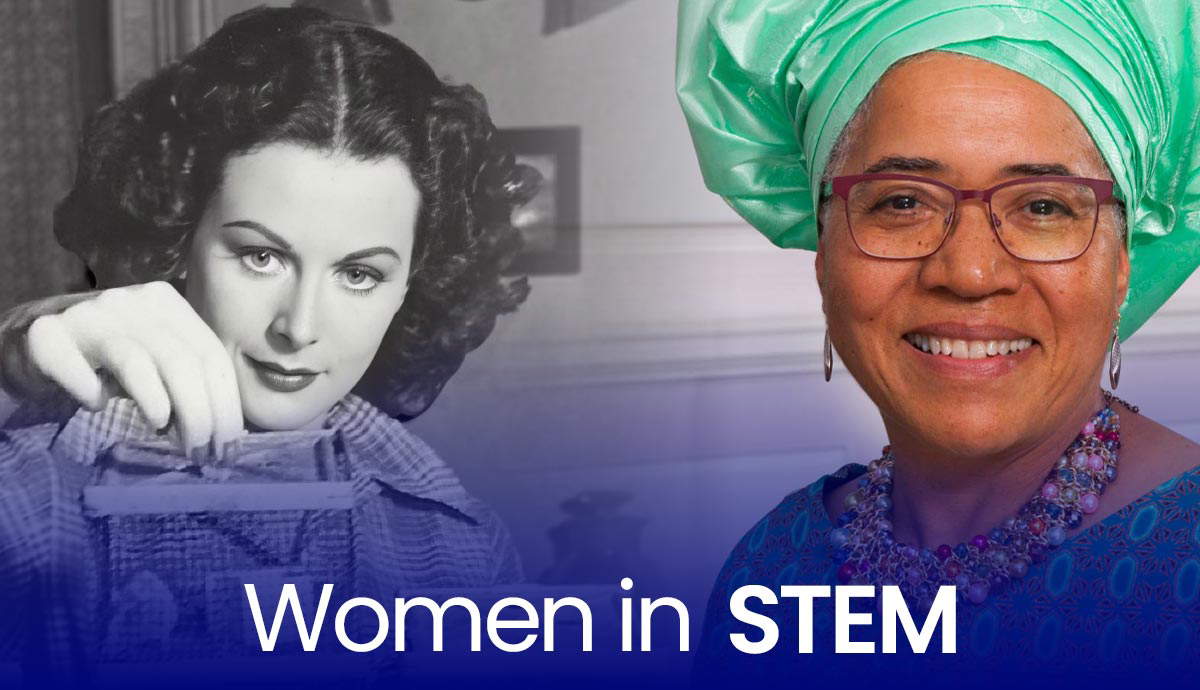
    Albert Einstein, Alan Turing, Alexander Graham Bell and even Pythagorasall famous for their contributions to the fields of science, technology, engineering, and mathematics, making them household names. But what about the women in STEM? Historically, women in STEM fields have been plagued by misogyny as well as the absence of female colleagues to support and inspire them. As a result, STEM fields remain dominated by men. Here are six inspiring and influential women in STEM that we should all know!1. Hedy Lamarr (1914-2000)Hedy Lamarr, the Hollywood star who paved the way for Wi-Fi. Source: PBSHedy Lamarr, a popular actress during the 1940s and 50s, was once seen as a fixture of popular American culture. Today, Lamarr is best known for her beauty and actingin fact, few people know that a technology she co-invented helped create a staple of modern life: Wi-Fi.Though best known for her achievements in acting, having been honored with a star on the Hollywood Walk of Fame in 1960, Lamarr had been interested in technology from a young age. She was not trained in any STEM subjects, but she read books about engineering voraciously and as a result would design her own inventions. In the early days, these inventions were quite rudimentarya glow-in-the-dark dog collar, for examplebut World War II changed everything.Working alongside George Antheil, an American composer, Lamarr discovered frequency hopping. This ingenious invention meant that switching radio frequencies became easier and signals jammed less often. Lamarr and Antheil aimed for their discovery to be used as a secret communications system; secret messages sent using their frequency hopping system were prevented from being intercepted.Lamarr patented the invention in 1942 and planned to sell it to the US military, to help the navy command torpedoes underwater undetected, but frequency hopping wasnt actually put into use until the Cuban Missile Crisis.Frequency hopping, as well as the spread spectrum invented by Lamarr, provided the basis and earliest models of modern wireless communication technology like Bluetooth and Wi-Fi.2. Dame Elizabeth Anionwu (1947- )Elizabeth Anionwu made great strides in studying sickle cell disease. Source: RCN MagazineDame Elizabeth Anionwu started her career in STEM as a nurse working for Britains National Health Service when she was just 16 years old. Working as a community nurse, Anionwu learned about sickle cell disease, an inherited variation of anemia that mainly affects those of African heritage, and decided to dedicate her career to helping those affected.Anionwu felt as if sickle cell disease wasnt thoroughly understood, or studied, by the NHS, and that there werent enough developments being made to help those who suffered from the disease. So, Anionwu traveled to the US to learn more about sickle cell disease and sickle cell anemia, as the resources and courses she needed were not available in the UK at the time.In 1979, working alongside Dr. Milica Brozovi, she opened the first UK center for counseling and screening for sickle cell disease, led by nurses in London. As more than 30 additional centers of this sort opened nationwide, Anionwu lectured at University College London and later became the dean of the School of Adult Nursing Studies and Professor of Nursing at the University of West London.Anionwu wrote The Politics of Sickle Cell and Thalassemia in 2001, and A Short History of Mary Seacole in 2005. She is committed to fighting medical racism and discrimination that Black and minority ethnic patients face.3. Katherine Johnson (1918-2020)Katherine Johnson, a human computer, working at NASA, 1962. Source: NASAAmerican mathematician Katherine Johnson is the reason man walked on the moon. One of NASAs human computers, Johnson conducted and completed the complex calculations that sent astronauts into orbit in the 1960s and then to the moon in 1969.Born in 1918, Johnson was a very bright child, having completed the eighth grade when she was only ten years old. Her town didnt offer any further education for African Americans after the eighth grade, and so her father moved her family 120 miles away so she could attend high school. She ultimately graduated from high school at 14 and then from college, with a degree in mathematics, at 18.In 1952, she applied to NASA after learning that they were hiring African American women to work as computers and check calculations. Those at NASA were impressed with Johnsons adeptness and curiosity, and two weeks later she was moved to the flight research division.Johnson found that geometry was the easiest way to calculate how to fly to space, and was given the task of plotting Americas first space journey in 1961. Johnson also worked on Americas space journey in 1962, 1969s Apollo 11 mission, and calculated how to safely return the astronauts on the failed Apollo 13 mission in 1970. Johnson retired from NASA in 1986. The book by Margot Lee Shetterly and subsequent 2016 film Hidden Figures were based on Johnsons work at NASA alongside fellow Black mathematicians Dorothy Vaughan and Mary Jackson.4. Barbara McClintock (1902-1992)Barbara McClintock was ostracized from the scientific community for her work on mobile genetic elements. Source: Connecticut Womens Hall of FameIn 1983, Barbara McClintock won the Nobel Prize in Physiology or Medicine when she was 81 years old. Thought of as one of the greatest modern geneticists, McClintock discovered mobile genetic elements, which are genes that move between chromosomes.Studying botany at Cornell Universitys College of Agriculture, McClintock discovered her love and passion for genetics when studying maize chromosomes and how they change during reproduction. In 1929, McClintock identified all ten maize chromosomes, and was the first person to do so. McClintock was also the first person to be able to describe the genetic map of maizebefore the DNA structure was discovered in 1953!In the 1940s and 50s, she began her work and breakthroughs in the field of mobile genetic elements. At that time, most scientists believed that genes were static and stationary, and so McClintocks work proving that some forms of genetic material can move was met with hostility. McClintock received so much backlash that she stopped publishing in 1953.It wasnt until the 1960s that her work was fully understood and accepted, and in 1970 she received the National Medal of Science, the first woman to do so. She later won her Nobel Prize, and in 1986 she was inducted into the National Womens Hall of Fame.After her death in 1992, biographies about her life and her discoveries were published to help inspire other young women and girls to study science and other STEM subjects.5. Chien-Shiung Wu (1912-1997)Physics professor Chien-Shiung Wu in a laboratory at Columbia University in 1958. Source: NPRKnown as the first lady of physics, nuclear physicist Chien-Shiung Wu worked on the Manhattan Project. Born in a small town near Shanghai, education was always very important to the Wu family. Her mother was a teacher and her father was an engineer, and so she was encouraged to pursue STEM subjects from a young age.She first attended Nanjing University to study mathematics but switched to physics after being inspired by Marie Curie and graduated top of her class in 1934.From 1935-1936, Wu completed her first experimental research, studying X-ray crystallography under the tutelage of Dr. Gu Jing-Wei. A fellow female researcher, she encouraged Wu to study at Berkeley, prompting Wu to move to the US. She later became the first female instructor to teach in Princetons physics department.In 1944, she joined Columbias Manhattan Project, the program working to develop the first nuclear weapons, focusing her work on radiation detectors. She also discovered a way to improve uranium ore to produce large amounts of uranium, to be used as the bombs fuel.Wu retired from teaching in 1981 and organized educational programs for people in the US, Taiwan, and China. She also dedicated the rest of her life to advocating for equal opportunities and rights for women in STEM and lectured worldwide to inspire young women in STEM.6. Dr. Indira Hinduja (1946- )Dr. Indira Hinduja, a pioneer in modern fertility treatments. Source: BioSpectrumDr. Indira Hinduja is a highly respected gynecologist and obstetrician who is one of the leading doctors in the field of combating infertility in India. Studying medicine at the University of Mumbai Medical School and practicing at the King Edward Memorial Hospital in Mumbai, she began experimenting with cell biology and embryology. This led her to her PHD in Human In-vitro Fertilization and Embryo Transfer, and this medical research helped make possible the birth of Indias first test tube baby.Later in her career, Dr. Hinduja developed the Gamete Intrafallopian Transfer (GIFT) Technology and went on to deliver Indias first GIFT baby in 1988. Her GIFT technique involves removing eggs from the ovaries and placing them in the fallopian tubes with the sperm.Other medical breakthroughs she has pioneered include the development of the Oocyte Donation Technique, which helps patients with premature and menopausal ovarian failure. In 1991, the first baby was born using this technique.Dr. Hindujas groundbreaking medical procedures have paved the way for even more research into stem cell biology, and her research has helped many couples struggling with infertility.
    0 Комментарии 0 Поделились 18 Просмотры
  • WWW.THECOLLECTOR.COM
    The Turbulent Time of Troubles (1598-1613) That Shaped Russia
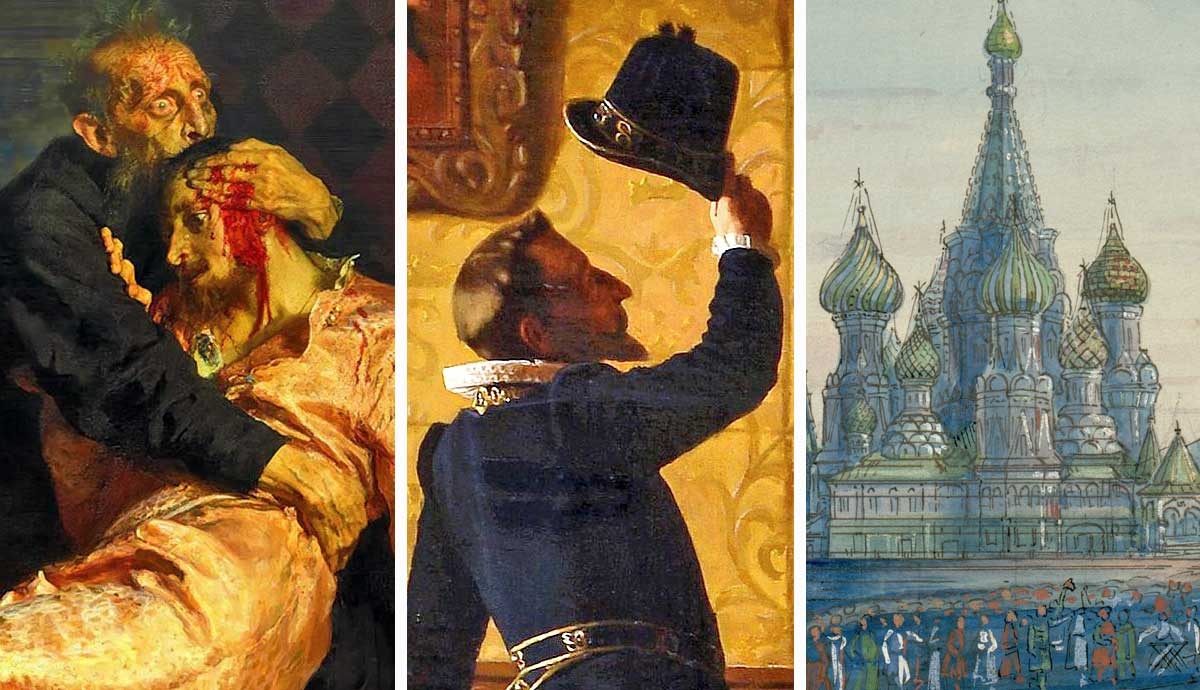
    The extinction of the Rurikid dynasty in Russia at the end of the 16th century sparked a 15-year period of political turmoil known as the Time of Troubles. During this period, Russia suffered a disastrous famine, the enthronement of a pretender of uncertain origins, unpopular aristocratic rule, and military intervention by Poland and Sweden, which encouraged the formation of patriotic Russian militias that liberated Moscow and restored order with the election of Mikhail Romanov as tsar in 1613.The Extinction of the RurikidsIvan the Terrible and his son, by Ilya Repin, 1883-1885. Source: Wikimedia Commons/State Tretyakov Gallery, Moscow, RussiaThe Time of Troubles came about as a result of the extinction of the main Rurikid linethe Grand Princes of Moscow, who claimed descent from the Viking chieftain Rurikin 1598. This had much to do with Tsar Ivan IV, better known as Ivan the Terrible, who had consolidated his power by executing rival claimants from his extended family.Ivan the Terribles intended successor was his eldest son, Tsarevich Ivan Ivanovich. It is generally accepted that the tsarevich died in November 1581 after an altercation with his father, who chastised Ivans wife for not being suitably dressed while pregnant. When the tsarevich intervened on behalf of his wife, the tsar struck his son with his staff in a fit of rage. A famous painting by Ilya Repin depicts the tsar cradling the bloodied head of his mortally wounded son in a display of remorse.When Ivan the Terrible died in 1584, he was succeeded by his surviving adult son, Fyodor Ivanovich. Nicknamed Fyodor the Bellringer for his piety, the new tsar may have had a mental disability and certainly lacked interest in state affairs, leaving the business of government in the hands of his minister Boris Godunov, the brother of his wife Irina.When Fyodor became tsar, there was only one other possible successor from the Rurikid line. Fyodors half-brother, Tsarevich Dmitry, was born in 1582, but since his mother, Maria Nagaya, was Ivan IVs sixth wife, the marriage was considered illegitimate by the Orthodox Church. Boris Godunov had them sent to the faraway town of Uglich, where Dmitry was found dead in 1591. While a delegation from Moscow concluded that the child died in a freak accident, it was rumored that Boris was responsible.Boris GodunovBoris Christoff in the role of Boris Godunov in Mussorgskys opera Boris Godunov, by Leonard Boden, 1965. Source: Victoria & Albert Museum, LondonDuring the 16th century, the Russian state had tripled in size, and the military expenditure to support this expansion placed a significant tax burden on peasants. The exploitation of the peasantry, combined with population growth, high inflation, and a colder climate caused a series of famines at the turn of the 17th century.As Tsar Fyodors regent, Boris restored order to state administration, albeit at the expense of making powerful enemies among leading Russian aristocrats known as boyars. Meanwhile, Boriss efforts to address the economic challenges by enserfing peasantsrestricting their movement to prevent the further dwindling of the tax basedid little to arrest the economic decline. This gave peasants even greater incentives to run away and become Cossacks on Russias southern frontier. Boriss economic policies not only worsened the conditions of the peasantry but also reduced the status of the lower gentry, who served as militiamen for the tsarist army.When Tsar Fyodor died childless in January 1598, marking the extinction of the Rurikid line, Boris was the obvious candidate to succeed to the throne. While his rivals amplified rumors of his involvement in the Uglich tragedy, Boris prevailed and was crowned in September.As an excellent administrator and effective diplomat, Tsar Boris temporarily ended costly wars with Russias neighbors, but his reign was overshadowed by the Great Famine of 1601-1603. While he responded energetically by making state grain reserves available to hungry peasants at low prices, he struggled to overcome speculators who manipulated grain prices by buying up the supply. The famine killed around two million people, or just under a third of Russias population.False DmitryFalse Dmitry Swearing an Oath to King Sigismund III of Poland by Nikolai Nevrev, 1874. Source: Wikimedia Commons/Radishchev Art Museum, Saratov, RussiaThe Great Faminenow understood to have been caused by global cooling following the eruption of the Huaynaputina volcano in Peru in February 1600ruined the tsars reputation among his subjects. God-fearing Orthodox Russians believed that God was punishing Russia for choosing an illegitimate and sinful tsar, leading many to conclude that Boris had indeed murdered Tsarevich Dmitry.Nevertheless, Tsar Boris did not face a major threat to his rule during the famine. The Russians still needed a tsar, and the alternative candidates were equally illegitimate. This was until 1604 when a young man claiming to be Tsarevich Dmitry invaded Russia at the head of a small army consisting of Cossacks and Polish soldiers.When Dmitry emerged in Poland-Lithuania in 1603, King Sigismund III of Poland saw an opportunity to turn a rival state into an ally. Upon hearing the news, Boris claimed that the young man was a dangerous runaway monk named Grigory Otrepyev. While few people genuinely believed that the young man was Dmitry, it was enough for the anti-Godunov coalition in Russia to have an alternative candidate who could convincingly present himself as a prince of the Rurikid line.The murder of Fyodor Godunov and his mother by Konstantin Makovsky, 1862. Source: Wikimedia Commons/State Tretyakov Gallery, Moscow, RussiaAfter Dmitry crossed into Russia in October 1604 at the head of 4,000 men, several cities in southern Russia declared in his favor. On December 21, the rebel army defeated a much larger tsarist force near Novgorod-Seversky (now Novhorod-Siverskyi in Ukraine). Dmitrys ranks swelled by the day, but a month later, he was defeated at Dobrynichi and barely escaped capture.Rather than effectively pursuing the pretender, the tsarist forces allowed him to recover and carried out atrocities against the civilian population in regions that had supported Dmitry, while a large tsarist army fruitlessly besieged Kromy near Oryol, some 200 miles south of Moscow.The tsarist cause was fatally weakened with Boris Godunovs death on April 13. Although the boyars in Moscow initially swore allegiance to Boriss 16-year-old son, Fyodor II, the defection of senior tsarist commanders Pyotr Basmanov and Vasily Golitsyn from the siege camp at Kromy proved decisive in bringing about the downfall of Fyodor II on June 11. On June 20, the deposed Tsar Fyodor and his mother were killed in captivity. The same day, the pretender entered Moscow in triumph and was welcomed as the new tsar.The Fall of the PretenderLast minutes of False Dmitry I by Karl Wenig, 1879. Source: Wikimedia Commons/Nizhny Novgorod State Museum of ArtDmitry was crowned tsar on July 21, becoming the first and only individual in Russian history to be raised to the throne by popular rebellion. Aside from the killing of the Godunovs and the banishment of Godunovs ally Patriarch Job, the new tsar was magnanimous towards his foes. When the ambitious boyar Vasily Shuisky attempted to seize the throne for himself, Dmitry briefly exiled him and recalled him to the boyar council within a matter of months.While Dmitry was rumored to have sworn allegiance to King Sigismund, offering to convert Russia to Catholicism and to cede large tracts of land to Poland, he took no steps to do so in power. However, his tolerance of Catholics, Protestants, Jews, and other religious groups caused some discomfort among the Orthodox faithful. Dmitrys relationship with the Russian Orthodox Church deteriorated in late 1605 when he planned to marry the Polish princess Marina Mniszech. To the dismay of senior Orthodox clergy, Dmitry supported his brides refusal to convert to Orthodoxy. This amplified rumors that he was a secret Catholic.Following his recall to the capital, Vasily Shuisky continued plotting to remove the tsar. He decided to strike on the occasion of Dmitrys wedding in May 1606, shortly before the tsar planned to leave on a campaign against the Crimean Tatars.Despite warnings of a plot against him, Dmitry took few precautions. On May 17, Shuisky spread rumors that the Polish wedding guests were intending to murder the tsar and all the Russians in Moscow. While an enraged mob stormed the Kremlin and hunted down the Poles, a group of conspirators broke into Dmitrys quarters. The tsar attempted to escape out of a window but stumbled and fell, enabling the conspirators to catch up to him and kill him.Tsar VasilyTsar Vasily IV Shuisky, 18th century painting. Source: State Historical Museum, Moscow via histrf.ruVasily Shuisky quickly moved to seize power and denounced the late tsar as an evil sorcerer and imposter. The dead tsars mangled body was initially put on public display before being cremated, after which the ashes were supposedly fired from a cannon towards Poland. Vasily hastily arranged his coronation as Tsar Vasily IV for June 1 before conveying the real Dmitrys body to Moscow for burial and veneration as a saint.After Shuiskys opponents on the boyar council appointed his rival Filaret Romanov as the patriarch of Moscow, Tsar Vasily purged the council and appointed Metropolitan Hermogenes of Kazan as the new patriarch. The elderly Hermogenes proved an energetic ally to Vasily and helped him secure his hold on Moscow.Prince Mikhail Skopin-Shuisky, author unknown, 17th century. Source: Wikimedia CommonsIn the Russian countryside, Dmitrys supporters claimed that he had miraculously escaped assassination once again and was still alive. Southern Russia once again rose up in rebellion in Dmitrys name. By fall, rebel commander Ivan Bolotnikov relieved the siege of Kromy and occupied Oryol. By October, rebel columns led by Bolotnikov and Istoma Pashkov were laying siege to Moscow. However, the rebel commanders had fallen out, and elite tsarist forces under Vasilys nephew, Mikhail Skopin-Shuisky, crushed the rebels on December 2.Bolotnikov retreated to Kaluga and defeated besieging forces in early 1607 before falling back on Tula. Vasily personally led a large army to besiege Tula, and the tsarist army captured the city in October after diverting the waters of the river Upa. Despite Vasilys promises to spare his life, Bolotnikov was killed in secret, and many of the rebels rallied to the banner of a man who claimed to be the resurrected Tsar Dmitry.This new pretender, known to history as False Dmitry II, established his camp at Tushino to the northwest of Moscow and besieged the capital for the next 18 months. Filaret Romanov arrived in Tushino and was reconfirmed as patriarch of Moscow, while Marina Mniszech recognized her husband.Although the rebels surrounded Moscow almost completely, the actions of rebel soldiers in the countryside inspired popular uprisings on behalf of the tsar. In the meantime, Prince Skopin-Shuisky led a force of Swedish mercenaries to defeat the rebels northwest of Moscow, and Dmitry was forced to leave Tushino in December 1609.A Polish Tsar?Crown Prince Wadysaw of Poland, later King WadysawIV by Pieter Soutman, c. 1626. Source: Wikimedia Commons/Wilanow Palace, WarsawAs a result of the agreement between Sweden and the Shuiskys, Russia came to serve as a new front for the Polish-Swedish War of 1600-1611. In September 1609, King Sigismund led a Polish army to besiege Smolensk while False Dmitry II rallied new support south of Moscow. The anti-Shuisky boyars considered offering the throne to Sigismunds son Wadysaw on condition that he would convert to Orthodoxy.Tsar Vasilys cause was undermined by the unexpected death of Mikhail Skopin-Shuisky in April 1610, and it was widely believed that the tsar had murdered his popular nephew to prevent him from challenging his throne. On July 4, 1610, a Polish army decisively defeated a Russian force at Klushino.The defeat encouraged Shuiskys enemies to depose him two weeks later and imprison him in a Kremlin monastery. With Polish troops heading towards Moscow, a council of seven boyars headed by Fyodor Mstislavsky formally offered the crown to Wadysaw.The Polish commander Stanisaw kiewski invited senior Russian dignitaries, including Filaret Romanov, Vasily Golitsyn, and the former Tsar Vasily, to the Polish siege camp at Smolensk on the pretext of negotiating the terms of Wadysaws accession. However, upon their arrival, Sigismund informed the boyars that he intended to rule Russia in his own right. When the Russians refused, they were all taken prisoner and escorted to Poland. Polish troops continued to attack Russian towns, and the council of seven eventually invited the Poles to occupy Moscow to restore order.Minin and PozharskyMinin and Pozharsky Monument in front of St Basils Cathedral, Moscow, photograph by Jimmy Chen, 2017. Source: Jimmy ChenThe Polish occupation of Moscow was naturally unpopular with most Russians, and Patriarch Hermogenes was arrested for denouncing the treason of the seven boyars. Most of False Dmitry IIs supporters were also opposed to Polish intervention, and the pretenders murder by a member of his entourage in December 1610 encouraged a united front against the Poles.Patriarch Hermogenes was still able to write secret letters encouraging the townsfolk of Nizhny Novgorod to rise up, while the nobleman Prokopy Lyapunov organized a militia against the Poles in early 1611. After the militia attacked Moscow in April 1611, the Poles were restricted to the city core, while the suburbs were burned to the ground.The fall of the Shuisky regime and the Polish occupation of Moscow encouraged Swedish troops to secure the submission of Novgorod in June 1611. Even King James I of England considered sending troops to north Russia to secure the trading routes through Archangelsk.The unity of the Russian militia received a bitter blow when Lyapunov was murdered by Cossacks. The Cossack leader Ivan Zarutsky assumed effective command and championed the cause of the young Ivan Dmitrievich, the posthumous son of False Dmitry II and Marina Mniszech. These efforts were opposed by the Nizhny Novgorod militia led by the butcher Kuzma Minin, who joined forces with the minor aristocrat Dmitry Pozharsky, an opponent of Zarutsky.Financed by the townsfolk in the Volga region, who had continued to conduct profitable trade throughout the Time of Troubles, Minin and Pozharsky organized the Second National Militia to challenge not only the Poles but Zarutsky, who had recently eliminated a third False Dmitry who emerged in northwestern Russia. From his base at Yaroslavl, Pozharsky attracted many Cossacks from Zarutskys ranks.A New DynastyMonument to Tsar Mikhail I and Tsar Nicholas II at Novospassky Monastery, Moscow, photograph by Jimmy Chen, 2017. Source: Jimmy ChenDuring the summer of 1612, the Second Militias prospects improved as the Poles and Zarutsky clashed repeatedly to the west of Moscow, with both sides sustaining heavy losses. In July, Zarutsky was abandoned by his ally, Dmitry Trubetskoy, who joined forces with Pozharsky. However, Trubetskoy was conscious of being a higher-ranking aristocrat and resented being under Pozharskys authority.At the beginning of September, when the Polish commander Jan Karol Chodkiewicz led a relief force to attack Pozharskys army besieging Moscow, Trubetskoy remained on the sidelines. However, most of his Cossacks joined the battle and helped Pozharsky achieve victory.Trubetskoy and Pozharsky soon came to an agreement in which Trubetskoy was appointed nominal commander-in-chief of the militia even though Pozharsky and Minin remained in charge. In early November, the national militia successfully liberated Moscow and forced the Polish garrison to evacuate the city. An interim government nominally led by Trubetskoy was installed while the Assembly of the Land was summoned to elect a new tsar.Patriarch Filaret of Moscow, attributed to Nikanor Tyutryumov, before 1877. Source: Wikimedia Commons/State Heritage Museum, St. Petersburg, RussiaThe delegates were initially deadlocked, and Trubetskoys own candidacy was opposed by Pozharsky and the boyars. The Romanov family, who had supported the first two false Dmitrys before joining the seven boyars, proposed the 16-year-old Mikhail Romanov, son of the imprisoned Patriarch Filaret. While Trubetskoy and Pozharsky opposed the Romanov candidacy, a body of Trubetskoys cossack delegates declared in his favor, and Mikhail was elected tsar on February 7, 1613.While rival boyar families were not enthusiastic about Mikhail, they believed that they could control him via the boyar council. While Mikhails position on the throne was initially precarious, Romanov propagandists moved to cover up the familys association with the pretenders and the Poles, and the tsars agents quickly silenced anti-Romanov voices.During the early years of his reign, Mikhail summoned the Assembly regularly to coordinate reconstruction efforts, but following Filarets return from captivity in 1619, the tsars father became the effective ruler of Russia until his death in 1633. The Romanov dynasty continued to rule Russia for three centuries until the 1917 Revolution.LegacySet design for the epilogue to A Life for the Tsar, 1874. Source: Wikimedia Commons/Archivio Storico Ricordi, Milan, ItalyThe Time of Troubles was an incredibly traumatic period of Russian history that has reverberated through the centuries. During the 19th century, Boris Godunov became one of the most famous tragic figures in Russian drama, firstly with Alexander Pushkins 1825 play Boris Godunov, which in turn inspired Modest Mussorgskys 1872 opera Boris Godunov.When Napoleon invaded Russia in 1812, Tsar Alexander I made reference to Minin and Pozharsky as he rallied the Russian people to resist the invader. In 1818, a few years after Russias victory over Napoleon, a statue of Minin and Pozharsky was unveiled in Red Square, celebrating the militia leaders who liberated Moscow in the 17th century.In 1815, the Italian court composer Catterino Cavos wrote a two-act opera, Ivan Susanin, based on the legendary tale of an old man who is supposed to have given his life to save Mikhail Romanov from Polish soldiers. Mikhail Glinkas 1836 opera A Life for the Tsar on the same subject, renamed Ivan Susanin during the Soviet period, is considered Russias first national opera.When Russia experienced a similar period of political turbulence and economic crisis at the beginning of the 20th century with the First World War, the Revolutions of 1917, and the Russian Civil War, opponents of the Bolshevik regime labeled the period as the krasnaya smuta or Red troubles.In contemporary Russia, the Time of Troubles is used to justify the need for a strong ruler who can prevent anarchy and disorder. In 2005, Vladimir Putins government instituted a national holiday known as the Day of National Unity on November 4, marking the anniversary of the liberation of Moscow from Polish occupation in 1612.
    0 Комментарии 0 Поделились 18 Просмотры
  • WWW.THECOLLECTOR.COM
    The Life of Pyotr Wrangel, the Legendary Black Baron of Russia
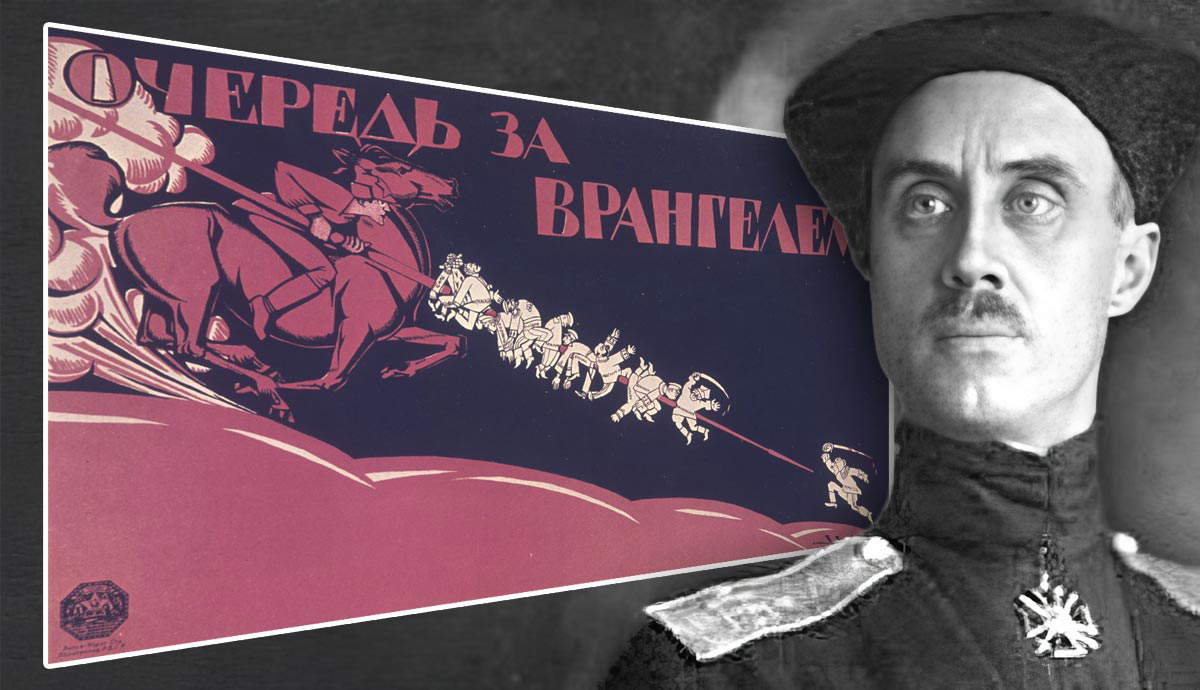
    A popular Red Army song began as follows:The White Army and the Black BaronAre preparing to restore to us the tsars throne,But from the taiga to the British seas,The Red Army is the strongest of all!Many myths surround General Pyotr Wrangel. Famous for wearing a black Cossack uniform, this charismatic commander played a major role in the Russian Civil War. He did not actually attempt to restore the Romanovs. Even after his defeat, the Soviets considered Wrangel a threat and may have plotted his unexpected death.A Powerful FamilyWrangel family coat of arms, Swedish Knighthood and Nobility Calendar, 1913. Source: Wikimedia Commons; with Carl Gustav Wrangel by Matthus Merian II, 1662. Source: Skokloster Castle MuseumBorn into a famous family of Baltic German origin in Lithuania in the Russian Empire on August 27, 1878, Baron Pyotr Nikolayevich Wrangel had aristocratic blood running through his veins.His ancestor, Carl Gustaf Wrangel, led Swedish forces during the Thirty Years War and in the Second Northern War. The Wrangel familys Latin motto, Frangas, non flectes (You can break, but you cant bend), would represent Pyotr Wrangels life.After graduating from St. Petersburgs Mining Institute, Wrangel worked as an engineer, but his heart remained with the military. When the Russo-Japanese War broke out, Wrangel signed up as a volunteer. He received multiple awards, including the Order of St. Anna for bravery.Before World War I, Wrangel changed careers by graduating from the Nikolaev Military Academy in Moscow. Next, he joined the Russian Army General Staff while finishing a course at the Officer Cavalry School. This strong affinity for the military set a defining course for the rest of Wrangels life.Rising StarPyotr Wrangel at the outbreak of World War I. Source: Wikimedia CommonsIn 1914, Austrian Archduke Franz Ferdinands assassination sparked a European powder keg. After the Russian Armys mobilization, Colonel Wrangel led the Life-Guards Cavalry Regiment in a daring attack on an enemy battery in East Prussia. With his horse shot out from under him and suffering from a concussion, Wrangel led his men to victory on foot. Tsar Nicholas II awarded Wrangel the Order of St. George, making him the first officer to receive this military award for bravery during World War I.Wrangel distinguished himself as a courageous commander for the rest of the war, participating in the successful Brusilov Offensive against Austria in 1916. Now a major general in the cavalry, Wrangel successfully screened the infantrys retreat after a failed Russian offensive in the summer of 1917. Meanwhile, revolution loomed, threatening Wrangels army and his family.The Coming StormSoviet cavalry patrolling Red Square, 1918-1920. Source: Radio Free EuropeAfter the February Revolution, the Russian Imperial Army began to disintegrate. Over the next several months, desertions increased and workers unrest intensified.In October 1917, the Soviets led a coup that ushered in the Bolshevik Revolution. The Soviets came to power with the slogan Bread, Peace, and Land, promising to end the war with the Central Powers and give confiscated property to the people.At Supreme Command Headquarters, Wrangel planned to raise a volunteer army to continue fighting Germany. When he realized his commander-in-chief had no intention of resisting the Bolsheviks, Wrangel headed south, where an anti-Soviet army started gathering.Arrest and EscapeIconic portrait of Baron Pyotr Wrangel in his black uniform, 1920. Source: Wikimedia CommonsThe October Revolution forced the general and his family to move to Yalta. But the situation in Crimea became more dangerous. Gangs of Bolshevik soldiers and sailors patrolled the streets. They broke into houses, helping themselves to cash, jewelry, and other valuables and dragging people before revolutionary tribunals.One morning, Wrangel woke to loud voices, stamping feet, and slamming doors. As the general sat up in bed, six sailors, swathed in machine-gun cartridges and carrying rifles, rushed into the room.Two sailors held him at gunpoint, shouting: Not a muscle, youre under arrest.The sailors hauled Wrangel onto a ship flying a red flag anchored in the harbor. Most interrogations ended the same way. In the water below their feet lay hundreds of drowned victims of summary Soviet trials.Revolutionary sailors displaying a flag declaring Death to the bourgeoisie, 1917. Source: Radio Free Europe / Radio LibertyAn aristocrat and former tsarist general who openly wore his officers shoulder straps on the street in a move that almost got him killed, the baron represented everything the Bolsheviks hated.His interrogation took place in a cell where a revolutionary chairman named Vakula asked the reason for his arrest.Probably because I am a Russian general, Wrangel replied. I know of no other guilt.The chairman turned to his wife, Olga Wrangel, who had accompanied the baron, and asked why they arrested her.I am not arrested, she clarified. I just want to be with my husband.The Baroness calm behavior evoked unusual sympathy among the tribunal.An astonished chairman told Wrangel, Not everyone has such wives, and you owe your life to your wife.He ordered the generals release on the spot.Olga and Pyotr Wrangel, 1920. Source: Wikimedia CommonsUnlike tens of thousands who disappeared under the Bolsheviks, Wrangel had a lucky escape. He moved to Miskhor, where he lived under a fake passport, avoiding the ongoing wave of raids and arrests.After the Germans seized the area, Wrangel traveled to Ukraine, where he tried to join Hetman Pavlo Skoropadskys government. Having been installed as the leader of a nominally independent Ukraine by the German authorities, Skoropadskys government teetered on the brink of collapse. Wrangel therefore decided to join Anton Denikins Volunteer Army in September 1918.Denikin gave him a frigid welcome. Due to his arrest, Wrangel could not participate in the brutal Ice March, which took the Volunteer Army south during the first Kuban Campaign. This meeting foreshadowed future tensions between the two men.The Black Baron vs the Red ArmyNow after Wrangel! Soviet propaganda poster, 1920. Source: Sputnik via Marx Memorial LibraryDespite frosty relations with Denikin, Wrangel had a reputation as one of the best cavalry commanders in the former imperial army. With a force primarily made up of Kuban Cossack horsemen, Denikin desperately needed a good cavalry general who could relate to the separatist-minded Cossacks.One of Wrangels first actions during the Russian Civil War included taking the city of Stavropol back from the Bolsheviks. In December 1918, Denikin promoted him to lieutenant general.By 1919, Wrangel began to push back against Denikins strategy. He argued that they should join forces with Admiral Aleksandr Kolchaks troops moving toward the Volga and throw their forces into the fight to take back the critical town of Tsaritsyn (later renamed Stalingrad).Map of Denikins advance toward Moscow, 1919. Source: Marx Memorial LibraryDenikin, feeling threatened, rejected Wrangels proposal. Instead, he insisted on defeating the Soviets in the Donbas first. This decision may have proved a fatal mistake.If the Volunteer Army had joined the battle with the Reds during Kolchaks Volga Offensive, they could have defeated the Bolsheviks in the Volga region. The Red Army would have had to withdraw troops from Siberia, relieving pressure on Kolchaks front and enabling him to throw troops into combat at Tsaritsyn. Dividing and conquering the Red Army may have prevented the collapse of Kolchaks eastern front and the downfall of the Omsk Siberian Provisional Government.By this time, Wrangel distinguished himself as one of the prominent leaders of the White movement. A popular commander, he also had a reputation as a strict disciplinarian who punished violence and robbery among his troops. In contrast, he faced a ruthless Bolshevik commander named Joseph Stalin. During the second siege of Tsaritsyn (SeptemberOctober 1918), Stalin clashed with Leon Trotsky, disobeyed orders, and illegally seized supplies sent through Tsaritsyn for the Red Army. Vladimir Lenin refused to tolerate his insubordination and recalled Stalin to Moscow.On June 30, 1919, Wrangel captured Tsaritsyn in the most successful operation of his career. Vastly outnumbered and using only cavalry units, Wrangel defeated the Soviets at Red Verdun and took tens of thousands of prisoners.March on MoscowDenikin and Wrangel march in a parade after the capture of Tsaritsyn, 1919. Source: Wikimedia CommonsThe conquest of the Donbas failed to strengthen the anti-Bolshevik cause. Instead, the campaign brought a largely antagonistic proletarian population under White control. Leon Trotskys attack through the Donbas proved fatal for the Volunteer Army. Although the area had rich steel and coal resources, the Whites did not control its military industry. The Volunteer Army, having failed to join Kolchak, proved unable to stop the admirals defeat later that year.Denikin also overestimated the Reds defeat at Tsaritsyn. Ignoring the logistical issues his overstretched forces would face, Denikin issued his famous Moscow Directive. While aimed at capturing the capital, the Moscow Directive lacked any strategic details. Instead, the White Army marched in spread formation in a single direction. Each corps simply received a roadmap to Moscow.Wrangel objected. He called the Moscow Directive a death sentence. He advised Denikin to strike at Moscow from the shortest possible route, transferring his main forces from Tsaritsyn without waiting for it to surrender.Denikin refused to listen to Wrangels advice. Instead, he split his forces, sending a significant part of the Volunteer Army to capture Kyiv and right-bank Ukraine, a division of strength that dangerously diluted the main march to Moscow.Wrangles With DenikinGeneral Anton Denikin, 1920. Source: Library of CongressUltimately, the Moscow Directive failed because Denikin divided and stretched the Volunteer Army too thin across a key section of their front. The Whites also failed to mobilize enough Ukrainian peasants to support their campaign. Unable to concentrate his forces or defend his supply lines, Denikins offensive bogged down beyond Oryol, some 200 miles south of Moscow. In contrast, the Red Army mobilized the peasant population. With their chance to take the Soviet capital lost, the Volunteer Army retreated south.After the Moscow disaster, Wrangel went public with his disagreement with Denikin. He issued a report criticizing Denikins strategy and blaming him for the Whites defeat. When copies of this report circulated among senior officers, many agreed.This act came at a cost. In February 1920, Denikin dismissed Wrangel for his outspoken criticism. Facing defeat, Denikin then initiated a disastrous evacuation at Novorossiysk in March. Authorities failed to provide enough ships to evacuate an estimated 100,000 troops, in addition to civilians, fleeing the Red Army. The botched evacuation left thousands of soldiers and refugees behind. In the aftermath, the Bolsheviks executed 60,000 people who could not escape. It is considered the single largest massacre of the Russian Civil War.A New CommandWrangel, after assuming command of the AFSR, 1920. Source: Wikimedia CommonsIn April 1920, Denikin resigned. At a meeting of the Military Council, several officers nominated Wrangel to take his place. While not everyone, including Wrangel, agreed that subordinates should elect their commander-in-chief, a shout went up: Long live General Wrangel!Denikin responded by appointing Wrangel commander of the Armed Forces of South Russia. Wrangel accepted the position with the words: I have shared the glory of victories with the army and I cannot refuse to drink with it the cup of humiliation.By now, the Allies, who had funneled resources to the Volunteer Army despite official bans from getting involved in the Russian war, refused to supply further food, weapons, or supplies. Despite this blow, most of the generals voted to keep fighting.One of Wrangels first acts as general was to rename the Volunteer Army the Russian Army. Meanwhile, an amphibious landing via the Black Sea and an advance through southern Ukraine in April met stiff resistance by the Red Army and collapsed.A Model StateCivilians overlooking the Crimea harbor, 1920. Source: The Russian Historical SocietySetbacks in the North Caucasus and Ukraine pushed the Russian Army back toward Crimea. Wrangel used the peninsula as his base to establish law and order, reorganize the army, and create a model anti-Soviet state.Under Wrangels administration, shops opened, postal services operated, and trains ran again. Despite these social and economic strides, the overall war effort kept deteriorating. The British withdrew aid and began negotiating with the Bolsheviks. Wrangel knew millions of pounds worth of supplies had been frittered away on Denikins army. But after Wrangel cracked down on corruption, foreign aid stopped.As head of the anti-Soviet government in Crimea, Wrangel rolled out a more liberal social and political policy than Denikin entertained.I am trying to make life possible in Crimea, at least on this little patch, Wrangel announced. To show the rest of Russia: you have communism there, that is, hunger and emergency, and hereorder and possible freedom are being established. No one is strangling you; no one is torturing youlive as you lived before.The Baron decided to avoid another march on Moscow. Instead, he concentrated on creating a model state characterized by democracy, economic stability, workers rights, and agrarian reforms. He also advocated for broad Ukrainian autonomy.Russian peasants by Bain News Service, 1915-1920. Source: Library of CongressOne of these laws transferred most of the landowners land to the peasants but held the government responsible for reimbursing the landowners. The problem was that this reimbursement exceeded the land value due to rampant inflation. If the imperial government had passed this law before 1917, it might have prevented the Revolution. Compared to the Soviets sweeping promises, most peasants had little incentive to join the Whites now.For a time, Wrangel created a model state intended to make the citizens of Sovdepia envy them.The outbreak of the Polish-Soviet War bought the anti-Bolsheviks some valuable time. Taking advantage of the Red Armys troop diversion, Wrangel launched a cavalry attack to break out of the peninsula. His tactical combination of horses, tanks, airplanes, and armored trains resulted in a resounding victory that defeated Dmitry Zhlobas cavalry units and captured 9,000 prisoners. Wrangels combined arms tactics anticipated those employed in future wars.Last StandWrangel and his officers descend the Sevastopol steps for the last time, 1920. Source: Russia Beyond the HeadlinesThe anti-Bolshevik state in the Crimea only lasted six months.In October 1920, the Red Army dealt the Russian Army a fatal blow at the Soviet bridgehead at Kakhovka on the left bank of the Dnieper. Meanwhile, the Polish Army overpowered the Red Army near Warsaw that autumn. Although the Polish Army could have marched on Moscow, Jzef Pisudskirefused. Neither Wrangel nor Pisudski supported each other in the past, and Wrangel had not recognized Polish independence. As a result, the Polish-Soviet truce in October 1920 sealed the fate of anti-Bolshevik Crimea.While the French government recognized Wrangels Government of South Russia, the lack of internal resources and external aid proved fatal for the White movement. Without coal, oil, military supplies, or food resources, it became only a matter of time before the Russian Army collapsed under the onslaught of the victorious Red Army.Flight From CrimeaThe Red Army Crossing the Syvash by Nikolay Samokish, 1935. Source: Wikimedia CommonsIn November 1920, the besieged White forces braced themselves for attack. Five Red Army columns combined to strike the exhausted Russian Army during the Perekop-Chongar Operation. Determined to prevent Wrangel from maintaining his foothold in Crimea, Lenin ordered his commanders to wipe the Russian Army off the map.As winter came on, an unequal fight began. The Whites had only 41,000 infantry and cavalry, who fought on foot due to a lack of horses, and 213 artillery pieces. In contrast, the Soviets employed a force of 200,000 troops, 40,000 cavalry, 17 armored trains, and 98 artillery pieces.The White defensive line clung on despite overwhelming enemy forces. In the early hours of November 11, 1920, the Red Army crossed the frozen Syvash Marsh in a surprise attack and broke through the Russian Armys defenses at Perekop. Under cover of predawn, the White Army fell back to the sea to avoid annihilation.With fate staring him in the face, Wrangel tried to ensure that this evacuation did not mimic Denikins disastrous attempt.After the Perekop breakthrough, Wrangel appealed to the people: The Government of the South of Russia considers it its duty to warn everyone about the severe trials that await those arriving from within RussiaThe government advises all those who are not in immediate danger from enemy violence to remain in the Crimea.Evacuation of anti-Bolshevik soldiers and civilians from the Crimean Peninsula, 1920. Source: Wikimedia CommonsMany people decided to stay. Tens of thousands of soldiers and civilians subsequently succumbed to the Red Terror which the victorious Soviets dealt out after conquering Crimea. Still, Wrangel managed to evacuate 145,693 people on 126 ships from the ports of Yalta, Sevastopol, and Feodosia. This number included 50,000 soldiers, army officials, civilians, and 6,000 wounded. The ships transported the refugees to the Gallipoli Peninsula and the Greek island of Lemnos.Despite its limitations, Wrangels evacuation avoided mass panic, demonstrated greater organization, kept the core of the Russian Army together, and shipped about 100,000 more people to safety compared to the previous evacuation attempt.An Opponent in ExileWrangel and his officers in Sevastopol, 1920. Source: DzenLife for refugees on Lemnos was hard. They had no resources, no passports, and no country.Wrangel landed in Constantinople, where he organized the army for the next two years. In 1922, Wrangel founded the Russian All-Military-Union to unite and support 100,000 military migrs and continue a political and psychological struggle against Soviet power.The Black Barons strong reputation in the migr community and his ability to successfully lead troops meant that the Soviets kept trying to discredit or destroy him.Sickness or Murder?Baron Wrangel as a civilian in Brussels, 1920s. Source: Russian7In 1924, Wrangel emigrated to Belgium where he worked as an engineer. Now the man who once faced down the Bolsheviks on the battlefield feared only one thing: poisoning.As it turned out, his fears may have been justified.During the 1920s, the Soviets ramped up their espionage activities in Europe. The next few years witnessed an increase in former White migrs-turned-Soviet-spies and double agents. This resulted in the kidnapping, disappearance, and murder of several high-profile anti-Bolshevik leaders.Things took a turn in March 1928 when Wrangels orderly, Yakov Yudikhin, asked Wrangel to take in his refugee brother. The baron agreed.As it turned out, this brother was a sailor on a Soviet ship.Funeral of General Baron Wrangel in Belgium, Hoover Institution, 1929. Source: Radio Free Europe / Radio Free LibertyWhen the sailor left on March 8, the general fell suddenly and violently ill. At first, it seemed like a winter cold, accompanied by a high fever, stomach pain, and coughing. Doctors could not agree on a diagnosis. Doctor Weiner diagnosed the baron with intestinal issues. Meanwhile, Ivan Aleksinsky thought Wrangel had influenza. Three days later, three doctors admitted the situation looked more dire than they initially realized.An analysis revealed that the barons lungs were riddled with Kochs bacilli. The general grew worse daily. He began to hallucinate. Imagining himself back on the battlefield, he tried to get up, directed military operations, and gave endless orders.After suffering for over a month, General Baron Pyotr Nikolayevich Wrangel died on April 25, 1928. The Black Barons sudden death convinced his family and some later historians that an OGPU agent used poison to infect him with a fast-acting bacteria. He died just six months before the discovery of penicillin. For the hundreds of emigrants at his funeral, Wrangels death seemed like the end of their hopes to restore their motherland.Always With HonorWrangel at the end of the Civil War, 1920. Source: Library of Congress; with Order of St. George, 4th class, which Wrangel won for his exploits in World War I. Source: Wikimedia CommonsIts no secret that Wrangel was a strict commander who balanced courage and a sense of honor with military expediency.While he was a monarchist, the baron believed Russia needed an elected, democratic form of government. He created a short-lived model state based on democratic principles and agrarian reform.In exile, the general fought for his soldiers welfare and waged an ideological war against the Soviets. The Black Barons reputation as arguably the most competent anti-Bolshevik commander made him a formidable opponent until his death.

    0 Комментарии 0 Поделились 18 Просмотры
  • WWW.THECOLLECTOR.COM
    The Tortured Genius of ETA Hoffmann Who Turned Personal Failure Into Literary Masterpieces
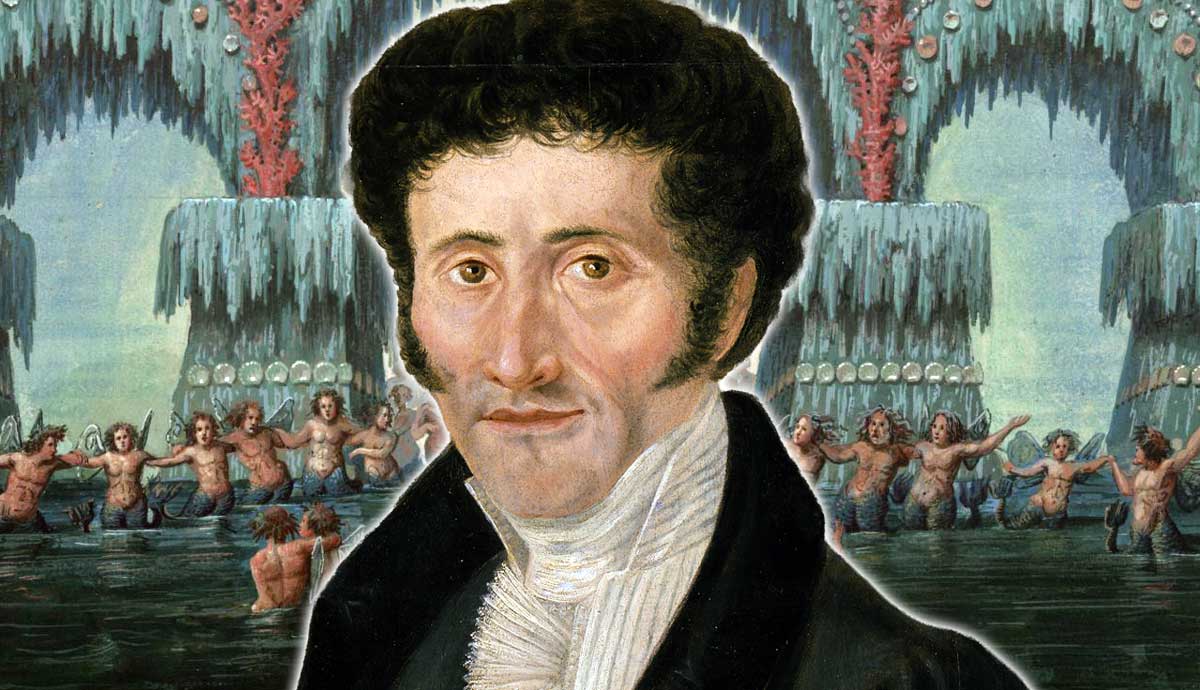
    ETA Hoffmann was, like many Romantics, a polymath, excelling as an author, a composer, and an artist. His stories, often containing fairytale, supernatural, or uncanny elements, changed the landscape of literature in his native Germany and across the world. Although he lived in turbulent times and much of his writing describes how difficult it was to make it as a musician, he emerged as a representative figure of Romanticisms ideals and its idiosyncrasies.ETA Hoffmann: From Lawyer to ComposerKnigsberg Cathedral in the 19th century. Source: The Russian Virtual MuseumOn January 24, 1776, Ernst Theodor Wilhelm (E.T.W. for nowE.T.A. was to come later) Hoffmann was born in Knigsberg, a medieval port city and university town situated in what was then Prussia. Today, as part of Russia, the city is known as Kaliningrad. Hoffmann was born into a family of lawyers, though his father dabbled in both poetry and music, and it was into the legal profession that the young Hoffmann initially went.At school, he had already identified the three passions that would define his adult lifemusic, literature, and artbut Knigsberg, despite being the home of Immanuel Kant (whom Hoffmann saw giving lectures in 1792), was generally removed from artistic developments in the German states as a whole, and the prospects for an artist were not promising.While continuing to work on his piano playing, composing, and artistic education, Hoffmann took on more reliable employment as a clerk. As he put it: On weekdays, I am a jurist and somewhat of a musician at most; on Sundays I draw during the day and in the evening, I become a very witty author until late into the night. His legal career took him to Glogau (now Gogw in Poland), Berlin, and Posen (now Pozna in Poland). Here, Hoffmann tried to establish himself as a composer, but his time in Posen was short-lived. After some caricatures he had drawn of military officers made the rounds, he was summarily moved elsewhere.The Music CriticETA Hoffmann and Ludwig Devrient, by Hermann Kramer, 1817. Source: Stadtmuseum BerlinIn 1804, Hoffmann gained a post in Warsaw, where the cultural life was more stimulating than in his previous places of residence. As well as the author Friedrich de la Motte Fouqu, whose story Undine Hoffmann would later adapt for the operatic stage, he met Julius Eduard Hitzig, who would publish the first biography of Hoffmann in 1822-23.Hitzig (who had changed the spelling of his surname when he was baptized) was a member of the prominent Itzig family, which had married into the Mendelssohn familyJulius was great-uncle to the composers Felix and Fanny. His sister Lea would later contribute to the revival of J.S. Bach by giving Felix a manuscript of the St. Matthew Passion, which had its first Berlin performance under his baton in 1829.Thus Hitzig, among other connections made in Warsaw, was an important figure in nurturing Hoffmanns enthusiasm for Romantic literature and music. Around this time, E.T.W. Hoffmann changed his middle name, replacing Wilhelm with Amadeus in tribute to one of his favorite composers, Wolfgang Amadeus Mozart. As his passion for music and immersion in a rich and varied cultural life were brewing, Hoffmann was forced to move again when in 1806, Napoleons troops captured Warsaw, and all Prussian civil servants lost their jobs.Title page of Beethovens Fifth Symphony, 1826. Source: ChristiesEventually ending up in Berlin, Hoffmann was finally able to find work more closely related to his interests: writing music criticism for the newspaper Allgemeine musikalische Zeitung. Hoffmann began to make his mark on contemporary music and pen certain pieces that would cement his place in music history. His 1810 review of Ludwig van Beethovens Fifth Symphony is considered a foundational work of Romantic criticism, typifying the ways early-19th-century audiences celebrated musics ineffable power and offering one of the earliest theorizations of the term romantic in relation to music.For Hoffmann, musical Romanticism is best exemplified by Beethoven, whose music is absoluteit does not need to rely on words or comparisons to images from the real world but takes for its subject the infinite. While Joseph Haydn is comprehensible for the common man, and Mozart captures the marvelous that dwells in the inner spirit, Beethovens music embodies that eternal longing that is the essence of the romantic. Hoffmanns review bestowed the ideas of absolute music, the omnipotent genius composer, and musics awe-inspiring incomprehensibility to the 19th century, as writers on music across Europe overwhelmingly took up his language.The Peripatetic Life of the MusicianSketch of Kapellmeister Kreisler, by ETA Hoffmann. Source: Wikimedia Commons/Klaus Gnzel, Die deutschen Romantiker (1995)From this point onwards, Hoffmann wore many hats. In Bamberg and Dresden, he was employed as a Kapellmeister (literally chapel-master), a musician who runs the day-to-day musical life of a church or court, including supplying his own compositions. He also worked in the theater as a set designer and architect and continued to draw (especially caricatures) and write. His first published story, Ritter Gluck, which tells the adventures of a man who believes he meets the opera composer Christoph Willibald Gluck, appeared in 1809.Part of the reason Hoffmann moved around so much was his historical and geographical circumstances. He had already had to leave Warsaw because he would not swear allegiance to Napoleon, who occupied what was then the capital of South Prussia. His time in Dresden was also disrupted by the Napoleonic Wars, with he and his wife temporarily fleeing to Leipzig early in 1813, returning just in time to witness the Battle of Dresden, a major victory for the French.Battle of Dresden (unattributed, undated). Source: Warfare History NetworkThere were other reasons for Hoffmanns peripatetic lifestyle. Before meeting his wife, way back in Knigsberg, when he was only 18, Hoffmann fell in love with a married woman ten years his senior. This was one of the reasons his family found employment for him in Glogau, and it was not the only time his romantic and professional life were to become entangled. In Bamberg, working as a singing teacher, he fell in love with his student, Julia, whose mother soon arranged for her to be taught by someone else.Hoffmanns experience of falling in love unsuitably, his awareness of how hard it was to maintain lasting employment as any kind of artist, and his feeling that musicians, in particular, were undervalued by society all found their way into his writings. He developed an alter ego, a composer called Johannes Kreisler, who appeared in much of his music criticism, and whose experiences and traitshe is often penniless, often falling in love, and often raging against societymirror Hoffmanns own. Though fictional, Kreisler was an immensely influential figure in both literary and musical circles, embodying all the prized values of Romanticism: genius, emotion, and a constant striving for something beyond what the ordinary world can offer.Success as Composer and AuthorStage design for Hoffmanns Undine, by Karl Friedrich Schinkel, 1815-16. Source: ETA Hoffmann Portal, Berlin State Library/ bpk / Kupferstichkabinett, SMBSome stability and success finally came Hoffmanns way when he moved to Berlin in 1814. There, he wrote an opera based on Fouqus Undine, which was staged in 1816. Hoffmanns work was favorably reviewed by the composer Carl Maria von Weber, whose own opera Der Freischtz (1821) similarly featured dreamy glens and forest spirits.Hoffmanns literary output also gathered pace: Fantasiestcke in Callots Manier in 1814-15 gathered various stories first published elsewhere, several of them featuring the composer Johannes Kreisler. He wrote two novels, Die Elixiere des Teufels (The Devils Elixirs, 1815) and Lebensansichten des Katers Murr (The Life and Opinions of the Tomcat Murr, 1820). The latter novel also featured Kreisler, to whom Hoffmann attributed one of his own compositions: the Six Canticles for a cappella choir. For good measure, Kreisler also spends much of the novel in turmoil because he, like Hoffmann some years earlier, is desperately in love with a singer named Julia.Although still obliged to support himself financially by taking on work as a jurist in 1816, he found time to write the stories that have made him an enduring name in literary history: the terrifying tale of the uncanny Der Sandmann (The Sandman, 1817), the early detective story Das Frulein von Scuderi (Mademoiselle de Scuderi, 1819), and most famously, Nuknacker und Mauseknig (The Nutcracker and the Mouse King, 1816).ETA Hoffmanns InfluenceSelf-portrait by ETA Hoffmann, before 1822. Source: Wikimedia Commons/Alte Nationalgalerie, BerlinAged only 46 when he died of syphilis in 1822, Hoffmann was remembered on his tombstone as a true polymath: councilor of the Court of Justice, poet, musician, and painter. His friend Hitzig recorded: his most striking feature was his extraordinary mannerisms, which would reach a climax whenever he told a story. When he greeted people and bid farewell, his neck would make short, fast, repetitive flexing movements, while his head would remain completely still, which could appear somewhat grotesque and could easily come across as ironic if the impression made by this strange gesture wasnt offset by his very friendly nature on such occasions.This mixture of the comic and grotesque, with an underlying current of warm-heartedness, captures Hoffmanns legacy, as can be seen in the various adaptations of his work. Only a few decades after his death, three of his short stories (The Sandman, Councilor Krespel or The Cremona Violin, and The Lost Reflection) were brought together as a stage play in Paris, Les contes fantastiques dHoffmann.Attending the play in 1851, the composer Jacques Offenbach deemed it ripe for operatic treatment, and it was finally premiered in 1881 (shortly after the death of Offenbach, who died with the manuscript in his hand). The most unusual feature of this opera is that it features Hoffmann himself as a character who istrue to the historical Hoffmannprone to having his head turned by beautiful, musical women but who ultimately recognizes that each of the women in the plays three acts is simply an idealized representation of his true love: the Muse of Poetry.Self-portrait by ETA (or ETW) Hoffmann, c. 1800. Source: Wikimedia Commons/Walter Daugsch, Lorenz Grimoni: Museum Stadt Knigsberg in Duisburg (1998)Composers and choreographers of ballet have also been inspired by Hoffmanns writing. Lo Delibess Copplia (1870) borrowed both names (Dr. Copplius) and themes (an inventor creates a life-size doll with whom a swooning young man falls in love) from The Sandman. The Nutcracker and the Mouse King, meanwhile, was the inspiration for Pyotr Ilyich Tchaikovskys 1892 ballet The Nutcracker, with its enchanting visions of toy soldiers coming to life and a dreamland made up of gingerbread and sweets.Hoffmanns influence on literature was similarly extensive and continues to the present day. He was a near contemporary of the Brothers Grimm, folklore collectors who popularized some of the most enduring fairytales, such as Cinderella, Sleeping Beauty, and Little Red Riding Hood. While Hoffmanns stories contain folkloric and fairytale elements, they are combined with touches from his own imagination, an appetite for innovative narrative style, and especially a relish for blending the everyday and the supernatural.Writers of short stories in the mid-19th century, such as Edgar Allan Poe and Nathaniel Hawthorne, were influenced by Hoffmanns transposition of supernatural phenomena into the ordinary world. Towards the end of the century, writers continued to draw on Hoffmanns work, examining the uncanny in relation to art and the psychological implications of being haunted by a revenant or double: examples include Vernon Lee in her collection Hauntings (1890) and Henry James in The Turn of the Screw (1898) and The Jolly Corner (1908).Statue of Hoffmann in Bamberg, by Leopold Rhrer, 2014. Source: Austria ForumInto the 20th century, Hoffmanns work provided fertile ground for theorization by Sigmund Freud (who wrote about The Sandman in his essay The Uncanny, 1919), and his influence can be detected in the Surrealists, the anthropomorphic and anti-bureaucratic writing of Franz Kafka, and the everydayness of the supernatural in magical realism. Although he was in many ways an archetype of how we now view Romanticism, Hoffmann has transcended time and place.Reference List:Hoffmann, E.T.A. Beethovens Instrumental-Musik, in E. T. A. Hoffmanns smtliche Werke, vol. 1, ed. C. G. Von Maassen (Munich and Leipzig: G. Mller, 1908), translated by Bryan R. Simms.
    0 Комментарии 0 Поделились 18 Просмотры
  • WWW.THECOLLECTOR.COM
    How 3,000 English Jews Were Erased from the Nation in 1290
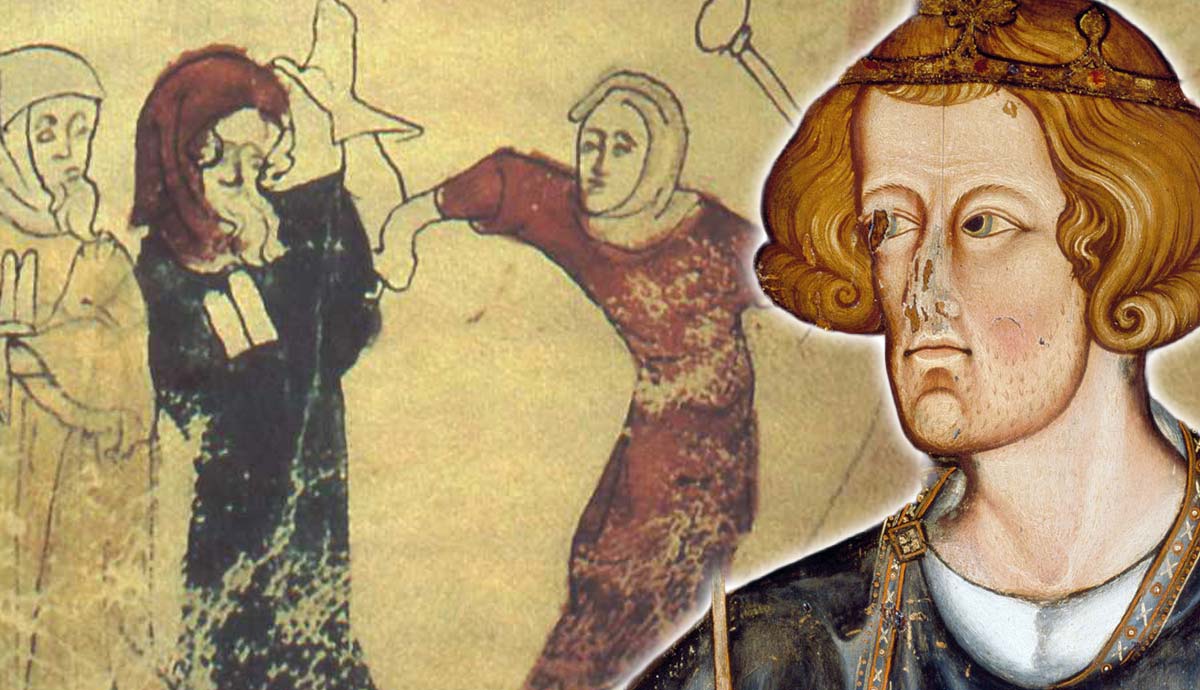
    On July 18, 1290, King Edward I of England issued the Edict of Expulsion, ordering all the Jews to leave the territories of the Kingdom by November 1. The decision was the result of decades-long restrictions on Jewish communities, including high taxation and accusations of usury and ritual crimes. The edict represented the culmination of a gradually increasing antisemitism in Europe. It was also the first recorded instance of a European country banning Jews from their socio-political lives.Jews in Medieval England Before the Edict of ExpulsionIllustration from the margin of the manuscript The Rochester Chronicle, illustrating the expulsion of the Jews from England, by the monk Edmund of Haddenham, 1355. Source: The History of LondonJews first established communities in England during the reign of William the Conqueror in 1066. King William invited Jews residing in Rouen, a city in northern France, to relocate to England. According to contemporary historical accounts, one of the leading reasons for such an invitation was King Williams financial considerations.During that time, taxes and payments to the throne were made through services or goods rather than actual money. King William sought to change this system. To successfully implement his plan, he began searching for skilled merchants and moneylenders worldwide. The Jewish community of Rouen accepted the offer and relocated to England, where they initially prospered in centers such as Norwich and Lincoln.During his reign, King William also introduced the feudal system in England, intending to consolidate his power as the countrys new monarch. Feudalism introduced the hierarchical structure of land ownership. All land was placed under the control of King William, who redistributed it to his loyal nobles in exchange for their political support and military service. At the bottom of the hierarchy were serfs, or peasants who lived and worked on the land and provided lords with produce and services.The Martyrdom of Simon of Trent, by Pierre Wolgmuth, 1493. Source: MeisterdruckeMerchants were granted a special status within the system. Under the Laws of Edward the Confessorand the later Charter of Liberties issued under King Richard I and King JohnJews enjoyed a similar position. Indeed, these documents outlined Jews right to freely and honourably live in England and enjoy the same liberties and customs for as long as they served the king in charge.In particular, the monarchs declared Jews under their direct control instead of being obliged to the lords.Over time, Jews acquired a particularly strong stance in English society. Since the Church of England forbade lending money for profit, Jews filled in the gap, taking advantage of their unique status. Canon law did not apply to Jews, andJudaism permitted loans with interestbetween Jews and non-Jews.Establishing Jews as the kingdoms key money lenders was also influenced by the fact that the Christian guild was under the control of several major professions at that time, including arts and crafts. As a result, many Jews found themselves prohibited from practicing them. Jews could not own land either, and thus were limited in agricultural activities. As a result, moneylending became the only reliable source of income for Jewish communities, though under the control of the throne.Jewish Communities During the Reign of King Henry III (1207-1272)Latin deed with Hebrew quitclaim (attached to seal) releasing a piece of land to William le Briel, by Jacob ben Aaron, England, 1239. Source: Asian and African Studies Blog/The British Library, LondonDuring King Henry IIIs reign (1207-1272), Jews were successfully used by the throne to introduce indirect taxes without needing consent from the parliament. The king taxed Jews, while moneylender Jews demanded payment from their debtors.The monarch could seize a portion of these earnings as he pleased. In this way, the Jewish communities acted as a monetary filter. They managed loans and interest, while the king benefited by using these profits to fund his treasury. If the benefit could not be secured, the king could detain Jews or seize their properties. However, the Jewish exchequer, or the kings department dealing with the matter, was often inefficient. As a result, it was hard to collect reliable information on moneylending activities.Between 1227 and 1259, King Henry III taxed Jews about 250,000. Historian Cecil Roth remarks, The King [Henry III] was like a spendthrift with a checkbook, drawing one amount after another in utter indifference to the dwindling of his resources.Despite their special status, Jews experienced segregation and oppression. During the reign of King Henry III, England became the first European country to require Jews to wear identifying badges. The yellow badges segregated Jews from the broader Christian population.The Rise of Antisemitism in EnglandDukes Place Synagogue, by Augustus Pugin and Thomas Rowlandson, 1809. Source: British Jews in World War IOver time, Jews acquired a reputation as moneylenders in English society. The negative association between Judaism and moneylending was further instilled by the Church of England, which viewed the activity as sinful and in contradiction with Christian beliefs. The general public also grew increasingly unsympathetic towards Jews, while the Church continued to foster resentment towards them by declaring them enemies of Christianity.As a result, various harmful folklore tales emerged. One of the most well-known was the so-called blood libel. According to the myth, Jews collected the blood of young Christians to practice religious rituals, such as making matzah, an unleavened flatbread.These prejudices against Jews further fueled antisemitism, sparking public unrest and violence.King Edward I & the Statute of the JewryMedieval manuscript, by Gilles Li Muisis, c. 1350. Source: World HistoryAntisemitism in England intensified when King Edward I (1239-1307) returned to England in 1274 from the Ninth Crusade. Along with the wider antisemitic environment in England, Edward also felt personal resentment towards the Jewish communities. Historical sources indicatethat Edward treated Jews unsympathetically as a devoted Christian. However, despite denouncing moneylending and declaring it to be in contradiction with Christian values, he still continued to heavily tax Jews to acquire profit. This suggests that Edwards actions were driven more by political and economic motives than by genuine religious piety.In 1275, Edward introduced the Statute of the Jewry, a set of new restrictions severely impacting the Jewish communities lives in England. In the statute, Edward dictated: From henceforth no Jew shall lend anything at usury, either upon land, or upon rent, or upon other things.The statute further attacked the Jews, proclaiming that each one after he should be twelve years old, pay three pence yearly at Easter of tax to the king of whose bondman he is.Edward also ordered to prohibit Jews from practicing usury. The new restrictions undermined and weakened Jewish communities as their role as a leading moneylender was weakened.Another contributing factor to the Jewish communitys economic marginalization was the opening of Englands borders to foreign trade in the 13thcentury.Moneylenders from other countries, mainly from Lombardy, Italy, started to fill in the gaps left by the Statute of the Jewry. Italian moneylenders offered loans with a grace perioda more flexible approach and a beneficial alternative for English debtors.Satirical illustration of the Norwich Jewish community in the 13th century. Source: The National Archives, LondonAdditionally, in 1283, King Edward I introduced the Statute of Merchants, favoring foreign merchants. The document declared that the local mayors were entitled to help foreign moneylenders collect their payments. The Statute of Merchants further strengthened foreign merchants economic position in England but marginalized the role of Jews as one of the key financial drivers of English society.By the second half of the 1280s, Edward I faced significant financial challenges due to his ongoing conflict with France over the Duchy of Gascony. This wealthy southwestern French region was under English control but subject to French suzerainty. The dispute required substantial funding to support military campaigns. To secure the Parliaments grant of further taxation to fund his war efforts against France, Edward had to make sacrifices. The expulsion of the Jews was the price he agreed to pay.This decision marked a turning point for Jewish communities in England, resulting in their eventual expulsion from the territories of the kingdom.Accusations of Coin Clipping & Imposing the Edict of ExpulsionExtract of the Statute of Jewry, c. 1275. Source: The National Archives, LondonAs the position of Jewish communities in the Kingdom of England was severely weakened and the wider public grew increasingly unsympathetic, accusations of coin clipping (the practice of shaving precious metal from coins) were leveled against Jews. Even though these accusations were not officially proven, they served as a prerequisite for the king to arrest or execute Jews, culminating in Edward Is decision to expel all the Jews from England.On July 18, 1290, King Edward I issued the Edict of Expulsion. The king named the Jews disobedience to the Statute of Jewry as the official reason for declaring the expulsion. The decision was not opposed; on the contrary, the wider public welcomed it.According to the edict, Jews would be expelled from the Kingdom of England until November 1, or All Saints Day. The expulsion appeared relatively easy to execute because the Jewish community in England comprised about 3,000 people, less than 1% of the population.King Edward I allowed Jews to take money and personal belongings. However, he seized Jewish-owned homes, land, synagogues, cemeteries, and other buildings, which were later sold for the thrones profit. Jews found new homes in different parts of the world. Jewish refugees settled mainly in France, Italy, Spain, and Germany. Records of Jews relocating as far as Cairo, Egypt, were also found.King Edward received a tax of 116,000 from the British parliament in exchange for the Edict of Expulsion.Legacy of the Edict of Expulsion1655 Petitions sent to Oliver Cromwell by Rabbi Menasseh ben Israel to give us liberty in his land, where we may similarly pray to the highest God for his prosperity. Source: British Jews in World War IThough the edict is regarded as the culmination of a century-long growing antisemitism in the Kingdom of England, at the time, it helped King Edward I to portray himself as the protector of Christians against Jews, acquiring praise and recognition for these efforts.In an essay published In Explanation of the Exodus (1891), writer Leonard GH notes:The matter is popularly explained on the score of religious bigotry: the people, it is said, are ignorant fanatics, led on by a less ignorant but more fanatical clergy, and the King shares in the fanaticism of his people.The Edict of Expulsion would remain in force for more than 300 years. It was officially overturned in 1665 when Oliver Cromwell, an English statesman and prominent politician, informally permitted the resettlement of the Jews in England.
    0 Комментарии 0 Поделились 18 Просмотры
  • WWW.THECOLLECTOR.COM
    Katana vs. Saber: A Closer Look at Two Iconic Blades
    Although the longsword and katana are often compared to one another in hypothetical debates about which sword is better, some commentators point out that the longsword may not be the most apt weapon to compare to the katana because it is too different mechanically. How true that is lies outside the scope of this piece; instead, were going to compare the katana to similar cutting blades of various traditions, collectively called sabers.A caveat: we arent attempting to decide which sword is inherently better. Every weapon created is intended for use in its specific context. Where one sword might excel, another may fall short, and vice versa. This is simply an analysis of the katana as it compares to the saber.Katana OverviewKatana, c. 1500. Source: Wikimedia CommonsThe katana has existed in one form or another since the late 13th century and was in military use until World War II. It is a refinement of earlier swords such as the tachi. It is 36 inches long, and roughly 28 inches of that is the blade.The weapon has a gentle curvature that lends itself well to drawing and cutting, and once out, it can be used in one or two hands. However, most ryuha (Japanese fencing styles) teach the use of both hands for most situations; the extra length of the hilt grants extra leverage. One aspect that singles out the katana is its distinctive hilt: it is constructed of wood and made to hold the tang of the blade with friction and retaining pins. Atop the wooden core of the hilt, a fishskin wrapping and a flat cotton or silk wrapping make the katana easy to grip, both from the contours of the wrap and the materials absorbency.The handguard, or tsuba, is an iron or brass disc or square that offers only slight protection for the hands, mainly being used to keep the swordsman from sliding his own hand up onto the blade inadvertently. However, the comparative lack of protection gave the ability to quickly grasp the hilt and be ready for action.Although it only weighs a kilogram on average, the lack of a pommel and the relatively thick blade make the katana a slightly tip-heavy sword. Its blade profile is larger than the saber, with the wedge-like curved structure making it suited for fast, powerful blows driven by hip rotation.Saber OverviewBritish military saber, 1796. Source: Wikimedia CommonsThe saber, a single-edged, one-handed sword, was originally the chief close-combat weapon of the various nomadic tribes of 5th-century Eurasia, such as the Avars, Magyars, Huns, and others. These tribes fought mostly from horseback. Cutting downward from such a height advantage and the momentum from a galloping horse with a curved blade like the saber is devastating to the victim. Different variants of the saber had their own curvature. Through the centuries, the saber became the adopted weapon for cavalry and infantry officers, eventually becoming the close-quarters sidearm until swords were phased out of military action altogether because of the bayonet.Unlike the katana, it is not possible to use the saber in two hands because there is not enough room on the hilt. Also, many saber hilts have a knuckle bow or similar guard that wraps around the hand, so it could be used as a sort of brass knucklestyle implement. The saber weighs about the same as the katana, with some variation. Both the distal and profile cross-sections are thinner, creating a nimble sword that can be used to make cuts from the wrist as well as the elbow.How Were They Wielded?Taiheiki Eiyu-den, by Utagawa Kuniyoshi, 1849. Source: Japanese PrintsSchools of Japanese fencing teach that the katana be held with the smallest and ring fingers gripping the hilt, a moderate grip with the middle finger, and the index finger and thumb barely touching. Cuts mostly receive their power through a step that drives hip and torso movement. The arms and hands naturally follow. The most common targets are the crown of the head, throat, collarbones, torso, wrists, and the insides of the thighs.The saber tended to be wielded with more emphasis on motions driven from the elbow and wrist. Cuts occurred along diagonal and horizontal lines, with wrist rotations called moulinets aiding in transition from one angle to another. The left hand often rested on the hip to act as an aid in supporting the swordsmans upright posture.What Societal Role Did These Swords Have?American Civil War cavalry officer at the Battle of Hanover. Source: Gettysburg DailyTo fully compare the katana and the saber, it is also important to consider their social context. The katana was, in addition to being a battlefield backup weapon, the everyday carry weapon for samurai. After the Great Sword Hunt of 1588, ordered by Toyotomi Hideyoshi, only samurai were legally permitted to own a katana or any other weapons, as a means of quelling peasant unrest. Samurai wore it and the wakizashi as a pair called daisho, which served as a samurais signifier of social status. Even if they were not master swordsmen, they were expected to have at least a basic skill in handling the weapon. Numerous schools of fencing developed in the Sengoku and Edo periods.The saber was also a military sidearm worn by the officer class in the military, but unlike the katana, there were fewer legal restrictions on its ownership. Of course, Japan is a single country, while various European countries over the medieval, Renaissance, and Early Modern periods used them to various degrees. That being said, swords were far too expensive to afford for most people and had little practical purpose outside warfare. Wealthy civilians in many European countries in the 17th through 19th centuries would instead use a smallsword or a pistol for dueling or self-defense.Did Katana and Saber Designs Draw From One Another?Kyu-gunto (bottom) and shin-gunto (top) on a sword rack. Source: Wikimedia CommonsFor most of its history, Japan had little to no contact with the various European nations except for Portugal and the Netherlands. When Commodore Matthew Perry landed in Tokyo Harbor in 1854, Japan was forced for the first time in over two centuries to open its ports to the outside world. The exposure to modernized technology drove the Japanese to aggressively pursue a program of modernization and emulation of the Western world. The samurai class was abolished and prohibited from wearing swords.As Japan developed a nationalized military, they equipped their officers with sabers at first; then merged the design elements with traditional katana. The resulting sword was called the kyu-gunto. It had a closed handguard and shorter grip, as well as a shorter blade. Kyu-gunto and other military swords post-Meiji were made on an industrial scale for equipping officers, gradually replaced by shin-gunto, which more closely resembled a traditional katana. Some officers who came from samurai families would bring their family katana into battle.There is little to no evidence of the katanas design influencing Western swords on a widespread scale, although individual swordsmiths may have incorporated aspects they found appealing.
    0 Комментарии 0 Поделились 18 Просмотры
  • WWW.THECOLLECTOR.COM
    7 Key Facts About the Life and Work of US President Jimmy Carter
    Jimmy Carter grew up on his familys peanut farm. After serving in the US Navy, he returned to Georgia and entered politics, eventually moving from state senator to governor before becoming the 39th president of the United States. During his time in office, Carter championed human rights, earning respect on the world stage. In the years after his presidency, his humanitarian work cemented his legacy. Here are seven facts about this US president.1. He Grew Up on a Peanut FarmJimmy Carter Boyhood Home, Old Plains Highway, Plains, Sumter County, GA. Source: Library of CongressJames Carter Jr. was born in 1924, the eldest child of James Carter Sr. and Bessie Carter. Delivered at the Wiseman Sanitarium where his mother was a nurse, Carter would become the first United States President born in a hospital. Jimmy, as he preferred to be called, grew up on his family peanut farm in Plains, Georgia. He quickly learned the hard work needed to keep a farm running. Jimmy spent his days tending to the animals and picking peanuts.Life on the farm wasnt easy, but neighbors often helped one another, creating a tight-knit community where people shared what they had. This communal effort would drive Carters humanitarian viewpoint later in life. Even at a young age, Carter noticed the racial divide in his town, which would influence his approach to his career.While money was scarce as Carter grew up during the height of the Great Depression, they made the most of what they had, teaching Carter to appreciate the basics and helping those in need. When he eventually left Plains to pursue higher education, he carried these early lessons with him. They shaped how he viewed public service, laying the groundwork for the leadership style which he became known for.2. He Graduated From the U.S. Naval AcademyGraduation of Jimmy Carter from U.S. Naval Academy, Annapolis, Maryland 1946. Source: Jimmy Carter Library and MuseumCarter attended Plains High School from 1937 to 1941. Following in his fathers footsteps, a veteran of the First World War, Carter set his sights on military service via an education at the United States Naval Academy in Annapolis Maryland. In 1943, he entered an environment worlds apart from the rural farm he was used to. Days at the Academy started before dawn, packed with drills, academic coursework, and strict discipline.Carter studied engineering and navigation, eager to master the skills needed to serve on a submarine. Though the curriculum was tough, he found some time to write letters home, staying close to his roots in Plains. Classmates soon recognized him as down-to-earth, someone who was serious about his studies but also happy to lend a helping hand.In 1946, he graduated from the academy, married his lifelong spouse Rosalynn, and headed into active duty. Serving on submarines forced him to rely on team members in high-pressure situations, leaving no room for ego. Carter later credited this experience with teaching him the importance of cooperation and quick thinking.3. He Served as Governor of Georgia Before Becoming PresidentJimmy Carter in 1971. Source: Wikimedia CommonsFollowing his naval career in 1953, Carter returned to Plains taking over as head of his family peanut farm. However, local issues and a desire to see meaningful change in Georgia pulled him toward politics. First, he served in the Georgia State Senate, learning the basics of legislation, budgeting, and how to address community needs. In 1970, Carter took a bigger leap, running for governor on a platform that promised integrity, modernization, and racial reconciliation in the waning years of the Civil Rights Movement.Once he won, he pushed for reforms in education, government transparency, and civil rightsbold moves in a state that still grappled with the aftermath of segregation. Carters time as governor revealed both his willingness to tackle tough issues and his practical solutions to not-so-practical problems. He also traveled across Georgia, meeting rural families, small business owners, and educators, refining his sense of what ordinary people need from their leaders.By the end of his term, he had gained valuable experience that set the stage for his next major step. Running for president would prove to be difficult, but Carter believed he could bring honest government to the federal level.4. He Was the 39th President of the United StatesJimmy Carter Inauguration 1977. Source: The National ArchivesIn the mid-1970s, America was exiting an era plagued with scandal (most notably the Watergate Scandal) and Jimmy Carter entered the presidential race promising a fresh start. Coming from a small town with a background in farming and state politics, he presented himself as an honest alternative to business as usual in Washington. Narrowly defeating incumbent Gerald Ford in 1976, Carter took office as the 39th president in January 1977.Jimmy Carters official Presidential portrait 1978. Source: The National ArchivesMuch like his policies as Governor of Georgia, he highlighted human rights, environmental protection, and energy conservation as key priorities. Early initiatives, like creating the Department of Energy, showed he was serious about addressing the energy crisis. To showcase his dedication to this initiative, Carter had solar energy panels installed on the roof of the White House.However, major economic troubles, like high inflation, made it tough for many Americans to feel the impact of his reforms. Even so, he made strides in foreign policy, normalizing relations with China and laying the groundwork for arms reduction. Carter left office after one term, but his focus on fairness, decency, and diplomatic solutions left a mark that would influence politics long after his presidency ended.5. He Brokered the Historic Camp David AccordsMenachem Begin, Jimmy Carter, and Anwar Sadat in Camp David, 1978. Source: The National ArchivesIn 1978, President Carter took on one of the toughest foreign policy challenges of his administration: navigating a peace agreement between Egypt and Israel. Tensions in the Middle East had flared for years, so Carter invited Egyptian President Anwar Sadat and Israeli Prime Minister Menachem Begin to Camp David, a presidential retreat in Maryland. For nearly two weeks, Carter moved between both leaders, ironing out disagreements and pushing each side to find common ground. The negotiations did not always look as though they would be successful.Finally, the parties reached an agreement, known as the Camp David Accords, which laid the groundwork for a lasting peace treaty between Egypt and Israel. While it didnt solve every regional conflict, it was a huge step forward at the time, bringing hope to an area that had been rising in tension over the last few decades. The success of the Camp David Accords showed Carters dedication to peaceful negotiation and his belief that issues could be tackled through dialogue and a willingness to compromise.6. He Faced Major Economic ChallengesJimmy and Rosalyn Carter during an interview with Barbara Walters, 1978. Source: Wikimedia CommonsAlthough Carter entered the White House with a focus on human rights and energy reform, he soon found himself dealing with serious economic challenges. By the late 1970s, inflation was climbing rapidly. On top of that, an international oil crisis hit, creating long lines at gas stations and leaving Americans sometimes stranded waiting in line for fuel.Carter tried several approaches to manage these issues, including encouraging conservation and investing in alternative energy sources. He even famously appeared on television wearing a sweater, asking citizens to turn down their thermostats to save energy. Despite these efforts, the economy remained shaky, and many voters became impatient with the slow pace of recovery. High interest rates also made it tough for businesses to expand and for families to buy homes.These economic pressures overshadowed many of Carters achievements. While the economy did improve, it was not soon enough and Carter lost his reelection bid based on the economic issues that plagued his presidency.7. He Dedicated His Post-Presidency Years to Humanitarian WorkFormer President Jimmy Carter holds the Nobel Peace Prize following the ceremony at Oslo City Hall, Dec. 10, 2002. Source: Wikimedia CommonsAfter leaving the White House in 1981, Carter founded the Carter Center, dedicating his time to global humanitarian issues. Traveling to remote villages in Africa and elsewhere, he worked on programs to combat diseases like Guinea worm and river blindness. Alongside this global outreach, he often picked up a hammer with Habitat for Humanity, helping build and restore homes for families in need. These hands-on efforts showed the world that Carters commitment to service went well beyond political office.In 2002, his dedication earned him the Nobel Peace Prize, reinforcing how serious he was about making possible, positive changes. Well into his 90s, Carter continued to speak out on issues ranging from healthcare to human rights, demonstrating that public service was a lifelong calling.
    0 Комментарии 0 Поделились 18 Просмотры
  • WWW.THECOLLECTOR.COM
    What Was Russian Serfdom?
    While the 18th century witnessed modernization and Westernization in the Russian Empire, it also saw the strengthening of the institution of serfdom, the legal ownership of people as a state-sanctioned labor force. Serfdom had roots in Russias social estate system which categorized people for service, social status, and tax purposes. This unfree system bound peasants to the land, a form of non-chattel slavery, although landowners could sell serfs with the land. The abolition of serfdom in 1861 freed around 10.5 million people and had a profound impact on the empires economy.The Rise of Serfdom in RussiaTsar Mikhail Fyodorovich at the Session of the Boyar Duma by Andrei Ryabushkin, 1893. Source: The Tretyakov Gallery via Wikimedia CommonsIn the Muscovite state, serfdom began as the practice of kholoptsvo, a form of slavery that continued until 1723. That year, Emperor Peter I abolished the practice. Under kholoptsvo, anyone, including nobles and knights, could fall into slavery. Being captured in combat, sold as punishment for a crime, or paying off a heavy debt were the most common ways that a person became enslaved. Many combat kholops worked in service as retainers or in private armies.A kholop had no rights. Little legal punishment existed for killing a kholop beyond a small fine. Someone who married a kholop became unfree and children born to kholop parents inherited their enslaved status. While kholops represented feudally dependent people according to the law, their reality placed them closer to the enslaved.Before the 1630s, anyone could own an enslaved person. By 1640, however, the law prohibited the upper class from being enslaved. By 1641, Russias legal code banned turning townspeople or peasants into enslaved people.Portrait of Peter I by J. M. Nattier, 1717. Source: Russian Virtual MuseumDespite its unfree condition, the practice of kholoptsvo did not create a social caste system. Instead, serfdom in Russia originated from a series of legal decrees. After the Time of Troubles, which saw the rise of the Romanov family as the ruling dynasty, loyalty to the state became paramount. Wars of expansion in the 16th and 17th centuries also meant that the government required a steady source of peasant conscripts.Under the 1649 Law Code issued by Tsar Alexei I, peasants had restrictions placed on them to prevent them from leaving the land. This decree effectively tied the peasant population to the land, enforced their dependence on landowners, and created a permanent labor force for the aristocracy. The 1649 Law Code enabled the nobility to solidify their control over the labor of the peasant population, a move which the government encouraged to secure the nobles loyalty to the state. Under Peter the Great, serfdom would compete with modernization in Russia.Bound to the Land: How Russian Serfdom Differed From American SlaveryThe Russian government legalized the hunt for fugitive serfs in 1649. Source: Dzen.ruUnlike slavery in the Atlantic world, serfdom was not race-based. In Russia, landowners and serfs had the same ethnicity, language, and religion, but belonged to vastly different social classes. Autocracy, Nationality, and Orthodoxy became the three pillars supporting serfdom in Russia.Officially, landowners could not sell serfs apart from the land as chattel property. But in the eighteenth century, selling or giving peasants as gifts became common. Even Peter I popularized this practice by awarding courtiers such as Prince Alexander Menshikov a gift of 100,000 captured serfs. During the reign of Catherine the Great, the nobility gained the right to punish their serfs by exiling them to labor camps in Siberia.In certain cases, serfs could pay high dues to a landowner to avoid forced labor obligations. These exorbitant dues often cost more than most peasants could afford, leaving them trapped in an unfree system. By the 19th century, landowners could buy and sell serfs, making their fate practically indistinguishable from enslaved people.Female barge haulers in the Nizhny Novgorod region, 1910; Barge Haulers on the Volga by Ilya Repin, 1873. Source: Dzen.ru and Russian Virtual MuseumAccording to 19th-century historian Vasily Klyuchevsky, the Russian village had turned into a North American plantation of Uncle Toms era. Subjected to extreme control, floggings, and other forms of abuse, denied the ability to leave or the right to marry without consent, forbidden to own property, and condemned to a term of military service which amounted to a life sentence, Russian serfdom paralleled American slavery in several important ways.Slavery in the Atlantic world was race-based, chattel slavery. Like generational serfdom, those born to enslaved parents remained enslaved. Russian serfs and enslaved people of color had practically no human rights protected by the legal system.Unlike enslaved people in the Americas, who spent their entire lives working for their masters, Russian serfs divided their time between working for the landowner and tending small plots of land provided for personal use. The state bound the peasants to the land to create a stable workforce and enforce immobility, since serfs often fled to border regions such as Ukraine (where they became Cossacks) before imperial edicts introduced harsh new fugitive serf decrees.A Stunted Economic SystemBy the River by William Carrick, 1860-1870; In the Fields by William Carrick, 1860. Source: The Russian State Museum and Exhibition CenterThose in power held onto the tradition of serfdom out of combined fear of loss of social control and economic impact.Instead, modern studies have shown that serfdom contributed to economic slowdown, agricultural stagnation, and delayed industrialization. In fact, the abolition of serfdom caused a sudden increase in agricultural activity, improved peasant living standards and reduced mortality rates, and spurred industrial development.For example, post-emancipation, peasant draftees into the Russian Army living in provinces characterized by barshchina, the harshest form of serfdom, grew 1.6 centimeters taller on average after 1861. Peasant death rates also decreased by 5.6 deaths per 1,000 people. These numbers demonstrate that the abolition of serfdom became the Russian Empires most significant humanitarian action.A System StrengthenedThe Bargain by Nikolai Nevrev, 1866. Source: Tretyakov GalleryUnder Peter the Great, who introduced both autocracy and Westernization reforms, the feudal system of serfdom in Russia was strengthened. Modernization required a large labor force and Peter I found his supply in the subjugation of the peasant population.The emperor used serfs as a labor force to drive his modernization efforts, including shipbuilding, mining, and erecting a new capital at St. Petersburg. During the 18th century, the government solidified control over the serf population by requiring them to work on projects for the state. This action kept serfs in bondage, prevented them from leaving the land, and ensured a steady stream of labor that benefitted the state economy. It also gave their owners incentives to hire them out for government projects in mines and factories.Due to Peters focus on revenue and military service, serfs found themselves burdened with heavy taxation and conscription, a term of service that often lasted for 25 years. Overall, strengthening the serfdom system ensured tighter state control, reduced legal protections for enserfed people, and ensured that a large percentage of the population, considered property in practical terms, remained bound to the land for generations.Resisting SerfdomPainting of a Fight with Pugachevs Troops by N. N. Karazin. Source: Library of CongressUnder the Romanovs, serfdom had both supporters and detractors.The Law Code of 1649 legalized the capture and return of fugitive serfs, giving landowners unlimited freedom to pursue runaway serfs even if they started working for a new landowner. Unsurprisingly, the rise of serfdom coincided with the rise of the Cossack movement in Ukraine. Serfdom did not exist among the Cossacks and the generally accepted meaning of the word Cossack meant free man. Between 1762 and 1772, about 160 peasant uprisings occurred throughout the Russian Empire.In 1773, frustration with the harsh realities of serfdom, high taxes, and grievances against the ruling class exploded into a rebellion. The rebellion began as a small uprising among the Yaik Cossacks. Led by Yemelyan Pugachev, an illiterate Don Cossack, the widespread revolt sparked extreme violence and threatened the existing social order. Pugachev claimed to be Peter III, the dead husband of Empress Catherine II. Pugachevs rebellion rejected serfdom and represented one of the largest and most significant uprisings in Russian history.Pugachevs Judgement by V. G. Perov, 1879. Source: The Russian Virtual MuseumBefore Catherines troops crushed the motley band of Cossacks and peasants, the rebels captured and burned the city of Kazan to the ground. These peasant soldiers made their priorities known: they wanted land and freedom. In July 1774, Pugachev issued a manifesto freeing the peasants from serfdom, taxes, and forced obligations. The manifesto also declared the right to land and liberty. The rest of the document encouraged violence against landowners and their families, which Pugachevs supporters did not hesitate to carry out.After imperial troops crushed the uprising, they executed thousands of peasants in the process. After Pugachevs defeat, capture, and execution in Moscow, the state took steps to destroy Cossack autonomy. In the aftermath, the crown deported the Zaporizhian Cossacks from Ukraine to the Caucasus. The government also tried to erase Pugachevs name from history by burning down his house, renaming his village, and changing the name of the river region where the uprising originated from the Yaik to the Ural.Despite defeat, Pugachevs uprising paved the way for future resistance and the final abolition of serfdom.Reform AttemptsA Peasant Leaving His Landlord on Yuriev Day by Sergei V. Ivanov, 1908. Source: Wikimedia CommonsFear of resistance to serfdom drove reform.Before his murder in 1801, Catherines son, Paul I, attempted to improve the serfs situation with a 1797 decree limiting the practice of barshchina, where a landowner took a significant portion of anything a serf produced. In this document, which curtailed the nobles privileges and power, the tsar advised landowners against making serfs work on Sundays and ensured that serfs had three days off to work for themselves. Pauls policies made him unpopular with the aristocracy and the army, which thrived on the system of serfdom.On December 26, 1825, a group of radical young officers led 3,000 soldiers in a protest that ignited the Decembrist Revolt against Pauls son, Nicholas I. These officers, exposed to liberal principles in Paris during the Napoleonic Wars, sought social and political change when they returned to Russia. They founded the Union of Salvation to facilitate the abolishment of serfdom, redistribute land among the peasants, and promote a constitutional monarchy even if it meant launching an armed revolt.Ultimately, the government stamped out the revolt and exiled the participants to Siberia. The states response to the Decembrist Revolt caused a sharp turn toward repression and away from the Westernization process started under Peter the Great.The Tsar LiberatorPortrait of Alexander II by Georg Bottman, 1856. Source: Russian Virtual MuseumDespite Nicholas Is response to the Decembrist Revolt, the emperor recognized that serfdom was unsustainable and initiated ten secret committee meetings between 1826 and 1855 to discuss the abolition of serfdom. He understood the peasants discontent and the landowners constant financial crisis. Two-thirds of most landowners estates at the time were pledged to the state, and without any backup income from industry, the landlords opposed any reforms that would reduce the income derived from their land and workforce.Before his death, Nicholas I urged his son Alexander II to give the peasants their own land. The tsar believed depriving the peasants of land would cause a national disaster. Unlike earlier tsars, who felt that the system of forced labor bolstered the crown, Nicholas called serfdom a gunpowder magazine underneath the state.In 1857, members of the Main Committee drafted a new reform plan. The committee remained divided between liberals and reactionaries who refused to approve it. In 1859, the committee amended the plan to satisfy the landowners while improving the peasants living conditions. Based on this new plan, the state would free the serfs without compensation, giving them freedom without landthe same disastrous scenario Nicholas I warned his son to avoid.Abolition of SerfdomAbolition of Serfdom, 1861. Source: Wikimedia CommosRussias defeat in the Crimean War (1853-1856) was an external shock that triggered a shift in the internal reform movement. After much debate, Tsar Alexander signed the Emancipation Manifesto on February 19, 1861.The reform occurred in two stages. First, the law granted freedom to all serfs. The second stage involved land reform. After the state bought small plots from the landowners, it loaned them out to the peasants at 5.6 percent annual interest. This charge reimbursed the state for recompensing the landlords, effectively making the peasants pay for their own freedom. Under the terms of the reform, former serfs could not sell their land for 49 years.On top of this, the landlords snapped up the best agricultural land, leaving the peasants with poor, infertile, or swampy earth. On the positive side, the peasants gained personal freedom, communal self-governance, and the ability to leave the land.The abolition of serfdom influenced nations outside of the Russian Empire. While the political contexts differed, a major European powers decision to eliminate a system of servitude offered a strong precedent for Abraham Lincolns road to emancipation in the United States.Shadows of SerfdomThe Zemstvo Dines by Grigory Myasoyedov, 1872. Source: Wikimedia CommonsDespite the tsars manifesto, peasant riots erupted nationwide. Most serfs did not believe that the abolition improved their livelihoods, since it left them still working for their landlord. They also had to pay the landowner for the land to which they were formerly bound. This financial burden amounted to more than the land cost, compensating landowners for the loss of labor and revenue. Many ex-serfs rebelled by not working. Peasant riots reached such a height that the army had to deploy regiments to nine regions to suppress the riots in March 1861 alone.The show of force failed.The next month, there were uprisings in 29 regions. By May, this number rose to 38. Time did not quell the uprisings, either. The year that Alexander II emancipated the serfs, 1,176 riots occurred across the empire. In 1863, the riots increased to over 2,000. Due to a lack of leadership and coordination, these revolts did not amount to a peasant war, but the army crushed over 700 of the riots anyway.Paying for their freedom through the land bankrupted the peasants, who often left the village commune to find work in cities. When peasants began to obtain private ownership under the 1906 Stolypin reforms, many workers found themselves pushed out of the way in the bid for land by those who remained behind.While the peasants overpaid for their freedom, this did not save the nobility from penury. By the start of the 20th century, almost all the minor nobility in rural Russia were broke. Their former serfs turned into an impoverished and angry working class agitating for revolution in the cities. The combination of strikes in cities and peasant uprisings in the countryside during the 1905 Revolution almost toppled the tsarist regime. The descendants of the Russian serfs would go on to prove fertile soil for Bolshevik propaganda on the eve of the October Revolution.Collectivization: A Return to Serfdom?A Collective Farm Festival by Arkady Plastov, 1937. Source: Distel ExhibitionsCommunist propaganda made collectivization look like a colorful celebration of rural Soviet life. The reality proved much different. Dekulakization, mass deportations, and famines characterized the enforced transition from private to state-owned property.Vladimir Lenin sowed the seeds of modern serfdom with his 1918 Hanging Order against the kulaks. Kulaks were any peasants considered well-off. Most simply owned a home, cultivated a plot of land, or employed farm workers.The system of state ownership of land, assets, and natural resources expanded into collectivization under Joseph Stalin. This time, people who resisted were separated from the land and sent to the GULAG, the Soviet system of prison work camps.Collectivization and dekulakization had a significant impact on Russias economy. These effects included state-run collective farms which eliminated private ownership of land, produce, and livestock and shifted production from a local economy to a state-owned focus.A dispossessed kulak family leaving their home in the village of Udachne in the Donetska oblast during the 1930s by the Central State Archives of Photo, Audio, and Video Documents of Ukraine. Soviet grain requisition in the Kuban. Photograph by U. Druzhelubov, Proletarskoe Foto, February 1933. Source: BBC and Wikimedia CommonsBoth policies also disrupted the economy in rural areas by banishing productive farmers from their land, causing a decrease in agricultural output. Unlike serfdom, which had its own human toll, collectivization and dekulakization had a massive impact on mortality rates. Over five million people died due to the systems implementation. These results stemmed from disrupted farming, forced grain requisition, mass violence against peasants, and the banishment of kulaks to work camps.Like serfdom, the Soviets policies represented a consolidation of power by concentrating economic forces in the Communist Partys hands and eliminating suspected enemies of the state. Unlike serfdom, which increased its hold over several centuries, the Soviets policies transformed the agricultural, social, political, and economic landscape within a decade.Long-term human and economic impacts included the 1932-1933 Holodomor famine in Ukraine. Famines across the Soviet Union between 1930 and 1933 claimed the lives of up to seven million people across Ukraine, Russia, and Kazakhstan.The Legacy of EmancipationLiberation of the Serfs by Boris Kustodiev, 1907. Source: Wikimedia CommonsThe abolition of serfdom had immense global influence. American abolitionists used Tsar Alexanders emancipation manifesto to push for legislative change and free four million enslaved people in the United States.In Russia, emancipation produced positive benefits across a broad cultural, demographic, and economic spectrum. Peasant land ownership increased individually and through the village commune after the Stolypin land reforms (1906-1917). Standards of living increased while mortality rates decreased. On the industrial front, the average province increased its industrial output by 60%, while those working in industry more than doubled after the abolition of serfdom.At the same time, the reforms limitations exposed the empires divide between reactionary conservatives and progressives who believed that the reform did not go far enough. It also exposed the struggle to find workable solutions to major institutional problems. This inability to navigate the land question set Russia on the road to revolution. While the rise of Soviet power paved the way for accelerated industrialization, the abolition of private land ownership, restrictions on peasant mobility, and a state-controlled labor force were indicative of a return to serfdom under the guise of communism.
    0 Комментарии 0 Поделились 18 Просмотры
  • WWW.THECOLLECTOR.COM
    Russian Revolution: Timeline of the 10 Days That Shook the World
    The Russian Revolution of 1917 (also known as the October Revolution) was one of the most transformative events in modern history. It fundamentally reshaped the global political landscape and inspired generations of revolutionaries. The events of 1917 were chronicled by American journalist John Reed in his book Ten Days That Shook The World. In this book, published in 1919, Reed documented the events that culminated in the Bolsheviks seizure of power and the establishment of the worlds first socialist state.The events that unfolded would shake the foundations of the world order and usher in a new era of history.Background to the Russian RevolutionWorkers in Petrograd during the February Revolution, 1917. Source: Public domain via Wikimedia CommonsBy 1917, Russia was truly a nation in turmoil. The brutal conflict of the First World War had destroyed much of its economy and military, leaving millions of soldiers and civilians disillusioned with the political situation. The head of state, Tsar Nicholas II, was widely regarded as bearing much of the blame and was discredited for his incompetence, corruption, and inability to properly address the needs of the Russian people.Earlier in the year, the February Revolution had succeeded in overthrowing the ruling Tsarist regime and replacing it with a Provisional Government. However, this chaotic coalition of powers struggled to govern properly and was unable to meet the popular demands for peace, land reform, and workers rights. Amid this social and political turmoil, the stage was set for the Bolsheviks, a Marxist political faction led by Vladimir Lenin, to seize the reins of power. With their slogan, Peace, Land, and Bread, they captured the feeling of the nation and quickly gained popularity in the lead-up to October 1917.Timeline of the Russian RevolutionDatePlace(s)EventOctober 1025, 1917PetrogradBolsheviks decide on an armed uprising, secure control of the Petrograd Soviet, form the Military Revolutionary Committee, and quietly seize key infrastructure while the Provisional Government underestimates the threat.October 2526, 1917Petrograd (Winter Palace, Smolny)Bolsheviks, operating from Smolny as HQ, surround and storm the Winter Palace; the Aurora fires the signal shot, ministers are arrested, and the Provisional Government effectively collapses.October 26, 1917Petrograd (Congress of Soviets)Lenin proclaims the transfer of power to the Soviets; the Congress issues the Decree on Peace and Decree on Land, boosting Bolshevik support while moderates and Mensheviks walk out in protest.October 2730, 1917Petrograd; Georgia; Tsarskoye SeloCouncil of Peoples Commissars is formed under Lenin; Bolsheviks start dismantling the old state, face local armed resistance and Menshevik opposition, and Kerenskys failed move with Don Cossacks at Tsarskoye Selo marks the Provisional Governments final defeat.October 31, 1917Petrograd; MoscowRed Guards drive Don Cossacks from the Petrograd area and capture Moscow after brutal street fighting and artillery bombardment, causing heavy civilian casualties and securing Bolshevik control of major cities.November 12, 1917Petrograd; Russia-wideThe new Bolshevik government confronts passive resistance from bourgeois classes and lack of trained officials; Lenin nationalizes banks and factories and sets up the Supreme Economic Council to manage the emerging socialist economy.November 12, 1917Russia (national); PetrogradIn Constituent Assembly elections, Socialist-Revolutionaries win a majority while Bolsheviks lag behind; when the Assembly meets on January 5, 1918 and rejects Bolshevik decrees, Lenin dissolves it by force, helping set the stage for the Russian Civil War.October 10-25: The Bolsheviks Set the StageThe gathered delegates at the Petrograd Soviet, 1917. Source: Public domain via Wikimedia CommonsOn October 10, the Central Committee of the Bolshevik Party made a historic decision; the gathered delegates voted in favor of staging an armed uprising. After several weeks of deliberation, Vladimir Lenin eventually persuaded the Bolshevik Committee to take drastic action, arguing that the Provisional Government was weak enough to make a revolutionary uprising possible. By October 16, the Bolsheviks had set their plans in motion. They had already secured full control over the Petrograd Soviet, and a council of workers and a newly formed Military Revolutionary Committee (MRC) were set up to oversee the uprising. Leon Trotsky played an important role in the initial stages, organizing Red Guard militias and rallying troops loyal to the Bolshevik cause.On October 20, the MRC mobilized workers and soldiers, stationing loyal Red Guards in strategic positions across Petrograd. During this first stage of the Revolution, key infrastructure was taken over by the Bolsheviks, including important bridges, telegraph offices, and railway stations. During these early stages, the Provisional Government failed to realize the growing threat and did little to prevent the Bolsheviks from further consolidating their power.The morning of October 24 saw the Provisional Government finally take action with security forces occupying the offices of the Bolshevik newspaper Rabochiy Put. However, the Red Guards soon managed to retake control of the paper, and the Bolshevik leadership called for an armed uprising in response. Violent clashes soon broke out across the city of Petrograd as Red Guards began taking strategically important areas such as the Central Telegraph Office. Prime Minister Kerensky ordered that the bridges crossing the river Neva be raised to impede the insurrection, but Bolshevik forces quickly circumvented this step.October 25-26: The Storming of the Winter PalaceThe storming of the Winter Palace in Petrograd, 1917. Source: Public domain via Wikimedia CommonsThroughout October 24 and by October 25, the Bolsheviks had come to control much of Petrograd. Red Guards, communist sailors, and rebellious soldiers had occupied major government facilities with little resistance. Smolny Palace, a former education institution, became the Bolshevik headquarters and the nerve center for the October Revolution. As the day unfolded, it became clear that the bulk of the Provisional Government was preparing to make its last stand at the Winter Palace, the former seat of Tsarist power in Russia.On the evening of October 25, Bolshevik forces launched their assault against the Winter Palace. The Russian Navy Battleship Aurora, which was manned by sailors loyal to the revolutionary cause, fired a blank shell, signaling the start of the attack. A contingent of Red Guards and revolutionary sailors quickly overwhelmed the Winter Palaces defenses. By early morning on October 26, the Winter Palace was completely under Bolshevik control, and the Provisional government had failed. The Bolsheviks arrested government ministers, but Prime Minister Alexander Kerensky managed to evade capture.October 26: The Birth of Soviet PowerBolshevik by Boris Kustodiev, 1920. Source: The Tretyakov Gallery via Wikimedia CommonsOn October 26, the Bolsheviks declared victory. At the Second All-Russian Congress of Soviets, Lenin officially announced that the transfer of power to the Soviets would begina move designed to legitimize Bolshevik rule in the eyes of the people. The Congress also announced two new decrees. First, the Decree on Peace called for an immediate end to Russias role in World War I. Second, the Decree on Land redistributed land owned by the aristocracy and the church to the peasantry of Russia.These two decrees gained the Bolsheviks considerable popular support, particularly among soldiers in the Russian army and peasants, who had long demanded these reforms from the Provisional Government. However, despite their growing popularity, the Bolsheviks faced opposition from the moderate socialists and Menshevik political factions who walked out of the Congress in protest.October 27-30: Consolidating ControlPrime Minister Kerensky and his staff, 1917. Source: Public domain via Wikimedia CommonsThe following day saw the Bolsheviks tighten their grip on power. On October 27, the new Soviet government, known as the Council of Peoples Commissars, was officially formed with Lenin as its chairman. The new Bolshevik government immediately began issuing decrees that aimed at dismantling the old state apparatus and laying the groundwork for a truly socialist state.However, despite their initial success, the Bolsheviks soon faced mounting opposition. Armed resistance instigated by forces loyal to the Provisional government erupted in some areas of Petrograd, and further dissent among moderate factions within the Congress of Soviets further highlighted the fragility of Lenins new government. Anti-Bolshevik propaganda posters were plastered across walls and fences in Petrograd, and Menshevik forces even managed to seize power in Georgia, declaring it an independent republic.A notable challenge to Bolshevik power came on October 30, when a group of Don Cossacks entered the town of Tsarskoye Selo, with Prime Minister Kerensky allegedly leading the battalion astride a white horse. Kerensky ordered the garrison to lay down their arms and surrender, but they refused. The soldiers fired on Kerensky, resulting in eight deaths. Historians have since described Kerenskys defeat at Tsarskoye Selo as the final failure that signaled the end of the Provisional government.October 31: The Battle for MoscowA damaged building near the Kremlin during the Moscow Bolshevik uprising, 1917. Source: Public domain via Wikimedia CommonsIn the days following Kerenskys defeat at Tsarskoye Selo, there followed a period of intense fighting as factions sought to overthrow the new Bolshevik government. The Red Guard continued to fight Don Cossacks in the North of Petrograd, with the Cossacks eventually fleeing the area by October 31. On this day, the Bolsheviks also gained control of Moscow after several weeks of bitter street-fighting. Within the city, artillery had been used, leading to an estimated 700 civilian casualties. After Moscow was taken by the Bolsheviks, there remained only a low level of anti-Bolshevik sentiment in the major cities of Russia. In the wake of their early victories at Tsarskoye Selo and in Moscow, Lenin declared that no resistance remained against the Bolsheviks in the whole of Russia.November 1-2: Early Challenges to Bolshevik GovernmentVladimir Lenin and other Bolshevik figures celebrating the revolution, 1918. Source: Public domain via Wikimedia CommonsAfter the initial armed uprisings against the revolution were crushed, the new Bolshevik government faced the considerable challenges of running a country that was largely opposed to communist principles. From the start, the bourgeois classes began to slowly organize a passive resistance to paralyze the Bolshevik regime. Moreover, Lenins new government was forced to run a country without a civil service or personnel trained in finance or administration.Lenin met these challenges with characteristic decisiveness. He nationalized the uncooperative banks within Petrograd, nationalized the owners of industrial factories, and created a Supreme Economic Council to manage them. The Bolsheviks issued one decree after another that aimed to consolidate the elements of the old state into the new communist system.November 12: The Bolsheviks Lose the Constituent Assembly ElectionsProtesters march through the main street of Petrograd, 1917. Source: Public domain via Wikimedia CommonsThe Constituent Assembly Elections were a democratic vote planned for after the fall of the Tsar. Intended to draft a new constitution to govern Russia, the Provisional Government had initially pledged to hold the elections, and the Bolshevik government, confident after seizing power in October, allowed the vote to take place. Hoping that the elections would further legitimize their authority, the Bolsheviks thought that Vladimir Lenin would secure a majority.However, the Bolsheviks suffered a humiliating defeat. The Socialist-Revolutionary Party won a majority, with almost 40 percent of the vote. In contrast, Lenin won less than 25 percent. The result of the Constituent Assembly Elections revealed the truth of Bolshevik power; they lacked overwhelming support among Russias rural population.The newly elected Constituent Assembly convened its first session on January 5, 1918, by openly disagreeing with the Bolshevik governments revolutionary decrees. Lenin responded by dissolving the parliament and dismissing the delegates at gunpoint. The dissolution of the democratically elected parliament outraged anti-Bolshevik forces across Russia and set the stage for what would become the Russian Civil War.
    0 Комментарии 0 Поделились 17 Просмотры
  • WWW.THEHISTORYBLOG.COM
    Footballer donates Norways most expensive book to home town
    Manchester City star footballer Erling Haaland and his father, retired footballer Alf-Inge Haaland, have donated the most expensive Norwegian book ever sold to their hometown of Time, southwestern Norway. It is the only known surviving copy of the 1594 edition of the Viking royal sagas by Icelander Snorri Sturluson, translated and printed for the first time in Norwegian at a time when there were no printing presses in Norway. It sold at auction in December for 1.3 million krone ($134,000), the highest price ever paid for a Norwegian book.The book was an abridged collection of Snorris sagas translated by magistrate, military commander and historian Mattis Strssn. It is the oldest printed history of Norway, published in Copenhagen by Jens Mortensen 25 years after Strssns death from a manuscript owned by historian Arild Huitfeldt.Haaland bought it with the intention of giving it to the Time Municipality so it could be placed on public display in the towns library and inspire people to read and develop connections to their shared cultural heritage. The municipality is working with the EH9 Foundation to create a secure permanent exhibit for the precious volume.I want the book always to lie open so that people can read about those who came from where I come from, from Bryne and Jren, Erling Braut Haaland says in a comment. Its easier to feel drawn to reading when you can recognise yourself in the people and places being written about.To help achieve the goal, the Haalands are sponsoring a reading competition with a pretty sweet prize.The competition, which will be organised by Time Municipality, will begin in the 2026/2027 school year. Pupils in middle school and lower secondary school in Time will then be invited to read as much as they can, and the classes that eventually win will be invited to Ullevaal Stadium for a match together with Erling Braut Haaland and the rest of the national team. []It is the schools in Time that will organise the reading competition, and it is no coincidence that this effort is starting here. Alfies parents and several others in the family have been teachers in the schools here, and both Erling and Alfie attended school in Time. Roots are important, Alfie Haaland says in a comment. Our roots are here in the municipality, and we also all have deep roots that can be found in the stories in Snorris royal sagas. We hope that both the book and the competition can bring joy and help form the roots of new generations in Time.
    0 Комментарии 0 Поделились 17 Просмотры