• Slay the Spire 2 Silent character guide - strategy, builds, and tier list
    Slay the Spire 2 Silent character guide - strategy, builds, and tier list How do you play The Silent in Slay the Spire 2? Originally from the Foglands, a region haunted by tormented souls, The Silent hunted down the cursed entity plaguing the land and now wears its skull as a trophy. After ascending the Spire and defeating The Heart, she brought a piece of it to her sisters, but her...
    0 Commenti 0 condivisioni 4 Views
  • Does Your Porch Need a Spring Refresh? Start with These 15 Amazon Decor Finds
    Boost Your Curb Appeal for Spring with These 15 Amazon Porch Decor Finds Best Overall After a long winter’s break, the weather is warming up, which means it’s finally time to start putting our porches to good use. But if yours is anything like mine, it’s probably in need of an update in order to make it feel bright and welcoming again. Since I moved into my home, I’ve learned that even small...
    0 Commenti 0 condivisioni 2 Views
  • WWW.THECOLLECTOR.COM
    The Life of Davy Crockett, an Iconic American Folk Hero
    Davy Crockett was a Tennessee frontiersman, soldier, and politician who became one of Americas most famous folk heroes. Known for his hunting skills, colorful storytelling, and eventual death at the Alamo, he lived a life that blurred the line between fact and legend.Backwoods BeginningsCrockett would grow up handling a rifle much like his favorite, Ol Betsy. Replicas of his favorite gun are still manufactured today. Source: Enfield Sports.The fifth of nine children, David Crockett was practically born with a rifle in his hand. His father, John, taught him to shoot by the time he was eight, and he eagerly accompanied his older brothers on hunting trips. At thirteen, he enrolled in school at his fathers insistence, but his academic tenure was short-lived. After only a few days, he got into a scrap with the school bully and, fearing vengeance, refused to return. He ended up running away from home and spent the next few years working as a woodsman in his native Tennessee. By sixteen, he returned home and worked for locals through his father.Davy Crocketts Marriages and Family LifeElizabeth Patton Crocketts grave occupies the smallest state park in Texas (Acton State Historic Site) and features a monument of Crocketts widow searching the horizon. Source: Visit Granbury Texas.In 1805, when he was nineteen years old, Davy took out a marriage license to marry Margaret Elder. However, his luck soured, and Margaret refused to follow through with the marriage.One year later, Davy successfully courted Mary Finley, who was known by the nickname Polly. They were married on August 14, 1806, and lived on a small rented farm. After failing to find success on the farm, they moved west. Davy was a better hunter than he was a farmer. Near the Alabama border, deer and bear were abundant, whose meat would provide food for his family, which now included two sons, and whose skins were worth cash on the market. Hegained fame for his hunting prowess,reportedly killing 105 bears in a singleseason.Elizabeth Patton and a New Start for Davy CrockettA portrait of Crockett and the Davy Crockett cabin. Source: Chickasaw TV.Davy and Mary later welcomed a daughter, increasing their brood of children to three. Not long after their daughter Margarets birth in 1815, Mary fell ill and died, a loss that Davy called the hardest trial which ever falls to the lot of man. Though he mourned his wife, Davy felt it necessary to find a mother for his three small children. He soon became interested in local widow Elizabeth Patton, who had two children of her own. They were married before the end of the summer of 1815.The War of 1812 & The Creek WarDavy Crockett by Lev Wells Prentice, mid-19th century. Source: Gilcrease Museum, Tulsa, Oklahoma.While the War of 1812 raged largely north of Crockett and on the water, some incidents would hit close to home. This included conflicts with the Creek tribe in the southeastern United States. In August 1813, members of the Creek tribe attacked Fort Mims, Alabama, and killed approximately 500 settlers. Crockett, along with most other young men in the region, was outraged and signed up to join the local militia immediately at the beckoning of General and future President Andrew Jackson.Crocketts service was undistinguished, though he served as a scout thanks to his skills. Crockett found that he had little stomach for warfare, though he demonstrated a willingness to follow orders. He participated in a revenge massacre on the Creek town of Tallushatchee, where more than two hundred Creek men, women, and children were killed.Crockett later reflected on the massacre with a sense of regret, saying that he and his brethren had shot the Native Americans like dogs. Crockett went home after his ninety-day enlistment, leaving before Jacksons victory at New Orleans. Though he would remain a militia lieutenant, Crocket would not bear arms in a military fashion again until 1836.Crockett the CongressmanDavy Crockett. Source: Texas Proud.After concluding his military service, Crockett decided to pursue a career in politics. He began his career in public service as a magistrate, then became a justice of the peace, and later served as a town official. Eventually, he ran for the state legislature, winning a seat in 1821 and 1823. A great deal of Crocketts political focus lay on the West, its development, and the protection of people who lived there.His good sense of humor and brutal honesty made Crockett very popular with his constituents and fellow politicians, and his legend began to grow. He never escaped his backwoods image, but it aided his popularity.Crockett would go on to run for the US House of Representatives as a supporter of Andrew Jackson, who was soon to become president. Eventually, his dedication to squatters rights and other aspects of western settlement led to a divide with Jacksons party, which contributed to his losing his congressional seat in 1831; however, he would be re-elected in the next congressional session.A Folk Hero EmergesA statue of Davy Crockett. Source: Summer Settings.Campaigning for political office helped Crockett to inadvertently create his own legend. Skilled in hunting and sharpshooting, his prowess was exaggerated in newspapers across the country. He was adept at spinning yarns, describing his adventures in epic detail to his fellow congressmen and constituents alike. He became an author, narrating his past adventures and writing political novellas.Writer James Kirke Paulding released an enormously successful play in April 1831 called The Lion of the West. Its protagonist and hero, Nimrod Wildfire, was very clearly a caricature of Crockett. Fans loved the play and its main character, which only boosted Crocketts reputation.A cover illustration from the Davy Crockett Almanac, 1837. Source: Encyclopedia Britannica.After losing his seat in 1835, Crockett became disenchanted with politics and was eager to explore again. He was reported as saying, Since you have chosen a man with a timber toe to replace me [his winning opponent had a peg leg], you may all go to Hell and I shall go to Texas.He decided his next move would be to explore Texas and, if he found the environment suitable, move his family there. In November, he set out with three friends to see what the vast Texas country had to offer. Texas was not yet a U.S. territory, but it was soon to become a disputed region when it declared independence from Mexico in 1836.Trouble in TexasThe Battle of the Alamo by William H. Brooker, 1897. Source: Encyclopedia Britannica.When Crockett arrived in Texas, he found the place in turmoil. He had no intention of getting involved in Texass struggle for independence, but soon found himself caught up in the fight. He signed an oath of allegiance to the Republic of Texas, fighting for independence from Mexico.Davy found that the political splits in Texas were very similar to the ones he had left at home, with supporters of Jacksonian politics opposing those who believed in the Whig philosophy, the party with which Crockett himself had been affiliated later in his political career. He was eager to re-align with his old party, which made it more enticing to join the fight. Crockett joined the army and led a small group called the Tennessee Mounted Volunteers to the Alamo, a former Franciscan mission-turned-fort in San Antonio. Letters home to his family reflect that Crockett did not expect a fight, but he would soon be proven wrong.The Battle of the AlamoThe Alamo. Source: Kera News.At the Alamo, Crockett joined Lieutenant Colonel William Travis, along with fabled mountain man-turned-military Colonel Jim Bowie, to create a trifecta of legendary leaders. Crockett was not the only one who did not expect the Mexican armys immediate arrival, so when news of General Antonio Lopez de Santa Annas impending attack came, the group of under 200 men inside the Alamo scurried to prepare for the onslaught.Though Crockett had limited war experience, due to his widely overblown legend, Travis assigned him to one of the toughest positions from which to defend the Alamo. Crockett took it in stride, even as enemy numbers grew into the thousands and promised Texas reinforcements failed to arrive. He was said to maintain a positive demeanor and encourage his fellow soldiers.After holding off the Mexicans for a remarkable 13 days, the Texans were finally overcome on March 6, 1836. Prisoners were shown no quarter, and though accounts of the specific events vary, Crockett was said to have met his end without complaining.Davy Crockett in Print and FilmIn stories, there was no limit to what Crockett could do. Source: Summer Setting.His death fighting for Texas independence would only add to the legend of Davy Crockett. Though he had passed on, his legend would spring forth with new life after his death. An unknown author began publishing annual Davy Crockett Almanacs, books that told stories about life in backwoods America from Crocketts point of view, with considerable artistic license. The main character was often bawdy, racist, and superhuman, fighting alligators, riding comets, and wrestling bears.These books were popular and cast him as a mythical figure, an American Hercules in a coonskin cap. While his popularity decreased somewhat after the Civil War, Crockett remained a popular character in boys adventure books and a fixture in early Hollywood.Disney helped to immortalize the legend of Davy Crockett. Source: Disney+.Television shows and movies made Davy Crockett not just a figment of the American imagination, but brought his character to life right before their eyes. Americans underwent a Crockett craze in the 1950s and 60s, with superstars John Wayne and Fess Parkerportraying Crockett on the big screen, and coonskin caps (although popular among frontiersmen, there isno definitive proof that Crockett ever wore one) in high demand.Fact, Fiction, and LegacyCrockett remains a popular character in childrens books and films. Source: Di Mano in Mano.Looking back on Crockett now, the American public grapples with distinguishing fact from fiction, as new information about the historical events in which Crockett was involved has come to light over the years. One particular example is the treatment of Native Americans by the United States government and army, an effort that, although Crockett was eventually disillusioned with, he was still a participant in.Fess Parker as Davy Crockett by John Colucci, 2021. Source: FoundMyselfDavy, Davy Crockett, king of the wild frontier echoes in the refrain of the theme for the Disney film starring Fess Parker, popular in the 1950s.These words perhaps best summarize how the world remembers Davy Crockett and his achievements. Although his story is more complex, Crockett left a legacy of intrigue and became an enduring American hero.

    0 Commenti 0 condivisioni 0 Views
  • WWW.THECOLLECTOR.COM
    The Asymmetrical But Strangely Effective Bamboo Longbow (Yumi Bow) of the Samurai
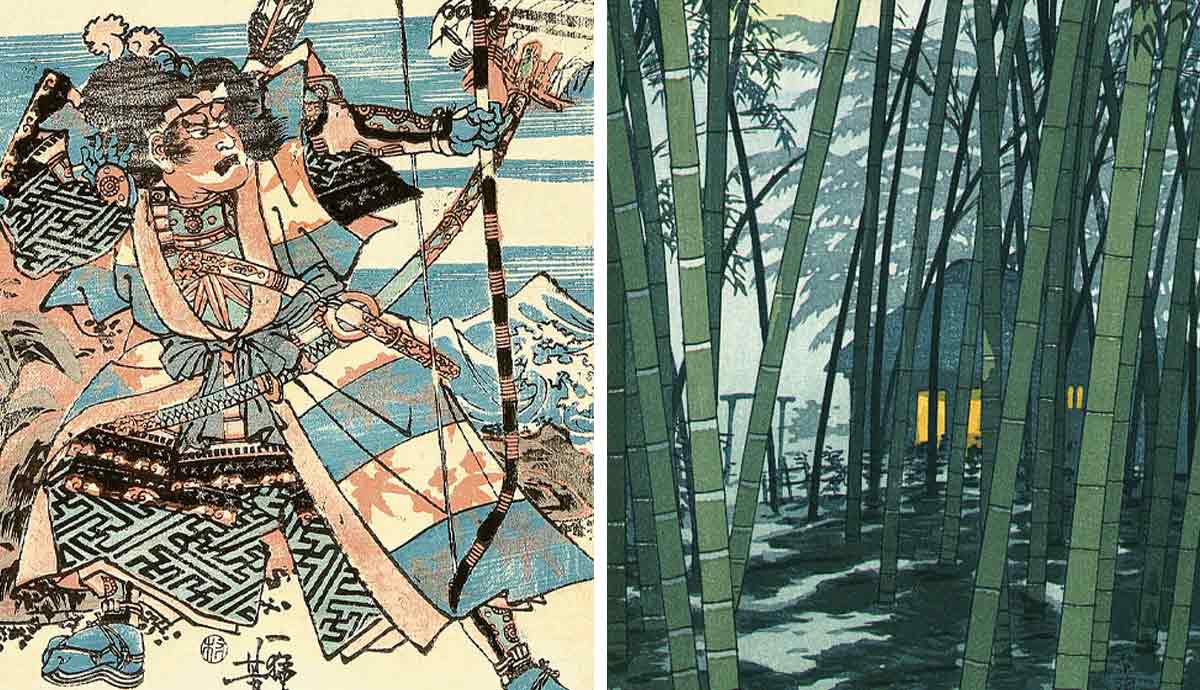
    Those familiar with samurai history will be familiar with the phrase kyuba-no-michi, most often translated as the way of horse and bow. Samurai from their very beginnings back in the Heian Period of Japanese history, ranging from 794-1185 AD, were mounted archers who used the tachi for close combat. The yumi, however, was an asymmetrical longbow that formed the mainstay of the samurai arsenal for hundreds of years, occupying the same level of prestige as the English longbow.It should also be noted that the yumi did not come into existence during the Heian Period, but instead much earlier, with mentions of it being made by visiting Chinese traders during the Three Kingdoms Period. Like all weapons, it had to evolve into the form we know today.What is the Yumi?A Good Time for Japanese Archery, by Totoya Hokkei, 1824. Source: Ukiyo-e.orgThe yumi is the traditional longbow used by the samurai throughout most of their existence, but really, it is the word used to refer to any bow. When we refer to the yumi today, were talking about the most advanced form of the weapon, the yohonhigo, with a bamboo laminate core, bamboo back and belly, and hardwood sides. Yumi come in two broad categories: daikyu, which is the extremely large bow that we associate with the term; and hankyu, or half bow, seen in the image above.The most obvious distinction of the yumi comes from its large size compared to similar bows: it could be over two meters (6.5 feet) long, likely much taller than the archer wielding it. The reason for the extra length was material constraints. Japan is poor in the natural resources that are used to make the more powerful composite bows used by, for instance, the Mongolian steppe archers. Wood and bamboo are what the Japanese had to work with mostly, and those materials are not as strong. To enable heavier draw weights that would be effective in warfare, they had to make the bows longer so that the recoil force would be distributed over a wider area, as well as greater draw lengths, which provided more acceleration to the arrow upon release.Why the Asymmetry?Archery and Horse, by Kobori Tomone, 1924. Source: Ukiyo-e.orgThe other visually striking element of the yumi is its unusual shape: where most bows have the grip situated at the center, the grip of the yumi is a third of the way up the bow, making the upper portion twice as long as the lower. One of the most commonly held theories maintains that the unusual grip location was meant to allow the archer to switch between firing to the right or the left more easily while mounted. However, the earliest yumi date to before horses were widely used in warfare. Also, the o-yoroi armor worn by Heian and early Kamakura-period samurai had extra protection on the left, indicating that they would fire primarily to the left side.Instead, the grip position is at a vibration node on the bow, meaning that the recoil causes little if any vibration in the users hand or arm. This helps to keep the archers aim steady. Also, the grip of the bow naturally aligns with the anatomy of the hand, wrist, and forearm, making it less tiring or stressful on the wrist to shoot for long periods like during a battle.Finally, the Japanese value asymmetry in their art and culture, and even though the shape of the bow is what it is for practical reasons, it became ingrained in aesthetic values, and many yumi are also seen and treated as works of art rather than just weapons.MaterialsBamboo in Summer, by Kasamatsu Shiro, 1954. Source: Ukiyo-e.orgThe yumi is made of bamboo, hardwood, and leather. The earliest yumi were self bows, which is the term used to describe bows made out of a single piece of material, which was wood. Most often, it was yew, waxwood, or maple. Later, bamboo became an integral part of the bow, often used as a laminated surface to impart more strength and flexibility to the wood core.Rattan strips and leather are also present: rattan windings around the yumi help to add even more strength and durability to the structure, while leather was most often used to make the nigiri, or grip. Rattan could also be used to denote the skill or rank of the archer who owned the bow.In modern times, yumi can be made from synthetic materials such as fiberglass, making them last longer, but they arent considered as aesthetically pleasing or as responsive.Crafting the BowA set of carpenters chisels used for woodworking. Source: Library of CongressThe bowyer first goes to collect madake bamboo that has been growing for at least five years; this allows it to grow enough to have the strength and flexibility required to make an acceptable yumi. Each stalk makes a single bow. The bowyer has to carefully select for uniform node length and straightness of the stalks. Winter is the best time to harvest, because there is less moisture in the bamboo.Once the bamboo is harvested, it is cut into four pieces lengthwise and allowed to dry for the next several months. Meanwhile, they select already-harvested bamboo that has undergone a smoking process that can last for over five years. The pieces get shaven down to tiny strips because no two pieces of bamboo are alike; there are no uniform cross-section measurements. Additional pieces of bamboo are cut and glued to the back and belly of the bow, and wood is glued to the sides. Then the shaping process begins.After wrapping the bow in overlapping crisscrossing knots, the bowyer inserts small wedges at each cross, hammering them into place and gradually bending the bow to take its final shape and letting it rest on a rack while the glue finishes drying. Once this is complete, the bowyer can put the string, which is made from hemp or silk, onto the bow. While the bottom of the bow has the string centered as would be expected, the top has the string slightly right of center.Arrows and ArrowheadsFujiwara no Hidesato, from the Thirty-six Ghosts series, by Tsukioka Yoshitoshi, 1890. Source: Ukiyo-e.orgThe arrows, known as ya, of the yumi are made of steam-straightened bamboo, cut to different dimensions depending on the intended use. They are on average a meter long (3.2 feet), making them larger than the arrows most archers are familiar with using, but this is because the yumi has a longer draw length and the arrow has to be stabilized against the bow.A variety of arrowheads, called yajiri, were made for specialized uses. The kaburi-ya, for example, was an arrowhead equipped with a whistle to frighten the enemy or call upon the favor of the kami. Karimata had a crescent-shaped head used for cutting ropes during naval warfare and was likely also used to hunt game. Meanwhile, watakusi were barbed arrows that would make gaping wounds, tearing off inside the body if the arrow was removed. Sankaku arrows were bodkin points designed to pierce armor. Fletching was traditionally made of the feathers of hawks, cranes, pheasants, or eagles, but if those were unavailable, they would use geese.Shooting TechniqueSamurai Archer, by Utagawa Yoshitoram, 1870. Source: Ukiyo-e.orgThe archery techniques for kyudo are tailored for the unique design of the bow, and as such are different from what you might be used to if you practice Western archery. The foot position is similar to the open position, with the leading foot pointed at the target and the trailing foot pointing outward. The arrow is nocked to rest on the outside of the bow, helping to reduce the so-called archers paradox. After pointing the arrow at the target, they raise their arms into the air while keeping the bow straight and drawing the arrow as they bring the bow down to eye level. Because of the larger size of the bow and thus greater draw length, the arms are fully extended, with the thumb of the right hand hooked over the string. This grip enables a smooth, quick release.Because the yumi has its string off-center, the recoil causes the bow to naturally twist in the wrist. When coupled with the loose grip used by kyudoka, the bows momentum causes it to spin all the way around so the arrow does not make too much contact with the bow, allowing it to fly in a straighter path, rather than having to curve around the bow and correct its path back to the target.Buying a YumiHeroes of the Battle of Yashima, by Toyohara Chikanobu, 1898. Source: Ukiyo-e.orgIf you want to learn kyudo and buy a yumi for yourself, it is important to get the proper measurements. To find your draw length, called yazuka, stand upright and hold your left arm parallel to the ground with your fingers extended. Measure from the tip of the middle finger to the center of your body. The length of the yumi should be roughly two and a third times greater than this measurement, and the arrows should be anywhere from 10 to 15 centimeters (4 to 6 inches) longer than the draw length. As you can see in the image above, the samurai on horseback is at full draw. If you go to an archery shop that sells yumi, have the seller take your measurements and help you select the bow that is the right size for your body.If you prefer to shop online, treat the purchase with the same caution you would anything else online; yumi can be expensive. Check the sellers reviews independently of the main site, if possible, and familiarize yourself with any warranties or return policies. For beginners or for those on a budget, it might be worth getting a synthetic yumi, but if you plan to join a kyudo or kyujutsu school, they may require you to own a traditionally-made bow.
    0 Commenti 0 condivisioni 0 Views
  • WWW.DUALSHOCKERS.COM
    10 Co-Op Games That Shaped Modern Gaming More Than Players Realized
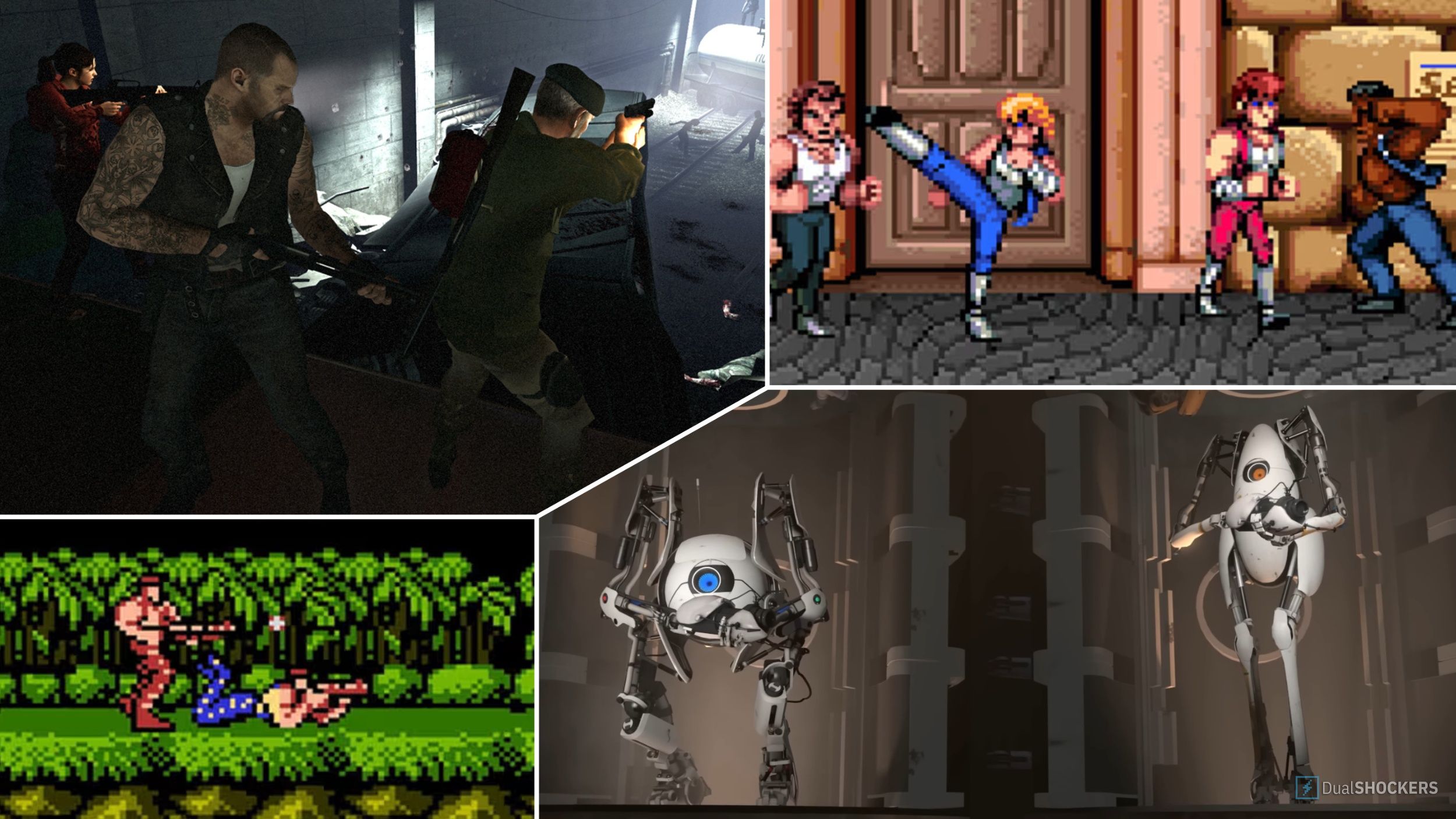
    From the moment Atari plugged in the first Pong cabinet, gaming has largely been considered a social activity. Thats part of whats great about this medium; it can be something you enjoy either by yourself or with friends, and in the case of the latter, it can be either competitive or cooperative. Even in the earliest days of arcade and home gaming, there were games meant to foster teamwork and coordination, and as games have become more advanced, co-op games have only become more elaborate.
    0 Commenti 0 condivisioni 0 Views
  • WWW.PCGAMESN.COM
    Slay the Spire 2 Silent character guide - strategy, builds, and tier list
    How do you play The Silent in Slay the Spire 2? Originally from the Foglands, a region haunted by tormented souls, The Silent hunted down the cursed entity plaguing the land and now wears its skull as a trophy. After ascending the Spire and defeating The Heart, she brought a piece of it to her sisters, but her trophy ended up poisoning her. The Silent heads back to the Spire upon its reopening, searching for a cure. The Silent brings her assassination talents back to the card game, and like the rest of the returning Slay the Spire 2 characters, she comes packing a refreshed arsenal of tools to murder her targets. If you plan on unlocking all the Ascension levels, the new Sly mechanic makes it easy to cheat out high-cost cards, giving you an easy run to quickly ascend the Spire.
    0 Commenti 0 condivisioni 0 Views
  • WWW.MASHED.COM
    An Etiquette Expert Detailed The Proper Way To Eat Cereal And It's Ridiculous
    We didn't think we needed an etiquette lesson on how to eat cereal, but in the social media age, we got one anyway. What the viral video depicted was priceless.
    0 Commenti 0 condivisioni 0 Views
  • 0 Commenti 0 condivisioni 0 Views
  • TECHCRUNCH.COM
    Travis Kalanick reportedly starting a new self-driving company backed by Uber
    Kalanick reportedly wants to be more aggressive in pursuing the technology than industry-leader Waymo.
    0 Commenti 0 condivisioni 0 Views
  • YUBNUB.NEWS
    ATL Host Jan Jekielek Launches New Book, Killed to Order, Exposing CCPs Organ Harvesting
    For more than 20 years, what has been done to counter the Chinese communist regimes industrial-scale practice of forced organ harvesting from living prisoners of conscience has remained limited and
    0 Commenti 0 condivisioni 0 Views