10 Iconic Last Words by Famous Historical Figures
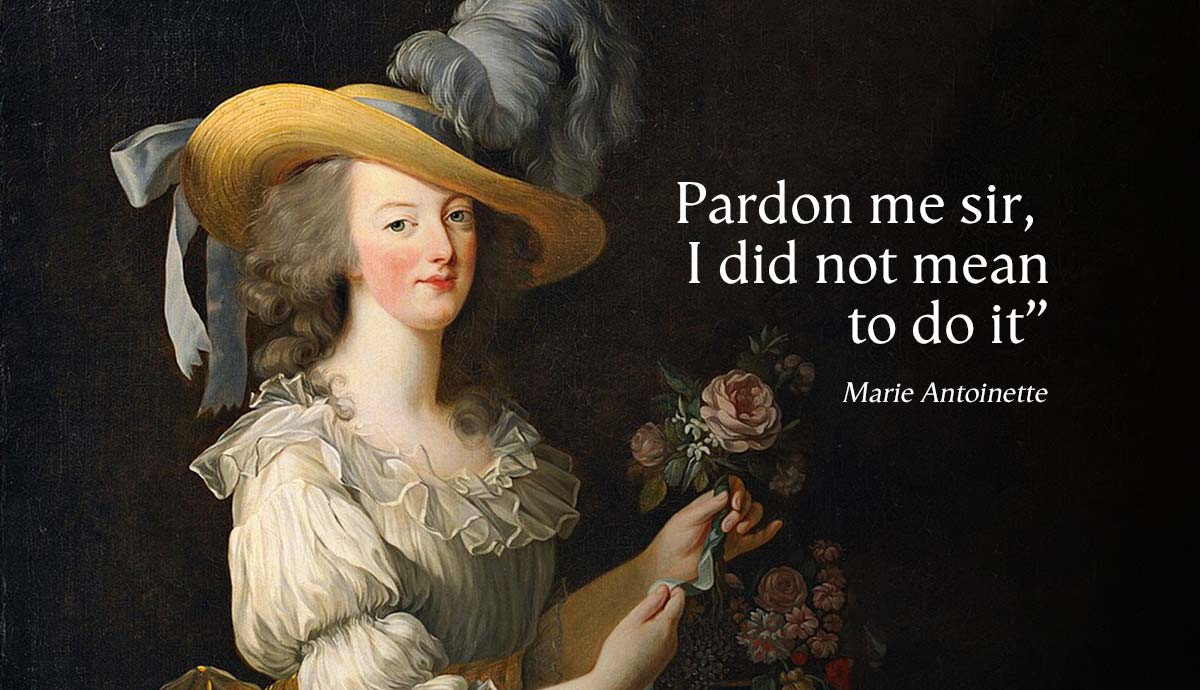
Everyone wants to know the famous last words of their heroes. Academics and amateurs alike are fascinated by the deathbed utterances of their favorite historical figures. What a person chooses to say with their final breath can reveal so much about their life, character, and even the nature of their death.Let us now take a moment to consider ten of historys most famous names, and what we can find out by hearing their final words. When, where, and how did they die? What emotions were they experiencing in their last moments of life?Words That Last CenturiesThe Death of Queen Elizabeth I, by Paul Delaroche, 1828. Source: Art WikiSince the very beginning of time, historians and chroniclers have been recording the last words of notable figures. For some reason, the last words a person speaks are very highly valued, perhaps even above the other interesting words they may have spoken at any other time during their life. A person may use their last words to impart some important information that was otherwise unknown, to confess a sin, to pray for comfort, to express fear or regret, or to pay tribute to loved ones, either living or deceased.Some parting quotes reveal fear and anxiety (Queen Elizabeth I offered all her possessions for one more moment of life). Some reveal confidence and contentment (Charles Darwin said, I am not the least afraid to die). Some are spoken in delirium (Robert Burns commanded, Dont let the awkward squad fire over my head). Some are clear and factual (John Lennon simply declared, Im shot). Some are whimsical (Karl Marx claimed that last words themselves were for fools who havent said enough). Some are romantic (T.S. Eliot was only able to say a single word, and he chose the name of his wife, Valerie).In this article, we will take ten figures from a wide range of eras and review their final messages. In chronological order, beginning with Archimedes (the Greek mathematician and physicist), and ending with Bing Crosby (the American all-around entertainer).In between we will come across Charlemagne (the first Holy Roman Emperor), Cardinal Wolsey (Archbishop of York and Lord Chancellor), Catherine Howard (fifth wife of King Henry VIII), Marie Antoinette (the wife of King Louis XVI of France), Napoleon Bonaparte (French emperor and military commander), Anna Pavlova (the Russian ballerina), Oscar Wilde (the Irish playwright), and finally Winston Churchill (the British wartime hero).1. ArchimedesArchimedes Thoughtful, by Domenico Fetti, 1620. Source: Wikimedia CommonsArchimedes is best remembered for being a Greek mathematician and physician, although he was also an inventor, an engineer, and an astronomer. He is considered, even in our modern world, as one of the greatest scientists of all time.Archimedes lived approximately between the years of 287 and 212 BCE. He was killed shortly after the siege of Syracuse by the Romans, which had ended in the successful conquering of the city. Marcus Claudius Marcellus, a Roman general, gave orders to his soldiers to find and retrieve Archimedes. However, despite the strict commands of their general, the soldiers killed Archimedes upon entering his household.It was just a few moments before his murder that Archimedes begged his intruders not to disrupt the circles he had supposedly just drawn in the sand. It was this plea that has gone down in history as his last. Noli turbare circulos meos! he exclaimed, Do not disturb my circles!It is thanks to the 1st-century Latin chronicler, Valerius Maximus, that we know the last words of Archimedes. The quote can tell us a lot about both the historical figure and the situation. So engrossed in his work was Archimedes that he did not even turn around to see who had entered his house, and his first concern was for the diagram he had drawn and studied rather than his own safety.Archimedes has long been associated with circles, and not just became of this renowned quote. The Archimedean circle famously bears his name. The circle now known as the Archimedean circle was first constructed in his own work, the Book of Lemmas, which consists of 15 propositions on circles.2. CharlemagneThe Coronation of Charlemagne, 1861 CE, by Friedrich Kaulbach, 19th century. Source: Wikimedia CommonsMany people are familiar with the name of Charlemagne. Although he was King of the Franks (768-814), King of the Lombards (774-814), and Emperor of the Carolingian Empire (800-814), he is now best remembered by the title of Holy Roman Emperor. Despite being labeled as the first Holy Roman Emperor, Charlemagne would not have used this exact title during his life.Despite Charlemagnes inclusion in this list, it is fair to say that both his death and his last words are rather unremarkable. Neither intrigue nor suspicion surrounded his final moments, and his final sentence was spoken in prayer and preparation rather than in fear or anxiety.Charlemagne became unwell in the autumn of 813. He was fortunate in that he knew he was dying, and therefore had time to prepare his soul with prayer, fasting, and study of the Bible. He suffered for many weeks and died on the morning of January 28, 814. The last words of Charlemagne were recorded by a man called Thegan of Trier. Thegan was a Catholic prelate and chronicler. His work is considered a principal source for the life of Charlemagnes son and successor, Louis the Pious.The Bust of Charlemagne is a reliquary from around 1350, which is said to contain the top part of Charlemagnes skull. Source: Wikimedia CommonsAccording to Thegan of Trier, Charlemagnes last words were, Into your hands, Lord, I commend my spirit. These words would have been memorized by Charlemagne through his study of the gospels. Although they may sound like an impromptu prayer, they are actually taken from the Gospel according to Saint Luke, Chapter 23: Jesus called out with a loud voice, Father, into your hands I commend my spirit. When he had said this, he breathed his last. This is just one of the seven statements made by Jesus Christ before his death on the cross.It is notable and even fitting that Charlemagne, the man considered the first of the Holy Roman Emperors, chose to quote Jesus Christ in his final moments. After speaking these words, he breathed his last, just as Jesus Christ had done eight centuries previously.When it comes to final words, Charlemagne was not the only historical figure to have selected Luke chapter 23, verse 46. Considering the nature of its appeal to God, it should not be surprising that it became something of a common choice of prayer. For example, seven centuries later, the words were used once again by an altogether different character. Anne Boleyn, the second wife of King Henry VIII, spent the last minutes before her execution repeatedly whispering, To Christ I commend my soul, Jesus receive my soul.3. Cardinal WolseyCardinal Wolsey, 1585-86. Source: Art UKThose with an interest in Tudor history are particularly lucky when it comes to the last words and final phrases of their favorite historical figures. This is because so many wordsmainly declarations and speeches before executionsseem to have been very reliably recorded. The closing utterances of many iconic, 16th-century characters have been diligently copied, treasured, and passed down through the generations. The likes of Anne Boleyn, Thomas Cromwell, Catherine Howard, King Henry VIII, and Elizabeth I are all renowned for this reason.Cardinal Wolsey is another such figure. It was early on a Tuesday morning, November 29, 1530, that Wolsey left this world. He died at Leicester Abbey, home to a community of Augustinian Monks, which was also known as the Abbey of Saint Mary in the Meadow. Wolsey had been residing at the abbey since the 26th, having been forced by his failing health to break his journey on the way from Sheffield to London. Wolseys rapid decline would not have been a surprise to him. Notably, on his unexpected arrival at the abbey, he had informed its inhabitants that he had come to leave his bones among them.At the time of his death, Cardinal Wolsey was surrounded by men of the Church. He was hosted by Richard Pexall, the Abbot of the Abbey, and was cared for by an abundance of servants and Churchmen who lived and worked around him. Most importantly of all, he had at his side his most loyal attendant. George Cavendish, Wolseys faithful servant, would remain with his employer until the very end and would eventually write and publish his famous biography entitled Thomas Wolsey, Late Cardinal, His Life and Death.The Dismissal of Cardinal Wolsey, by John Laslett Pott, 1874. Source: Art UKIt is solely thanks to the account of George Cavendish that we know anything of Cardinal Wolseys death, including how he spent his final moments and how he filled his final breath. To Cavendish, Wolsey quietly muttered the following sentences.Take note of my words, for when I am dead ye shall peradventure remember my words much better. Here, Wolsey anticipated that the world would one day be interested in the confession he was about to impart. He continued, I have often kneeled before him in his Privy Chamber in the space of an hour or two, to persuade him from his will and appetite, but I could never dissuade him. Here, Wolsey referred to the hours he had spent reasoning with King Henry VIII and petitioning for forgiveness. Be most careful about any idea you may put into the Kings head, for ye shall never pull it out again. This was an important piece of advice for anyone who dared venture near the throne.Finally, Cardinal Wolsey spoke the 24 words that would go down in history as his last. If I had served God as diligently as I have done the King, he would not have given me over in my grey hairs.Even in speaking these words, Cardinal Wolsey was said to have been calm, collected, and reconciled to death. At what would be a terrifying time for so many, Wolsey was unmoved and unafraid.Cardinal Wolsey at the Gate of Leicester Abbey, Charles West Cope, 1847. Source: Wikimedia CommonsUnfortunately, Cardinal Wolseys last sentence was one of sorrow and regret. He expressed his guilt over neglecting his Church, his faith, and his God, and doubted the time he had spent pleasing the King and thus accumulating worldly goods. He also speculated that he would not have succumbed to such a sorry state had he been a better servant of the heavenly God rather than the human King of England.After giving his confession and delivering his final words, the clock struck eight, and Cardinal Wolsey breathed his last. The man who was born the son of an Ipswich Butcher and who rose to become the wealthiest and most powerful man in England, died in exile and disgrace at the age of just 57.4. Catherine HowardCatherine Howard, c. 1540. Source: Wikimedia CommonsOn February 13, 1542, Catherine Howard was executed for treason at the Tower of London. At the time of her death, she had been the fifth wife and queen of King Henry VIII for a little over a year, and was probably no more than 20 years old.To say that Catherine was distraught would be an understatement. Many reliable sources describe the extent of her distress. Charles De Marillac (French Ambassador to the English Court c. 1510-1560) wrote the following letter to King Francis I of France: Her execution was expected this week, he began, for last night she was brought from Syon to the Tower, but as she weeps, cries and torments herself miserably and without ceasing, it is deferred for three or four days, to give her leisure to recover.Catherine Howard did not recover particularly well, but continued in her desperately hysterical state. On February 12, the night before her death, she is thought to have requested that the executioners block be brought to her room. Then, she supposedly spent many hours practicing the act of laying her head on the block.Catherine Howards execution, 1864. Source: Wikimedia CommonsOn February 13, Marillac extended his letter. His main purpose was to retell the events that had occurred at nine oclock that morning. The Queen was so weak, he claimed, that she could hardly speak, but confessed in a few words that she had merited a hundred deaths for so offending the King who had so graciously treated her.According to many sources, Catherines last words were I may die a Queen, but I would rather have died the wife of Thomas Culpeper. However, there are no eye-witness primary source accounts that can be wholly relied upon for accuracy. Although this has gone down in history as her final jibe at King Henry VIII, many historians insist that she would have been much more likely to have given a typical speech for condemned women of her era.If Catherine had indeed claimed that she would rather have died the wife of Thomas Culpeper, she would have publicly confessed her romantic affair and announced to the world she was, in fact, guilty of the charges. But how likely is this to have happened?This question has been persistently argued by Tudor history fanatics, and many still like to believe that Catherine Howards last words were of courage and defiance rather than of repentance and humility.5. Marie AntoinetteMarie Antoinette, by Elizabeth Louise Vigee Le Brun, 1783. Source: Musee de OrsayMarie Antoinette was executed on October 16, 1793, in the midst of the French Revolution. Her final words, Pardon me sir, I did not mean to do it, could not have been more different than the phrase Let them eat cake, with which her character is most associated.Marie Antoinettes executioner was named Charles-Henri Sanson. This man was well known to her, not only because he had previously been employed by the royal court, but because he had executed her husband, Louis XVI, just ten months earlier.Apparently, as Marie Antoinette walked onto the scaffold, she accidentally stepped on Sansons foot. For some reason, she felt the need to apologize, and did so with the aforementioned words. These wordsto the point but unremarkablewill forever be remembered as being her last. Thanks to their poignant innocence, words that should be forgettable have become hauntingly memorable.After she had been executed, Sanson held up the head and presented it to those who had gathered. The crowd roared and chanted the words Vive la Republique!Long live the Republic!6. Napoleon BonaparteNapolon Bonaparte Abdicated in Fontainebleau, by Paul Delaroche, 1845. Source: Wikimedia CommonsNapoleon Bonaparte is the author of some of the best-known and most iconic last words in European history. Although there are many variations of the phrase, the most commonly quoted version is La France, larmee, tete darmee, Josephine France, the army, head of the army, Josephine.However, what is not known about this quote is its meaning. A common misconception is that he uttered these words one after another, in a coherent and well-constructed sentence, moments before taking his final breath. However, in reality, these words were not intended as a single phrase. In a confused state, Napoleon muttered a string of incoherent musings which could not be deciphered by his companions. The words which could be agreed uponthe words which Napoleon almost definitely said in the presence of his companionswere France, Army, and Josephine. Although not all the witnesses of his death agreed on all the words, each of them was heard, authenticated, and agreed upon by at least two of the people present.So instead of speaking one whole quote, Napoleon said something about France, something about the army, and something about Josephine. From this, we may derive that during his last moments, Napoleon was thinking of the things that had been most important to him during his life.7. Anna PavlovaPhotograph of Anna Pavlova in The Swan by Mikhail Fokine, 1908. Source: Wikimedia CommonsAnna Pavlova was a Russian ballerina who lived between the years of 1881 and 1931. Most notably, she was the principal dancer of the Imperial Russian Ballet. She has been described by historians as The most celebrated dancer of her time. Anna Pavlova is often associated with swans, and this is because she is most famous for creating the role of the Dying Swan and for being the first woman to perform it.The Dying Swan was and still is a popular solo dance, originally choreographed by Mikhail Fokine to be performed to Camille Saint-Saens Le Cygne, from the Carnival of the Animals.The dance lasts just four minutes, but Anna Pavlova was known to have performed it over 4,000 times. There is little wonder why her last words were Get my swan costume ready, or Bring me my swan costume.It was on Friday, January 23, 1931, that Anna Pavlova died of pleurisy, in her hotel bedroom at the Hotel Des Indes in the Netherlands, at the age of just 49. Her maid, Marguerite Letienne, and her personal physician, Zalevsky, were both at her bedside as she breathed her last.In accordance with tradition in the world of ballet, on the night she was next scheduled to perform, the show went on as planned. However, instead of having a dancer replace her, a single spotlight circled the empty stage where she would have been.8. Oscar WildeOscar Wilde, by Napoleon Sarony and Adam Cuerden, 1882. Source: Library of CongressIn life, Oscar Wilde was renowned as a great playwright, novelist, and comedic genius. Due to his reputation for quick wit and his entertaining sense of humor, it seems only fitting that his last comment should be light-hearted and amusing.It is thought that his last words were brought on by his environment. At the end of his life, he was poor, debt-ridden, and unwell. His living conditions were shabby, and to him, they were completely unsatisfactory. Certainly, his accommodations in Paris did not meet his high expectations or standards.Many versions of the quote have been circulated over the years. One version is This wallpaper is killing me; one of us will have to go. Another is My wallpaper and I are fighting a duel to the deathone of us must go.The most popular version is Either that wallpaper goes or I do. And shortly after that statement, he did.9. Winston ChurchillPhotograph of Sir Winston Churchill, 1941. Source: BNFWinston Churchill is remembered as one of Britains great prime ministers and is acclaimed as an iconic wartime hero. Due to his quick wit, encouraging slogans, and inspiring speeches, he has also become one of the most quoted figures in British history.His last words were slightly less inspiring. Moments before his death, he simply said, Im bored with it all. His demise was caused by a stroke on January 24, 1965.Winston Churchill is not the only figure to complain of being bored by the business of dying. Three centuries earlier, King Charles II had apologized for wasting the time of his companions by taking so long to die. I have been a most unconscionable time dying, he said, but I beg you to excuse it. Later, in 1988, the famous physicist Richard Feynman claimed that he would Hate to die twice, because this dying business is boring.10. Bing CrosbyPhotograph of Bing Crosby, 1940. Source: Wikimedia CommonsWhen it comes to the basic details of Bing Crosbys death, his last words leave little to the imagination. On the day of his death, October 14, 1977, he had played 18 holes of golf at the La Moraleja Golf Course near Madrid. On his way back to the clubhouse, he suffered a heart attack, collapsed, and died instantly at the scene. His last words were reportedly, That was a great game of golf, fellas. Lets go have a Coca-Cola.These were recorded by the Spanish professional golfer, Valentin Barrios, with whom he had been playing. Once again, these last words are simple and to the point, but have gone down in history as some of the most iconic.As a member of the Catholic Church, Bing Crosby was administered the last rites. Four days later, a private funeral Mass was held at Saint Paul the Apostle Catholic Church in Los Angeles, and his body was buried at Holy Cross Cemetery in Culver City.











 English
 Arabic
 French
 Spanish
 Deutsch
 Turkish
 Dutch
Dutch
 Italiano
 Russian
 Romaian
 Portuguese (Brazil)
 Greek
Greek