20 Facts About Prohibition That Reveal The Truth Behind Americas Failed Noble Experiment
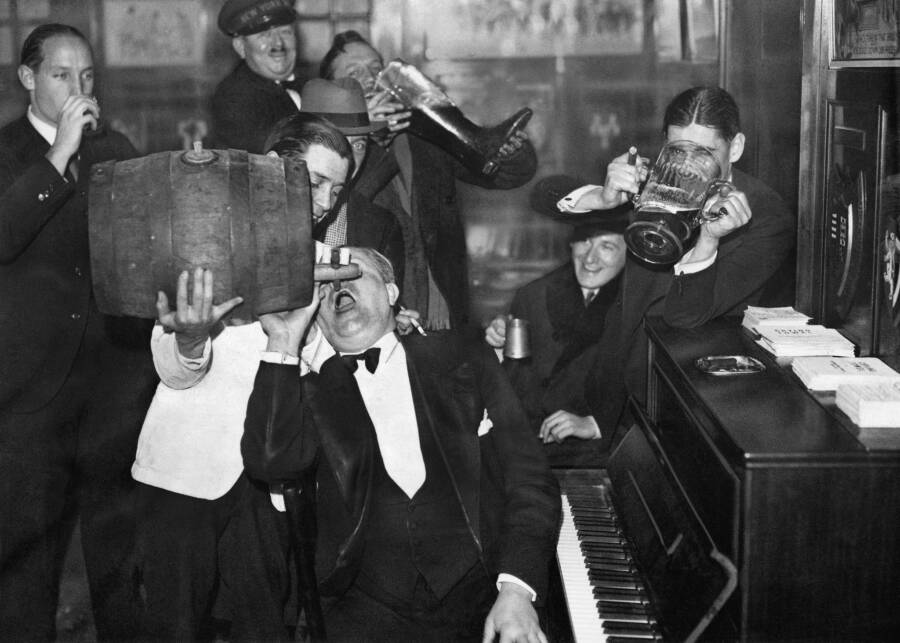
Public DomainRevelry after the repeal of Prohibition.Prohibition was a strange time in American history. Ultimately a social experiment, Prohibition was a constitutional attempt to legislate morality that came with many unintended consequences.What began as a progressive reform movement championed by temperance advocates and religious groups quickly devolved into a period full of speakeasies, bootleggers, unregulated liquor, and the rise of organized crime. The so-called noble experiment a term coined by President Herbert Hoover ended up exposing flaws in the relationship between the law and personal liberty. This turbulent period paved the way for organized crime figures like Al Capone, transformed cities into battlegrounds between law enforcement and criminal enterprises, and fundamentally altered American attitudes toward government regulation. Below are answers to 20 frequently asked questions about Prohibition.When Was Prohibition In Effect In The United States?Prohibition was in effect in the United States from 1920 to 1933.What Amendment To The U.S. Constitution Established Prohibition?Bettmann/Getty ImagesMen enjoying a drink together in 1919, just before Prohibition began.The 18th Amendment to the U.S. Constitution established Prohibition, banning the manufacture, sale, and transportation of alcoholic beverages nationwide.Why Was Prohibition Enacted In The First Place?Prohibition was enacted primarily due to the temperance movement, which framed alcohol consumption as a destructive force corroding American society. Led by organizations like the Anti-Saloon League and the Womans Christian Temperance Union, the temperance movement linked liquor to issues like domestic violence, poverty, and industrial accidents, arguing that it threatened the family unit and national productivity. The movement gained momentum during World War I, sometimes by connecting German American brewers with enemy sympathies, stoking anti-immigrant sentiment. After all, some U.S. citizens feared the foreign drinking habits of those from other countries.Progressives believed that eliminating alcohol would create a more disciplined, efficient workforce and reduce urban corruption. Many Protestants, meanwhile, viewed it as a moral crusade against societal decay. Eventually, with these forces aligned, the political pressure became too great to ignore.What Organization Was Most Influential In Promoting Prohibition?The Anti-Saloon League was the most influential organization promoting Prohibition in the United States. Founded in 1893 in Ohio, it rapidly became a national organization by 1895 and quickly established itself as the most powerful group lobbying for Prohibition in America.The League surpassed other organizations like the Womans Christian Temperance Union (WCTU) and the Prohibition Party through its focused, single-issue approach and sophisticated political tactics.Under leaders like Wayne Wheeler, the Anti-Saloon League pioneered the modern pressure group in U.S. politics, making Prohibition a wedge issue and successfully promoting pro-Prohibition candidates. And unlike the WCTU, which employed educational and social methods, the Anti-Saloon League concentrated primarily on legislative reform, applying intense political pressure to achieve state and federal anti-alcohol laws.How Did Prohibition Actually Affect Alcohol Consumption In America?Imagno/Getty ImagesProtesters taking to the streets to speak out against Prohibition.Prohibition had a mixed and ultimately limited effect on alcohol consumption. Initially, consumption dropped by approximately 30 percent as the legal methods of obtaining alcohol vanished. However, this decline was short-lived. Americans quickly adapted, creating a vast underground economy of bootleggers, speakeasies, and home distillers. Over the next several years, consumption rebounded to roughly 60 to 70 percent of pre-Prohibition levels. Rather than eradicating alcohol, Prohibition merely shifted its production and distribution into the shadows, fostering disrespect for the law.What Were Speakeasies And How Did They Operate?Bettmann/Getty ImagesA speakeasy bartender pouring beer from the tap.Speakeasies were illegal, secretive drinking establishments that operated during Prohibition, often disguised as legitimate businesses like soda shops or dry clubs. They required patrons to speak easy or quietly to gain entry, often using a secret password. Located in basements, back rooms, or behind unmarked doors, they flourished in urban areas. These venues offered live jazz music, dancing, and gambling, creating a vibrant underground social scene. To avoid raids, speakeasies employed elaborate security measures, including peepholes, lookout systems, and arrangements with corrupt police officers. Despite their illegality, tens of thousands of speakeasies operated nationwide, becoming symbols of the eras defiance and social rebellion.How Did Organized Crime Benefit From Prohibition?Organized crime syndicates thrived during Prohibition by monopolizing the illegal production, distribution, and sale of alcohol. This lucrative black market generated enormous profits, allowing criminal organizations like the Mafia to expand their operations, bribe public officials, and establish sophisticated networks.Who Were Some Of The Most Famous Bootleggers During Prohibition?Bettmann/Getty ImagesAl Capone, pictured during his trial for tax evasion.The most famous bootleggers of Prohibition were entrepreneurial criminals who built vast empires from illegal alcohol. Al Capone, for instance, dominated Chicago, controlling speakeasies, breweries, and distribution networks, earning millions annually. In New York, Dutch Schultz and Waxey Gordon ran competing operations, often engaging in violent turf wars. Meanwhile, Charles Lucky Luciano began his rise to power working in bootlegging before organizing the National Crime Syndicate, bringing together Italian and Jewish mobsters to help run various bootlegging operations. George Remus, a former attorney, became the King of the Bootleggers in Cincinnati, for exploiting medicinal whiskey loopholes. Bill McCoy earned the nickname The Real McCoy by smuggling high-quality Caribbean liquor without diluting it. In Detroit, the Purple Gang controlled much of the Canadian whiskey trade. These figures transformed small-scale smuggling into sophisticated criminal enterprises, using violence, bribery, and business acumen to profit from Americas thirst for illegal alcohol.What Was Al Capones Role During Prohibition?Al Capone was the most notorious figure of the Prohibition era, transforming Chicago into his criminal empire. As leader of the Chicago Outfit, he controlled the citys illegal alcohol industry, from speakeasies and breweries to distribution networks, earning an estimated $100 million a year at his peak.Capone used a combination of ruthless violence, political corruption, and public relations to maintain power. He famously bribed police and politicians while cultivating a public image as a generous businessman. His reign reportedly led to the 1929 St. Valentines Day Massacre, which eliminated his rivals but drew national attention. Though he was eventually imprisoned for tax evasion rather than Prohibition violations, Capone and his criminal enterprise demonstrated how organized crime could flourish under the ban, making him the enduring symbol of Prohibitions lawlessness.How Did The Government Enforce Prohibition?Public DomainFederal agents dumping illegal liquor into the sewers during Prohibition.The federal government first enforced Prohibition with the help of U.S. Marshals, followed by the Bureau of Prohibition and its agents. These agents were tasked with investigating, raiding, and prosecuting illegal alcohol operations. They conducted surprise raids on speakeasies, breweries, and distilleries, often leading to violent confrontations.At the same time, the Coast Guard patrolled coastlines to intercept smugglers arriving by boat, while the Internal Revenue Service pursued tax evasion cases against prominent bootleggers. State and local police also enforced the laws, though corruption was widespread, and many officers were bribed to ignore illegal drinking establishments. Despite these efforts, the government struggled with limited resources, jurisdictional issues, and public resistance, making enforcement increasingly ineffective as organized crime networks grew more sophisticated and public support for the ban waned.What Were The Economic Effects Of Prohibition?Prohibition had largely negative economic effects. For starters, it immediately eliminated legal alcohol industry jobs, from brewers and distillers to bartenders and related suppliers. At the same time, it created plenty of opportunities for bootleggers and speakeasy operators, but since these positions existed outside of the law, they were untaxed and unregulated. The government lost substantial tax revenue from alcohol sales, while simultaneously spending millions on enforcement efforts. Restaurants and entertainment industries suffered, as legitimate establishments could no longer serve alcohol to patrons. The start of the Great Depression compounded these economic issues, with some even arguing that legalizing and taxing alcohol would provide crucial government revenue during the financial crisis. What Was The Noble Experiment That President Hoover Referred To?President Herbert Hoover referred to Prohibition as a noble experiment, calling it a great social and economic experiment, noble in motive and far-reaching in purpose. Reformers goals of reducing alcohol abuse, strengthening families, and improving public health and morality were seen as noble, and since such broad legislation regarding morality had never been done before, it could be seen as an experiment. Although Hoover had supported enforcement, the phrase was eventually used in a more sarcastic or even mocking fashion, as Prohibition increasingly failed to achieve its aims, instead fostering organized crime, widespread lawbreaking, and economic woes. How Did The Repeal Of Prohibition Come About?Imagno/Getty ImagesAmericans enjoying drinks after the repeal of Prohibition.By the early 1930s, public support for Prohibition was virtually nonexistent. The Great Depression in particular had highlighted the economic costs of the ban, and many within the government felt that legalizing and taxing alcohol which people were clearly still drinking would bring in significant revenue. As organized crime continued to run rampant and control the flow of alcohol, the general public grew more and more disillusioned with Prohibition. Eventually, Franklin D. Roosevelt made repeal part of his 1932 presidential platform, recognizing the policys failure. After his election, Congress soon put an end to the failed noble experiment.What Amendment Repealed Prohibition And When Was It Ratified?The 21st Amendment repealed Prohibition in the United States. It was ratified on Dec. 5, 1933, ending the nationwide ban on the manufacture, sale, and transportation of alcoholic beverages that had been in place for 13 years. This amendment is also unique in U.S. history as the only one passed specifically to repeal another constitutional amendment (the 18th Amendment).What Were The Unintended Consequences Of Prohibition?The unintended consequences of Prohibition were numerous and far outweighed its goals. Most significantly, it fostered the rise of powerful organized crime syndicates, as criminals like Al Capone built their empires on the illegal alcohol trade. This led to shocking levels of violence, corruption of public officials, and a general erosion of respect for the law. On top of that, the ban led to dangerous, unregulated alcohol products that caused illness and even death, as some consumers turned to toxic moonshine and other unsafe spirits. While wealthy Americans continued to have access to the best alcoholic drinks, impoverished citizens were often at risk of purchasing completely unregulated and sometimes even tainted liquor. At one point, as many as 1,000 people were dying per year from the effects of drinking tainted booze.Rather than eliminating drinking, Prohibition simply drove it underground, making consumption more secretive. It sometimes also made drinking seem more glamorous. The government, meanwhile, lost substantial tax revenue and bled money trying to enforce Prohibition laws. In the end, Prohibition demonstrated the failure of trying to legislate morality, while the American public grew more distrustful of government regulation especially after 10,000 people died from government-poisoned alcohol. How Did Prohibition Affect The American Healthcare System?Prohibition significantly altered the American healthcare system, primarily through the creation of a legal loophole for medicinal whiskey. Physicians gained special, never-before-seen authority to prescribe alcohol for various ailments, from anxiety to tuberculosis, leading to a dramatic increase in prescriptions with some estimates at 11 million prescriptions annually by the late 1920s. What Was Medicinal Whiskey During Prohibition?California State LibraryPatrons at the Senator Hotel in Sacramento enjoying post-Prohibition drinks.Medicinal whiskey was a legal loophole that allowed physicians to prescribe whiskey for therapeutic purposes during Prohibition. This created a system where doctors could write prescriptions for whiskey to treat various ailments, from anxiety and tuberculosis to common colds. Pharmacists filled these prescriptions, often charging high prices. Naturally, the system was widely abused. Not only did this system expose the hypocrisy of the Prohibition movement, but it also strained the credibility of the medical profession. How Did Other Countries View Americas Prohibition Experiment?Other countries generally viewed Americas Prohibition experiment with skepticism, amusement, and sometimes concern. Many European nations saw it as an extreme measure that contradicted their own drinking cultures. Some international temperance movements initially praised the American experiment, but most foreign observers saw it as creating more problems than it solved.The Canadian government, despite having its own provincial prohibition laws, was critical of Americas approach. Mexico and Caribbean nations became popular destinations for American booze tourists and profited from smuggling operations. British and French newspapers, meanwhile, often mocked American puritanism while reporting on the rise of gangland violence. What Happened To The Brewing And Distilling Industries After Prohibition Ended?After Prohibition ended in 1933, the brewing and distilling industries faced significant challenges in rebuilding their operations. Many former legitimate breweries had been converted to other uses or had fallen into disrepair, requiring substantial renovations to resume production. Large companies like Anheuser-Busch and Schlitz quickly regained market dominance, while numerous smaller operations never reopened. The distilling industry recovered more slowly, due to the lengthy aging process required for some spirits. Some former bootleggers transitioned into creating legitimate businesses, but the industry landscape was permanently altered by the 13-year hiatus and changing consumer preferences.Did Any States Maintain Prohibition After The Federal Repeal?Yes, some states maintained Prohibition after the federal repeal. The 21st Amendment, which repealed Prohibition at the federal level, explicitly allowed states to continue banning alcohol if they chose to do so.Per the National Constitution Center, Mississippi was the last state to maintain statewide Prohibition, finally ending it in 1966. But even today, some remnants of Prohibition remain, albeit on a smaller scale. Certain states have dry counties, and its estimated that over 80 counties still completely ban the sale of alcohol to this day.After learning about the history of Prohibition in America, check out these colorized photographs from the Roaring Twenties. Then, meet some of the most notorious gangsters of the 1920s.The post 20 Facts About Prohibition That Reveal The Truth Behind Americas Failed Noble Experiment appeared first on All That's Interesting.







 English
 Arabic
 French
 Spanish
 Portuguese
 Deutsch
 Dutch
Dutch
 Italiano
 Russian
 Romaian
 Portuguese (Brazil)
 Greek
Greek