• YUBNUB.NEWS
    FROM BEYOND THE GRAVE: Epstein Files Show Countess Clare Hazell Flew 40 Times in the Lolita Express, Was Suspected Key Member of Inner Ring Accused by Giuffre of Sexual Abuse
    Clare Hazell: before her rise into higher aristocracy, there was Epstein. Before marrying the Guinness brewery heir, she reportedly lived a dark life alongside Jeffrey Epstein. When glamorous interior
    0 Comments 0 Shares 9 Views
  • YUBNUB.NEWS
    You Go, Girl: Tiara-Wearing 'Diva' With Snowplow Takes D.C. Streets by (Winter) Storm
    One of the things a lot of people do when weather events like this weekend's winter storm take place is to make sure to say a prayer for the first responders, linemen, street crews, etc., who have to
    0 Comments 0 Shares 9 Views
  • YUBNUB.NEWS
    Its Time to Invoke the Insurrection Act Elon Musk
    [View Article at Source] Americans dont like criminals destroying American cities, preventing law enforcement from doing their jobs, or being paid to commit violence. The post Its Time to Invoke
    0 Comments 0 Shares 9 Views
  • YUBNUB.NEWS
    America in Photos: Patrolling the Mexican Border, Trumps First Year, and Swimming With Manatees
    [View Article at Source]Notable moments from the past week in America.
    0 Comments 0 Shares 9 Views
  • YUBNUB.NEWS
    Freedom from Interest Payments Starts Now 0% APR Until Nearly 2028
    (Note: Thank you for supporting businesses like the one presenting a sponsored message below and working with them through the links below which benefits Gateway Pundit. We appreciate your support!) The
    0 Comments 0 Shares 9 Views
  • YUBNUB.NEWS
    WATCH: Red State Governor Trashes Trump, Backs Leftist Talking Points On Minneapolis Unrest
    Oklahoma Governor Kevin Stitt, a Republican, trashed President Donald Trumps immigration policy and claimed that Trump voters did not vote for mass deportations while speaking with CNNs Dana Bash.
    0 Comments 0 Shares 9 Views
  • YUBNUB.NEWS
    Minnesota CEOs Issue New Plea for De-Escalation
    A group of 60+ Chief Executive Officers (CEOs) of a considerable list of major corporations doing business in Minnesota have weighed in on the ongoing disturbance. As one might expect, they are calling
    0 Comments 0 Shares 9 Views
  • WWW.THECOLLECTOR.COM
    The Rise and Fall of the Latin Empire of Constantinople
    Even though the Roman Church initially launched the Crusades to support the Byzantines, the Fourth Crusade was redirected from the Holy Land to Constantinople in 1204 CE. The Latin Crusaders founded a feudal state known as the Latin Empire, which was governed along similar lines to the Western European kingdoms. The empire lasted over half a century until it was conquered by resurgent Byzantine Greeks in 1261.Founding of the Latin EmpireCrusade of 1204, by Tintoretto, 16th Century. Source: Timetoast.comWhen Pope Innocent III launched the Fourth Crusade, he hoped to recapture Jerusalem and protect the coastal cities of the Kingdom of Jerusalem. However, a series of diversions, driven by debt, politics, and opportunism, led the Crusaders to sack Constantinople, the capital of the Byzantine Empire. The Venetians, who had financed the Crusaders fleet, played a crucial role in redirecting the campaign toward Byzantium, hoping to collect their debts and advance their commercial and political interests in the eastern Mediterranean.The Byzantine Empire was politically unstable at the time. In 1203, the Crusaders and Venetians supported the claim of Alexios IV Angelos, a deposed Byzantine prince who promised them money, military support, and religious union with the Catholic Church if they restored him. After taking Constantinople and reinstalling Alexios IV, the Crusaders found he could not fulfill his promises. He was murdered in a palace coup, prompting the Crusaders to storm the city again in April 1204. Both sieges led to horrendous casualties among the citys population.Following this second conquest, the Crusaders established the Latin Empire on the ruins of Byzantium, declaring Baldwin of Flanders as its first emperor. Territories were divided among Latin barons and Venice, with Eastern Orthodox clerics replaced by Catholic clergy. The Empire was meant to consolidate Western control over former Byzantine lands and impose Catholic dominance in the East. The Byzantines retained their own rump kingdom called the Empire of Nicaea. This marked the first time a Pope had authority over the eastern provinces of the former Roman Empire.Political AdministrationThe Boukoleon Palace, residence of the Latin emperors. Aerial photograph by Pi Istvn Tth, 2018. Source: FlickrThe governance structure of the Latin Empire was unwieldy and unstable. The emperor, usually a Frankish or Venetian lord, was the titular head of state. Beneath him was a series of lords and barons who oversaw the different regions of the empire. This was based on the feudal structure of Western Europe at the time, something alien to most Byzantine subjects who had been used to direct imperial rule. The empire did retain much of the Byzantine bureaucracy due to its administrative efficiency. There was a council of advisors, one of which was the Venetian Podest, who acted as the Venetian delegate to the emperors court in Constantinople.The Latin Empires vassals included the Kingdom of Thessalonica, the Principality of Achaea, the Duchy of Athens, the Duchy of the Archipelago, and the short-lived Duchy of Philippopolis in northern Thrace. All of these territories were located in Greece, the Aegean islands, and parts of Macedonia. The Venetians took control of Crete, Rhodes, Cephalonia, Corfu, Negroponte, and some other territories. This made it one of the largest empires under the control of the Catholic Church. The Latin emperors sought to expand their territory further at the expense of the Byzantines and the Seljuk Sultanate.The Latin Empires lords ruled over a mostly Greek population who followed Eastern rites. This led to serious discontent among the people, who resented the efforts to Latinize the population. Additionally, the Empire persecuted Jews, who had not been subject to systemic persecution under Byzantine rule. This increased instability during the period of Frankish rule.The EconomyIllustration of a Venetian trade galley in the Mediterranean from Description of a Journey from Konstanz to Jerusalem by Konrad von Grnenberg, c. 1487. Source: Karlsruhe LibraryThe economy of the Latin Empire was weak from its inception and played a central role in its eventual collapse. When the Crusaders established the empire, they inherited an economy that had already been weakened by internal strife, invasions, and administrative decline. The two sieges of Constantinople also destroyed much of the citys infrastructure, disrupted trade networks, and alienated local populations, especially the Greek merchant and artisan classes who had driven the citys economy.A key challenge was the Latin Empires dependency on external resources. The Crusaders lacked the administrative experience to effectively manage local economies or restore Byzantine tax systems. Even though they tried to keep much of the bureaucracy in place, many Byzantine officials fled after the Latin conquest.Meanwhile, the Venetians, who had helped engineer the conquest, gained control over major ports, customs duties, and entire districts of Constantinople. Their dominance of trade routes, major islands such as Rhodes, and exemption from taxes drained revenue from the imperial treasury, further weakening central authority.Agricultural production in surrounding regions suffered from warfare and population displacement. The Latin rulers also faced constant threats from several Byzantine states and the Second Bulgarian Empire, making it difficult to secure rural areas and collect revenue consistently. Without stable taxation, internal markets, or strong economic institutions, the Latin Empire struggled to fund its military and administrative apparatus. Ultimately, its economy could not support the state in the face of external military pressure and internal fragmentation, making it a major factor in the empires collapse in 1261.Military OrganizationCrusaders of the Latin Empire in Constantinople by Eugene Delacroix, 1830. Source: Louvre MuseumThe Latin Empires military was a patchwork force composed of Western European knights, feudal levies, mercenaries, and naval allies, particularly the Venetians. The empire controlled a lot of territory but did not have the manpower to defend it all. Its military was initially formidable, benefiting from seasoned Crusader knights and the walls of Constantinople, but was quickly strained by overextension and constant warfare.The Latin emperors, starting with Baldwin I, relied heavily on feudal vassals from France, Flanders, and Italy, who were granted fiefs in former Byzantine lands in exchange for military service. The subordinate lords brought contingents of knights and foot soldiers, but were more focused on defending their own territories than protecting the Empire as a whole. The empire also depended on Venices powerful navy to maintain control of the seas, defend ports, and disrupt maritime powers like Genoa, which had an intense rivalry with Venice.Despite these strengths, the Latin military was chronically under-resourced. The Latin Empire was surrounded by hostile forces: the Empire of Nicaea, the Despotate of Epirus, and the Second Bulgarian Empire all challenged Latin authority, often successfully. The Empires failure to win local support and its limited recruitment base meant that its armies were often outnumbered. Western kingdoms did not send reinforcements and the Latin Empire suffered from the same logistical challenges that the Kingdom of Jerusalem dealt with. Defeats, such as the Battle of Adrianople in 1205, where Emperor Baldwin I was captured by the Bulgarians, highlighted its vulnerability.The Fall of the Latin EmpireMichael VIII Palaiologos, the Byzantine Emperor who took back control of Constantinople from the Latin Empire. Miniature by George Pachymeres, 14th century. Source: Wikimedia CommonsWith a collapsing economy and a weak military, the Latin Empire was vulnerable to outside threats. The Empire of Nicaea maintained control of much of Anatolia and had a strong military. It was allied to several other Byzantine kingdoms that hoped to restore Constantinople to Greek rule. However, the Latin Empire managed to hold off some of these foes, such as the Despotate of Epirus, due to robust defenses and the mediation of the Bulgarians.In 1235, Emperor John III Doukas Vatatzes of Nicaea signed an alliance with Bulgaria and marched on Constantinople. This attack failed, but it highlighted the vulnerabilities of the Latin Empires defenses. By 1237, Baldwin II became the Latin emperor and struggled to maintain his realm. Repeated attempts to acquire loans from Western European kingdoms failed and the economy deteriorated further. Meanwhile, many local peasants rose up in support of the Byzantines because of the strength of the Eastern Church and the belief that the Frankists and Venetians were outsiders.In 1261, Alexios Strategopoulos, a prominent Byzantine general, led hundreds of men from Nicaea to the outskirts of Constantinople. He snuck into the city and forced the garrison and Emperor Baldwin into a panicked retreat. Michael VIII Palaiologos returned as the restored Byzantine Emperor and the Franco-Venetian forces evacuated to the Principality of Achaea, a vassal state of the Latin Empire that became the main Crusader holdout until the Byzantines reconquered it in the 1300s. With this final act, the Latin Empire was no more, although Baldwin IIs descendants and relatives continued to claim the imperial title.The Empires LegacyThe Selymbria Gate, one of the gates seized during the recapture of Constantinople by Alexios Strategopoulos, 2006. Source: TripbucketThe failure of the Latin Empire highlighted how the Crusaders were capable of conquering territory and inflicting atrocities on the inhabitants, but not effective at governing or maintaining control of conquered lands. Despite the Byzantine Empires internal troubles preceding the Fourth Crusade, the Frankish rulers failed to realize that most of the peasantry did not want to submit to their rule. Additionally, the conquest of Constantinople distracted the Crusaders from their original goal of retaking Jerusalem.The long lines of communication that had to be maintained to supply the Latin Empire with resources were vulnerable to attack. Additionally, the Byzantines were operating on their territory, meaning that they could attack the Crusaders when they chose to. Once the Empire of Nicaea allied itself with the Bulgarians, the Latin Empires days were numbered. The Latin Empire suffered from the same institutional problems that plagued the Christian kingdoms in the Levant.At the start of the 14th century, a new Turkish state was established in Anatolia and that would conquer Constantinople once and for all. The Ottoman conquest of Constantinople in 1453 was facilitated by the weakness of the Byzantine Empire, which was still recovering from the partitions of the Fourth Crusade.Although the Latin Empire lasted little more than half a century, its legacy can be seen in Istanbul through the Western architectural features it introduced in existing Byzantine buildings. The Latin Empire has also left a psychological legacy: to this day, Catholic and Orthodox communities still struggle to overcome the memory of rapacious Latin Crusaders sacking Constantinople, suppressing the Orthodox Church, and facilitating the eventual Muslim conquest of the Second Rome.

    0 Comments 0 Shares 9 Views
  • ALLTHATSINTERESTING.COM
    The Chilling Story Of Beth Thomas, The Six-Year-Old Who Tried To Murder Her Little Brother
    YouTubeBeth Thomas as a child (left) and as an adult (right).Her name was Beth Thomas.At only six years old, Beth admitted to a clinical psychologist, on tape, that she would kill her adoptive parents and birth sibling if given the opportunity. Her adoptive parents, Tim and Julie Tennant, locked their young daughter in her room at night because they were afraid of what she might do.Meanwhile, the couple had no idea that their adopted daughter had been horrifically abused by her birth father, and it wasnt until Beth started speaking to a psychologist that she could begin to heal from her trauma.Videotapes of the therapy sessions between Beth and Dr. Ken Magid were later compiled into a 1990 HBO documentary, Child of Rage, which revealed the haunting effects of severe neglect and sexual abuse on a child.Beth Thomas Traumatic ChildhoodPublic DomainBeth Thomas displayed psychopathic tendencies early on, and it took years to uncover the root of her behavior.Details about Beth Thomas birth are scarce, but its believed that she was born around 1982, somewhere in the United States. When she was just one year old, her birth mother died, leaving her and her newborn brother Jonathan alone with their abusive and violent birth father.Beths biological father sexually abused her for months. When he wasnt physically harming her, he was neglecting her. He also abused Jonathan. By February 1984, both children had been removed from their fathers home. The Department of Social Services then told two prospective adoptive parents that they had two young children up for adoption. These prospective adoptive parents were Tim Tennant (sometimes spelled Tennent), a minister at a small Methodist church in the American South, and his wife Julie. Married for over a decade and unable to have biological children, Tim and Julie were delighted to welcome 19-month-old Beth and seven-month-old Jonathan into their home. They knew little about the childrens background and were told that they were normal and healthy.But shortly after Beth Thomas was adopted, she began displaying psychopathic behavior. As a toddler, she removed a nest of baby birds from a tree, even though Julie said that the birds mother wouldnt come back if the nest was gone then Beth squeezed all the baby birds to death.Even more disturbing, Beth physically and sexually abused her brother. She attempted to kill Jonathan multiple times, at one point smashing his head onto a concrete floor, according to the Daily Star. She made no secret of her desire to murder her sibling, and she also expressed her desire to stab her adoptive parents. And when she wasnt threatening violence, she was masturbating at inappropriate times sometimes even in public places.Terrified by their adopted daughter, who seemed to completely lack a conscience, Tim and Julie Tennant resorted to locking Beth in her room every night to protect her brother and themselves from her rage. But they couldnt live in fear in their own home forever, and by the time Beth Thomas was six years old, they decided to seek professional help.A Child Of Rage Who Shocked AmericaYouTubeSix-year-old Beth Thomas undergoing therapy in the HBO documentary Child of Rage.Ultimately, Beth Thomas was diagnosed with reactive attachment disorder (RAD), a severe trauma response present in children who do not form an emotional bond with their caregivers. This mental health condition is only diagnosed in the most extreme cases. According to the Cleveland Clinic, its estimated that about one to two percent of children suffer from RAD, but the number is believed to be higher for children in the foster care system.Examined by psychologist Dr. Ken Magid, Beth began to slowly reveal the root of her trauma the severe abuse and neglect she faced at the hands of her biological father. In 1990, HBO released a documentary titled Child of Rage that chronicled the young girls therapy sessions as she battled RAD. Viewers were stunned by Beths disturbing behavior and the confessions she made during her therapy tapes with Magid. When Magid asked the young girl how she would kill her adoptive parents, she responded, without any emotion, Stab them. Beth also explained that she would murder them at night because I dont like them seeing me do it, but they can feel me do it. Beth also expressed her desire to kill her birth sibling, and admitted to sexually abusing Jonathan. When Magid asked her what she did with Jonathans genitals, she said, I hurt it I pinch it. Squeeze it. Kick it.Even more disturbing was Beths past with her birth father, who had brutally abused both her and Jonathan. Magid asked her about a recurring nightmare about a violent man shed mentioned before, and she replied that in the dream, I would be in the house upstairs. He comes up the stairs and hurts me. As it turned out, the man in the nightmare was her birth father. In one tape, Magid questioned Beth about her biological father and what she could remember about him. Despite her young age, Beth spoke in graphic detail about her birth fathers physical and sexual abuse: He touched my vagina until it bled. It hurted a lot. And um, he wouldnt feed me a lot. Hed hit on me. Wouldnt be very nice to me. When asked about how old she was when the abuse happened, Beth said that she was only a year old.Beth Thomas Successful Treatment And The Controversies That FollowedYouTubeBeth Thomas now as a fully healed adult. After Beth Thomas completed her sessions with Dr. Ken Magid, the psychologist decided that the girl should be temporarily separated from her adoptive family, as she still required intensive therapy to heal. According to news.com.au, she was then placed in the care of Connell Watkins, a therapist who specialized in intensive behavioral modification therapy. Watkins was extremely strict with Beth, requiring her to ask permission to eat, use the bathroom, and nearly everything else. She also kept her in a locked bedroom at night. This forced Beth to work to earn the trust of Watkins and the other staff members who were helping her. Only then would Beth earn privileges and more freedom to do what she wanted. She flourished under Watkins care and finally began to express remorse for the pain and anguish that she put her brother and her adoptive parents through.However, Beth did not return to the home that she spent her early years in and was instead re-adopted by a different woman, Nancy Thomas, during the course of her treatment. From there, Beth continued to thrive, eventually graduating from the University of Colorado with a degree in nursing. She later got a job as a registered nurse at Flagstaff Medical Center in Arizona in 2005. Incredibly, Beth Thomas now takes care of babies. She also volunteers with her second adoptive mother Nancys program Families By Design, which aims to help families with adopted or foster children.Odyssey/WikipediaThe 1992 film Child of Rage was inspired by the real case of Beth Thomas and her 1990 HBO documentary.But while this may seem like a fairytale ending for the former Child of Rage, some view Beth Thomas successful therapy as an anomaly especially since she was treated by the now-controversial Connell Watkins. In 2001, Watkins was found guilty of negligent child abuse in relation to the death of a 10-year-old girl in her care, Candace Newmaker. The girl was fatally smothered during a pseudoscientific attachment therapy practice called rebirthing, which involved wrapping a child up in blankets and pushing against them with pillows to simulate the feeling of being born. Watkins was sentenced to 16 years in prison but was paroled after seven years.The advocacy group Advocates for Children in Therapy has spoken out against attachment therapy in general, and has specifically criticized both Beth and Nancy Thomas for promoting its practices: [Nancy] Thomass parenting methods are based on isolation, deprivation, humiliation, and being non-communicative with the child Beth Thomas is one of only two survivors of Attachment Therapy known to speak well of the practice as an adult; both market pro-Attachment Therapy materials and services.But even though attachment therapy may be more harmful than helpful to most children with conditions like reactive attachment disorder, the good news is that there are other options for kids in need of treatment. The Cleveland Clinic suggests that options like psychotherapy, family counseling, social skills intervention, and parental skills classes may be beneficial but the earlier the disorder is diagnosed and treated, the better.After learning about Beth Thomas, the subject of Child of Rage, read about 15 terrifying child killerss. Then, read about the psychologist who claims that child sex dolls should be given to pedophiles so they dont abuse real children. The post The Chilling Story Of Beth Thomas, The Six-Year-Old Who Tried To Murder Her Little Brother appeared first on All That's Interesting.
    0 Comments 0 Shares 8 Views
  • ALLTHATSINTERESTING.COM
    The Legend Of The Beast Of Bray Road, The Wolf-Like Creature Said To Prowl The Wisconsin Countryside
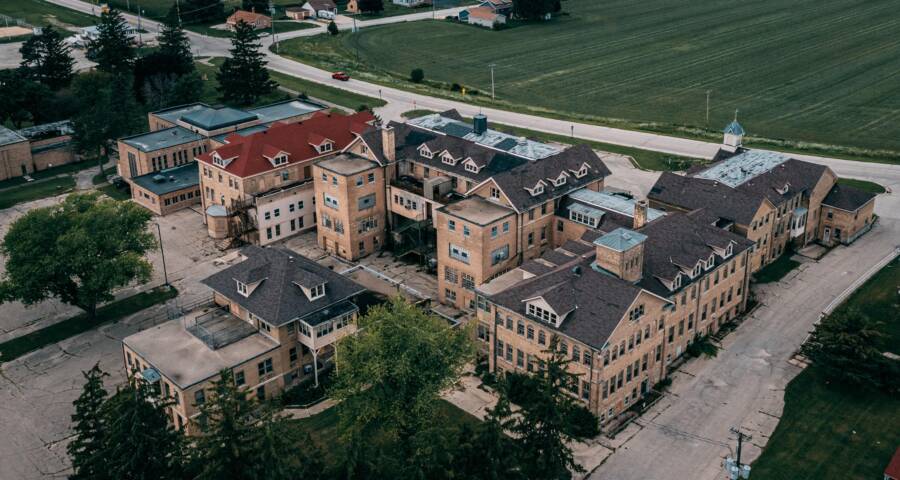
    Through the rural community of Elkhorn, Wisconsin, runs Bray Road, a 17-mile stretch of thoroughfare dating back to colonial times when it was known as the Kings Highway. Like many roads in America, it is generally unremarkable except for the terrifying creature that supposedly lingers in its vicinity.The first sighting of what would come to be known as the Beast of Bray Road occurred in 1936 when a night watchman for the nearby St. Coletta School for Exceptional Children was crossing the fields. He saw what he described as a hairy, humanoid creature standing between six and seven feet tall, closely resembling a wolf or a bear. Its speech was half-beast, half-human, and the watchman caught the strong scent of rotting flesh.He never saw the creature again, but the experience stuck with him for the rest of his life.But that was just the first of many encounters with the Bray Road Beast. Throughout the 1980s and 1990s, more witnesses would come forward claiming to have encountered the Wisconsin Werewolf, each with their own theory as to what it might be.The First Encounter With The Bray Road BeastElkhorn, Wisconsin, 1936. A small rural town, picturesque and charming, with a population of roughly 6,500. As author Linda Godfrey wrote in her book The Beast of Bray Road, Elkhorn was known as the Christmas Card Town. Surrounded by a rich prairie and dotted with cornfields and dairy farms and about an hours drive from Madison and Milwaukee, it was an idyllic place.But something would soon change the town of Elkhorn forever.Enter Mark Shackleman, a night watchman at a Catholic convent known as St. Coletta the very same St. Coletta where Rosemary Kennedy was housed after her father Joseph Kennedy Sr. had her lobotomized for agitated depression to combat her sometimes violent mood swings in 1941.The now-abandoned St. Coletta School for the Feeble Minded.Around midnight, Shackleman was walking through the fields near the school when he saw something perched atop a nearby Native American burial mound. It appeared wolf-like, yet standing upright, and appeared to be clawing at the ground. Shackleman approached the creature to get a better look, but it fled.The following morning, Shackleman told his wife about the creature, describing that its thumbs and little fingers appeared shriveled, notably shorter than the others on its hands. During the daylight hours, Shackleman returned to the mound and discovered raking marks in the dirt.After dusk passed and gave way to night, Shackleman returned to the mound and once again saw the creature. This time, however, it did not flee. It stood and faced Shackleman, who later estimated it to be nearly seven feet tall. He said the creature was covered with dark or black hair, gave off a bad, bad odor like long-dead meat eyes that looked right into me, and it made a sound. It was a three-syllable growl, low and mean, something like gadarrah with the accent on the second syllable.Mark Shackleman was in his mid-30s, a strong and capable man and a former heavyweight boxer but the encounter made the hairs on his neck stand on end.Then I did the only thing I could do, I prayed to God to save me and it turned and slowly walked away For a long time I stood there, that bad smell hung in the air and then I said another prayer of thankfulness. I never saw that thing again or anything even like it.Some who heard Shacklemans story assumed the creature must have been a hellhound, a creature often found in ancient European and Biblical literature. The growl of a hellhound was once described by writer Bob Trubshaw as a halfway station between articulate speech and silence filled with emotion and power, but utterly lacking in reasonThen, there was what Shackleman had heard the creature say: gadarrah, which shares an uncanny resemblance to Gadara, a site mentioned in the Bible as the location in ancient Judea where Jesus exorcised a demon-possessed man coming from the tombs just as the creature Shackleman saw had been clawing at a burial mound.Wikimedia CommonsThe Norse goddess Hel with a hellhound.Even among believers, though, this hellhound explanation for the Beast of Bray Road carries little credence. Rather, it highlights how the creature seems to defy explanation. When presented with something beyond understanding, it is often easiest to compare it to what you do know.In any case, Shacklemans story ends there. The creature he saw atop the burial mound vanished for a time or perhaps it simply lay in wait, as nearly 50 years after Shacklemans encounter, stories of the creature once again began to surface.Subsequent Sightings Of The Beast Of Bray RoadThroughout the 80s and 90s, sightings of the Bray Road Beast rose in prominence. Though mostly seen around Elkhorn, locals also reported sightings of the beast as far as Walworth, Racine, and Jefferson County.The first of these recent encounters with the so-called Wisconsin Werewolf occurred in the fall of 1989. Around 1:30 a.m., Lori Endrizzi was driving home along Bray Road from a lounge in Elkhorn called The Jury Room, where she worked as a manager. There, off to the side, she saw a massive creature, its back turned to her, but as she continued along the road, she glanced back and caught it from the front.It was kneeling! she said. Its elbows were up, and its claws were facing out, so I knew it had claws. I remember the long claws.RedditAn illustration depicting the Beast of Bray Road.She said it seemed to be holding something between those long claws roadkill, perhaps. But unlike many animals, which would turn and run when headlights were aimed at them, this creature instead turned and stared at her. Terrified, Endrizzi drove home.The next morning, she ventured to the local library to dig through the catalogs and find something that might explain what she saw. What she found was an entry in The Golden Book of the Mysterious, published in 1976, featuring an illustration labeled werewolf.It was night, and it was quite late, but I know what I saw, Endrizzi said. You dont mistake something like that To this day I believe it was satanic. It was just my feeling. I dont believe in werewolves, per se, but I believe something could be, well, conjured up.Two years later, another local named Doris Gipson claimed to have seen the beast. It was Halloween night, 1991. Gipson was driving along the road through the fog when she hit something and felt her front tire lift off the ground. After driving another 50 feet, she stopped the car and got out to assess the damage to her car and to whatever she might have hit.There was nothing on the road behind her. As she made her way around the back of the car, it came running out of the woods.Here comes this thing, and its just running up at me! she said. It was no dog; it was bigger than me Ive never seen a human run like that, and my uncle was a track star.Gipson quickly got back in her car and slammed her foot on the gas; at that same moment, the creature caught up to her car and landed on the trunk, only sliding off because it had become slick in the rain. Gipson said she felt shed have been dinner had the beast caught her, but she managed to escape.Except, later that night, she saw it again. She picked up a friend from a party, and on the way home, that friend pointed out the window and screamed, Look at that thing! Gipson wasted no time in speeding away, and when she got home she noticed claw marks on the back of her blue Plymouth Sundance.Gipson later described the creature as a freak of nature, one of Gods mistakes.Is The Wisconsin Werewolf Still Out There?Godfrey published both Gipson and Endrizzis stories in the local paper, The Week, and shortly after, even more people came forward with accounts of the alleged Beast of Bray Road.As reported by Milwaukee Magazine, Godfrey acknowledged some of the nuances on her website:There is a high probability that everyone is not always seeing the same thing. There could be a biological, physical animal seen by some, while others see phantoms or supernatural entities from a variety of sources. A few may be misidentifications or hoaxes.For the most part, sightings of the Wisconsin Werewolf have dropped off since the 90s, but a few still believe the creature lurks in the brush along Bray Road. And, of course, there are those who never believed in it to begin with.In either case, the legend of the Beast of Bray Road has solidified itself in the pantheon of American folklore. And who knows? It may still be out there.After learning about the Bray Road Beast, read about another legend from North America, like the creepy tale of the Bunny Man and the disturbing true stories behind it. Or, learn about a horrifying Japanese legend, Kuchisake onna, the slit-mouthed woman.The post The Legend Of The Beast Of Bray Road, The Wolf-Like Creature Said To Prowl The Wisconsin Countryside appeared first on All That's Interesting.
    0 Comments 0 Shares 9 Views