0 Comentários
0 Compartilhamentos
13 Visualizações
Diretório
Elevate your Sngine platform to new levels with plugins from YubNub Digital Media!
-
Faça o login para curtir, compartilhar e comentar!
-
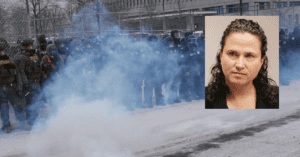
YUBNUB.NEWSActivist Judge stops ICE agents from controlling mob rioting behavior[View Article at Source]ICE has no desire to interfere with anyones peaceful protest.But Leftists, including leftist judges, seem to have great difficulty discerning peaceful protest from, say, bombing0 Comentários 0 Compartilhamentos 13 Visualizações -
YUBNUB.NEWSAs U.S. Forces Move Into Position For A Potential Attack On Iran, Evidence That The Iranians Possess Unconventional Weapons EmergesWe are witnessing a massive buildup of air and naval power in the Middle East, and we are being told that everything could be ready for an unprecedented attack on Iran in two to three weeks. But0 Comentários 0 Compartilhamentos 13 Visualizações -
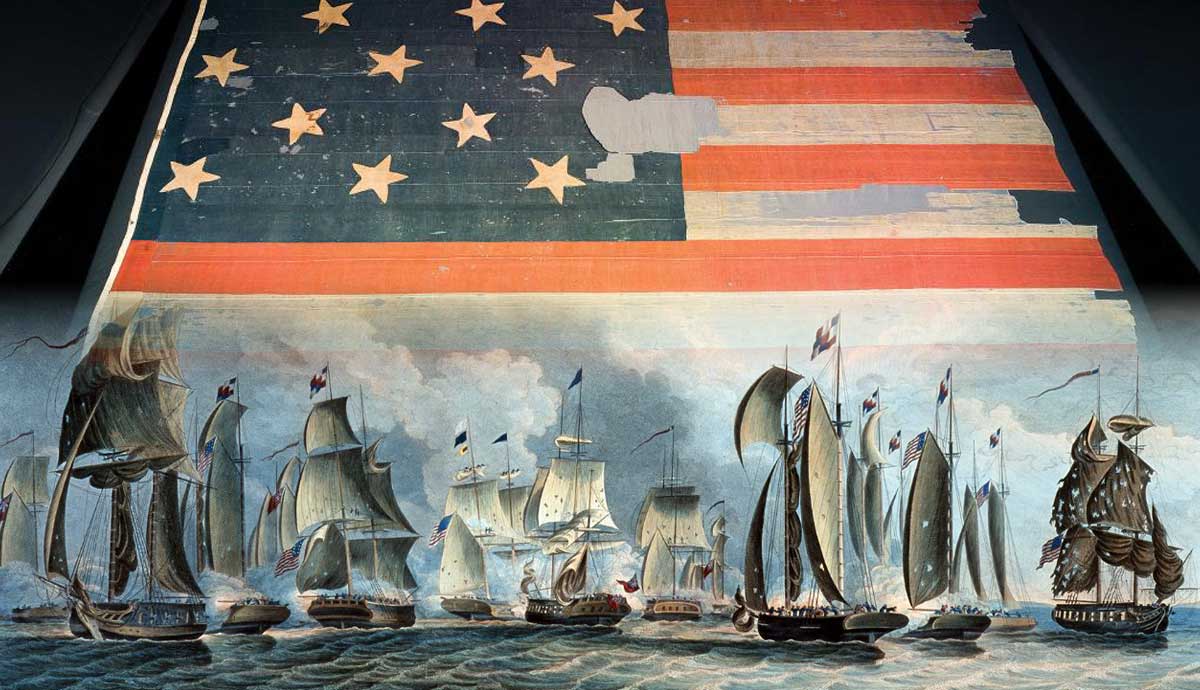
WWW.THECOLLECTOR.COMThe War of 1812: Causes, Key Events, and Lasting EffectsThe American Revolutionary War officially provided early American citizens with independence from British colonial rule, but after eight years of fighting, victors were left with the responsibility of shaping the United States politically, economically, and militarily. Founded on the ideals of life, liberty, and the pursuit of happiness, the nascent country continued to be the target of provocative actions by Britain into the 1800s. Less than thirty years after American independence, the United States was once again at war with Britain.Primary CausesPrint of President James Madison by Gilbert Stuart, 1828. Source: Smithsonian InstitutionDuring the early 19th century, British actions at sea and in American ports escalated tensions with the United States. Namely, the Royal Navy forced American sailors into service for the British navy without their consent, a method known as impressment. With Europe embroiled in the Napoleonic Wars, Britain restricted American trade with France, infringing on Americas rights as a neutral power. In 1807, President Thomas Jefferson had attempted to enforce American neutrality by placing an embargo on all trade with the United States, but this policy was abandoned in 1809 as it only served to damage American economic interests. When President James Madison came to office in 1809, the drumbeat for war grew ever louder.Countering both real and perceived grievances with British actions in the early 1800s was a strong motivator for further hostilities. War hawks cheered on the idea of expanding the American territory north into Canada, and on the western frontier, settlers faced immense clashes with Native American groups intent on protecting their land. The Americans believed this resistance was fueled by the British, strengthening calls for war.On June 18, 1812, the United States formally declared war on Britain and American forces soon invaded British Canada. However, fighting an adversary with the worlds most powerful navy would prove especially challenging for the United States.Major BattlesPainting of General William Henry Harrison by Rembrandt Peale, date unknown. Source: Smithsonian InstitutionOne of the most significant battles of the War of 1812 occurred shortly after the American invasion of Canada. Near modern-day Ontario, British and Canadian troops successfully defended the invasion despite the death of British commander Major General Isaac Brock. This early success at the October 1812 Battle of Queenston Heights marked a sustained period of British control over the Niagara region.In October 1813, the War of 1812 observed more intense fighting in northern Canada. At the Battle of Thames, future president and General William Henry Harrison led American forces against the British and their Native American allies. Already suffering from an immense naval defeat at the Battle of Lake Erie one month prior, retreating British forces launched a counteroffensive near the Thames River. The unrelenting American forces pursued the British, refusing to let their enemies regroup. During the resulting engagement, Shawnee leader Tecumseh was killed in battle. This led to the effective collapse of Tecumsehs Confederacy and weakened the British western flank.The following year, the Battle of Lake Champlain, also known as the Battle of Plattsburgh, proved crucial for securing the northern boundary of the United States. In the deadly naval engagement, American Master Commandant Thomas Macdonough outmaneuvered the superior British fleet, leading to a decisive victory. Just two days later, American forces successfully defended Fort McHenry at the Battle of Baltimore. The action prevented the British from exploiting their successful attack on Washington DC on August 24, 1814 and would have a significant impact on American national identity.Turning PointThe Battle of Lake Erie, Second View. Engraving by Murray Draper and Co. after Sully and Kearny, c. 1813. Source: Naval History and Heritage CommandWhile there were many important battles during the War of 1812, the Battle of Lake Erie in 1813 proved to be a primary turning point in the struggle for control of the Great Lakes. Controlled by the British, Lake Erie facilitated the transportation of supplies and troops in the theater. On September 10, 1813, American naval forces made an attempt to reclaim the lake by engaging the British near Put-in-Bay in northern Ohio.During the battle, American Master Commandant Oliver Hazard Perry led his naval forces through heavy casualties. Damage inflicted by the British was so intense that Perrys flagship vessel, the USS Lawrence, was exposed and rendered indefensible. Instead of surrendering, the brave naval officer boarded a smaller craft and assumed command from the USS Niagara. Refusing to give in to British momentum, Perry organized naval bombardments in a decisive counterattack, forcing the British to surrender. Following the confrontation, Perry sent a memorable status report to fellow American commanders, We have met the enemy, and they are ours.Not only did the Battle of Lake Erie allow the United States to dominate the crucial waterway for the remainder of the War of 1812, but the exchange also permitted American forces on land to exploit retreating British and Native American forces by recapturing Detroit, which was lost to the British early in the war. This series of events turned the tide of the war and strengthened the United States negotiating position. The signing of the Treaty of Ghent in December 1814 ended hostilities, and the war ended in February 1815 after its ratification.Immediate ImpactDrawing of President James Monroe by Jacques Reich, 1899-1920. Source: Smithsonian InstitutionThe War of 1812 had several immediate outcomes that shaped US foreign policy in the early 1800s. The Treaty of Ghent maintained the status quo ante between the United States and Britain in terms of territory. Both sides now sought a diplomatic solution to issues such as impressment. Although the British made no formal commitment to end impressment, the end of the Napoleonic Wars in Europe reduced the British Navys manpower requirement and rendered the controversial recruiting method unnecessary.In the aftermath of the War of 1812, the United States found it easier to expand westwards and incorporate new states into the Union, while American shipping could trade freely with economic partners overseas. Renewed American confidence and friendly relations with Britain enabled President James Monroe to formulate the Monroe Doctrine of 1823, which warned European colonial powers from interfering in the Americas.Politically, the War of 1812 began the sustained decline of the Federalist Party. A leading political force during the early years of American independence, Federalist leaders including Alexander Hamilton and John Adams advocated for a strong central government, closer diplomatic ties with Britain, a national bank, and protectionist tariffs. While the partys influence diminished following Thomas Jeffersons defeat of John Adams in the 1800 presidential election, the War of 1812 made Federalists politically suspect, and contributed to the partys ultimate demise by the 1820s. Paradoxically, the centralization of government powers to effectively prosecute the war meant the Jeffersonians were compelled to adopt Federalist ideas.Long-Term EffectsCoat worn by Andrew Jackson at the Battle of New Orleans, 1815. Source: Smithsonian InstitutionIn addition to the short-term consequences, the War of 1812 had a longer-term impact that altered the United States over the following decades. Following the conflict, the United States experienced a decade of national consensus known as the Era of Good Feelings, which saw major advancements in interstate commerce and economic development. The technological and infrastructure improvements strengthened the country over the following decades.The Era of Good Feelings gave American leaders the opportunity to expand south by acquiring Florida from Spain in the 1819 Adams-Onis Treaty. Over the following decades, ambitious settlers were encouraged to journey across the Mississippi River as western portions of the territories acquired under Louisiana Purchase were incorporated into the Union. Disputes about the status of slavery in the West contributed to the tensions that would result in the American Civil War during the 1860s.The War of 1812 strengthened the US army and navy and enhanced the profile of military commanders who would become president. Andrew Jackson gained national attention for leading the United States to a decisive victory in the 1815 Battle of New Orleans. While the battle had been fought one month after the signing of the Treaty of Ghent, it did not influence peace negotiations, and ended the war on a high note for the United States. The popular general would go on to found the Democratic Party and become one of the most transformational presidents in American history during his eight years in office between 1829 and 1837. A few years later, William Henry Harrison campaigned on his war record to defeat Jacksons successor Martin Van Buren in the 1840 presidential election.Shaping American National IdentityThe Star-Spangled Banner on display at the National Museum of American History. Source: American Battlefield TrustOne of the most important outcomes of the War of 1812 was its impact on American national identity. The conflict came to be seen as a second war of independence, and the sack of Washington in August 1814 underlined the existential nature of the war. During the ensuing Battle of Baltimore, American defenders successfully defended Fort McHenry from the British Navys overwhelming bombardment. A key strategic post that protected the approach to Baltimore, its successful defense turned around Americas military fortunes in the Chesapeake Bay, but its longest-lasting impact was to inspire the national anthem of the United States.During the engagement, American lawyer Francis Scott Key was aboard a British vessel negotiating the release of an American doctor captured by the Redcoats near Washington DC The morning after the bombardment, Key emerged to witness how an American flag still flew over Fort McHenry, signifying how American troops successfully resisted the assault. This observation, along with the red glare of the rockets fired at the fort, was included in Keys famous poem, the Defence of Fort MHenry.Now known as the Star-Spangled Banner, Keys poem was soon set to the tune of the Anacreontic Song, a popular English drinking song that had already been used for political campaign songs in the late 18th century. Over the course of the 19th century, American soldiers often sang the Star-Spangled Banner to boost morale. In 1931, the song was formally recognized as the national anthem of the United States. Today, the original Star-Spangled Banner resides at the National Museum of American History in Washington DC, forever memorializing the sacrifices and legacy of the War of 1812.0 Comentários 0 Compartilhamentos 13 Visualizações -
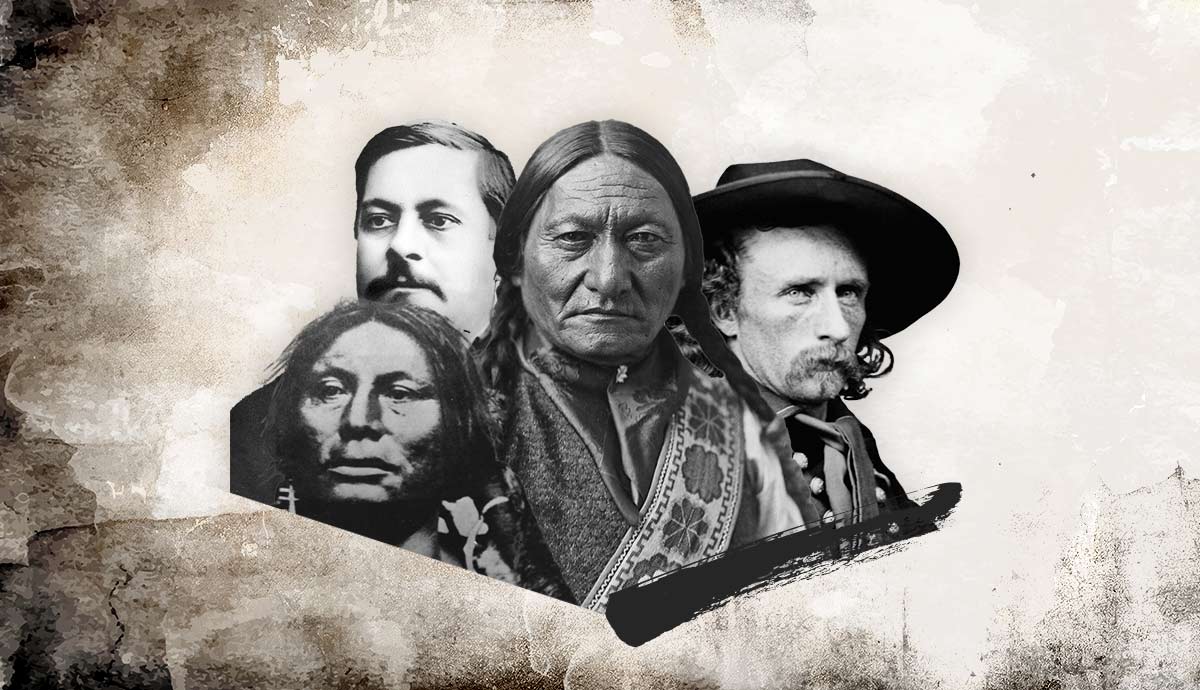
WWW.THECOLLECTOR.COM7 Players at the Little Bighorn (Greasy Grass)The Battle of the Greasy Grass, also known as the Battle of Little Bighorn, fought on June 25, 1876, is eternally etched in Americas consciousness. Viewed in various contexts in the decades since its occurrence, the fight is nonetheless one for the history books. Lakota, Cheyenne, and Arapaho warriors earned one of the biggest victories over the US Army, wiping out the entirety of George Armstrong Custers 7th Cavalry. The decisions made leading up to and during the event would determine the fates not only of the warriors on the field but the future of US-Indian policy. Who called the shots at the Greasy Grass?1. Crazy HorseCrazy Horses father, who took the name Waglula (Worm) after giving his moniker to his son. There are no authenticated photos of Crazy Horse the Younger. Source: Demetrio Cetan Cikala/Wikimedia CommonsBorn Chan-O-Ha or Among the Trees, Tansuke Witco, or Crazy Horse (more accurately translated as His Horse is Crazy), earned his fathers name after filling his early teen years with multiple cultural and military accomplishments. He proved himself an exceptional warrior in inter-tribal warfare and was promoted to the position of Shirt Wearer, a designation reserved for the best of the best of Lakota soldiers.In the mid-19th century, the main enemy of Crazy Horses people became the encroaching United States. Crazy Horse was heavily involved in the series of conflicts known as Red Clouds War, including Fettermans Fight, or The Hundred in The Hands, where he led the decoy trap that lured Captain William Judd Fetterman and his men to their deaths. Though Crazy Horse was a quiet man and thought strange by some, his actions to care for those who were struggling in his community, such as widows and the elderly, demonstrated his dedication to his people. He appeared to be a fearless leader who encouraged his fellow warriors to follow him into battle with the cry Hokahey [similar to lets go], today is a good day to die!The in-progress Crazy Horse Memorial in South Dakota. Source: Jeffery L Cooke/Wikimedia CommonsCrazy Horse was instrumental at the Greasy Grass, acting as a key leader among more than 1,500 allied Indigenous warriors. Just days prior, he had successfully led 1,200 warriors against General George Crook at the Battle of the Rosebud (also known as Where the Girl Saved Her Brother). Defeating the Americans soundly, Crazy Horse continually refused treaties and reservation life. He was arrested in May 1877 and taken to Fort Robinson, where he was killed by officers later that year.2. George Armstrong CusterCuster in his field uniform in 1865. Source: Library of Congress/Wikimedia CommonsPerhaps one of the most controversial figures in American history, George Armstrong Custer has been both celebrated and vilified in the years since his death. Custer was a rambunctious West Point student, later active in the Civil War, earning the rank of major general. He was known for his bravery and bravado, along with his flowing blonde locks. The Indigenous people he encountered in battles on the Plains often referred to him as Yellow Hair. Interestingly, Custer would chop his famous mane just before the battle that would seal his fate at Little Bighorn, making it difficult to identify his body.Custer, seated on left, with his brother Tom and wife Libbie, circa 1865. Source: National Portrait Gallery/Wikimedia CommonsWorking with generals Crook and Terry, Custer led one arm of a planned three-prong attack on the Lakota, Cheyenne, and Arapaho camp. The goal was to subdue the non treaty Indians who refused to move to the reservations that were being established by the US government. Custer arrived at the planned meeting location first and, believing the numbers of warriors in the Native American village were smaller than they actually were, elected to attack without waiting for supporting forces. Custer also lacked supplies, as his pack train was delayed. Still, the confident Custer advanced, leading just over 200 US soldiers in an assault on the village, which contained thousands of Indigenous men, women, and children, and among them, over 1,500 skilled warriors.Hed lend his name to the event in the immediate aftermath, with the battle referred to as Custers Last Stand in the press. He was further glorified by the publication of multiple bestselling books written by his wife, Elizabeth Libbie Custer. Even in the early 20th century, the Custer myth persisted, with films like Custers Last Stand and They Died With Their Boots On starring Errol Flynn, who portrayed the soldier as a sympathetic character. In recent years, however, other perspectives have been pushing through the narrative, and the truth of Custer not only attacking a village but impulsively leading his men to their deaths has become a point of discussion.3. Sitting BullSitting Bull photographed in 1885 by William Notman & Son. Source: Art Canada Institute/Wikimedia CommonsThough he was beyond fighting age at the time of the Greasy Grass, Sitting Bull was instrumental in the success of the Lakota in the fight. An esteemed tribal elder and medicine man, the warriors looked to Sitting Bull for leadership and inspiration. Two weeks before the fight, Sitting Bull had a dream in which white soldiers were falling upside down into the Lakota camp like grasshoppers, symbolizing their deaths. Though he would not personally fight in the battle, Sitting Bull was present in the camp and sent his two nephews, One Bull and White Bull, into battle with his own personal medicine.4. Frederick BenteenCaptain Frederick Benteen photographed by David Francis Barry, circa 1874. Source: National Portrait Gallery/Wikimedia CommonsFrederick Benteen was a captain in the 7th Cavalry, and not long after his appointment, he developed a loathing for his commanding officer, George Custer. He did not like Custers tendency for self-promotion or his showy manner. At Little Bighorn, Benteen was sent southwest to scout for additional Native encampments, but he found none and turned to head back. It was then that a message arrived from Custers camp informing him that Custer had engaged the enemy.The message ordered Benteen to come quickly and to bring the pack train he had with him, as it contained extra ammunition. However, on his way back, Benteen encountered the company of Major Marcus Reno, who had been pinned down by Native warriors. Instead of following Custers orders, Benteen remained with Reno. About 350 members of the 7th Cavalry survived that encounter. Benteen was criticized by some for failing to support Custer but was considered by many to have saved the day for Renos forces.5. GallGall in an undated image. Source: National Archives and Records Administration/Wikimedia CommonsGall, whose actual name was Phizi or Man Who Goes in the Middle, was a Hunkpapa Lakota orphan whose tenacity and skill proved his merits as a warrior early in life. He was a favorite Protg of Sitting Bull and had a reputation as a survivor. In addition to overcoming a rough start in life, in 1865, an Arikara scout, Bloody Knife, led US soldiers to Galls encampment, where Gall was bayoneted and left for dead. He crawled away and made a full recovery. Gall led the assault on Major Renos men near Little Bighorn, then returned and assisted Crazy Horse and others in directing the fight against Custers forces.6. Marcus RenoMajor Marcus Reno photographed by David Francis Berry circa 1876. Source: Denver Library Digital Collections/Wikimedia CommonsConsidered second-in-command after Custer at the Greasy Grass, Major Marcus Reno never made it to the famous battle site. Instead, his approximately 140 men were pinned down when they attempted to broach the Native village under Custers orders. The attack quickly became a retreat, then a siege, forcing Reno and his men to remain in place while Custers contingent was wiped out. After the smoke cleared, Reno was instantly scrutinized for what some considered his failure to assist Custer. A court of inquiry, including 1,300 pages of testimony, eventually exonerated him three years later, but his reputation, coupled with rumors of alcoholism (he was even accused by some of being drunk during the attack), meant his good name would never be restored. His military career spiraled downward, and he was eventually dismissed from the army. He continued trying to clear his name but was largely unsuccessful before he died of throat cancer in 1889.7. Bloody KnifeBloody Knife on the Yellowstone Expedition in 1873. Source: National Archives at College Park/Wikimedia CommonsPerhaps the most famous Indian Scout to serve with the US Army, Bloody Knife, was the son of a Hunkpapa Lakota man and an Arikara woman. He felt out of place in both tribes and, as a child, he was constantly ridiculed due to his mixed parentage. Bloody Knife enlisted as an Indian Scout during the Civil War and continued his involvement with the army afterward. He became a favorite of George Custer, and he accompanied him on many assignments. Bloody Knife was assigned to assist Reno as the conflict at the Greasy Grass ramped up, and he was killed by a bullet to the head as he stood beside Reno, discussing strategy.Recommended Reading: Connell, Evan S.(1984). Son of the Morning Star. New York: North Point Press0 Comentários 0 Compartilhamentos 13 Visualizações -
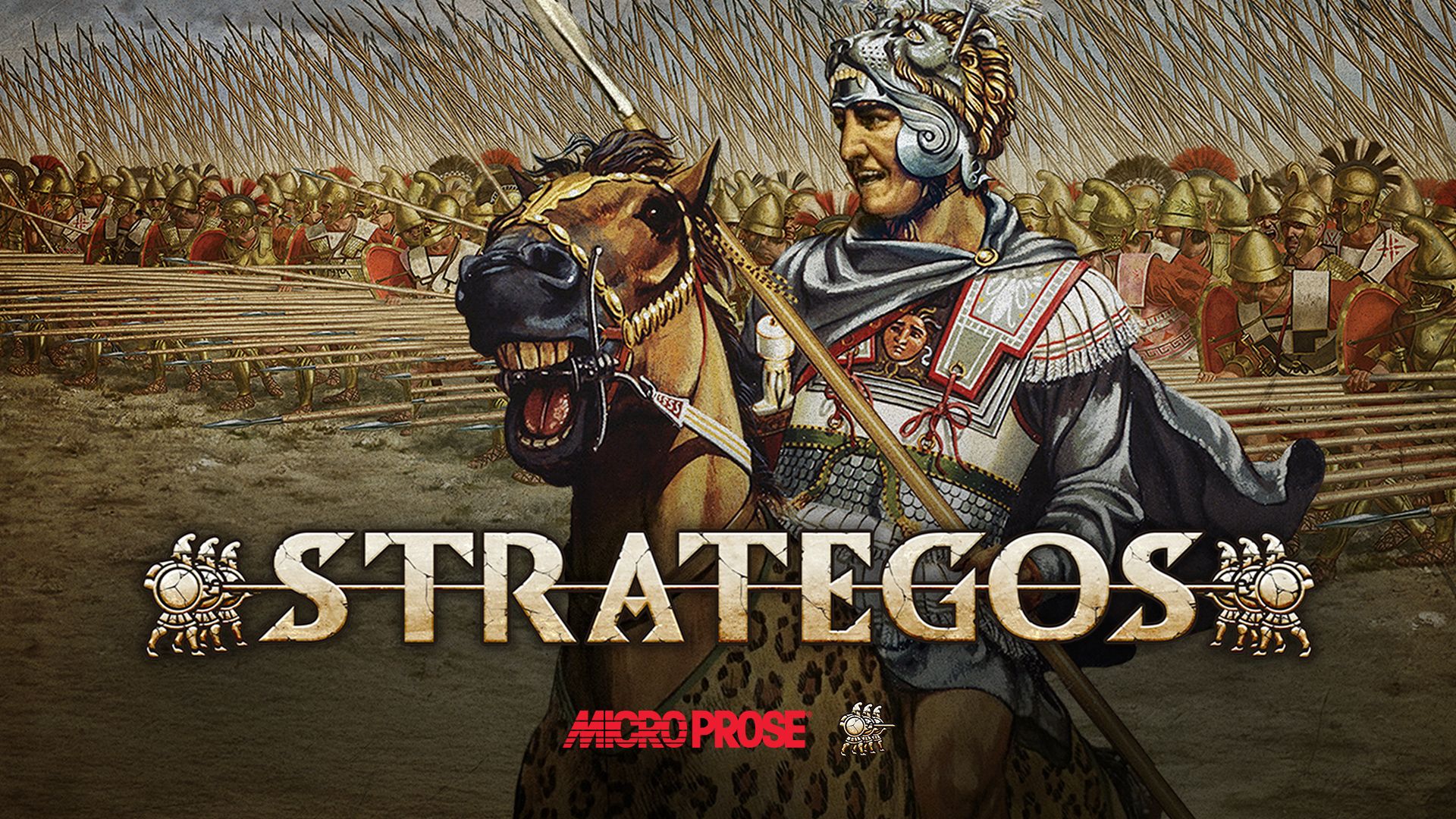
WWW.DUALSHOCKERS.COMStrategos Review: An Instant Classic is BornThe concept of strategy comes from the Greek strategia. In Latin, strategi. In French, stratgie. In German, strategie. In Italian, strategia. In Spanish, estrategia. Are you writing this down?0 Comentários 0 Compartilhamentos 13 Visualizações -
WWW.BGR.COM5 Uses For Your Old WebcamsIf you have an old webcam lying around, it can be repurposed in a variety of ways that give it new life. Here are some creative uses for an aging webcam.0 Comentários 0 Compartilhamentos 13 Visualizações -
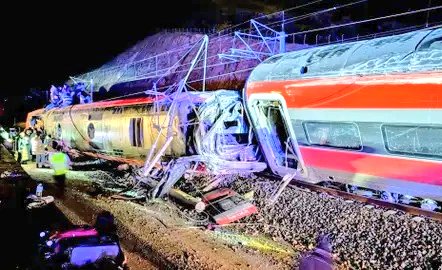
YUBNUB.NEWSAt least 21 people were killed and over 100 injured after two trains collided in SpainIn a deadly train accident, at least 21 people lost their lives and over a hundred injured in Spain. The devastating train collision occurred in southern Spain on Sunday.Transport Minister Oscar Puente0 Comentários 0 Compartilhamentos 13 Visualizações -
YUBNUB.NEWSPortugal Heads to Presidential Runoff as Far-Right Leader Scores Historic Second PlaceBY RosemaryPortugals presidential election has set the stage for a closely watched runoff after the leader of a hard-right populist party surged into second place, marking one of the most striking0 Comentários 0 Compartilhamentos 13 Visualizações -
YUBNUB.NEWSDem Leader Goes On Bizarre Rant Against Her Own Cuck SenatorsDemocratic Virginia state Sen. L. Louise Lucas ripped into fellow party Sens. Tim Kaine and Mark Warner over redistricting in the commonwealth, declaring Saturday she didnt need advice from a cuck0 Comentários 0 Compartilhamentos 13 Visualizações