Did Marie Antoinette Really Say Let Them Eat Cake?
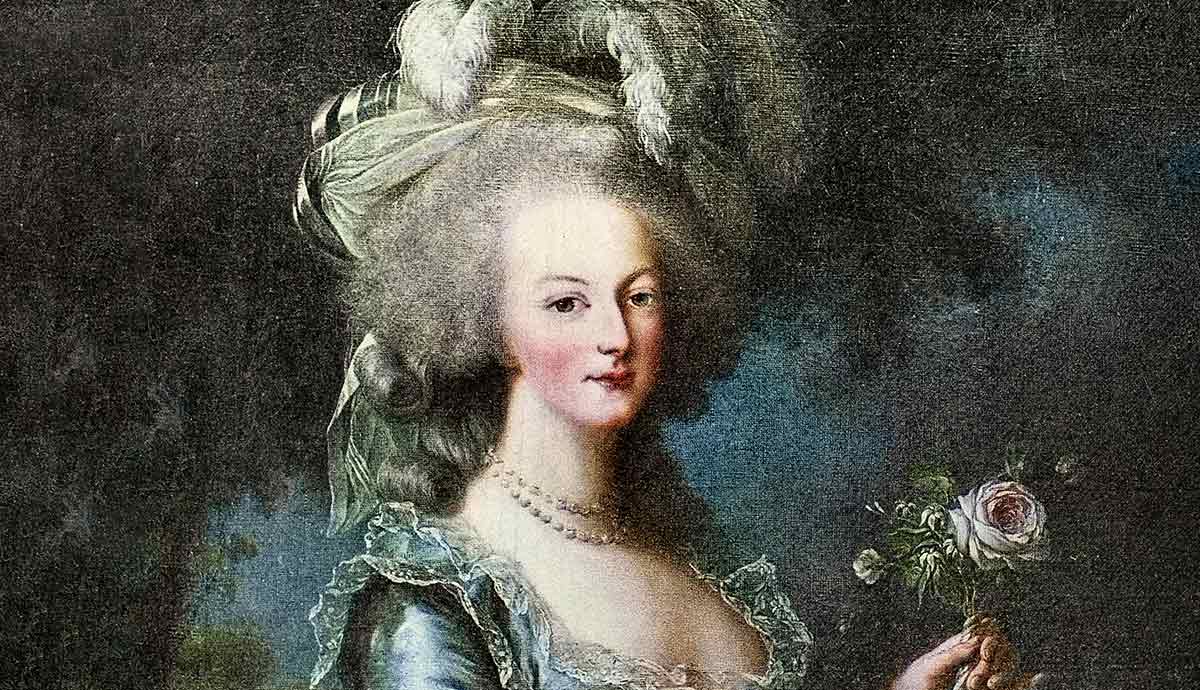
Let them eat cake is the translation of the famous French phrase Quils mangent de la brioche (brioche is a bread enriched with butter and eggs, considered a luxury food) thought to be the response of the 18th-centuryQueen consort of Louis XVI, Marie Antoinette, when informed about the starving peasants. Even though most historians believe the phrase was lost in translation and the queen never said it, it became a symbol of the privileged classes poor understanding of the plight of the lower classes on the eve of the French Revolution.France During Queen Marie AntoinettePortrait of Marie Antoinette, Queen of France, by Louise lisabeth Vige Le Brun, c. 1788. Source: New Orleans Museum of ArtMarie Antoinette Josefa Johanna (Vienna 1755Paris 1793) was an Austrian princess born and raised in Vienna. She was a member of the first generation of the House of Habsburg-Lorraine and the last queen of pre-Revolutionary France from 1774 to 1792. At the age of 14, in May 1770, she became Dauphin of France by marrying Louis Auguste, grandson of King Louis XV of France. On May 10, 1774, her husband became king of France under the name of Louis XVI, making Marie Antoinette a queen.As a queen, Marie Antoinettes power and influence were limited. She was perceived as an outsider who never broke ties with her family in Vienna. For this reason, King Louis XVI did not discuss politics and foreign or internal affairs with her, nor did he ask for her opinion on these matters. Her role as a queen was confined to charitable activities, ceremonial duties, and producing heirs to the French throne to secure the Bourbon dynasty, at least during the initial period.When she first arrived in France, Marie Antoinette was celebrated for her beauty and generosity. However, feeling constrained by her duties, she found her escape in a lavish lifestyle, including expensive and extravagant balls in Versailles and luxurious fashion items. This lifestyle was perceived as detached from the socio-economic struggles of ordinary citizens, especially when the first signs of the revolution appeared.The French RevolutionScenes Under the French Revolution: Bread Shortage, Money Seller and Annuitants Selling Their Effects, by the Lesueur Brothers, c. 1789. Source: MeisterdruckeThe French Revolution erupted in 1789 and raged on until 1799, bringing a tumultuous decade of political and social upheaval. The revolution itself was a product of diverging factors, including the economic hardships the Frenchmen were experiencing. Poor economic conditions in France were caused by the following key factors:-Bad harvest and famine caused by weather conditions, leading to food shortages;-Subsequent rising food prices;-Harsh and inequitable tax system;-Frances contribution to the American Revolutionary War of 1775-1783 that further strained the French economy, leaving the country in considerable debt;Even though attempts were made to reform the financial system, noblemen often resisted, fearing they would lose their tax privileges.Anger and discontent with the monarchy started accumulating among French peasants and the working class. The culmination of these events was the Storming of the Bastille on July 14, 1789, marking the start of the French Revolution, the peoples revolt against the monarchy. The revolutionaries sought to break up the old feudal order, abolish privileges, and establish a republic based on the principles of liberty and equality.Marie Antoinettes ReputationFrench Revolution of 1789: The Storming of the Bastille on July 14, by Tancredi Scarpelli. Source: MeisterdruckeThe situation became especially tense after the population, which was in dire straits, learned that Marie Antoinette had allegedly purchased a valuable diamond necklace. Although she had not worn it publicly, the incident, commonly known as the Affair of the Diamond Necklace, seriously damaged her reputation as a queen. The revolutionaries directly accused her of bankrupting the country, and she became known in this circle as Madame Deficit.During the revolt, Marie Antoinette was credited with many immoral acts and counter-revolutionary intrigues, which worked well in increasing the number of supporters of the revolution. In October 1789, starving Parisians stormed Versailles and captured the royal family, who were then taken to the Tuileries Palace. In June 1791, Marie Antoinette and Louis XVI attempted to flee to Great Britain but were recognized at the border.The fact had disastrous results and greatly humiliated the monarchs in the eyes of the French people. On August 10, 1792, the Tuileries Palace was stormed, and the royal family was captured, separated, and imprisoned. On September 21, 1792, the monarchy was abolished in France. On January 21, 1793, Louis XVI was executed. Marie Antoinettes trial took place on October 14, 1793, when she was convicted of high treason by a revolutionary tribunal and sentenced to death. Two days later, on October 16, the 37-year-old Marie Antoinette was guillotined in front of the Palace of the Revolution.Historical Context of Bread in FranceMarie Antoinette playing the harp at the Versailles, by Jean-Baptiste Andr Gautier-Dagoty. Source: GranPalais RmnPhoto/Chteaux de Versailles et de Trianon, VersaillesThe French queen is alleged to have said, Quils mangent de la brioche. Thats French for Let them eat brioche. So, the reference wasnt to the cake we know today but brioche, a rich bread made from eggs and butter.Marie Antoinette reportedly said, Let them eat cake, in 1789, when France, under the rule of King Louis XVI, was experiencing bread shortages, which led to the subsequent starvation of the working class.Lady Antonia Fraser, in her biographic work, Marie Antoinette: The Journey, outlines the word brioche held a particular power in this phase, as the staple food of the French peasantry and the working class was bread, absorbing 50 percent of their income, as opposed to 5 percent on fuel; the whole topic of bread was therefore the result of obsessional national interest.Origins of Quils mangent de la briochePortrait of Marie-Antoinette and her children, by Studio of lisabeth Vige Le Brun. Source: La Gazette DroutThe French philosopher Jean-Jacques Rousseau is regarded as the first person to come up with the phrase Quils mangent de la brioche.In book VI of his Confessions, written in 1767 and published in 1782, Rousseau recounts the phrase in a story in which he recalled an episode when he was in desperate need of finding some bread to accompany the wine he had stolen. Elegantly dressed, he hesitated to enter an ordinary bakery, recalling the words of a great princess without specifying which one:At length I remembered the last resort of a great princess who, when told that the peasants had no bread, replied, Then let them eat brioches.Marie Antoinette was indeed a princess at the time, though still a child, aged about nine years old. During this period, Marie Antoinette was living in Austria, and there is no historical evidence that the future queen and the French philosopher had ever met. Hence, it is unlikely that she was the princess Rousseau had in mind.As Rousseaus works inspired the French revolutionaries to galvanize more support, it is thought that some might have picked up the quote and accredited it to Marie Antoinette to fuel the opposition to monarchy.Jean-Jacques Rousseau set a precedent by not naming the great princess, setting the stage for further manipulation of the phrase.The earliest known official source associating the Quils mangent de la brioche quote with Marie Antoinette can be found in an 1843 issue of the journal Les Gupes, almost 50 years after the French Revolution. The French writer Jean-Baptiste Alphonse Karr declared that he came across a book dated 1760 containing the phrase. Since Marie Antoinette was born in 1755 and only arrived in France in 1770, this timing proves that the rumor about Marie Antoinette was not true.Why Was the Phrase Attributed to Marie Antoinette?Execution of Marie Antoinette, Queen of France, Place de la Revolution, Paris, 1793, French School. Source: MeisterdruckeAs the last queen of pre-revolutionary France, the opposition of the monarchy had successfully utilized the person of Marie Antoinette to galvanize public support. Besides accusations of ruining Frances finances for a lavish lifestyle, which worsened Frances dire financial straits, she was presented as a threat to the republicans. When the armed insurrections against the French monarchy intensified, Marie Antoinette turned to her brothers in Austria for help, asking for assistance to save the French monarchy.Through propaganda, the image of Marie Antoinette was damaged. Stories and articles were printed and spread, exaggerating the queens and her Austrian familys history and relationships with fictitious anecdotes and false information.The Revolution abolished monarchy. Even so, the following centuries saw the alternation of monarchies and republics. Along with armed clashes, propaganda was actively and successfully utilized. In this context, the phrase Let them eat brioche was attributed to Marie Antoinette only during the Third French Republic in 1870. According to Professor Denise Maior-Barron:It did not come to be misattributed to Marie Antoinette during the 18th century, but during the Third French Republic starting in 1870, when a careful program of reconstructing the historical past took place. The masterminds of the French Revolution destroyed the French monarchy by continually attacking, and eventually destroying, its most important symbols: the king and the queen of France. For this reason, the Let them eat cake type of clichs persists.The War of Flours: Pillage of bakeries in Paris, French School, c. 1775. Source: MeisterdruckeBesides the Republican cause, Robert Gildea, a professor of modern history at the University of Oxford in the United Kingdom, names sexism as another reason for demonizing the legacy of Marie Antoinette through the phrase, especially during the 19th-centuryFrench Revolution, which tried to exclude women from political power, as he outlined.Women, and especially those women who could hold unofficial power over a king or other influential governors, were largely denounced. In fact, Marie Antoinette was not the only woman to have a tragic fate during the revolution. Olympe de Gouges, who wrote the Declaration of the Rights of Women and of the Female Citizen, was also guillotined on November 3, 1793.Did Marie Antoinette Really Say, Let Them Eat Cake?French Revolution: the Awakening of the Third Estate, French School, 1789. Source: MeisterdruckeAccording to British author Antonia Fraser, the notorious phrase Let them eat cake was used around 100 years before Marie Antoinette was born in reference to Maria Theresa, the wife of Louis XIV. Fraser uses the memoirs of Louis XVIII as a source. Louis XVIII did not directly name Marie Antoinette but attributed the phrase to Maria Theresa. Thus, the great princess in Rousseaus book might have been Maria Theresa, not Marie Antoinette.During the reign of Louis XVI, France experienced only two considerable famines and subsequent bread shortages. The first is known as the Flour War of April-May 1775, referring to the series of uprisings in different parts of France; the second occurred in 1788. According to the letters Marie Antoinette sent to her family in Austria, she felt concerned and sympathized with the peasantsan attitude contrary to the phrase Let them eat brioche:It is quite certain that in seeing the people who treat us so well despite their own misfortune, we are more obliged than ever to work hard for their happiness. The King seems to understand this truth.British historian Antonia Fraser claims that contrary to anti-monarchist portrayals of Marie Antoinette, the queen of France was a generous patron of charity and moved by the plight of the poor when it was brought to her attention, thus making the statement out of character for her. The evidence, or the lack of it, proves that the phrase Let them eat cake might represent a notable example of historical misattribution to historical figures.In the words of Rose Bertin, Marie Antoinettes fashion designer, There is nothing new except what has been forgotten.













 English
 Arabic
 Spanish
 Portuguese
 Deutsch
 Turkish
 Dutch
Dutch
 Italiano
 Russian
 Romaian
 Portuguese (Brazil)
 Greek
Greek