• YUBNUB.NEWS
    SHAKEDOWN: Democratic State Rep Says She Was Threatened by Sanctuary Sheriff for Supporting Pro-ICE Legislation
    A Democratic North Carolina lawmaker claimed she was threatened last summer when she was on the verge of supporting legislation forcing sheriffs to cooperate with Immigration and Customs Enforcement.
    0 Comments 0 Shares 0 Views
  • YUBNUB.NEWS
    Trump to Release New Health Care Affordability Plan in Coming Days
    President Donald Trump speaks to the Detroit Economic Club at the MotorCity Hotel and Casino in Detroit, Michigan on Jan. 13, 2026. Travis Gillmore/The Epoch TimesPresident Donald Trump dropped hints
    0 Comments 0 Shares 0 Views
  • YUBNUB.NEWS
    JUST IN: Several Prosecutors in Minneapolis US Attorneys Office Resign in Protest Over DOJs Push to Probe Renee Goods Widow
    At least six prosecutors in the Minneapolis US Attorneys Office have resigned in protest over the Justice Departments push to probe Renee Goods widow. New cellphone footage from the ICE agent
    0 Comments 0 Shares 0 Views
  • YUBNUB.NEWS
    Former Congressional Staffer Charged with Stealing $150,000 Worth of Government Property in Bizarre Scheme
    Federal prosecutors have charged a Maryland man with orchestrating a years-long theft scheme inside the U.S. House of Representatives, alleging he stole hundreds of government-issued cell phones and sold
    0 Comments 0 Shares 0 Views
  • YUBNUB.NEWS
    Community Opposition Strikes Down Planned Islamic Center In Red State
    A planned Islamic center and mosque in the community of Broken Arrow, Oklahoma was struck down by the city council in a 4-1 vote after months of steep pushback from residents. The decision followed weeks
    0 Comments 0 Shares 0 Views
  • YUBNUB.NEWS
    Keir Jung Un-Believable
    I couldn't think of a whole lot of anything on the 'Dictatorship and Authoritarian Workbook for Dummies' checklist that Sir Keir Starmer, Prime Minister of the United Kingdom, hadn't made a good start
    0 Comments 0 Shares 0 Views
  • WWW.UNIVERSETODAY.COM
    When Baby Stars Throw Tantrums
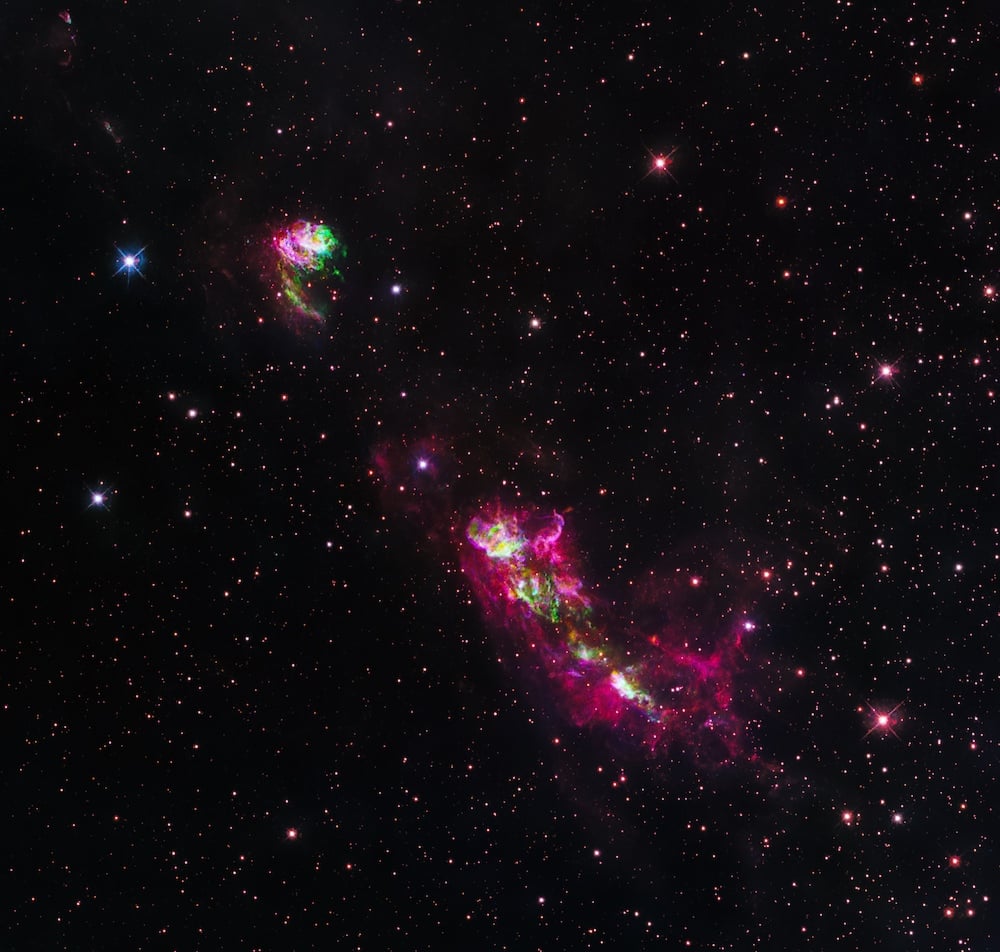
    NASAs Hubble Space Telescope has captured stunning new image of HH 80/81, a pair of objects created when supersonic jets from a newborn star slam into previously expelled gas clouds, heating them to extreme levels. These jets, powered by a protostar 20 times more massive than our Sun, stretch over 32 light years through space and travel at speeds exceeding 1,000 kilometres per second, making them the fastest outflows ever recorded from a young star.
    0 Comments 0 Shares 0 Views
  • WWW.THECOLLECTOR.COM
    The History of the Isle of Wight (Vikings, Castles, and Medieval Heritage)
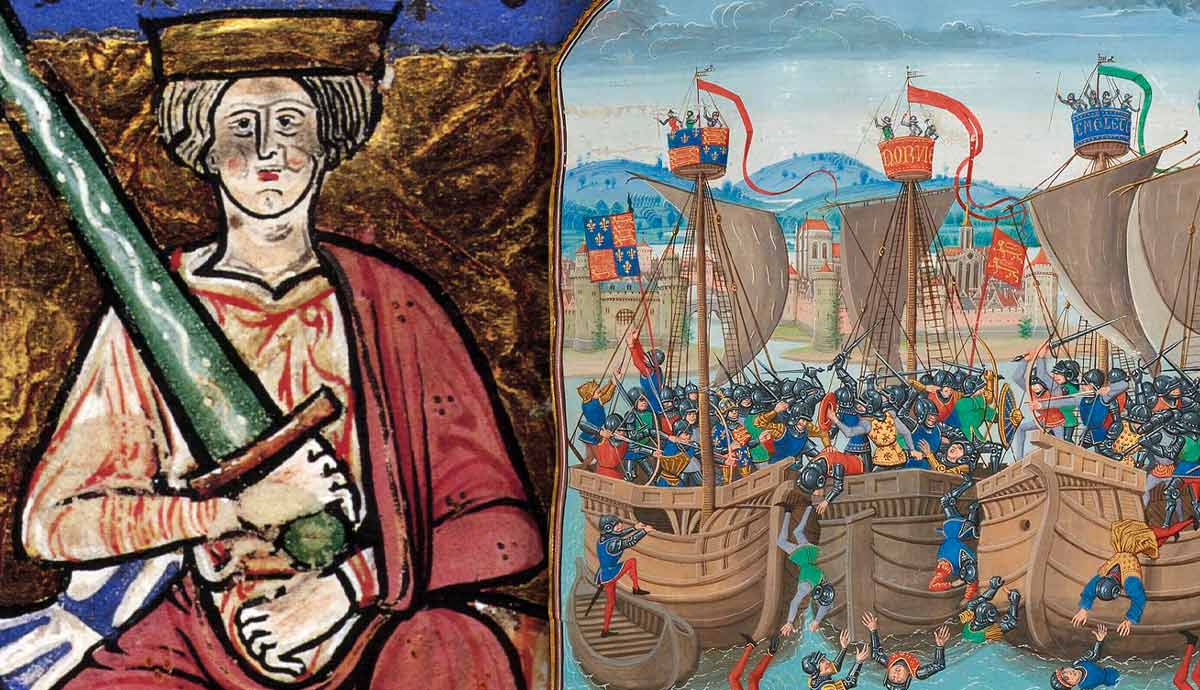
    The Isle of Wight, located off the southern coast of Great Britain, has a long and rich history dating back millennia. Inhabited since Neolithic times, its strategic location in the English Channel has placed it at the center of many conflicts, including the Viking invasions of England, Anglo-French conflicts, and World War II. But in contrast, since Roman times, the island has also been a popular holiday destination for the wealthy. This is the history of the Isle of Wight.Early History of the IslandCopper Alloy Axe, found at Arreton Down, Isle of Wight, c. 1700-1500 BCE. Source: British MuseumThe Isle of Wight is located off the southern coast of Great Britain near the county of Hampshire. The earliest inhabitants of the island appear to have been paleolithic hunter-gatherers about half a million years ago, though the exact timing of their arrival is subject to some speculation. These were followed by waves of Mesolithic and Neolithic migrations over the following millennia. During the Bronze Age, the island was settled by segments of the Bell Beaker culture, an Indo-European speaking group that brought metalworking to the island. During the Iron Age, the Isle of Wight was home to the Celts, who inhabited the island until the arrival of the Romans.In the early 1st century CE, the Roman Empire under Claudius invaded and conquered a large portion of Britain, including the Isle of Wight, which was captured by the future emperor Vespasian. Though it was added to Romes ever-growing list of territories, the Isle of Wight, which the Romans called Vectis, was for the most part overlooked by the Romans. They did not place any significant towns on the island, though they may have placed a small fort at the future location of Carisbrooke Castle. However, archaeologists have found at least seven Roman villas, homes of the wealthiest members of Roman society. This would imply that the Isle of Wight was a vacation spot for the Romano-British elite. Later the Victorian aristocracy would also treat the island as a holiday destination.Bronze Dupondius of Vespasian, Roman, 72 CE. Source: Metropolitan Museum of ArtIts unknown where the name Wight comes from, though the most prominent theory is that it means place of division, since the island divides the two arms of the Solent, a strait of the English Channel that separates the Isle of Wight from the rest of Britain. The name Wiht has been used since the Anglo-Saxon era, and the Doomsday Book of 1086 refers to the island as Wit.The Germanic Invaders ArriveDisc-on-bow brooch, found near Shorwell, Isle of Wight, c. mid-6th century CE. Source: British MuseumIn 410 CE, the Roman Empire was crumbling, and the legions that once protected Britain were withdrawn. The inhabitants were told to look to their own defenses. With the might of Rome no longer a shield, Britain and the Isle of Wight were subject to waves of invasion from Germanic tribes that were migrating west. The exact timeline of events is a bit speculative, since there are few firsthand accounts, and even fewer archaeological remains. However, thanks to later writings by historians such as the Venerable Bede and the Anglo Saxon Chronicle, its possible to piece together a timeline. In 530, the island was conquered by the Saxons under the leadership of Cedric, the first king of Wessex. In 534, he turned control of the island over to his nephews Stuf and Wihtgar, who drove out the native Briton inhabitants. These two were Jutes, a Germanic tribe from what is now Denmark. Their arrival opened up the island to settlement by the Jutes.Anglo-Saxon Seax (knife), c. 10th century. Source: British MuseumThe Isle of Wight was ruled by Stufs descendants until it was taken over by the Christian kingdom of Mercia in the mid-7th century. According to Bede, in 686, the island was invaded by the king of Wessex, Caedwalla. The king of Wight, Arwald, attempted to fight off the Wessex incursion, but was defeated in battle and killed. His other relatives are captured and executed. Arwald was the last pagan ruler of Anglo-Saxon land in England, and with his death, England and the Isle of Wight were firmly Christianized.The Fury of the NorthmenViking sword, c. 10th century CE. Source: Metropolitan Museum of ArtStarting in the late 8th century, the British Isles, as well as much of Europe and other parts of the world, were subject to centuries of attack by a new set of raiders and invaders, the Vikings. Because of the naval-based nature of Norse raids, the Isle of Wight was a convenient staging ground for strikes against the rest of the British Isles. In the 9th century, the Isle of Wight was a base of operations for strikes into Hampshire and Sussex in southern England. It was also used as a stopover point and wintering location for the Vikings who were unable to make the full journey to northern France.In 897, the Vikings launched a major series of raids into England, and in particular Devon and the Isle of Wight. In response, Alfred the Great fought a naval battle and defeated the raiders, driving them off for some time. In spite of these and other successes, the Norse would continue to plague England for many more centuries. The Isle of Wight would remain largely in Saxon hands, being incorporated into the shire of Hampshire after the kingdom of Wessex was divided into shires. However, it was still used as a base of operations for Norse raiders, who would often winter there.Aethelred the Unready, 968-1016, from an illuminated manuscript of the Chronicle of Abindon, c. 1220. Source: Wikimedia CommonsThe raids of the Norse were especially bad during the reign of Aethelred the Unready. In 1002, a Norse chieftain named Swein attacked the Isle of Wight, and according to the Anglo-Saxon Chronicle:There they roved about, even as they themselves would, and nothing withstood them, nor any fleet by sea durst meet them nor land force either, went they ever so far up. Then was it in every wise a heavy time, because they never ceased from their evil doings.In 1013, Swein launched an even fiercer invasion of England and Aethelred was forced to flee to the Isle of Wight as a refuge until Sweins death. After Aethelreds death in 1022, the island was once again used by the Norse as a staging ground for raids and a place to winter.The Isle of Wight would be permanently recaptured by the Saxons in 1048, and control turned over to Earl Godwin and his son Harold, who would become the future King Harold Godwinson. With this occupation, the back-and-forth seesaw of possession of the island was finally over.The Middle AgesWilliam of Normandy on the Bayeux Tapestry. c. early 12th century CE. Source: Wikimedia CommonsIn 1066, William of Normandy launched a successful invasion of England, seizing the throne from Harold Godwinson. With England now under Norman rule, the Isle of Wight was given to William Fitz Osbern. During his lordship over the island, Osbern began construction of Carisbrooke Castle, the main defensive structure. The site may have been the location of a Roman fort, and the Saxons used the location for a fortification against Viking raids. Osbern was killed in battle in 1071, and lordship of the island and construction of the castle passed to his son Roger.In 1100, Henry I granted the lordship of the Isle of Wight to the Redvers family, who would retain control of this fief for two centuries. By a quirk in the arrangement, the people of the Isle of Wight did not owe their loyalty to the English monarch, but to their lord. This state of affairs would remain in effect until 1293, when the island was sold to Edward I, transferring it to the English Crown.In the early 1330s, tensions between England and France were at a fever pitch, eventually exploding into open conflict, known today as the Hundred Years War. As was the case when the Vikings sailed the seas in search of conquest and plunder, the Isle of Wights strategic location in the English Channel made it an important hub for raids, counter raids, and invasions. Almost as soon as the war began, the island was struck by French raiders. Later, the English King Edward III used the island as a staging ground for his invasion of France during the Crecy campaign. The remainder of the century saw the Isle of Wight continually subjected to raids by the French and their Castilian allies.The Battle of Sluys, 1340, by Jean Froissart, 15th century. Source: Wikimedia CommonsIn 1374, a Castilian incursion sacked and burned much of the island. In 1377, a combined French and Castilian invasion pillaged much of the island and besieged Carisbrooke Castle. During the siege, the French commander was struck with an arrow shot from one of the castles loopholes, throwing the besiegers into confusion. They were driven off after the defenders sallied out, relieving the castle, and departed the island after being paid a bribe. The Isle of Wight was still targeted by French raiders into the 15th century.The Modern EraDefeat of the Spanish Armada, 1588, by John Tominson, 1805. Source: British MuseumAfter the Hundred Years War, tensions continued to simmer between England and France. During the Tudor era, King Henry VIII established the Royal Navy and further fortified the Isle of Wight as a defense against possible French attacks. In spite of these preparations, the island was attacked by the French in 1545. Landing in the southern portion of the island, the invasion force was driven off by the local militia. To protect against future attacks, another fortification, Yarmouth Castle, was built in 1547. In 1588, the Spanish Armada clashed with the English navy throughout the channel, with much of the fighting occurring off the coast of the island. Despite victories, the lingering threat of invasion led to the building of further defenses in the late 16th and early 17th centuries.While most of the Isle of Wights military history was focused on external threats, internal strife also had a hand in the islands history. In 1647, during the English Civil War, English monarch Charles I was fleeing London and boarded a ship bound for the Isle of Wight. Unfortunately for him, Robert Hammond, the governor, was a Parliamentarian and captured Charles, imprisoning him in Carisbrooke Castle. Charles attempted to escape several times, but failed, and was eventually transferred back to London for trial and execution. A century later, the Isle of Wight would be a staging ground for British soldiers during the Seven Years War.Osborne House on the Isle of Wight, by Le Blond & Co., 1852-1853. Source: British MuseumFrom the late 18th to the mid-20th centuries, the Island was peaceful and was a holiday location for the wealthy and influential members of British society, drawn to the islands temperate climate. Poets, artists, and even royalty spent time there as a refuge from the cares of the outside world. Most famously, Osborne House, a mansion on the island, would be the place where Queen Victoria would pass away in 1901. The tranquility was far from permanent, however.During World War II, the Isle of Wight was the location of radar installations and radio transmitters that warned Britain of incoming Luftwaffe air raids. As a result, the island was bombed repeatedly by German aircraft. There were plans for a German invasion, though these were called off when Operation Seal Lion, the invasion of Great Britain, was canceled. After the Normandy landings in 1944, the Isle of Wight became the jumping off point for Operation Pluto, or Pipe Line Under The Ocean. It was exactly what it sounds like, an underwater oil pipeline that could transfer fuel from Britain to mainland Europe quickly and efficiently. This was the last time the Isle of Wight would be used for a direct military purpose.Other more peaceful events also happened on the Isle of Wight, such as the first phone call in the British Isles and the first radio station, though these are overshadowed by the more militant events in the islands history.

    0 Comments 0 Shares 0 Views
  • ALLTHATSINTERESTING.COM
    A Rogue Elephant In India Has Killed More Than 20 People Since The Start Of The Year
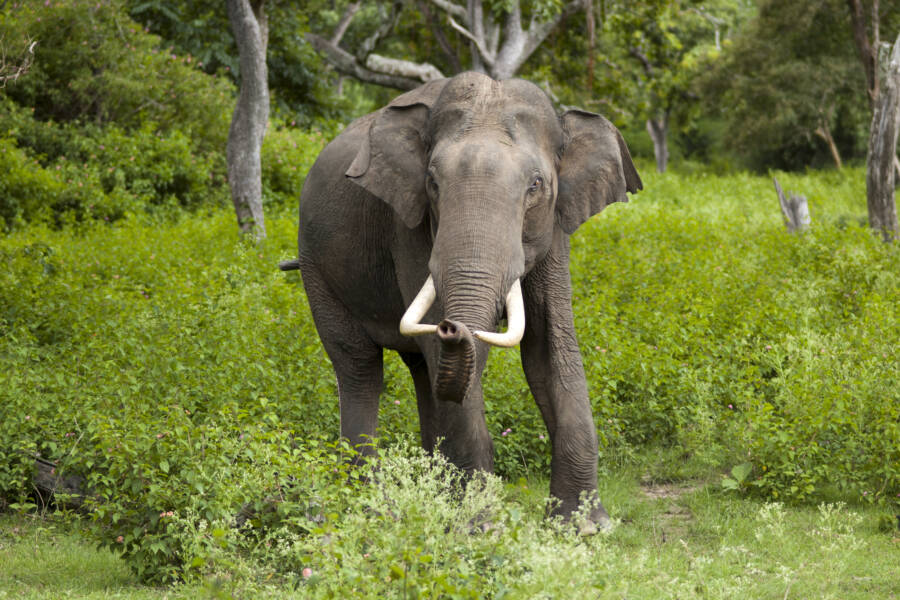
    Yathin S Krishnappa/Wikimedia CommonsAn Indian bull elephant not the rampaging elephant as seen at Bandipur National Park.Over the past two weeks, several villages in the Indian state of Jharkhand have been terrorized by an elephant. The creature appears at night, tearing through vulnerable communities. So far, hes trampled at least 22 people. Officials are now on the hunt for the elephant. They hope to safely capture him and return him to his herd but hes proving to be elusive.The Rampaging Elephant In Jharkhand, IndiaAccording to reports from the Times of India, the elephant attacks began on Jan. 1, 2026, in the Indian state of Jharkhand, and have occurred in the villages and towns of Chaibasa, Kolhan, Saranda, Noamundi, Tonto, and Goilkera.The attacks mostly take place at night, when the young male elephant emerges from the forest and rampages through fields and residential areas. So far, most of his victims have included men who were sleeping outdoors or guarding their fields. But the elephant has also killed three members of a single family, including two young children, as well as a man who was returning from work. Google MapsThe elephant killed a father and his two young children near Goilkera, India.Officials have launched an urgent search for the animal, but so far its been difficult to track it down. After its nightly rampages, the elephant slips back into the forest, where its virtually impossible to locate. And even the elephants daytime attacks have not been consistent over the past two weeks, meaning that no one knows where the creature will appear next. The elephants movement pattern suggests that it is haphazardly running around a [62-mile] circumference across three forest divisions, an official told the Times of India. Accordingly, teams are on its trail.So, what has caused this elephant to go on a rampage?The Theories Behind The Elephants AttacksElephants will attack humans for a number of reasons, including habitat loss, stress from human encounters, and even out of revenge for human actions. In 2022, an elephant in Thailand tore its handler in two after it was forced to work in extreme heat. That same year, an elephant in India trampled a woman to death for an unknown reason then returned to attack her body as her family conducted her funeral. And in 2023, elephants in Malaysia trampled a car after the vehicle ran over one of the herds calves. Whats more, elephants and humans have increasingly clashed in India, where industrialization has driven elephants from their natural habitats and disrupted their migratory paths. This has led to an increase in violent human-elephant encounters, and Jharkhand alone has seen an estimated 1,300 deaths caused by elephant attacks in the last 23 years. Elephants also have fatal encounters with humans: Recently, eight elephants were killed when their herd tried to cross railway tracks in the state of Assam.Bernard DUPONT/Wikimedia CommonsAn elephant foraging along a road in India.But the most recent elephant attacks in India dont seem to have been inspired by revenge or habitat loss. Rather, experts suspect that the rampaging elephant is in musth, or a mating phase during which its testosterone levels spike. This stage, which can last up to 15 to 20 days, can make male elephants more aggressive.The elephant appears to have turned rogue and our focus now is to tranquilize it at the earliest, Chaibasa divisional forest officer Aditya Narayan explained to the Times of India. We are certain it is in musth, which explains its heightened aggression. Were trying our best to control the situation.Officials suspect that the rogue elephant may also have gotten separated from its herd and wandered into human territory. Their goal is to locate the animal and return him to the others. Hopefully, this and the end of the elephants musth phase will help bring an end to its rampage. After reading about the violent, rampaging elephant in India thats killed almost two dozen people in two weeks, discover the story of the Gulabi Gang, Indias all-female vigilante group that wears bright pink saris, carries bamboo sticks, and protects abused women. Or, learn about Mumtaz Mahal, the woman whose death inspired the construction of the Taj Mahal, one of the Seven Wonders of the World.The post A Rogue Elephant In India Has Killed More Than 20 People Since The Start Of The Year appeared first on All That's Interesting.
    0 Comments 0 Shares 0 Views
  • ALLTHATSINTERESTING.COM
    The Prehistoric tzi The Iceman Mummy May Have Just Upended Experts Theories About The Origins Of HPV
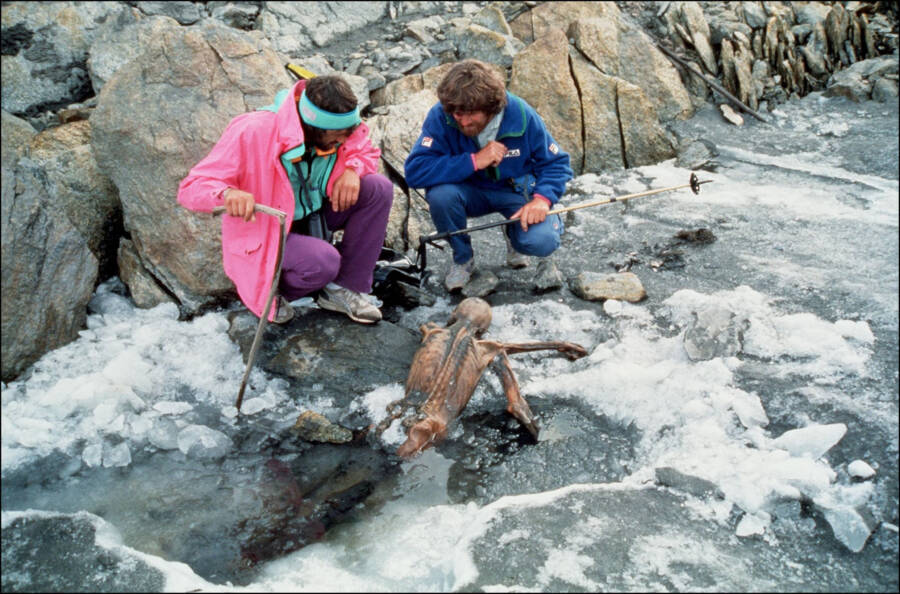
    Paul HANNY/Gamma-Rapho via Getty ImagesNew research found evidence of HPV16 in tzis genome, revealing groundbreaking insights into the virus evolutionary history.Both tzi the Iceman, the oldest well-preserved human ever found, as well as a prehistoric man who lived in Siberia 45,000 years ago were recently found to be carriers of a cancer-causing strain of human papillomavirus (HPV), according to new research posted to bioRxiv.Since his discovery along the Austrian-Italian border in 1991, tzi has been the subject of several scientific analyses that have revealed details of his life some 5,300 years ago. Researchers have, for instance, learned that he was likely killed after an arrow struck him in the shoulder, uncovered what his last meal was, and even revealed what ailments had plagued him, including broken bones, intestinal parasites, and lungs blackened by soot.Now, analysis of genetic data from tzi and another prehistoric individual has revealed that both were likely infected with HPV16, which would mark the earliest molecular evidence of the disease in human history, researchers say. The research has yet to be peer-reviewed, but if the findings are accurate, they could help to identify when and how humans first came into contact with the virus. Pushing Back The Historical Timeline Of HPVWikimedia CommonsA reconstruction of an early Neanderthal man.Our results suggest that HPV16 was already present in modern humans during the Upper Paleolithic, indicating a long-standing host-virus independent of Neanderthal transmission, the researchers wrote in the new preprint paper.This is an especially notable finding, as it is commonly believed that Neanderthals, who overlapped with modern humans in Eurasia from 60,000 to 34,000 years ago, were responsible for transmitting the virus to Homo sapiens. The teams sample size is admittedly small, and so the origins of HPV are still largely shrouded in mystery, but the research does at least challenge the Neanderthal-transmission theory to a considerable degree.This is a very nice finding, Ville Pimenoff, a computational geneticist at the University of Oulu who was not involved in the study, told Science. Homo sapiens was basically infected by these viruses for all of its existence.Scientists are starting to gain a better understanding of just how intertwined the evolutionary history of HPV is with that of humankind itself. Viruses in the Papillomaviridae family are prehistoric and have co-diverged with their vertebrate hosts over extensive timescales, exhibiting strict host specificity that mirrors the phylogeny of their hosts. In other words, the virus and its host evolved in lock step, side by side.South Tyrol Museum of Archaeologytzi is one of the best-preserved prehistoric mummies ever found.Phylogenetic studies suggest that the timescale of papillomavirus evolution spans millions of years, largely inferred from a model of virus-host co-divergence. This means, essentially, that as different species evolved, their associated papillomaviruses evolved with them. And while general papillomaviruses are very old, the specific high-risk types that affect humans today and can cause cancer, such as HPV16, have divergence times that align with significant events in human prehistory.Research into how these specific high-risk HPV lineages evolved can also provide insight into how ancient human populations interacted and spread viruses. Modern analyses indicate that the major variant lineages of HPV16 (A, B, C, and D) split apart around 500,000 years ago predating the emergence of Homo sapiens and coinciding with the evolutionary divergence between Neanderthals and modern humans.The results indicate that HPV16 has been associated with anatomically modern humans for a very long time, likely well before major population splits outside Africa, study co-author Marcelo Briones told Live Science.This supports the idea that oncogenic human papillomaviruses are not recent pathogens but long-term companions of their hosts, evolving alongside primates and humans over extended evolutionary timescales.Potential Challenges To The Neanderthal-Transmission Theory Of HPVBoth tzi and the prehistoric Siberian man also studied here, known as Ust-Ishim, were chosen for this analysis because they represent two of the most well-preserved early human genomes ever found. tzi died roughly 5,300 years ago and was naturally mummified, but Ust-Ishim, who was found in 2008, was much older. He lived around 45,000 years ago in what is now Siberia, and all that remains of him is a single leg bone. Still, that was enough material to sequence one of the oldest human genomes known to science.Through these genomes, Briones and colleagues were able to find multiple DNA fragments matching HPV16, indicating both men were afflicted with the virus.Were pretty confident theres a signal there We have the oldest evidence of HPV, said study first author Juliana Yazigi.Wikimedia CommonsA map of potential sites of Neanderthal-human interbreeding.Given how far apart tzi and Ust-Ishim lived, both geographically and in the historical timeline, both men showing signs of HPV16 provides further evidence that this disease has been with humanity for perhaps millions of years. It could also indicate, Briones says, that perhaps Homo sapiens transmitted the cancer-causing virus to Neanderthals, and not the other way around, contrary to popular belief.Other experts feel this claim may be overstated, however. Koenraad Van Doorslaer, interim co-chair of the immunobiology department at the University of Arizona, tells Live Science that because Ust-Ishim also has Neanderthal DNA in his genome, it does not prove that HPV16 does not come from Neanderthals.Still, Van Doorslaer says he is genuinely excited about the implications of this study because it supports some critical assumptions about the history of this family of important viruses.Is this gonna make better vaccines, better treatments, better cures? Probably not. But not all science should be about that, he says. It should just be about learning cool things.After reading about this discovery, learn more about nine of historys most fascinating mummies. Then, read about six of the most interesting diseases to ever ravage humanity.The post The Prehistoric tzi The Iceman Mummy May Have Just Upended Experts Theories About The Origins Of HPV appeared first on All That's Interesting.
    0 Comments 0 Shares 0 Views