0 Commenti
0 condivisioni
0 Views
Elenco
Elevate your Sngine platform to new levels with plugins from YubNub Digital Media!
-
Effettua l'accesso per mettere mi piace, condividere e commentare!
-
YUBNUB.NEWSI Accept Jesus Christ as My Lord and Savior Scott Adamss Ex-Wife Tearfully Reads Legendary Cartoonists Final Message (VIDEO)Dilbert creator Scott Adams passed away on Tuesday after a battle with prostate cancer. He was 68 years old. In addition to the Dilbert comic strip, Adams has a podcast dubbed, Coffee With Scott Adams,0 Commenti 0 condivisioni 0 Views -
YUBNUB.NEWSDemocrats Words Used to Support Trump Venezuela Action, Lawmaker SaysHouse Intelligence Committee Chairman Rick Crawford (R-AR) announced a resolution praising President Trumps capture of Venezuelan leader Nicols Maduro, citing past Democratic comments and legislation0 Commenti 0 condivisioni 0 Views -
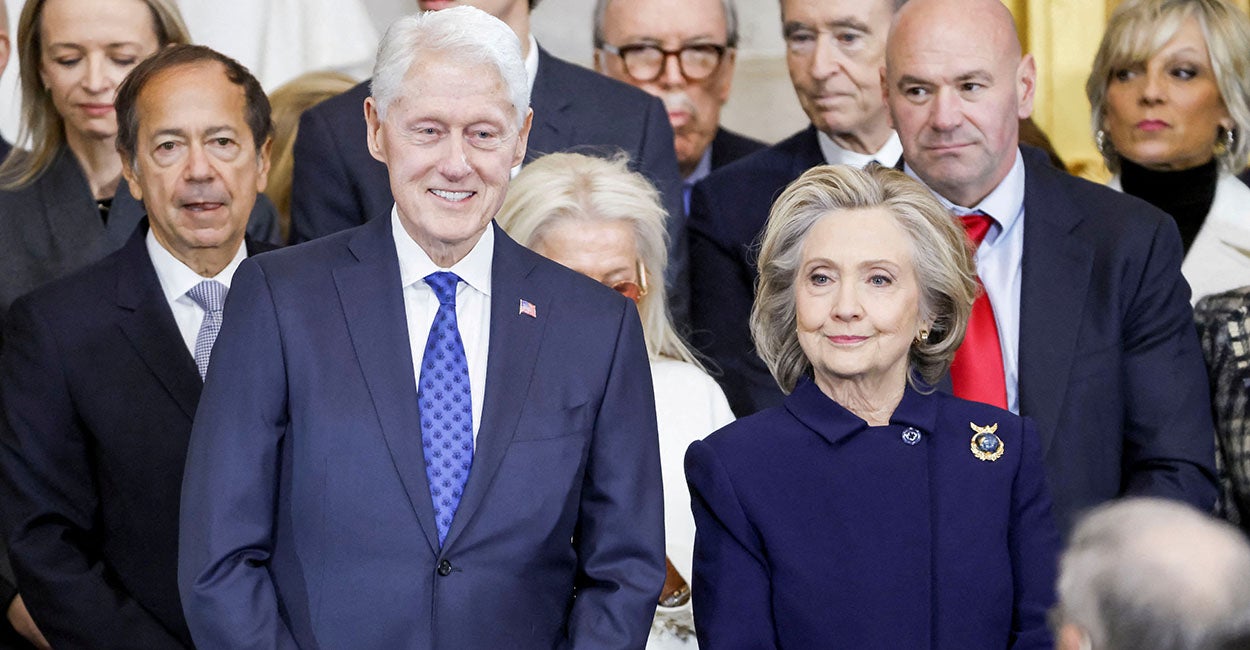
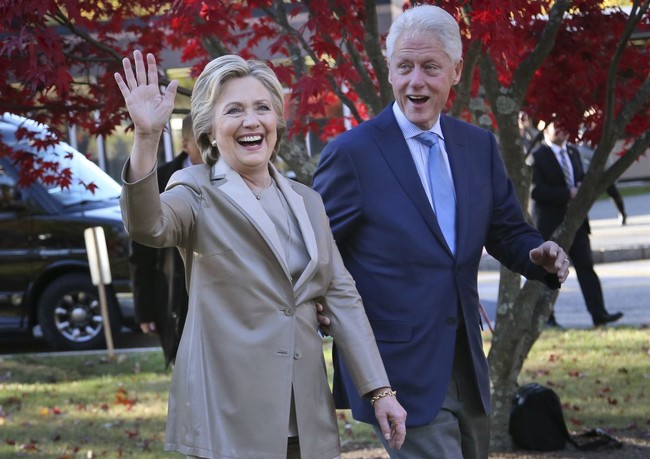
YUBNUB.NEWSRepublican Seeks Contempt Charges for Bill ClintonAfter former President Bill Clinton failed to appear at a House Oversight Committee deposition on Tuesday, chairman James Comer said he will move to penalize him for not complying with a subpoena. The0 Commenti 0 condivisioni 0 Views -
YUBNUB.NEWSClintons in Big Trouble on Epstein Subpoenas - Their Response Is Something ElseIf you know Bill and Hillary Clinton, you probably could have guessed that they weren't going to comply with subpoenas to testify in the Jeffrey Epstein case before the House Oversight Committee.0 Commenti 0 condivisioni 0 Views -
YUBNUB.NEWSTrump Cancels Iran Meetings in Support of ProtestersPresident Trump announced that the White House cancelled all meetings with Iranian officials amid ongoing protests in the country. Iranian Patriots, KEEP PROTESTING TAKE OVER YOUR INSTITUTIONS!!!0 Commenti 0 condivisioni 0 Views -
WWW.UNIVERSETODAY.COMNew Evidence That An Ancient Martian Ocean Covered Half The PlanetMars Was Half Covered by an Oceansusannakohler33808Mon, 01/12/2026 - 12:00Mars Was Half Covered by an Oceanhttps://mediarelations.unibe.ch/media_releases/2026/media_releases_2026/mars_was_half_covered_by_an_ocean/index_eng.html0 Commenti 0 condivisioni 0 Views -
WWW.THECOLLECTOR.COMThe Failed Russian Revolution? The Decembrist Uprising of 1825On December 26, 1825, around 3,000 Russian guardsmen staged a demonstration on Senate Square in St Petersburg against the accession of Tsar Nicholas I. They were led by liberal officers who had been conspiring for several years to overthrow the tsarist regime, abolish serfdom, and introduce a constitution. After a tense confrontation for several hours, Nicholas reluctantly fired on the rebels. Hundreds of conspirators were arrested and over a hundred were sentenced to exile in Siberia.The Revolutionary SpiritRussian army enters Paris in 1814. Copy of a painting by Johann-Friedrich Jgel, 1815. Source: Pushkin Museum, St Petersburg, RussiaIn March 1801, Tsar Alexander I of Russia succeeded his assassinated father Tsar Paul as Emperor of Russia. Educated by the Swiss liberal philosopher Frdric-Csar de La Harpe, Alexander came to the throne seeking to introduce liberal political reforms and abolish the notorious institution of serfdom. Alexanders early reform initiatives were significantly watered down by conservative aristocrats who warned of peasant uprisings.Alexanders domestic agenda was further impacted by the outbreak of war with Napoleonic France, but reform prospects improved after Alexander and Napoleon signed the Treaty of Tilsit in 1807. In 1809 Alexanders chief minister Mikhail Speransky introduced proposals for a constitution inspired by British, American, and French models with separation of powers between executive, legislative, and judicial branches. However, the plans were shelved as tensions began to build between Russia and Napoleon, and in March 1812 Speransky was exiled to Siberia as a French sympathizer.Napoleons invasion of Russia in 1812 famously ended in disaster, and by April 1814 Russian soldiers were triumphantly marching through the streets of Paris. The liberal officers who experienced the freedoms of French society returned to Russia hoping that the tsar would resurrect his reform agenda.Although Alexander had granted Poland a constitution in 1815 and appointed Speransky to lead administrative reforms in Siberia in 1819, their hopes for meaningful change were dashed as Alexander surrounded himself with conservative advisors including the reactionary general Alexei Arakcheev, who was placed in charge of Alexanders military colonies. Arakcheevs administration of the scheme, which intended to turn soldiers into farmers in peacetime and peasants into soldiers in wartime, was widely resented and led to sporadic mutinies.The Northern SocietyNikita Mikhailovich Muravyev. Portrait by Osip Kiprensky, 1815. Source: Mezhdunarodnaya voenno-istorichekaya assotsiatsiya (International Military History Organization)In 1816, several Russian Guards officers founded the Union of Salvation, a secret society dedicated to the abolition of serfdom and a constitutional monarchy. The organization was soon dominated by the radical Pavel Pestel, who became its chief ideologue and began agitating for political revolution. In 1818, the Union of Salvation was reorganized into the Union of Prosperity, a more moderate body boasting a wider membership base.After Pestel was transferred to the headquarters of the Second Army in Tulchin, Ukraine in 1818, the Union of Prosperity was divided between a moderate northern faction in St Petersburg and a more radical southern faction in Tulchin. The Union of Prosperity was dissolved in early 1821 as its more cautious members feared a government crackdown following a high-profile mutiny by the elite Semenovsky Guards. Pestel refused to recognize the dissolution and founded the independent Southern Society.In 1822, a few leaders including Nikita Muravyev and Prince Sergey Trubetskoy formed the Northern Society in St Petersburg. Although a republican at heart, Muravyev drew up a constitution that envisaged the abolition of serfdom, a constitutional monarchy, and a federal system of 13 states and two provinces inspired by the US Constitution.The Northern Society became more radical after the poet Kondraty Ryleev was recruited into the ranks in 1823. Although he opposed Muravyevs constitution and was more sympathetic to Pestel, he proved an effective propagandist and spokesperson for the Northern Societys cause.The Southern SocietyPavel Pestel. Unknown artist, 1821-1825. Source: Wikimedia CommonsFrom Tulchin, Pestel recognized that any successful military uprising had to take place in St Petersburg, the imperial capital. He hoped to cooperate with the Northern Society, but criticized Muravyevs constitution for being too moderate. He believed that a federal system would encourage fragmentation and considered the land grants Muravyev proposed for freed serfs to be insufficient.Pestel set out his own political agenda in his unfinished treatise Russian Justice. He envisaged a comprehensive overhaul of Russian society, with each individual entitled to a strip of land sufficient to sustain a family of five. Any surplus land belonged to the state, which could rent it out to wealthier peasants.In contrast to Muravyevs federal model, he proposed a strong central government to direct the revolutionary changes, conceding autonomy only to the Poles. While Pestel called for a free press and individual liberty, he also envisaged a temporary dictatorship for up to a decade supported by a secret police to enforce the revolution. Pestel was an admirer of the meritocratic system that had existed in Napoleonic France, and his revolutionary ideas led his critics to label him the Russian Napoleon.In 1824, Pestel travelled to St Petersburg in an effort to reunite the two societies on the basis of his republican ideas, but was bitterly opposed by Muraviev. He returned to Tulchin bitterly disappointed, though the Northern Society became more radical by 1825 as Ryleev assumed a more prominent role.A Succession CrisisTsarevich Grand Duke Constantine Pavlovich of Russia by Yegor Botman after George Dawe, 1848. Source: State Hermitage Museum, St Petersburg, RussiaWhile Pestel was prepared to overthrow the tsar by military force, members of the Northern Society preferred either to present Muravyevs constitution to Tsar Alexander, or to await the tsars death and demand the changes from his successor.On December 1, 1825, Tsar Alexander I died unexpectedly at the age of 50 at the port of Taganrog in southern Russia. Since Alexander had no sons, his younger brother Constantine was officially next in line to the throne. However, Constantine, the Viceroy of Poland, was content to remain in Warsaw and had renounced his succession rights in early 1823. This placed Grand Duke Nicholas next in line to succeed Alexander.Alexander accepted Constantines renunciation but kept the matter secret, and Nicholas himself was completely ignorant of the arrangement. As news of Alexanders death spread across the empire, Russian officers and officials began swearing oaths recognizing Constantine as the new tsar. From Warsaw, Constantine reiterated his renunciation. Nicholas remained reluctant to take the crown and it was only on December 24 after Constantine adamantly refused to go to St Petersburg that he agreed to become tsar. As a result, the Senate and Imperial Guard were scheduled to swear a new oath to Nicholas on December 26 (December 14 in the Old Style Julian Calendar used in the Russian Empire).By this point, both the Northern and Southern Societies had agreed to the principle of an armed uprising to overthrow the government. However, Alexanders death took the conspirators by surprise. Ryleev and the Northern Society leaders decided to take advantage of the confusion by refusing to swear allegiance to Nicholas on the 26th and proclaiming Constantine as the true tsar. The Society elected Prince Sergey Trubetskoy as dictator, giving him full authority on the day of the uprising.A Fatal ConfrontationThe Life-Guard Horse Regiment During the Decembrist Uprising. Painting by Vasily Timm, 19th century. Source: State Hermitage Museum, St PetersburgOn December 25, Trubetskoy and other Northern Society leaders began informing the commanders of the Guards regiments of their plans. To their disappointment, several refused to join, leaving the conspirators with only the Grenadier, the Marine Guards, and Moskovsky Guard regiment. Although Trubetskoy rapidly drew up grandiose plans to seize the Winter Palace and arrest the imperial family, during the night he was convinced that the uprising was doomed to fail.On the morning of the 26th, a few of the Decembrist regiments assembled on Senate Square on the banks of the River Neva and shouted Hurrah Constantine! Trubetskoy was absent during the appointed hour and instead visited the chief of staffs office to express his desire to swear his oath to Nicholas, before taking refuge at the Austrian Embassy. In Trubetskoys absence, the rebel units, who numbered some 3,000 men, stood around without taking any initiative.Nicholas was unnerved by the demonstration, but had little desire to ascend the throne upon the bodies of Russian guardsmen. He made several attempts to reach a peaceful resolution and persuade the rebels to stand down. Mikhail Miloradovich, governor-general of St Petersburg and a popular hero of the war against Napoleon, volunteered to parley with the rebels. The Decembrists refused to accept his entreaties, and as he turned back he was shot and killed by Pyotr Kakhovsky, who had been planning to assassinate Nicholas himself.Portrait of Tsar Nicholas I of Russia by Franz Krger, 1852. Source: State Hermitage Museum, St. PetersburgAlthough Nicholas had continued to seek a peaceful resolution to the confrontation after Miloradovichs death, as night approached he was afraid of the defection of loyal troops if the demonstration continued into the following morning. Nicholas ordered his cavalry to ride down the rebels, but the unshod horses struggled to move in the ice and were forced to retreat.Nicholas made one final effort by dispatching artillery general Ivan Sukhozanet to offer the rebels a pardon if they dispersed, which was refused. Sukhozanet therefore advised the tsar to clear the square with artillery fire. Nicholas was appalled by the suggestion but eventually agreed to do so after being advised that he had no other choice if he wanted to remain on the throne.While the rebels witnessed three artillery pieces being brought forward, they could not imagine their brethren firing on them. After the insurrectionists ignored a final warning, the deadly muzzles of the cannon burst forth with murderous canister shot. Hundreds of soldiers and civilians were killed and wounded in the ensuing action as the artillerymen continued to fire into the backs of the retreating rebels and the cavalry rode down any units attempting to reform. Large numbers of rebels drowned as cannon balls broke the ice on the frozen Neva.A Brutal CrackdownA plaque commemorating the execution of the five Decembrists on the Decembrist Memorial at the Peter and Paul Fortress, St Petersburg. Source: Wikimedia CommonsThe Northern Society envisaged a simultaneous insurrection by the Southern Society in Ukraine, but any plans for a rising in the south were undermined by Pestels arrest on December 25. The Southern Society did not receive news of events in St Petersburg until early January. Pestels associates Sergey Muravyev-Apostol and Alexey Bestuzhev-Ryumin led a few hundred men of the Chernigovsky regiment and occupied a few towns around Kyiv but were eventually defeated by a government force. The ringleaders of the Southern Society were arrested and taken to St Petersburg for questioning.While Decembrists were rounded up and imprisoned in the notorious Peter and Paul Fortress, Nicholas appointed a special investigative committee whose members included his younger brother Grand Duke Mikhail Pavlovich and secret police chief Alexander Benckendorff. The tsar himself personally questioned most of the Decembrists. Although instinctively conservative, Nicholas was sympathetic to moderate reforms and his charming manner encouraged many of the rebels to share information about the conspiracy.After the investigation committee completed its work, Nicholas established a special court to pass sentences upon the Decembrists. Almost 600 men were brought to trial, of whom around half were acquitted. Of the remainder, 121 were identified as worthy of the heaviest punishments. Five ringleaders were sentenced to be quartered, while a further 31 individuals were to be beheaded, while the remainder would be exiled to Siberia. Nicholas modified the sentences so that only the five would be hanged, while the 31 would be exiled to Siberia for life.On July 25, 1826, Kondraty Ryleev, Pyotr Kakhovsky, Pavel Pestel, Sergey Muraviev-Apostol, and Alexey Bestuzhev-Ryumin were hanged on the grounds of the Peter and Paul Fortress. The same day, the first party of exiles began making their way to Siberia in heavy chains.The First Russian Revolution?Scene from Yuri Shaporins opera The Decembrists at the Bolshoi Theater. Source: Wikimedia Commons/RIA NovostiDespite its failure, the Decembrist uprising was a major event in Russian history. The Russian liberal intelligentsia sympathized with the Decembrists and cast Nicholas I as a brutal tyrant. The small group of Decembrist wives who accompanied their husbands to their Siberian exile were celebrated for their loyalty and sacrifice.Although Nicholas occasionally agreed to reduce the sentences of individual exiles, it was in 1856 only after his death that his son Alexander II granted full amnesty and restored the privileges of the surviving Decembrists. A liberal reformer, Alexander II finally emancipated the serfs in January 1861, although its conditions still imposed heavy burdens on the liberated peasants.Unlike the conspirators who led palace coups in 18th century Russia, the Decembrists were motivated by wider political ideals rather than personal interests. Their example inspired Russian revolutionary groups in the second half of the 19th century, such as the Peoples Will, which assassinated Alexander IIs in 1881.Following the Bolshevik Revolution in 1917, the Decembrists were celebrated as revolutionary heroes. Yuri Shaporins 1953 opera The Decembrists was one of the most popular productions at the Bolshoi Opera, and in 1975 a monument to the five executed Decembrists was erected in the grounds of the Peter and Paul Fortress.The subject of the Decembrists continues to be of cultural interest in contemporary Russia following the release of the 2019 film Union of Salvation. In accordance with the conservative values of the Russian state, the film depicts the Decembrists as dangerous fanatics who recklessly undermined the state and threatened civil war until Tsar Nicholas took action to restore order and harmony.0 Commenti 0 condivisioni 0 Views -
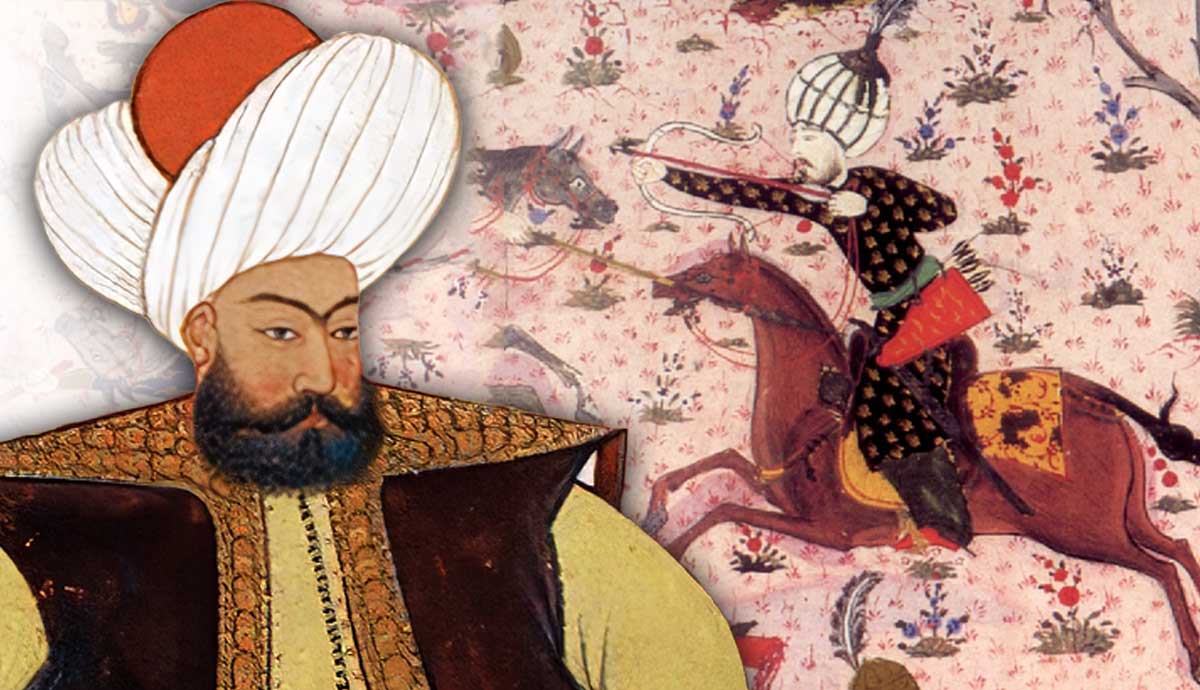
WWW.THECOLLECTOR.COMOsman I, the Legendary Founder of the Ottoman EmpireIn the late 13th century, Osman I, the son of a Turkic chieftain, established a new kingdom and dynasty on the Anatolian coast. His kingdom would grow into the mighty Ottoman Empire, stretching from the Balkans to the Red Sea and ruled by Osmans descendants until the 20th century. Yet Osmans life is shrouded in mystery and legend. Learn how a minor nomadic nobleman was able to set the foundations of one of the greatest empires in history.BackgroundMausoleum of Osmans father, Erturul. Source: Wikimedia CommonsFor a man who left such a lasting impact on the world, the truth is that Osman Is actual life is quite mysterious. There are few contemporary written sources about him, and later writings from Ottoman sources regularly embellished or mythologized certain aspects of his life. However, what little we can ascertain about Osmans rise helps to show how he laid the foundations for later Ottoman success.Osman, also known as Othman or Uthman, was born in the mid-13th century. Tradition says he was born in 1258, on the same day that the Mongol Ilkhanate captured the city of Baghdad. However, other sources suggest he was born around 1254. His father, Erturul, was chieftain of the Kay, an Oghuz Turkic clan, and a Bey, or lord, of a fiefdom based around the settlement of St near the Anatolian coast. Erturuls Beylik was one of a number in Anatolia, each made up of one or more Turkic clans practicing a semi-nomadic lifestyle while taking tribute from towns in their territory and occasionally raiding each others lands. Officially, Erturul was a vassal of the Seljuk Sultanate of Rum, but by the time of Osmans birth, the Sultanate was declining, and the Beyliks of Anatolia enjoyed a fair degree of autonomy.Into this world, Osman rapidly came of age. He would have been taught the martial skills required for a young nobleman and future leader. However, he also studied religious texts and Islamic law. Tradition dictates that after Erturul died, Osman had to overcome his ambitious brothers and uncles to succeed him. One story notes that Osmans uncle had him taken to the Seljuk Sultan for imprisonment. However, Osman so impressed the Sultan and his advisor, the Sufi saint j Bakt Wal, that the Sultan declared that Osman would be the new Bey and chief of the Kay.Rise of OsmanA miniature painting of Osman, 18th century. Source: Wikimedia CommonsOnce again, the truth of Osmans actual succession is uncertain, and how much influence the Seljuk Sultans had over the Beylik remains debatable. It does, however, highlight one of Osmans crucial skills: his alliance-making with other Turkic clans and connection to Sufi scholars and other religious organizations. In any case, sometime around 1281, Osman had become chief of the Kay and Bey in his own right. Yet he was still only a relatively small fish in a pond full of equally ambitious beys. How Osman turned his small vassalage into a powerful independent state was thanks to timing, location, and clever decisions.Osmans new Beylik lay on the borders of the remaining Byzantine territory in Asia Minor. As the 1280s continued, Osman increasingly came to blows with the semi-independent governors, known as Tekfurs, of the numerous Byzantine strongholds in the region. By 1287, he had won several victories against the Tekfurs and brought many settlements under his control. Chief among these were the towns of Kulacahisar and Karacahisar, which he turned into fortified bases for further operations.The Beyliks of the 14th century. Source: Wikimedia CommonsThere were also occasional skirmishes with other Beyliks, including against the neighboring Germiyanids, yet in terms of actual expansion, Osman kept his focus on the Byzantines. The waning power of the Byzantines and somewhat disunited Tekfurs gave the Kay plenty of opportunity to expand deeper into Bithynia and towards the Hellespont,whereas seizing territory from other Beyliks ran the risk of them forming an anti-Kay coalition or perhaps an intervention from other powers.Furthermore, the Christian Byzantines were a more religiously and politically justifiable target than fellow Muslims and gained Osman further recognition from them and, in particular, the Sufi sects. The Kay was not the only Beylik threatening Byzantine territoryfurther south, the Germiyanids made moves against the territory on the coast around Philadelphia.However, Osman was unique in turning raids into genuine territorial expansion, secure from the other Beyliks, the Seljuks, and Mongols, and encompassing vital trade routes into Europe. Meanwhile, Osmans growing support among Sufi mystics and the Dervish sects helped him grow his military forces and boost his Beyliks population.Territorial Expansion and the GhaziA map of Bithynia in Northern Anatolia, the region into which Osman would expand his Beylik, 19th century. Source: Wikimedia CommonsAs Osmans prestige and territory grew, so did his following. Tribes fleeing the Mongol expansion in the East had flocked to the Kay in Anatolia for many years. Yet Osmans expansion into Byzantine territory brought even more tribes to his cause. Most notably, his respect among the Sufis garnered Osman the support of many Ghazi, Islamic warrior societies that contracted their services to conquerors in exchange for land, glory, and plunder.The Ghazi became a core component of Osmans growing fighting force as his campaigns in Anatolia continued. Though not exactly holy warriors like the Crusader orders of knights, the Ghazi were strongly connected to religious movements, particularly Sufism. Osman himself allegedly became inducted into a Ghazi society through one of his earliest allies, the Sufi leader Sheikh Ebedali. Ebedali was one of Osmans closest allies, connecting him with important religious and political figures among the Turkic tribes and promoting him widely throughout Asia Minor, even marrying Osman to his daughter to seal their friendship. These religious and political connections further strengthened Osmans campaigns of expansion during the 1290s.A miniature depicting Osman Gazi, 1523. Source: Wikimedia CommonsHowever, while the Ghazi and support of the Sufi and Dervish sects were crucial to Osmans burgeoning expansion, he was not necessarily fighting a war of religious conquest. While later Ottoman sources attempted to retroactively portray Osman as a holy warrior, the evidence suggests he was tolerant of non-Muslims in his lands. Osman happily welcomed Byzantine recruits to join his Beylik nonviolently.In several cases, he expanded his control into Byzantine lands through peaceful negotiation with Tekfurs who, disillusioned with the absentee administration in Constantinople, willingly cooperated with him or defected outright. The most famous of these was Kse Mihal, or Michael Kosses, the Tekfur of modern-day Harmanky, who defected to Osman and became one of his most trusted advisors and lieutenants. Osman, it appears, managed to walk the tightrope of religious devotion and tolerance ably as he sought to turn his nascent state into a true independent kingdom. However, Osmans (admittedly hands-off) vassalage to the Seljuk Sultanate would soon come to an end.IndependenceAn ake coin of Osman, although the coin is undated, it provides the clearest demonstration of Osmans political independence from the Seljuks as it bears only his name and the name of his father. Source: Hurriyet DailyIn truth, the Seljuk Sultanate, what was left of it at least, was beholden to the Mongol Ilkhanate of Central Asia after the Battle of Kse Da in 1243. Since then, the Seljuk Sultans had devolved from Ilkhanate vassals to mere puppets before the state was abolished entirely in 1308. Yet well before this date, Osman and the Kay were already functionally independent.Symbolically, the last of the Seljuks retained overlordship of the Anatolian Beyliks, but in truth, they held little, if any, authority over them. A few of the last Sultans, on the orders of their Ilkhanate masters, made abortive attempts to bring the Anatolian Beyliks to heel, but all failed. Being on the far extremity of Anatolia, Osman remained undisturbed by even the most spirited Seljuk and Ilkhanate military interventions, allowing him to nation-build in relative peace and provide a haven for Turkish tribes fleeing Mongol oppression in the East.Battle of Kse Da, Fleur des histoires dorient, by Hayton of Corycus, 14th century. Source: BnFLater Ottoman chroniclers emphasized Osmans relationship with the Seljuk Sultans to legitimize Ottoman rule by connecting it to the previous Turkic power, as seen in the story of his appointment as Bey. Ottoman chroniclers also recorded that, after his Byzantine conquests, Seljuk Sultan Kayqubad III honored Osman with gifts of status and the right of Khutba wa sikka. This was a right for Osman to mint coins bearing his name and have his name mentioned in sermons before Friday prayers, both symbols of a leaders authority and sovereign status.However, while Sultan Kayqubad might have rewarded Osman with gifts, it is unlikely he would have given his erstwhile vassal rights that effectively recognized him as an independent ruler. More likely, Osman, with the Sultanates dwindling authority and relative safety from the Ilkhanates backlash, took these rights for himself. Though there is no evidence that he used the title Sultan himself, by the turn of the century, it appears that he had effectively created an independent kingdom. In 1302, this was confirmed by his most famous and consequential military victory.Battle of BapheusA painting of Ottoman Akinci, or light raiding cavalry, although this image is from the 16th century, the Akinci depicted trace their origins to the Ghazi cavalry deployed by Osman. Source: Wikimedia CommonsBy 1302, Osman and the Kay effectively controlled the hinterland around the remaining Byzantine strongholds. This prevented the Byzantines from growing food to keep their garrisons fed and paid, while refugees poured into the strongholds or abandoned Anatolia entirely and fled into Europe. Facing a now unavoidable crisis, the imperial court sent a relief force under General Georgios Mouzalon to deal with Osman on a field known as Bapheus on July 27, 1302.The battle is one of the earliest events in Osmans career chronicled by contemporary sources and one of the most consequential battles for the Byzantine Empire and burgeoning Ottoman state. Mouzalon, despite fielding only 2,000 troops to Osmans 5,000, was confident his professional Byzantine regulars and Alan mercenaries could overcome Osmans army, made up almost entirely of light cavalry. However, a miscommunication saw the Byzantines take to the field without the support of the Alans, and Osmans light cavalry charged and broke the Byzantine line before this could be rectified.Osman I. Source: Culver PicturesBapheus and the following Battle of Dimbos in 1303, where Osman shattered a coalition of local Tekfurs, tipped the regional balance of power entirely in Osmans favor. He could let the remaining Byzantine strongholds surrender at his leisure and send raids, so Byzantine chroniclers claimed, over the Hellespont and into Europe. However, the Byzantines werent quite finished. In 1303, they hired a notorious mercenary band known as the Catalan Company, commanded by the Italian adventurer Roger de Flor, to retake Anatolia.The Catalans sent Osman and the Kay reeling back into the Anatolian interior. However, for whatever reason, Roger and his mercenaries saved the bulk of their campaigning for the region around Philadelphia and the other Turkish Beyliks further south. In the end, the Kay got off relatively unscathed while the other tribes suffered brutal defeats at the hands of the mercenaries, before in 1304 the whole venture collapsed due to Byzantine political infighting. Osman and his Beylik survived and swiftly recovered from this final Byzantine fightback, and so began the process of turning a nomadic tribe into a continent-spanning empire.Osmans Final YearsA portrait of Osmans son and successor, Orhan I, who would take up his fathers mantle and take the Ottoman Sultanate to even greater heights, 16th century. Source: Wikimedia CommonsIt is unclear when Osmans Beylik became known as the Ottoman Sultanate; most historians begin using the name Ottoman at some point between 1299 and shortly after Bapheus. Although Osman never called himself Sultan in his lifetime, it is around this time that he took the title Padiah l-Osmn, or Ruler of the House of Osman. In this new role, he would oversee the next stage of evolution: a symbolic transformation of the small nomadic nation into a fully independent sovereign state.The Kay had already begun transitioning to a less nomadic way of life for some time; however, after Bapheus, this transition picked up speed as yet more Turkic peoples joined the mighty Osman and settled in the former Byzantine lands. Soon, Osman started developing a proper centralized government administration, based largely on the old Seljuk model, and consolidated the Ottoman state throughout the 1300s-1310s. There is little known for certain about his specific policies, save that he kept taxes on his new followers (and those Byzantines who chose to remain under Ottoman rule) relatively low and managed to keep the traditionally anti-central-authority Ghazis on side. He also appointed the first Grand Vizier, Alaeddin Pasha, in 1320. Whatever the finer details of Osmans government policies, he undoubtedly laid the foundations that would grow into the mighty Ottoman Empire.The old gate of Nicaea (no Iznik), Turkey. Source: Wikimedia CommonsOne area of Osmans state building that is well documented was his aim to capture major Byzantine cities. Although the remaining minor castles and small towns fell relatively quickly after Bapheus, the great cities like Pusra and Nicaea still held out. Taking a major city would be an unprecedented step in the development of the Ottoman Sultanate, so Osman set his sights on Pusra in the mid-to-late 1310s. However, the large-scale siege warfare required for such a city was unfamiliar to the Ottomans, even with the advice of the Byzantines who had defected to their cause.The Ottomans blockaded the city, but Pusra stubbornly held out for almost a decade, and by the time the city fell in 1326, Osman had become too old to campaign, and the surrender was accepted by his son Orhan. The legendary founder of the House of Osman died at almost the same time the last great conquest of his life had been achieved.Osmans Legend and LegacyThe Tomb of Osman in Pusra, modern day Busra, the city that would fall on the eve of his death, and would become the stepping stone for his descendants to conquer their empire. Source: Wikimedia CommonsThe story of Osman is the story of the rise of the Ottoman Empire, yet it was after his death that the Ottomans truly blossomed into a superpower. Orhan would succeed his father and, from his new capital in Prusa, direct Ottoman operations into Europe while also piecing together the administration that made the Ottoman state so powerful. Yet none of what the Ottomans became would have been possible without the foundations laid by Osman, which makes the precious details we know about him and his ventures that much more compelling.It is easy to dismiss Ottoman sources as overemphasizing Osmans actions and ability as just Great Man theory and an attempt to artificially connect Osman with the previous Seljuk regime. However, the idea that Osman had no impact on the Ottomans eventual success and that a great power would always have arisen from the Ottomans location and geopolitical circumstances is equally reductive.The advantages of geography and the collapse of the Seljuk and Byzantine empires could easily have been squandered by a lesser leader. Maintaining the balance of expanding the Beylik whilst avoiding weakening the control over the already conquered territory took skill, as did maintaining balance between keeping up the support of the Ghazi sects while also encouraging defections amongst the Byzantine Tekfurs. We may not know the whole story of Osman, but it is clear that his ability to transform a tribe of Turkish nomadic warrior groups into a nascent settled state was vital to his descendants building one of the most powerful empires the world has ever seen.0 Commenti 0 condivisioni 0 Views -