• YUBNUB.NEWS
    J.D. Vance Completely Dismantles Leftwing Gaslighting on ICE Shooting in Minneapolis
    Vice President J.D. Vance on Thursday aptly dismantled the disinformation being spread by leftwing media and operatives regarding the ICE involved shooting in Minneapolis, calling the incident a tragedy,
    0 Comentários 0 Compartilhamentos 23 Visualizações
  • YUBNUB.NEWS
    Republicans Confirm: We Will Not Back Down on Hyde, No Tax-Funded Abortions
    GOP lawmakers and pro-life groups are strongly pushing back against a suggestion by President Donald Trump Tuesday that House Republicans should be a little flexible during health care legislation
    0 Comentários 0 Compartilhamentos 22 Visualizações
  • YUBNUB.NEWS
    Trade deficit plunges to under $30 billion in report delayed by Schumer shutdown
    A federal report on the nations trade deficit reveals a stunner: That the deficit for October plunged to under $30 billion, the first time the figure has been that low in nearly two decades. The report,
    0 Comentários 0 Compartilhamentos 23 Visualizações
  • YUBNUB.NEWS
    Walz Says Minnesota Is Under Assault as ICE Shooting Inflames Tensions
    [View Article at Source]This is not good.The post Walz Says Minnesota Is Under Assault as ICE Shooting Inflames Tensions appeared first on Conservative Brief.
    0 Comentários 0 Compartilhamentos 23 Visualizações
  • YUBNUB.NEWS
    Five Republicans Break Ranks With Trump On Venezuela
    The Senate narrowly advanced a bipartisan resolution Thursday morning blocking President Donald Trump from using future military force on Venezuela absent congressional authorization.Lawmakers voted 52
    0 Comentários 0 Compartilhamentos 23 Visualizações
  • 31 Rock + Metal Albums Turning 30 in 2026
    31 Rock + Metal Albums Turning 30 in 2026EastWest / Epic / Epic/Immortal / Blackened / MCAWhat rock and metal albums from 1996 are turning 30 this year?It certainly was an interesting time for music. Soundgarden's final album (for then), Down on the Upside, seemed to mark the end of the grunge era. Pearl Jam started shifting away from grunge on No Code and Stone Temple Pilots were mostly...
    0 Comentários 0 Compartilhamentos 77 Visualizações
  • Grab Nothings CMF Watch 3 Pro for its near-lowest price yet
    Best smartwatch deal: Get the Nothing CMF Watch 3 Pro for $37.40 off at Amazon SAVE $37.40: As of Jan. 8, get the Nothing CMF Watch 3 Pro for $61.60 at Amazon, down from its usual price of $99. That's a discount of 38%. $61.60 at Amazon...
    0 Comentários 0 Compartilhamentos 54 Visualizações
  • I found the headphones Ilya Rozanov wears in "Heated Rivalry" and theyre on sale at Amazon for $100 off
    Best headphones deal: Save 26% on the Marshall Monitor III headphones at Amazon SAVE $100: The Marshall Monitor III headphones are on sale at Amazon for $279.99, down from the list price of $379.99. That's a 26% discount that matches the record-low at Amazon. $279.99...
    0 Comentários 0 Compartilhamentos 58 Visualizações
  • WWW.THECOLLECTOR.COM
    7 Shocking Facts About Leopolds Congo
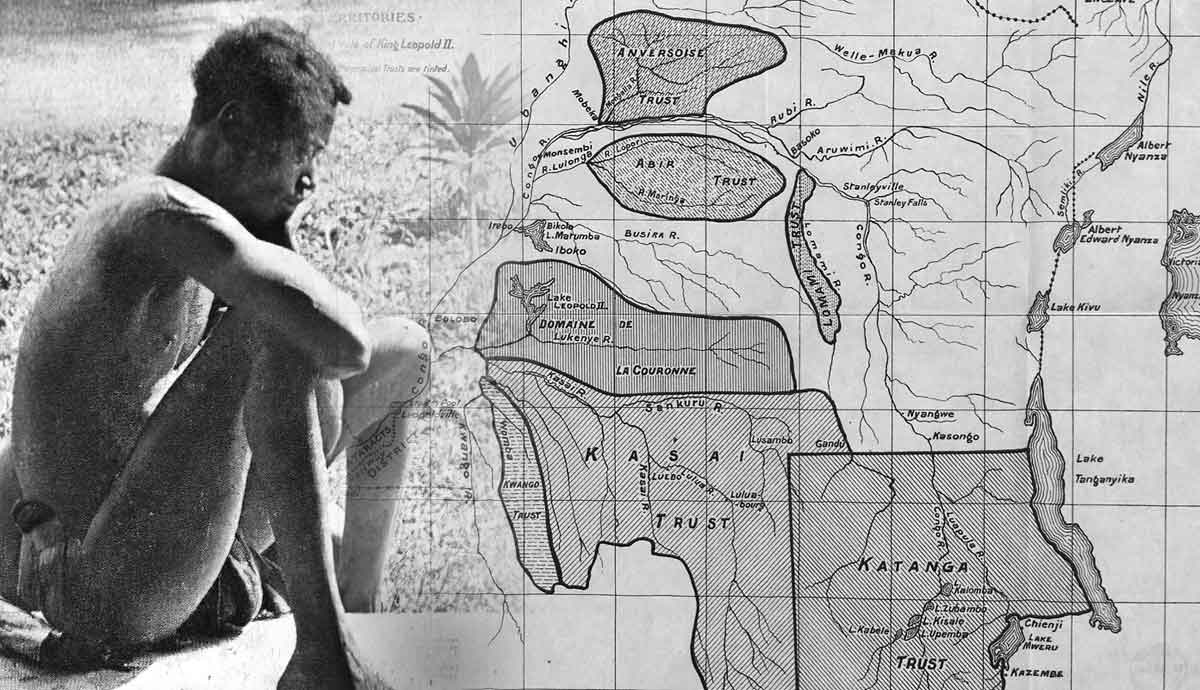
    19th-century Europe was heavily focused on colonization as a means to bolster the power of empires. Africa was in the spotlight for its potential wealth and resources, and the race was on. By 1914, there were only two countries not controlled by a European entity. King Leopold II of Belgium wanted a piece of the action, not for the benefit of his people, but to boost his own power. The lengths he went to secure his wealth and status were incredibly shocking, and many of his actions wouldnt be revealed until after the fact. Leopolds impact shaped the future of the Congo and resonates in his legacy today.1. Leopolds Piece of the ScrambleKing Leopold II of Belgium. This photo was taken sometime after 1881, when he was awarded the title of Garter Knight by England. Source: London Stereoscopic and Photographic Company / Wikimedia CommonsFrom an early age, the man who would become Leopold II of Belgium seemed obsessed with the idea of gaining colonies. Belgium lacked a trading fleet and navy, and as a result, few royals or nobles shared young Leopolds interests. When he ascended the throne in 1865 at age 30, his desire for colonies only seemed to increase. He observed other European powers enjoying the fruits of their conquests and even attempted to purchase colonies from other countries. When these attempts failed, his interests turned to Africa. Disguising his true intentions by proclaiming he wanted to make an impact on slavery prevention, Leopold created organizations such as the International Association of the Congo, which helped him gain legitimacy and funds from across Europe.By 1885, Leopold had control of the Congo, a heavily forested area located in the center of the African continent. However, rather than operating the region as a colony, Leopold had organized it so that he had sole control as a private owner. He retained control for about fifteen years until reformers finally brought sufficient public attention to the devastation in the Congo at Leopolds hands. In 1908, control of the region was transferred to the Belgian government.2. The Congo Was Leopolds Personal PossessionA 1904 map of the Congo shows it divided into different rubber organizations. Source: E.D. Morel / Wikimedia CommonsLeopold stated publicly that his goals were to prevent the Arab slave trade and bring civilization to the people of the Congo. Instead, he used funds that he borrowed from the Belgian government and supporters such as the Royal Geographic Society to build his overseas empire. While Leopold never visited his new dominion, he governed it in an autocratic fashion from home. With the ironic name of Etat Independant du Congo, the Congo Independent State or Congo Free State, Leopold put his new holding to work for him.This political cartoon from 1906 by Francis Carruthers Gould demonstrates Leopolds desire to hide the true goings-on within the Congo Free State. Source: Picture-Politics, de Londres / Wikimedia CommonsDespite his publicly voiced opposition to slavery, Leopold relied on the forced labor of the Congolese people to make him successful. By using these people, Leopold also exploited the regions natural resources, particularly ivory and rubber. Raw goods were moved to the port city of Boma and shipped to Europe from there. It is estimated that Leopold pulled approximately 1.1 billion dollars from the Congo during his reign, according to todays standards.3. Bicycles Added to Leopolds SuccessBy the onset of the new century, bicycles were rising in global popularity. Source: National Library of Ireland on the Commons / Wikimedia CommonsBefore automobiles were an easily accessible form of transportation, bicycles found their place in society as important modes of transportation. In the 1890s, the addition of rubber tires, creating a more comfortable ride, created a bicycling boom. Bicycles were more popular than ever all over the globe, and this surge in production required a key ingredient: rubber. Synthetic alternatives were yet to be invented, allowing rubber companies like Leopolds to benefit from this demand. During the fifteen years that Leopold had possession of the Congo, approximately 75,000 tons of rubber were wrenched from the territory. However, the expense paid by the Congolese people for this production was grim.4. Leopold Went to Great Lengths to Ensure QuotasA Congolese man named Nsala sits observing the severed hand and foot of his five-year-old daughter, cut off as punishment for his harvesting too little rubber in 1904. Source: E.D. Morel / Wikimedia CommonsThe lengths that Leopolds regime went to in order to ensure their needs were met in the Congo resulted in some of the worst human rights violations in world history. Leopolds rubber companies demanded that the local Congolese pay a tax in the form of rubber collection. Though gathering rubber was arduous work, people who did not meet these tax quotas would be punished, or their families would be, until the demand was met. A favorite punishment of Leopolds forces was the amputation of limbs. In an effort to conserve bullets, sentries were required to provide a human hand for each bullet used. As a result, many sought to acquire a stockpile of preserved hands to account for their firearm usage. Since amputating the workers limbs would limit their ability to work, the severing was often done on family members, including children. Wives, elders, and children were held captive until certain quotas were met.A chicotte displayed at the Brooklyn Museum. Source: Brooklyn Museum / Wikimedia CommonsAnother popular form of physical violence was the use of the chicotte, a whip made of hippopotamus leather that could cause devastating injury or death with prolonged use. Children were not spared from these punishments. One example came from a Belgian lawyer visiting the area, who told of every servant boy in a town receiving 50 chicotte lashes (25 usually led to unconsciousness) as a result of a small group of children accused of laughing at a white man. The true extent of the horrors that were undertaken by Leopolds interests in the Congo may never be known. After the Congo was turned over to Belgium proper, the furnaces outside of Leopolds palace burned materials relevant to the Congo. Leopold was reported as saying, I will give them my Congo, but they have no right to know what I did there.5. He Had His Own Military ForceThis art depicts an Inspector and Officer of the Force Publique in 1897. Source: New York Public Library / Wikimedia CommonsSince Leopold never visited the Congo, he relied on representatives to carry out his wishes and enforce his rules. One of these entities was the Force Publique, Leopolds military representation in the Congo. These were the men responsible for ensuring quotas were met and doling out punishments. The Force was composed of European mercenaries, as well as Congolese men who had been pressed into service. Children were funneled into military training camps with the end goal of serving in the Force. While some members of the Force were African, all officers were white. At times, the Force numbered up to 19,000.6. The Horrors Inspired Joseph ConradJoseph Conrad in 1916. Source: Alvin Langdon Coburn / Wikimedia CommonsHeart of Darkness by Joseph Conrad is one of the most celebrated novels of the 20th century, still utilized today in studies of literature and humanity. What many dont realize is that this examination of themes such as civilization and society is based on Conrads actual travels in the Congo in the late 19th century. Though outspoken criticism of the Congo wouldnt be taken seriously until the first decade of the 20th century, Conrad was one of the first to disparage Leopolds adventure. He called the colonization of the Congo a rapacious and pitiless folly. The main character, Marlow, serves as an alter ego to Conrad, who spent time in the Congo working on a steamer. Many of the sights described in the novel were reminiscent of observations Conrad made on his journeys. The villain of the story, Mr. Kurtz, was based on several individuals that Conrad met during this time in the Congo, including a Captain from the Force Publique and an ivory agent.7. Leopold Is Defended TodayA statue of Leopold in Belgium defaced with red paint in 2020. Source: EmDee / Wikimedia CommonsIn an age where the memories of many historical heroes turned villains have been brought to justice, Leopold surprisingly still finds defenders nearly a century after his death and with the revelation of his crimes in the Congo. At least 13 statues in Belgium representing Leopold exist, and several parks, public areas, and streets are named for the king. In 2010, Louis Michel, former Belgian foreign minister, stated that King Leopold II was a hero with ambitions. In 2020, the younger brother of Belgiums king, a descendant of Leopold, was scrutinized for stating that Leopold was not responsible for the atrocities in the Congo since he never visited the territory. Also in 2020, the former president of the Free University of Brussels argued that colonization such as that undertaken by Leopold in the Congo had positive aspects.Despite his modern-day supporters, Leopolds actions were publicly condemned by European leaders, many of whom also participated in the colonization of Africa. The discussion of his legacy continues today, with some calling for the removal of statues and a more honest discussion about the events that took place in Leopolds Congo.Recommended Reading:Hochschild, Adam (1998). King Leopolds Ghost: A Story of Greed, Terror, and Heroism in Colonial Africa. First Mariner Books.
    0 Comentários 0 Compartilhamentos 23 Visualizações
  • WWW.THECOLLECTOR.COM
    The Pope Who Owned a Pet Elephant? The Life of Leo X
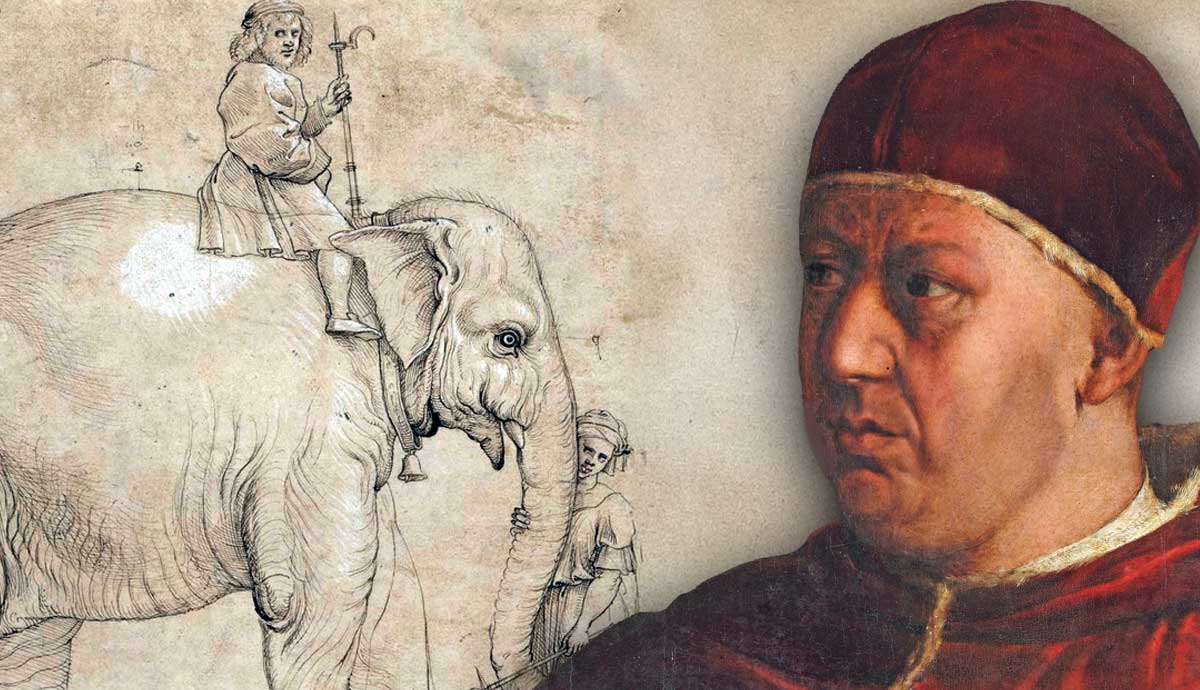
    In 1962, during maintenance works of the cooling system of the Vaticans Belvedere Courtyard, a group of workers stumbled upon something unexpected: a set of bones. Though initially thought to belong to a dinosaur, the large tooth and fragments of jawbone were, in fact, the remains of a pet elephant owned by Pope Leo X. Named Hanno, the young animal was a gift of King Manuel I of Portugal to the newly elected pope. Besides delighting the Roman court, Hanno became intertwined with the troubled political and religious landscape of 16th-century Europe.Pope Leo X: A Renaissance RulerPortrait of Leo X, by Raphael Sanzio, 1518. Source: Wikimedia Commons/Uffizi Gallery, Florence, ItalyIn March 1513, the papal conclave gathered in Rome elected Cardinal Giovanni de Medici to be the successor of Pope Julius II. Born in Florence in 1475, the new Pope Leo X was the second son of Lorenzo de Medici, the head of the powerful Medici family and de facto ruler of the Republic of Florence.Destined to take up a career in the Catholic Church, the young Giovanni was tutored by some of the best scholars of the Italian Renaissance, including Pico della Mirandola, Angelo Poliziano, and Marsilio Ficino, who educated their pupil according to the humanist ideals of the time. Besides taking lessons in rhetoric and classical subjects, Giovanni de Medici gained experience in diplomacy and governance, witnessing firsthand at his fathers court the power dynamics at play in the complex political landscape of 15th and 16th-century Italy.In 1494, a 19-year-old Giovanni and his family fell victim to that volatile landscape. Forced to go into exile, the Medici left Florence following accusations of having betrayed the republic. Giovanni spent the following years traveling through Europe. He returned to Italy in 1500, where he settled in Rome. In 1512, he eventually restored his familys control in Florence.Michelangelo Showing Lorenzo il Magnifico the Head of a Faun, fresco by Ottavio Vannini, 1638-42. Source: Wikimedia Commons/Palazzo Pitti, Florence, ItalyAs a pope, Giovanni quickly became the embodiment of the quintessential Renaissance ruler. In a time when politics, culture, and religion were deeply intertwined, Pope Leo X transformed Rome into a leading cultural center. His patronage of the arts led many scholars, musicians, and artists to settle in the city. During his time in office, Leo X commissioned Raphael to paint frescoes in the Vatican Apartments, expedited the construction of St. Peters Basilica, and enriched the collections of the Vatican Library.Resembling more a temporal ruler than a spiritual leader, Pope Leo X also aimed to become an influential player in the Italian and international arenas, seeking to further the interests of the Papal States and the Medici family. In 1517, for example, he had young Cardinal Alfonso Petrucci imprisoned in Castel St. Angelo and killed in secret. Charged with masterminding an alleged conspiracy against Leo X, Cardinal Petrucci not coincidentally belonged to a family who threatened the Medicis hold in Tuscany.A Wondrous GiftPortuguese map of Cochi (now Kochi), the city where Hanno was born, c. 1620-1640. Source: Wikimedia CommonsThe exchange of extravagant gifts was a common practice in Renaissance diplomacy, with rulers hoping to secure political support and financial favors by impressing their allies. In the 16th century, as the discovery of direct trade routes to Africa and the Far East opened new markets, many European rulers started collecting exotic flora and fauna in the courts. Thus, along with luxury goods, pets and birds from Africa and India began to be a common sight in royal menageries throughout Europe. The members of the Habsburg dynasty, for example, became avid collectors of exotic pets.Besides entertaining and dazzling guests, the exotic pets and birds were living symbols of their owners financial prestige and power in global trade. In particular, King Manuel I of Portugal was set to secure his monopoly on the spice trade. After Vasco da Gama reached India in 1498, Portugal started building trading posts, known as feitorias, to establish relations with the local authorities. King Manuel also developed a special interest in Indian elephants, bringing several pachyderms to his court. Soon, he also used them as diplomatic gifts. After all, elephants were the ultimate gift a Western European ruler could hope for, as historian Annemarie Jordan Gschwend remarks.Lithograph of King Manuel I of Portugal, by anonymous, 1495. Source: Wikimedia Commons/MasiterDrucke/University of Coimbra, Coimbra, PortugalAs Egypt, fearing that it would lose control of the overland trade with the Far East, sought to sway Leo X against Portugal, King Manuel decided to send an envoy to Rome to honor the newly elected pope with an array of precious gifts, including a gold chalice, parrots, and leopards. The most eye-catching gift, however, was a young albino elephant. Born in Cochi (now Kochi), a Portuguese-controlled town in southwestern India, the animal had arrived in Portugal in 1511 after a long sea voyage. In 1514, he embarked on a second journey.During the first stops in Alicante, the island of Ibiza, and the port of Palma (Mallorca), the elephant immediately began to attract the attention of local residents, with large crowds clamoring to get a glimpse of the animal or even climb on the ship. To avoid delays or incidents, Nicolau de Faria, the equerry in charge of the pachyderm, eventually decided against making any more stops.When the ship reached Porto Ercole, news of the famous elephants arrival had already reached the town on the Tuscan coast. As the Portuguese envoy began traveling to Rome, an ever-growing crowd followed it on foot or horseback, causing damage to fields and buildings. When the elephant and his keeper stayed overnight at a cardinals villa in Tarquinia (a town near Rome), so many locals climbed on the roof of a nearby inn that its roof collapsed. Finally, on March 19, 1514, the elephant arrived in Rome.The Darling of the Popes CourtSketch of Hanno by Raphael, c. 1516. Source: Wikimedia Commons/Kupferstichkabinett, Staatliche Museen zu Berlin, Berlin, GermanyWearing an elaborate decoration on his back, the elephant made a spectacular entry into the city, with residents rushing to witness his arrival. Having been trained as a performing animal, he also amazed the pope and the court during his first visit to the Vatican. In his 1533 account of the event, Pasquale Malaspina recalled, with its trumpet so much noise it made that the entire place was deafened; and stretching itself on the ground to kneel it then straightened up in reverence to the Pope, and to his entourage.Leo X was immediately delighted by his gift and named him Annone (Hanno) after the Carthaginian seaman. The sight of this quadruped provides us with the greatest amusement and has become for our people an object of extraordinary wonder, wrote the pope to King Manuel, adding that It was the elephant which excited the greatest astonishment to the whole world, as much from the memories it evoked of the ancient past, for the arrival of similar beast was fairly frequent in the days of ancient Rome.After Hannos arrival at the Vatican, he quickly became the darling of the popes court and the main attraction of Romes social life. The elephant resided in the Belvedere Courtyard, where he was cared for by his keeper, Giovanni Battista Branconio dellAquila, dubbed il pedagogo de lalifante (the elephants pedagogue) by satirist Pietro Aretino. Pope Leo X paid Giovanni 100 ducati a year for looking after his beloved pet.Baraballo and Hanno, 16th century. Source: Biblioteca Apostolica Vaticana; with Hannos epitaph, drawing by Francisco dOllanda, 1538. Source: Wikimedia Commons/Escorial LibraryDuring his stay at the Vatican, Hanno appeared in several events and performances organized to entertain the pope and his court. The elephant even took part in a cruel prank Leo X played at the expense of Cosimo Baraballo, the Abbot of Gaeta and an amateur poet. To humiliate the vain abbot, the pope planned a mock procession through the streets of Rome. The unsuspecting Baraballo agreed to be carried on Hannos back to the Campidoglio Square, where the pope promised he would be solemnly crowned arch-poet. On the day of the prank, however, the elephant, disturbed by the crowds noise, panicked and threw Baraballo to the ground.Despite the popes attention, life at the Vatican did not benefit Hanno. In 1516, his health started to deteriorate. Alarmed, Leo X summoned his best doctors to examine him. Believing Hanno was suffering from constipation, they prescribed a laxative with a high dose of gold, a common treatment at the time. However, Hanno died shortly after on June 8.Hanno in Art: Satirists and ArtistsThe Creation of the Animals by Raphael, 1518. Source: Wikimedia Commons/Raphael Loggia, Apostolic Palace, Vatican CityPope Leo X mourned the death of his beloved companion, tasking artist Raphael Sanzio with creating a life-size fresco portrait to commemorate him. The fresco was unfortunately later destroyed. Leo himself had written the epitaph. In the following years, many artists depicted Hanno in their work. Giovanni da Udine, for example, built the Fontana dellElefante (Fountain of the Elephant) in the gardens of Villa Madama. Raphaels assistants included Hanno in the fresco known as Creazione degli animali (Creation of the Animals) in the loggia of the Apostolic Palace.At the same time, Pope Leo Xs love for Hanno did not escape the notice of satirists, who saw the elephant as a symbol of the papacys moral bankruptcy and penchant for luxury. In his The Last Will and Testament of the Elephant Hanno, Pietro Aretino, known as the Scourge of Princes, denounced the wrongdoings of Leo X and his followers. In the satirical text, for example, the elephant arranged to leave his jaws to a cardinal so that he could use them to devour all the money of the republic of Christ.Pope Leo X, Hanno, & the Protestant ReformationPortrait of Martin Luther by Lucas Cranach the Elder, 1528. Source: Wikimedia Commons/Coburg Fortress, Coburg, GermanyPope Leo Xs lavish lifestyle, extravagant spending, and vast patronage of the arts required considerable resources, draining the already straining finances of the Papal States. As a result, the pope often resorted to controversial practices to raise funds.Acting on instructions from Rome, in 1517, a year after the death of Hanno, Johann Tetzel, a Dominican friar, began to sell indulgences (a remission of believers sin) in northern Germany to finance the construction of St. Peters Basilica. Tetzels preaching sparked controversy, leading theologian Martin Luther to write his Ninety-five Theses, a critique of the Catholic Churchs amoral practices and his theological system. It was the beginning of the Protestant Reformation.As the schism between the papacy and Luthers followers worsened, the anti-papal press focused on Hanno, depicting the elephant as proof of Leo Xs frivolity. In an early essay, for example, Martin Luther described the pope as indolently catching flies while his pet elephant cavorted before him.Pope Leo X ultimately failed to fully understand the call for reforms and growing discontent within the Catholic Church. In the 1520 bull Exsurge Domine (Arise O Lord), he condemned Martin Luther as a heretic. In 1521, he excommunicated him. When Leo X died in December of the same year, the Renaissance pope left behind religious turmoil that would permanently change Europe.

    0 Comentários 0 Compartilhamentos 23 Visualizações