


AI May Infringe On Your Rights And Insult Your Dignity (Unless We Do Something Soon)
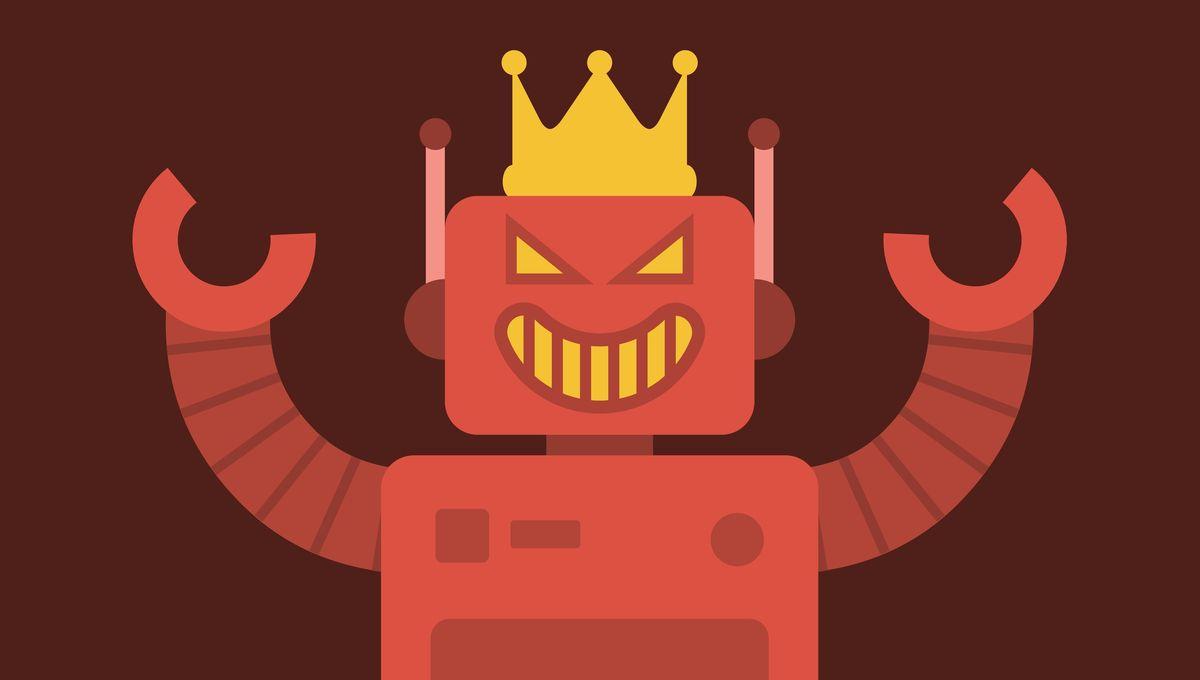
AI May Infringe On Your Rights And Insult Your Dignity (Unless We Do Something Soon)
With every significant breakthrough in technology, humanity has had to reckon with equally significant drawbacks – and artificial intelligence (AI) is definitely no exception. We’re all aware of many of its downsides by now: it’s bad for the environment; it’s bad for our brains; increasingly, it’s even turning deadly – and let’s face it, it’s not really even good enough at its job to make up for it.
The rest of this article is behind a paywall. Please sign in or subscribe to access the full content. But according to a new paper from law professors Maria Salvatrice Randazzo and Guzyal Hill, that’s not the end of it. As things stand, they argue, AI models are little more than a “black box problem” – an input, an output, and a giant gaping “trust me, bro” in the middle where who knows what rights and boundaries are being crossed or why. It is, Randazzo said in a statement this week, a “very significant issue” – and it’s “only going to get worse without adequate regulation.” AI algorithms are neither transparent nor accountable, she argues: they make decisions that humans can’t necessarily replicate or explain – and as a result, neither can we easily know whether our rights have been violated by the machine’s use. You don’t have to look far for a real-world example of this. Only last month, AI startup Anthropic agreed to pay thousands of authors a total of $1.5 billion – yes, with a b – to settle a class-action lawsuit after allegedly downloading potentially millions of pirated books to train its chatbot. Before that, AI systems were catching heat in the UK for their use in the justice and welfare systems – applications which, by the nature of how such machines are trained, ended up perpetuating human prejudices, unfairly penalizing innocent people, and challenging existing laws around data protection. Of course, none of this is actually AI’s fault – it’s just working as designed. The problem is that we expect too much of it: “AI is not intelligent in any human sense at all,” Randazzo explained. “It is a triumph in engineering, not in cognitive behavior.” “It has no clue what it's doing or why,” she said. “There's no thought process as a human would understand it, just pattern recognition stripped of embodiment, memory, empathy, or wisdom.” What’s needed, then, is a robust system of regulation – and in that respect, we’re currently seeing three distinct trends: there’s the “state-centric” approach favored by China; the “human-centric” approach being followed by the European Union (EU); finally, there’s the US, with what’s being called a “market-centric” approach. “China’s ‘state-centric’ approach to AI governance asserts that states, not private sector actors, should be driving AI governance,” Randazzo and Hill write. “The approach is instrumental in strengthening China’s authoritarian system of government” both at home and abroad, they explain. Meanwhile, “the EU’s ‘human-centric’ approach to AI […] strives to ensure that Western human values are central to the way in which AI systems are developed, deployed and monitored,” the pair write. “Primacy is given to the protection of fundamental rights, including those set out in the Treaties of the European Union and Charter of Fundamental Rights of the European Union.” “This also entails consideration of the natural environment and of other living beings that are part of the human ecosystem,” the paper continues, “as well as a sustainable approach aimed at preserving the rights of future generations” Finally, there’s the American way: “also known as ‘bottom-up multi-stakeholderism’, [this approach] asserts that the private sector and civil society should remain key players in AI governance,” the paper explains. “The USA underlines the importance of ‘AI freedom’, a generic expression that, drawing from human rights and freedom of speech rhetoric, calls for non-governmental regulatory frameworks for American AI technology companies, developed mostly through private-sector initiatives and self-regulation.” But such a setup “may potentially pose many risks to the USA’s stability, safety, and security,” they write. It essentially leaves AI companies as their own little sovereign entities, wielding power far beyond the US’s geographical and legal footprint – and chasing profit over human interest, if necessary. It’s perhaps not surprising, given their summation of the three systems, that Randazzo and Hill prefer the European approach, with its strong regulation and prioritization of human dignity. But without worldwide adoption, they caution, even those ruled by such human-led administrations will be at risk from the rise of unregulated AI. “Globally, if we don't anchor AI development to what makes us human – our capacity to choose, to feel, to reason with care, to empathy and compassion – we risk creating systems that devalue and flatten humanity into data points, rather than improve the human condition,” Randazzo warned. “Humankind must not be treated as a means to an end.” The paper is published in the Australian Journal of Human Rights.

 English
 Arabic
 French
 Spanish
 Portuguese
 Turkish
 Dutch
Dutch
 Italiano
 Russian
 Romaian
 Portuguese (Brazil)
 Greek
Greek