


Strange Halos Have Formed Around Barrels Of Chemicals Dumped Off LA's Coast Over 50 Years Ago
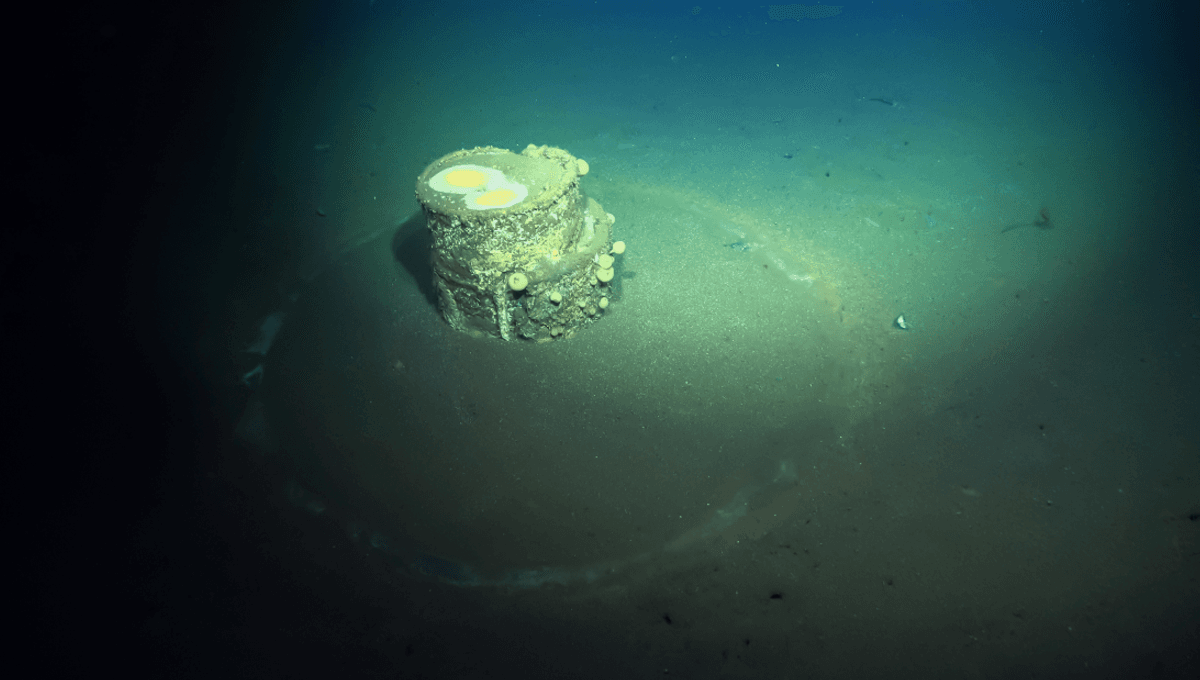
Barrels Dumped Off LA Coast Have Developed Ghostly “Halos” – What The Hell Was In Those Barrels?
From the 1930s to the 1970s, barrels amounting to thousands of tons of chemicals were dumped off the coast of Los Angeles. It was an assault on the environment that would continue to unfold for decades to come, and worse still, we weren’t even sure what was inside the barrels.
The rest of this article is behind a paywall. Please sign in or subscribe to access the full content. For a long time we thought it was the carcinogenic pesticide dichlorodiphenyltrichloroethane, commonly known as DDT. We do know this was being dumped here back in the mid-1900s, but when strange ghostly halos started forming around the barrels, it started to look as if we were dealing with something else. A team on board the Schmidt Ocean Institute’s Research Vessel Falkor made a huge leap in solving the halo mystery when they sent the remotely operated vehicle (ROV) SuBastian out to collect some samples. Getting those samples wasn’t easy, as whatever had leaked out of the barrels had turned the sea floor a concrete-like texture. When they finally got a chunk to study, they found that the levels of DDT didn’t increase the closer you got to the barrels. This would indicate they weren’t the source of the DDT contamination, so what on Earth had leaked out of them? The samples captured some microbial DNA. Not much, but enough to reveal that there was very low diversity of bacteria in the sediment around the barrels, and that the microbes that were present were the kind of extremophiles you’d expect to find around hydrothermal vents – some of the most inhospitable habitats in the ocean. Testing the sample’s pH also turned up a surprise result, as it was in the region of 12. On the pH scale, anything above 7 is considered alkaline, so the team realized that what they were looking at what the result of some kind of highly caustic alkaline waste, not DDT. “One of the main waste streams from DDT production was acid and they didn’t put that into barrels,” said Johanna Gutleben, a Scripps postdoctoral scholar and the study’s first author, in a release. “It makes you wonder: What was worse than DDT acid waste to deserve being put into barrels?” As for those halos, they're the result of a chemical reaction between the waste and seawater, forming the mineral brucite. This caused the cement-like texture of the surrounding sediment and made it alkaline, which combined with seawater to create calcium carbonate deposits. Paul Jensen and Johanna Gutleben of UC San Diego's Scripps Institution of Oceanography unload and sort sediment cores after the samples were brought to the surface from known dumping sites. Image credit: Schmidt Ocean Institute The discovery recontextualizes the decades-long environmental disaster, and while we still don’t know exactly what was in those barrels, we might now have a better idea of where to look for answers. “DDT was not the only thing that was dumped in this part of the ocean and we have only a very fragmented idea of what else was dumped there,” added Gutleben. “We only find what we are looking for and up to this point we have mostly been looking for DDT. Nobody was thinking about alkaline waste before this and we may have to start looking for other things as well.” It also means that alkaline waste now ranks as highly as DDT when it comes to pollutants that linger in marine environments. According to Paul Jensen, emeritus marine microbiologist at Scripps and senior author of the study, we would’ve typically expected alkaline waste to be quickly diluted in seawater, but clearly that’s not the case. “This adds to our understanding of the consequences of the dumping of these barrels,” he said. “It’s shocking that 50-plus years later you’re still seeing these effects. We can’t quantify the environmental impact without knowing how many of these barrels with white halos are out there, but it’s clearly having a localized impact on microbes.” The study is published in the journal PNAS Nexus.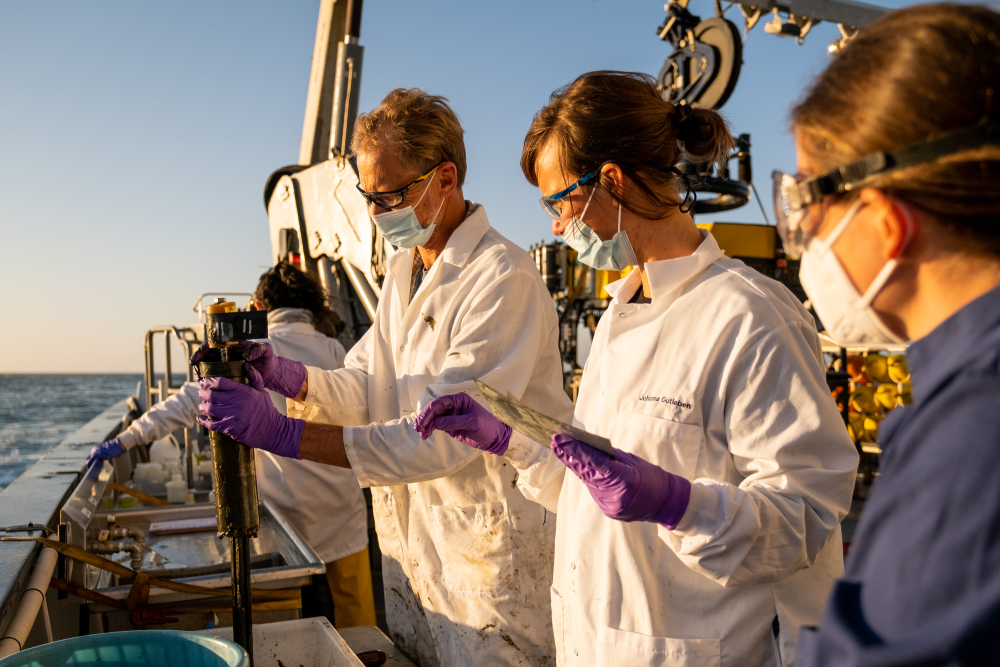

 English
 Arabic
 French
 Spanish
 Portuguese
 Deutsch
 Turkish
 Dutch
Dutch
 Italiano
 Russian
 Romaian
 Portuguese (Brazil)