


Queen Ant Produces Babies Of 2 Different Species, For The First Time Ever We Have A Complete Map Of Brain Activity, And Much More This Week
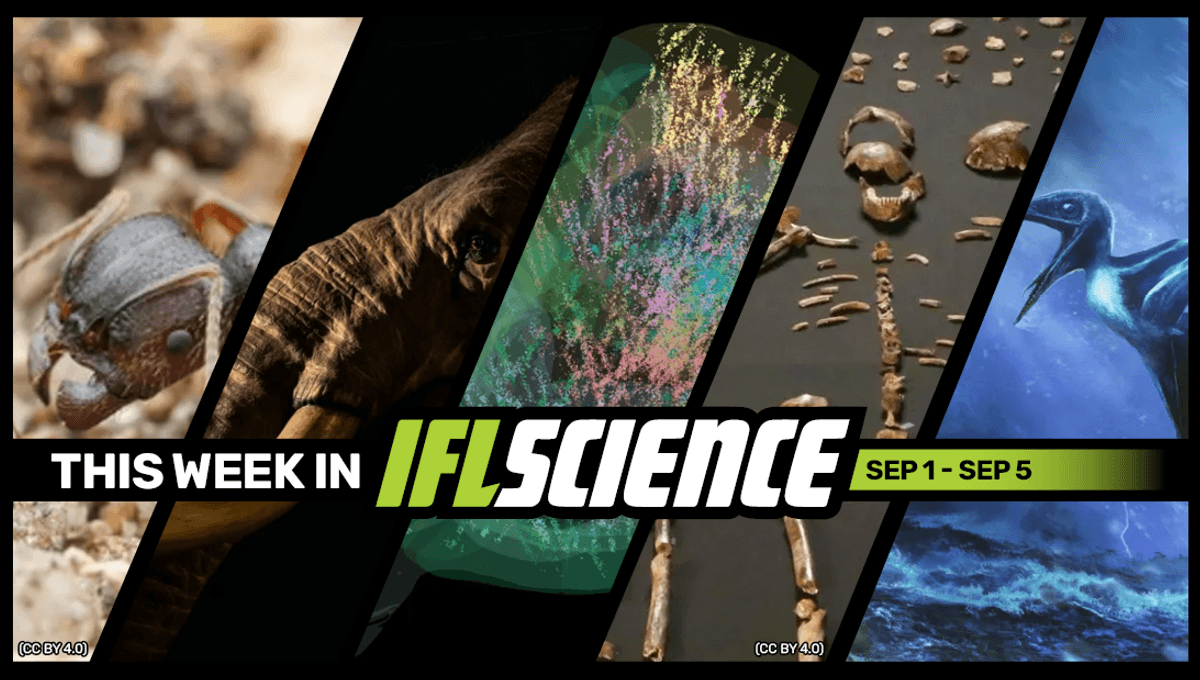
Queen Ant Produces Babies Of 2 Different Species, For The First Time Ever We Have A Complete Map Of Brain Activity, And Much More This Week
This week, a new lineage of tropical mammoth has been discovered in Mexico, the latest in the saga of whether the small-brained Homo naledi may have buried its dead, and violent storms led to the perfect preservation of hatchling pterosaurs. Finally, we ask: what is the largest egg of any animal? Spoiler, it’s not an ostrich.
The rest of this article is behind a paywall. Please sign in or subscribe to access the full content. Reproduction in the animal world is all kinds of freaky; from penis jousting to mammals laying eggs, there seems to be just about every method going. However, one thing that is not common is any species being able to produce offspring of two different species, but that's exactly what has been discovered in Iberian harvester ants. Read the full story here A new lineage of mammoth has been discovered in… Mexico? While we usually think of these shaggy Ice Age giants roaming icy landscapes and temperate plains, the find shows that North American mammoths were more genetically diverse – and more widespread – than previously appreciated. Read the full story here A huge project led by neuroscientists from all across the world has achieved world-first insight into what decision-making looks like in the brain. It marks the first time a single-cell, electrophysiological brain map of this size has been generated in a mammal, and it’s already challenging what we thought we knew about how decisions are made. Read the full story here One of the biggest controversies in human evolution just took another dramatic turn after researchers submitted their final, revised version of a study claiming that a small-brained human ancestor buried its dead. Known as Homo naledi, this prehistoric hominid rose to fame a couple of years ago thanks to a Netflix documentary that sensationalized the theory, even though most independent experts completely rejected the claim. Now, at least one of the reviewers has accepted the study's claim is persuasive. Read the full story here Pterosaur fossils aren’t easy to find, especially well-preserved ones. Often, you’re looking at the odd bone here and there. That is, until you start looking in the Solnhofen Limestones in Germany. Here, scientists have found almost perfectly preserved hatchling pterosaurs; meanwhile, the adults are all in pieces. The solution to that mystery appears to rest (to the delight of British people everywhere) in the weather. It wasn’t an easy one to solve, however, because pterosaurs really like to make palaeontologists work for it. Read the full story here Today, the biggest egg you can get your mitts on is that of an ostrich. The biggest of those eggs on record weighed in at an impressive 2.589 kilograms (5.7 pounds), or about the weight of a small house cat. It’s hardly surprising, given they’re the world’s largest birds, and they have footballs for eggs to show for it. If we take into account all the animals the world’s ever seen, however, the ostrich egg isn’t all that impressive compared to those of some extinct giants. Read the full story here Have you seen our e-magazine, CURIOUS? Issue 38, September 2025, is available now. This month, we asked, “Are Space-Made Medicines The Future?” – check it out for exclusive interviews, book excerpts, long reads, and more. PLUS, the We Have Questions podcast – an audio version of our coveted CURIOUS e-magazine column – continues. In episode 12, we ask, “Do Humans Have Pheromones?”. The Big Questions podcast has returned, and we’re continuing season 5 with episode 6’s big question: What Will The Fossils Of The Future Look Like?Create an IFLScience account to get all the biggest science news delivered straight to your inbox every Wednesday and Saturday.
"Impossible To Imagine": Queen Ants Produce Babies Of 2 Different Species, And It's Never Been Seen Before
A New Lineage Of Tropical Mammoths Is Discovered In Mexico
For The First Time Ever We Have A Complete Map Of Brain Activity, And It’s Dazzling
Homo Naledi May Have Buried Its Dead After All, Peer Reviewer Accepts
“It Literally Leapt Out Of The Rock At Us”: How Violent Storms Led To The Extraordinary Preservation Of Baby Pterosaurs
TWIS is published weekly on our Linkedin page, join us there for even more content.
Feature of the week:
What’s The Largest Egg Of Any Animal? Clue: It Doesn't Come From An Ostrich
More content:

 English
 Arabic
 Spanish
 Portuguese
 Deutsch
 Turkish
 Dutch
Dutch
 Italiano
 Russian
 Romaian
 Portuguese (Brazil)
 Greek
Greek