


“It Literally Leapt Out Of The Rock At Us”: How Violent Storms Led To The Extraordinary Preservation Of Baby Pterosaurs
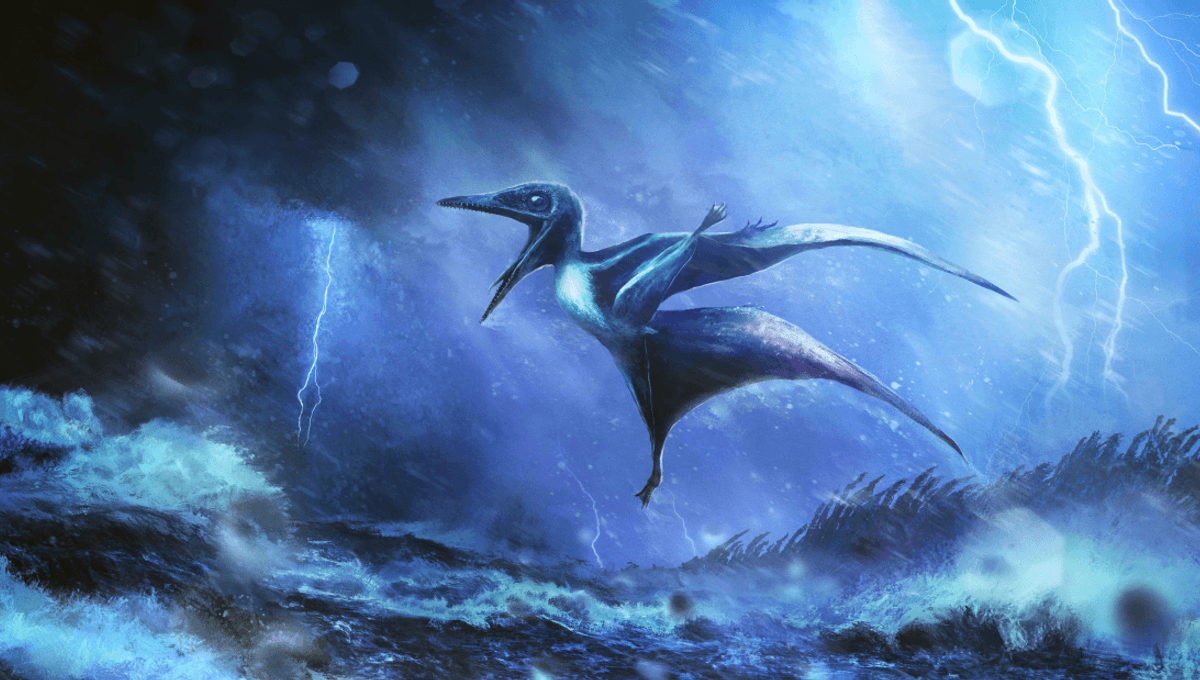
150-Million-Year-Old Pterosaur Hatchlings Were Smashed Out Of The Mesozoic Sky By Violent Storms
Pterosaur fossils aren’t easy to find, especially well-preserved ones. Often, you’re looking at the odd bone here and there. That is, until you start looking in the Solnhofen Limestones in Germany. Here, scientists have found almost perfectly preserved hatchling pterosaurs; meanwhile, the adults are all in pieces. The solution to that mystery appears to rest (to the delight of British people everywhere) in the weather. It wasn’t an easy one to solve, however, because pterosaurs really like to make palaeontologists work for it.
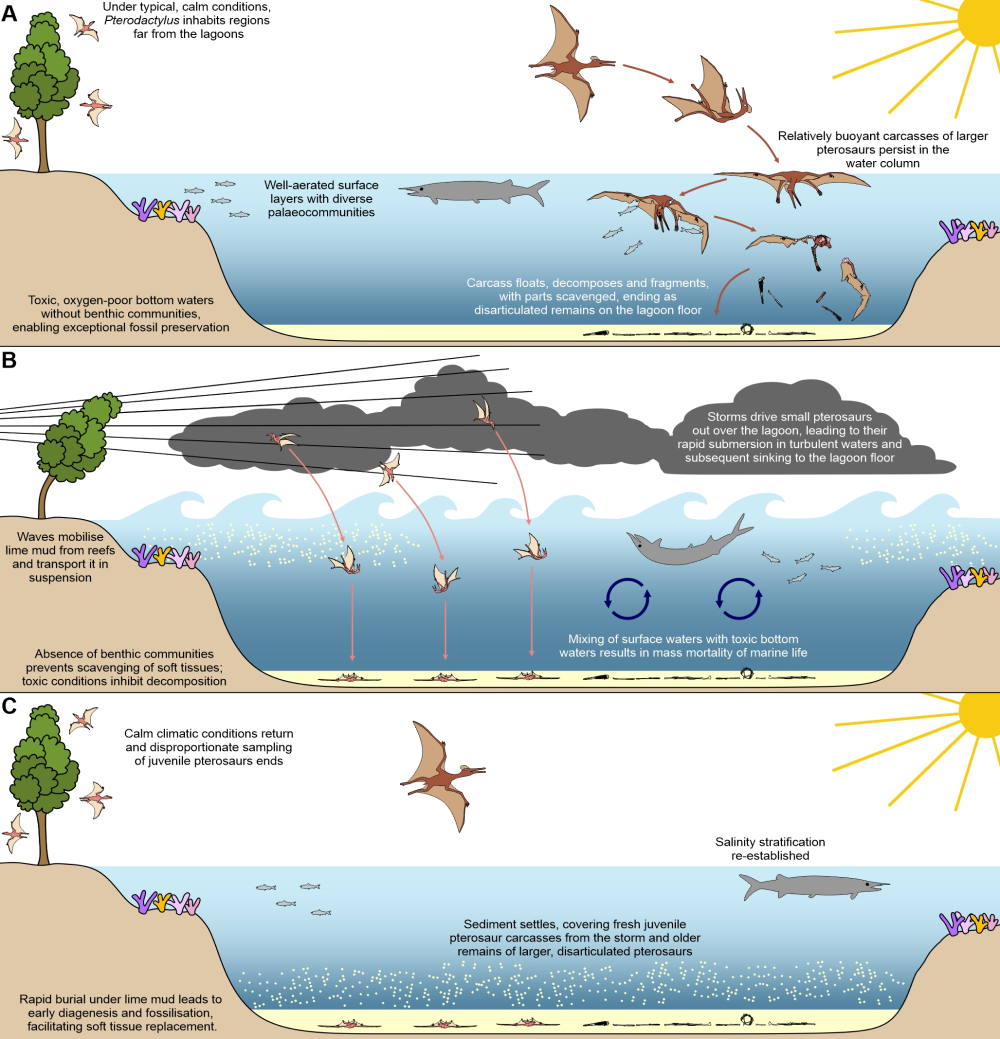
The rest of this article is behind a paywall. Please sign in or subscribe to access the full content. “Pterosaurs had incredibly lightweight skeletons,” said lead author of the study Rab Smyth, from the University of Leicester’s Centre for Palaeobiology, in a statement sent to IFLScience. “Hollow, thin-walled bones are ideal for flight but terrible for fossilisation. The odds of preserving one are already slim, and finding a fossil that tells you how the animal died is even rarer.” Two fossils that gave Smyth and colleagues a bit of an easier time were Lucky and Lucky II, two hatchling Pterodactylus pterosaurs retrieved from the Solnhofen Limestones. They were flapping in the skies around 150 million years ago, but not for very long. Lucky and Lucky II, not appreciating the irony of their names. Image credit: University of Leicester "When Rab spotted Lucky we were very excited but realised that it was a one-off. Was it representative in any way?” co-author Dr David Unwin from the University of Leicester added. “A year later, when Rab noticed Lucky II, we knew that it was no longer a freak find but evidence of how these animals were dying. Later still, when we had a chance to light up Lucky II with our UV torches, it literally leapt out of the rock at us – and our hearts stopped. Neither of us will ever forget that moment.” Their fossilized skeletons are almost perfectly preserved, but they’re also tiny with wingspans of less than 20 centimeters (8 inches). Having endured for 150 million years, they remain intact, articulated, and with evidence of a shared injury: they’ve both got fractured wings. So, what happened? The clue is in those breaks, as the nature of their fractures suggests they were caused by a powerful twisting force, and anyone who’s ever had their umbrella unceremoniously inverted by a stiff wind can probably relate. Yes, it seems these animals got caught up in a storm that caused catastrophic injuries, effectively smashing them out of the air. Unable to fly, the young pterosaurs plummeted to their deaths and drowned in the lagoon, sinking to the bottom. Here, they would’ve been rapidly buried by sediments stirred up by the stormy weather and, as we know, this is a great way to become a smashing fossil. A) Pterosaurs rarely fossilize when conditions are mild as they float and decompose. B) Storms create the perfect conditions, stirring up sediment, which created anoxic conditions, killing scavengers and preventing decay as young pterosaurs slammed into the water. C) Lime-rich mud carried by the storm rapidly buried the remains. Together, these rare conditions explain why fossils from Solnhofen are so well preserved. Image credit: University of Leicester Though an unfortunate fate for some pterosaurs that were only a few weeks old at best, Lucky and Lucky II have provided a great gift to palaeontology in solving the mystery as to why it was so many young pterosaur fossils were turning up in the Solnhofen Limestones. Larger pterosaurs would’ve likely been able to survive the storm, sparing them the same watery burial. When they died of alternative causes, the waters would’ve been calm, giving them time to float and decompose so that their remains were scattered in pieces. “For centuries, scientists believed that the Solnhofen lagoon ecosystems were dominated by small pterosaurs, but we now know this view is deeply biased," added Smyth. "Many of these pterosaurs weren’t native to the lagoon at all. Most are inexperienced juveniles that were likely living on nearby islands that were unfortunately caught up in powerful storms.” Bit of a bum deal for two tiny pterosaurs, but a fascinating discovery for palaeontology. The study is published in Current Biology.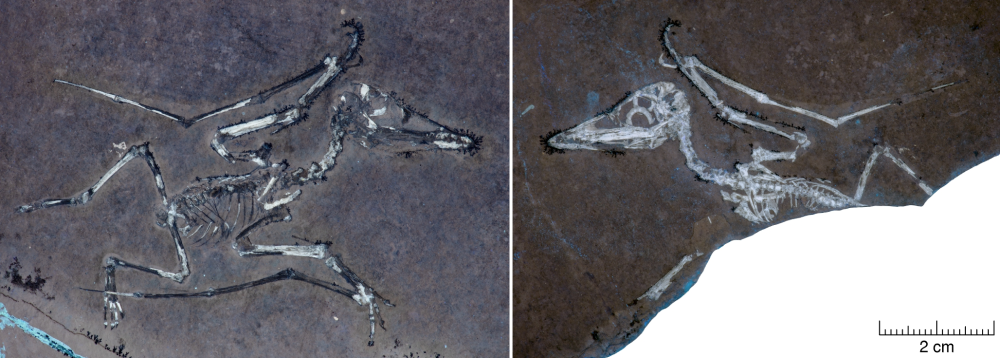

 English
 Arabic
 French
 Portuguese
 Deutsch
 Turkish
 Dutch
Dutch
 Italiano
 Russian
 Romaian
 Portuguese (Brazil)
 Greek
Greek