


This Very Strange Fish Has Clear Blood And Is The Only Known Vertebrate To Lack Hemoglobin
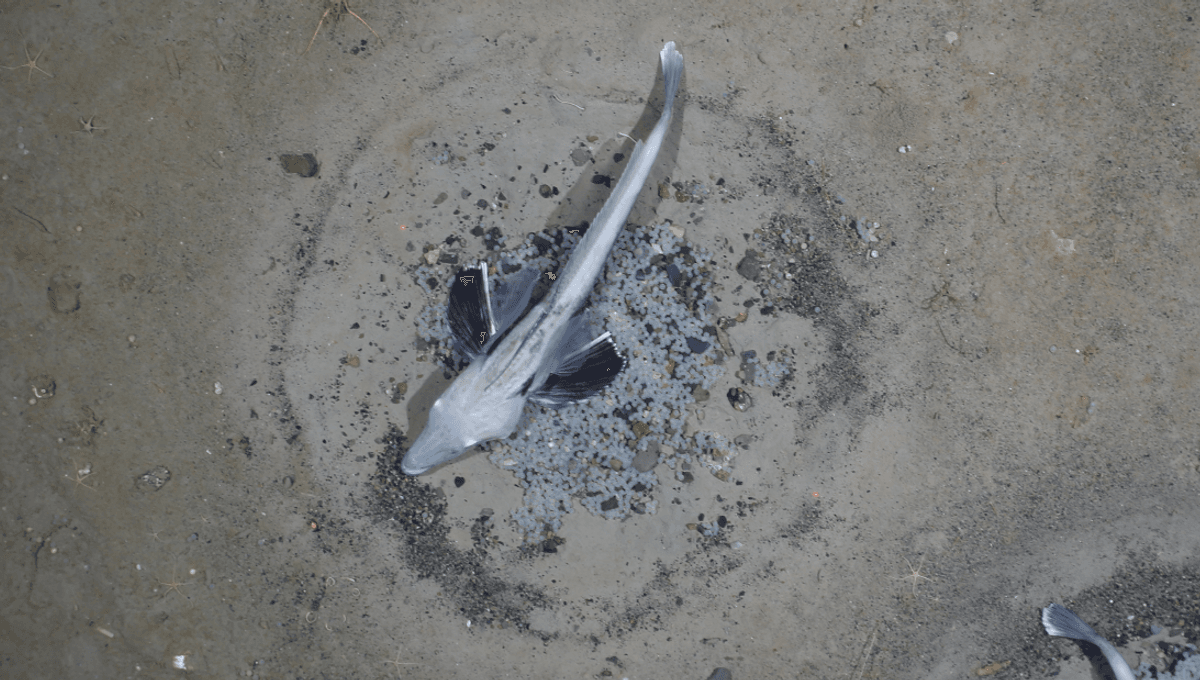
Every Vertebrate Known To Science Has Hemoglobin In Its Blood, Except For This Very Strange Fish
Growing up in Antarctica isn’t easy. The hostile conditions here have pushed animals to the extremes of evolution to overcome things the rest of us take for granted, like breathing, eating, and not freezing to death.
The rest of this article is behind a paywall. Please sign in or subscribe to access the full content. A great example of the lengths life will go to is the rather alien-looking Antarctic icefishes, known to science as Channichthyidae. Living in sub-zero waters has shaped their vision, it’s altered their coloration, and weirdest of all, it’s given them clear blood. This curious coloration is the result of a total lack of hemoglobin in their blood. In fact, they are the only known vertebrates not to have hemoglobin as adults, and it’s a freaky claim to fame that’s altered their appearance as well as their physiology. “The hemoglobinless condition, associated with a colorless blood with few nonfunctional erythrocytelike cells, gives these fishes a peculiar pale color for which they are named icefish,” wrote the authors of a 2003 study. “Because icefish lack hemoglobin, oxygen is carried exclusively in physical solution and therefore the oxygen-carrying capacity of the icefish blood, despite the gain in gas solubility at low temperature, is only one-tenth of that of red-blooded teleosts.” The Antarctic icefishes are like a posterchild for what can happen when you isolate a species in an extreme environment. They first came onto the scene when Antarctica cooled tens of millions of years ago and their ancestors stepped into a newly available ecological niche. A random mutation made them unable to produce hemoglobin. If this were to happen to fish elsewhere in the ocean, they would die, but the cold and oxygen-rich waters of Antarctica made it possible for them to survive without it. Better yet, they thrive. In 2022, we discovered 60 million white-blooded icefish living it up in the largest nesting ground ever discovered for these animals. Tucked beneath the Filchner Ice Shelf in the south of the Antarctic Weddell Sea, it also marked the world's largest fish breeding area known to date. "After the spectacular discovery of the many fish nests, we thought about a strategy on board to find out how large the breeding area was - there was literally no end in sight,” said Autun Purser of the Alfred Wegener Institute in Bremerhaven, Germany, in a statement. “The nests are three quarters of a metre in diameter - so they are much larger than the structures and creatures, some of which are only centimetres in size, that we normally detect with the [Ocean Floor Observation and Bathymetry System].” "So, we were able to increase the height above ground to about three metres and the towing speed to a maximum of three knots, thus multiplying the area investigated. We covered an area of 45,600 square metres and counted an incredible 16,160 fish nests on the photo and video footage.” Estimates from the Polarstern's observations put the population of the nesting ground at around 60 million, demonstrating that the area is a vital one for the species and a marine environment worthy of protection. A proposal to establish a Marine Protected Area here has been under consideration since 2016 by the European Union and the international Commission for the Conservation of Antarctic Marine Living Resources (CCAMLR) but has not yet come to fruition. Come on, world. Do it for the white-blooded weirdos.

 Arabic
 French
 Spanish
 Portuguese
 Deutsch
 Turkish
 Dutch
Dutch
 Italiano
 Russian
 Romaian
 Portuguese (Brazil)
 Greek
Greek