


Homo Naledi May Have Buried Its Dead After All, Peer Reviewer Accepts
Homo Naledi May Have Buried Its Dead After All, Peer Reviewer Accepts
One of the biggest controversies in human evolution just took another dramatic turn after researchers submitted their final, revised version of a study claiming that a small-brained human ancestor buried its dead. Known as Homo naledi, this prehistoric hominid rose to fame a couple of years ago thanks to a Netflix documentary that sensationalized the theory, even though most independent experts completely rejected the claim.
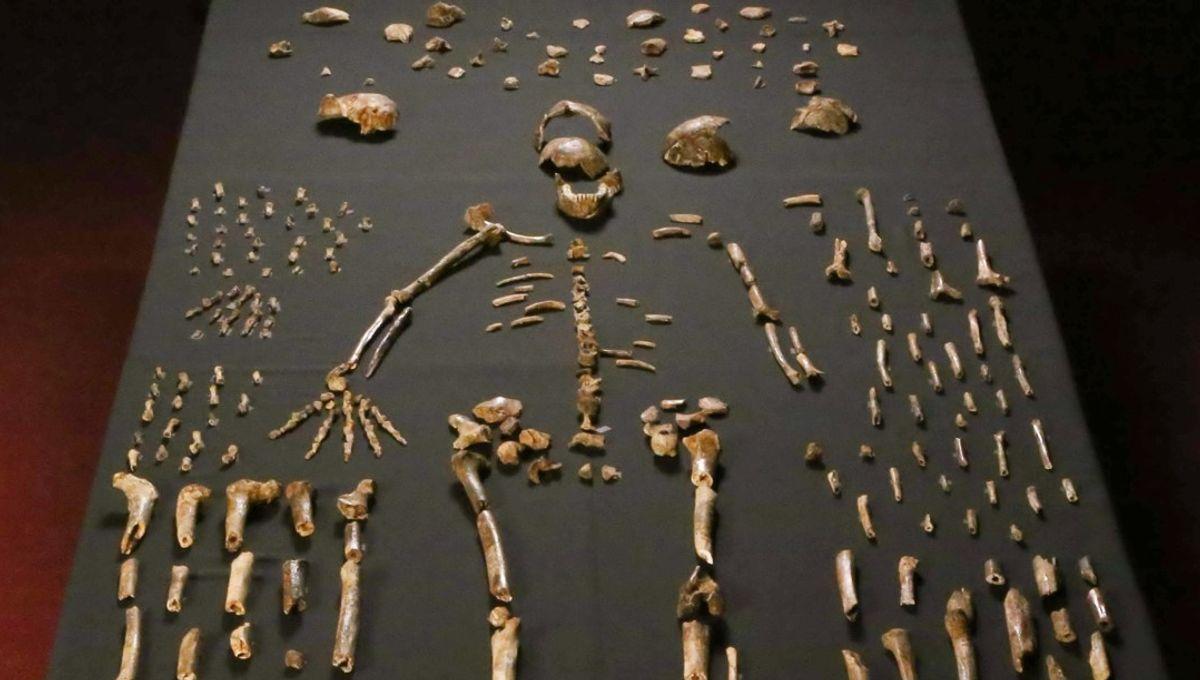
The rest of this article is behind a paywall. Please sign in or subscribe to access the full content. Found in South Africa’s Rising Star Cave System, Homo naledi skeletons analyzed by Lee Berger and his colleagues were deemed to have been deliberately interred, suggesting that this prehistoric human possessed the cognitive capacity for funerary behavior. Dated to between 241,000 and 335,000 years ago, the specimens made global headlines when the findings were released via a preprint, with the subsequent film coming out before the paper had even completed peer review. When the study was eventually scrutinized, all four peer reviewers found the evidence inadequate and unconvincing. Among the many issues they identified was a lack of data to support the idea that the bones were intentionally placed in the cave as opposed to ending up there due to natural processes like water flow. However, Berger et al. have now amended and resubmitted their paper, with two of the original peer reviewers giving it another look. Of these, one now appears to be on the fence, citing uncertainty over how H. naledi might have reached this highly inaccessible cavern as the main reason for not wanting to support any definitive claims. The other, however, is now convinced by the study authors’ attempts to demonstrate deliberate and repeated burial practices by H. naledi. “In their revised manuscript, the authors have implemented substantial improvements in methodology, analytical depth, and overall presentation, which have effectively resolved the critical issues I previously highlighted,” writes the anonymous reviewer. “Key gaps in the earlier version, such as the absence of detailed reconstructions of taphonomic processes, bone articulations, and displacement patterns, have been addressed with thorough analyses and clearer illustrations,” continues the new appraisal. The researchers have also included new data supporting the idea that the bones were placed in human-made pits, thus addressing another of the doubts raised during the first round of peer review. “The study also now includes a well-structured timeline of events surrounding death and deposition, demonstrating an improved ability to differentiate between natural processes and deliberate human actions,” writes the newly converted reviewer. “These additions lend greater clarity and rigor to the evidence, making the argument for intentional burials both robust and persuasive.” Despite this development, however, many questions remain unanswered and scholars are unlikely to be easily convinced by the idea that H. naledi buried its dead. For one thing, the species had a brain that’s about the same size as a chimp’s, and it’s hard to accept that such a primitive species could have been capable of symbolic behavior. Yet the new details provided by Berger’s team do at least add greater credibility to their claim that the skeletons were deliberately buried. Exactly what this means for the story of human evolution and the emergence of funerary customs, however, is something that is sure to be hotly debated for some time. The study is published in the journal eLife.

 English
 Arabic
 Spanish
 Portuguese
 Deutsch
 Turkish
 Dutch
Dutch
 Italiano
 Russian
 Romaian
 Portuguese (Brazil)
 Greek
Greek