


40 Years Since Titanic's Wreck Was Found, Watch The Rare Footage Of Its Discovery
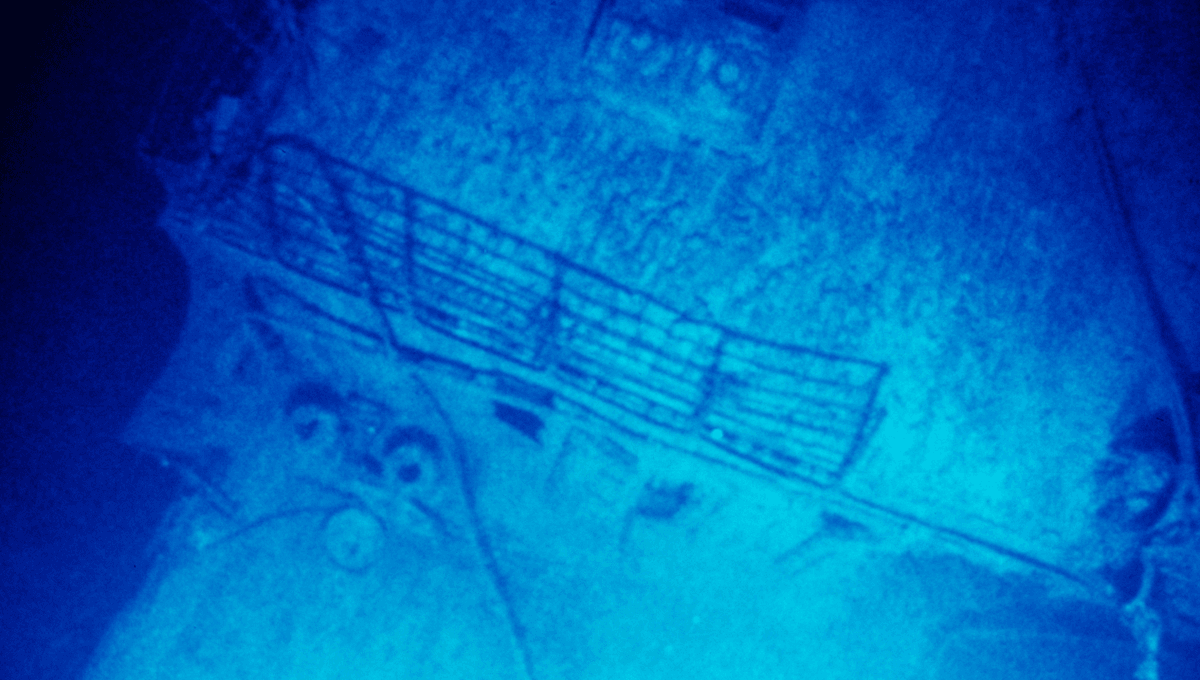
Watch The Rarely Seen Video Of RMS Titanic’s Shipwreck Discovery 40 Years Ago
Forty years ago yesterday, explorers laid eyes on the RMS Titanic for the first time since its infamous sinking in 1912. To mark the anniversary, those behind the historic mission to locate the wreck have released rarely seen footage of its discovery.
The rest of this article is behind a paywall. Please sign in or subscribe to access the full content. On September 1, 1985, the shipwreck of the RMS Titanic was found on the seabed of the North Atlantic at a depth of about 3,800 meters (12,500 feet) by an international team led by the Woods Hole Oceanographic Institution (WHOI) and the French oceanographic institution, IFREMER. Led by Dr Robert Ballard and Jean-Louis Michel, the crew departed for the North Atlantic in the summer of 1985 on board the US Navy-owned RV Knorr. Initially, they were on a mission to survey the wreckage of the USS Scorpion, a nuclear submarine lost at sea in 1968, although Ballard and the team quietly had ambitions that their venture might lead them to the coveted site of the Titanic. Their vast research vessel carried cutting-edge technology for deep-sea exploration, most notably ARGO, a remotely operated submersible equipped with side-scan sonar and cameras capable of transmitting live video from the ocean floor (an impressive technology for the '80s). Then WHOI Director John Steele and then head of the Deep Submergence Lab at WHOI, Robert Ballard, standing aboard the R/V Knorr after the discovery of the RMS Titanic wreckage in 1985. Image credit: ©Woods Hole Oceanographic Institution The original plan was to sweep the surrounding seafloor using their sonar equipment, but this failed to deliver any results. In their next move, the team decided to take on a new approach of following the trail of debris released by the Titanic when it sank and split apart. After less than a week of searching, the breakthrough came. In the early hours of September 1, the cameras captured an image of what appeared to be one of Titanic’s massive boilers resting on the seabed. In the footage, the team can be heard exclaiming: "GOD, THAT'S THE BOILER!", "YES! YES!", "FANTASTIC!" Chasing the debris field northward, the team soon came upon the wreck of the Titanic itself. “Finding the Titanic was extraordinarily exciting, but simultaneously a bit gut-wrenching,” Stewart Harris, chief engineer on WHOI’s Argo project, said in a statement. “Over 1,500 people lost their lives in the accident, and with all the hoopla surrounding the discovery, it was important for us to be mindful of that. Nonetheless, the technology demonstration was an eye-opener for the oceanographic community.” In 1986, Ballard and a WHOI team returned to the Titanic’s resting place armed with Alvin, a pioneering human-occupied submersible, and Jason Jr., a small remotely operated vehicle tethered to it. Together, they captured the first haunting close-up images of the wreck, revealing glimpses of its interior and providing valuable insights into the ship’s deteriorating condition. Many still wonder why it took nearly four decades to find the resting place of the Titanic. The simple answer lies in technology: only with the advent of live-feed cameras, remotely operated vehicles, and advanced sonar in the 1980s did the search become possible. In turn, the discovery itself became a catalyst, driving further innovation in deep-sea robotics and exploration. “Titanic proved to be a pivotal moment in the exploration of the deep sea. The addition of larger area search and survey technology, coupled to Alvin, was among the first effective demonstrations of robots and humans working together in the deep ocean,” said Andy Bowen, principal engineer at WHOI, who designed Jason Jr. for the 1986 return to Titanic. ”Our development of the ROV Jason Jr. and subsequent, larger Jason vehicle created an inflection point that accelerated our access into the deep sea. The resulting technology and its impact have added a surprising and welcome dimension to Titanic’s legacy.” Since its discovery, sophisticated scans have been taken of the ship, artifact salvaging has been attempted and aborted, and its slow decay monitored.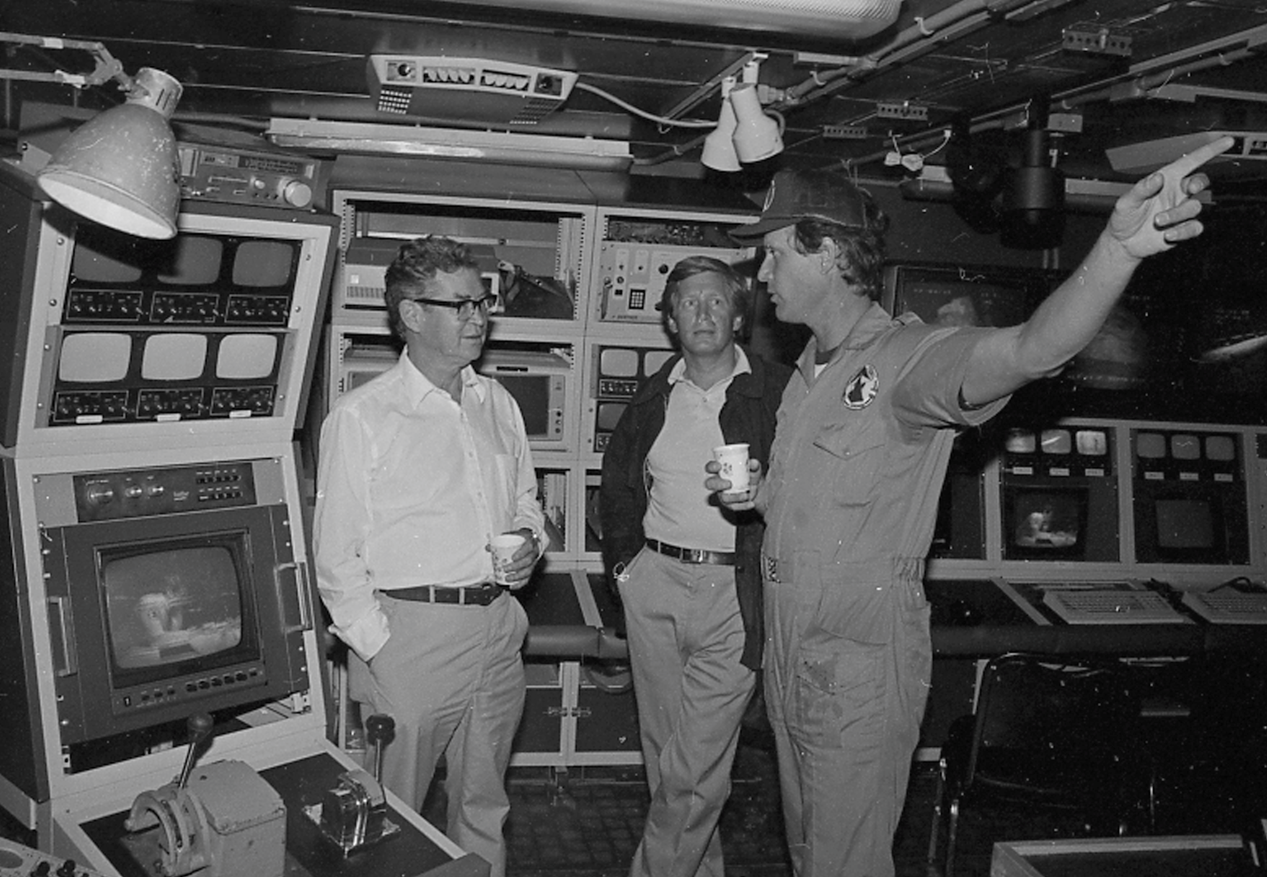

 English
 Arabic
 French
 Spanish
 Portuguese
 Deutsch
 Turkish
 Dutch
Dutch
 Italiano
 Russian
 Romaian
 Portuguese (Brazil)