


Giant City-Swallowing Cracks In Earth’s Surface Are A “New Geo-Hydrological Hazard”
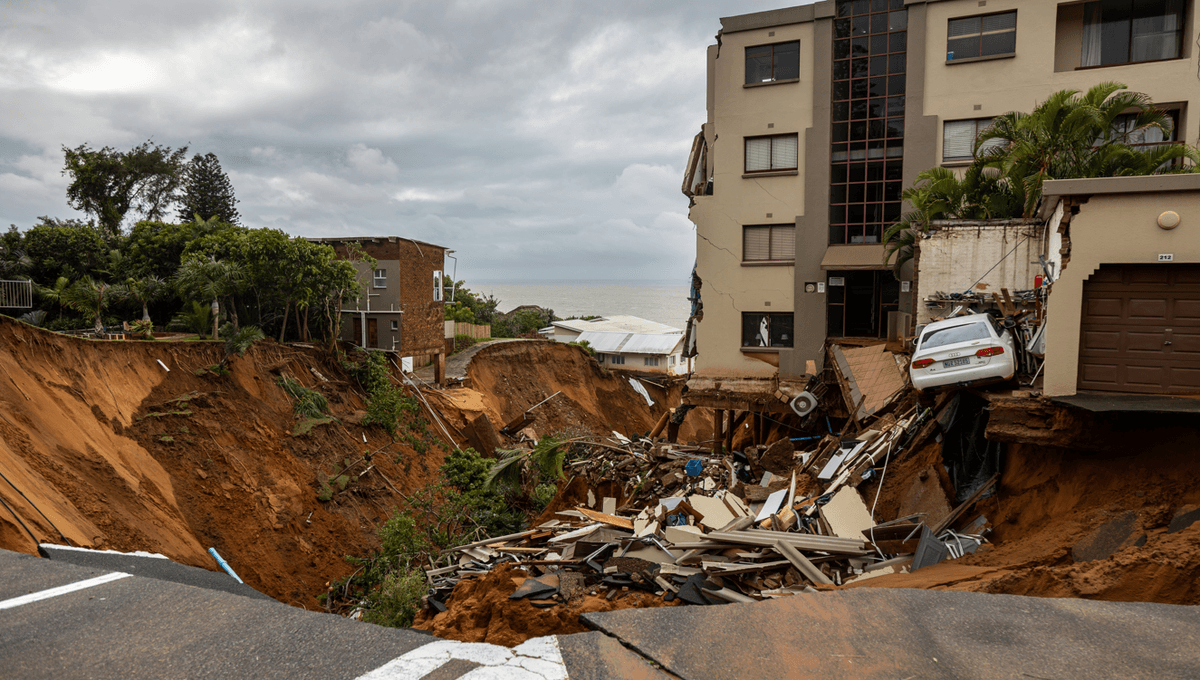
Scientists Warn Of A “New Geo-Hydrological Hazard" That's Threatening Millions
Giant city-swallowing cracks in Earth’s surface are a “new geo-hydrological hazard,” threatening millions of city dwellers across the Global South and beyond, a new study looking at the large urban gullies creeping through the Democratic Republic of the Congo (DRC), Central Africa, has found.
The rest of this article is behind a paywall. Please sign in or subscribe to access the full content. By mapping 26 cities, the team identified 2,922 large trenches, known as "gullies", that had opened up – some large enough to swallow houses and roads. These massive erosion scars – deep, widening cracks often formed by rainwater run-off in unstable soils – have spread across the DRC at a time of rapid urban population growth. The toll is already staggering. Between 2004 and 2023, the erosion displaced an estimated 118,600 people, forcing families to abandon homes and communities. And the danger is accelerating. The researchers found that from 2010 to 2023, the number of people living in areas threatened by expanding gullies doubled from 1.6 million to 3.2 million. A) A gully in Kinshasa in November 2019; b) another gully in Bukavu in July 2021; c and d) Google Earth imagery of urban gullies in Kikwit in July 2004. Image credit: G I Mawe et al./Nature/2025 (CC BY 4.0) Although the study focused on the DRC, they argue it’s likely to be a problem facing many countries across the Global South, from sub-Saharan Africa to South America. The researchers point to rapid, disordered urbanization as the main culprit. Unstable soils, unregulated construction, and a lack of drainage systems leave cities ill-equipped to handle heavy rains. In places already prone to erosion, they warn, the absence of infrastructure to safely channel and store rainwater is helping gullies spread like open wounds through urban neighborhoods. The situation will likely get worse over the coming decades, too. The populations of many African nations are booming, and the continent is experiencing a rapid shift to urbanization. Paired with this, this part of the world is becoming increasingly wet and prone to freak rainstorms. “Climate change may further aggravate the problem,” the authors write. “Future projections indicate that rainfall intensities in tropical Africa may increase by 10 to 15 percent in the coming decades. Yet, intensive rainfall events are also a main driver of gully formation and expansion. A meta-analysis of observational data worldwide suggests that these predicted increases could easily double gully expansion rates if other factors remain the same." The team believes that it’s a challenge that many countries need to start taking seriously. Since stabilizing existing gullies is costly and complex, researchers argue that prevention may be the key. Simple engineering solutions, like shallow drainage channels and “swales” that help rainwater soak into the ground rather than rushing across it, could make a difference. Another tactic is to redirect runoff away from erosion-prone slopes, reducing the pressure from road drains and stopping new gullies from forming in the first place. For now, the cracks are overshadowed by more familiar climate risks like floods, heat, and storms, but the researchers warn they could soon be recognized as one of the defining urban hazards of the Global South. The new study is published in the journal Nature. 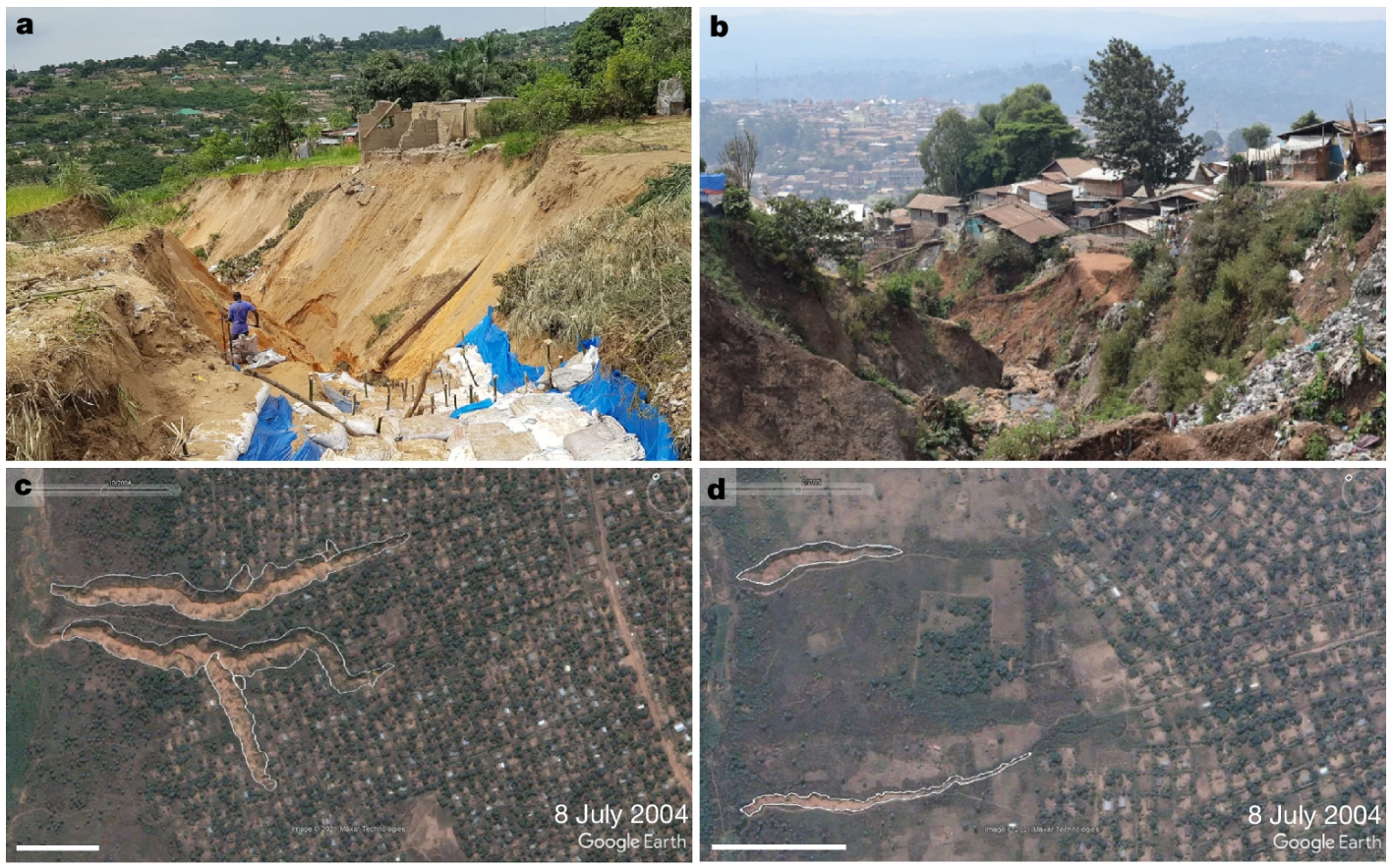

 English
 Arabic
 French
 Spanish
 Portuguese
 Deutsch
 Dutch
Dutch
 Italiano
 Russian
 Romaian
 Portuguese (Brazil)
 Greek
Greek