


The "Plague Of Justinian" May Have Been The First Pandemic. DNA At A Mass Grave Has Finally Identified Its Cause.
The "Plague Of Justinian" May Have Been The First Pandemic. DNA At A Mass Grave Has Finally Identified Its Cause.
A new study has found direct genetic evidence pointing to the cause of the devastating "Plague of Justinian" first described nearly 1,500 years ago.
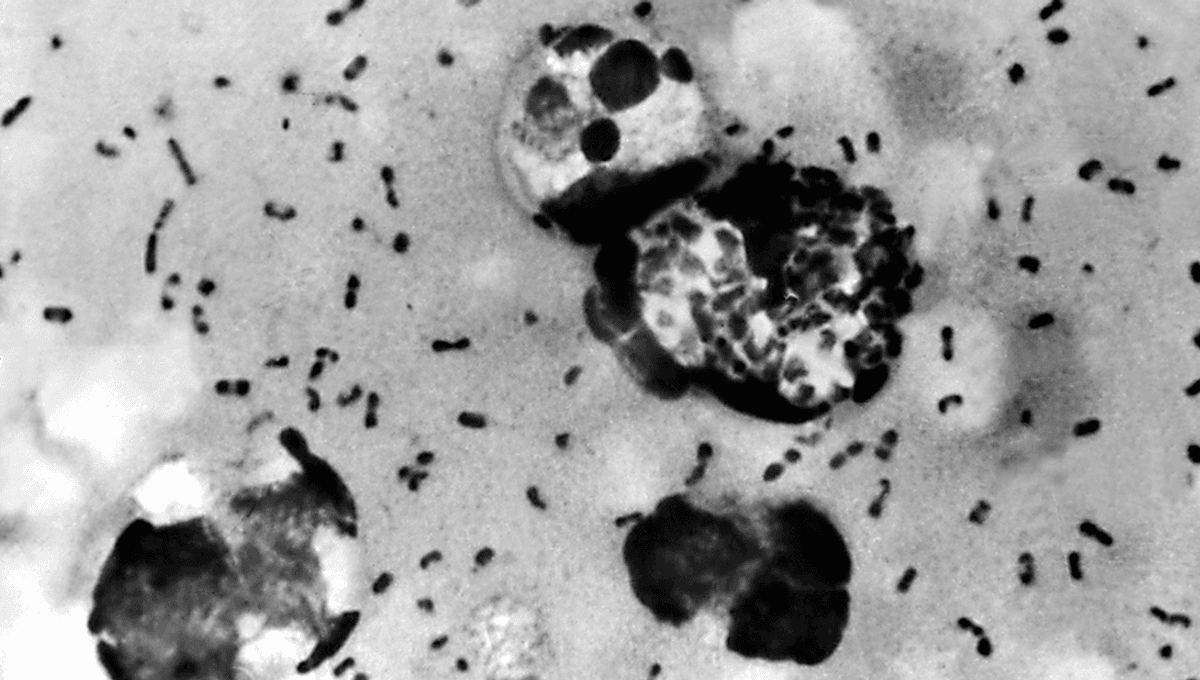
The rest of this article is behind a paywall. Please sign in or subscribe to access the full content. Reports of the disease first came around 541 CE in the port of Pelusium in Lower Egypt, before spreading through trade routes around the Byzantine Empire. During a particularly intense outbreak in Constantinople (now Istanbul), Emperor Justinian I, after whom the plague was named, grew ill but later recovered. Residents of the city were not so lucky, with possibly tens of thousands dying over the course of four months. Responding to the sheer number of corpses, Justinian ordered pits to be dug, and when those overflowed, some of the corpses were put inside the towers of the city's walls, and covered in quicklime to hurry decomposition along. The disease spread west throughout Europe, with outbreaks occurring over the next few centuries before it finally disappeared around 750 CE. In all, it estimates suggest it killed between 30 and 50 million people, with some historians suggesting it helped contribute to the fall of the Byzantine Empire (though others argue it was not that catastrophic for the empire, stressing other factors). In new research, scientists have directly linked the outbreak – believed by some to be the first recorded pandemic in history – to the bacterium that caused it. Given reports of the effects of the disease, it had been thought Yersinia pestis was behind the outbreak, the bacteria that causes the plague. Though traces of the bacterium had been found thousands of kilometers away in the villages of western Europe, none had previously been found within the Byzantine Empire, nor at the center of the outbreak. Now, that has been changed, after researchers investigated an arena used as a mass grave in the mid-sixth to early-seventh century CE. "The Jerash site offers a rare glimpse of how ancient societies responded to public health disaster," Rays H. Y. Jiang, lead principal investigator of the studies and associate professor with the University of South Florida College of Public Health, explained in a statement. "Jerash was one of the key cities of the Eastern Roman Empire, a documented trade hub with magnificent structures. That a venue once built for entertainment and civic pride became a mass cemetery in a time of emergency shows how urban centers were very likely overwhelmed." The site provided the key evidence needed to link the Plague of Justinian to its source. "Using targeted ancient DNA techniques, we successfully recovered and sequenced genetic material from eight human teeth excavated from burial chambers beneath the former Roman hippodrome in Jerash, a city just 200 miles [322 kilometers] from ancient Pelusium," Greg O'Corry-Crowe, co-author and a research professor at Florida Atlantic University's Harbor Branch Oceanographic Institute, explained in the statement. The team found that the victims all had nearly identical strains of Y. pestis, confirming that it was there during the initial phases of the pandemic, and suggesting that it was a rapid and devastating outbreak that quickly moved through the population, with high mortality rates. "This discovery provides the long-sought definitive proof of Y. pestis at the epicenter of the Plague of Justinian," Jiang added. "For centuries, we've relied on written accounts describing a devastating disease, but lacked any hard biological evidence of plague's presence. Our findings provide the missing piece of that puzzle, offering the first direct genetic window into how this pandemic unfolded at the heart of the empire." While interesting historically, it could help us understand modern diseases (though we should point out, you can still get the plague). A separate study by the same team analyzed this strain and compared it to other ancient genomes and modern-day examples of Y. pestis, from the Neolithic and Bronze Age to the present day. "We show that pandemic-causing lineages did not arise from a single ancestral strain but instead emerged independently along deep branches of the Y. pestis phylogeny," the team explains in their paper. "Pandemic-associated Y. pestis strains were recovered exclusively from human remains and display clear local temporal divergence, indicating evolution driven by human transmission during outbreaks. These findings support the hypothesis that plague emergence is driven by complex, regionally rooted reservoirs, with recurrent spillovers into human populations across millennia." The team will next turn their attention to Lazzaretto Vecchio, Venice's infamous "plague island", where sick individuals were isolated during outbreaks, studying a disease that can lie low but never disappears entirely. "We've been wrestling with plague for a few thousand years and people still die from it today," Jiang added. "Like COVID, it continues to evolve, and containment measures evidently can't get rid of it. We have to be careful, but the threat will never go away." The first study is published in Genes. The second is published in Pathogens.

 English
 Arabic
 French
 Spanish
 Portuguese
 Deutsch
 Turkish
 Dutch
Dutch
 Italiano
 Romaian
 Portuguese (Brazil)
 Greek
Greek