


New AI Model May Predict Success Of Future Fusion Experiments, Saving Money And Fuel
New AI Model May Predict Success Of Future Fusion Experiments, Saving Money And Fuel
Scientists at Lawrence Livermore National Laboratory have announced that a new artificial intelligence (AI) model accurately predicted the results of a nuclear fusion experiment conducted in 2022. The model correctly assigned a probability greater than 70 percent that ignition was likely in that experiment. This outdid existing supercomputer approaches while also offering researchers a more precise way to predict outcomes in a field of research with limited data.
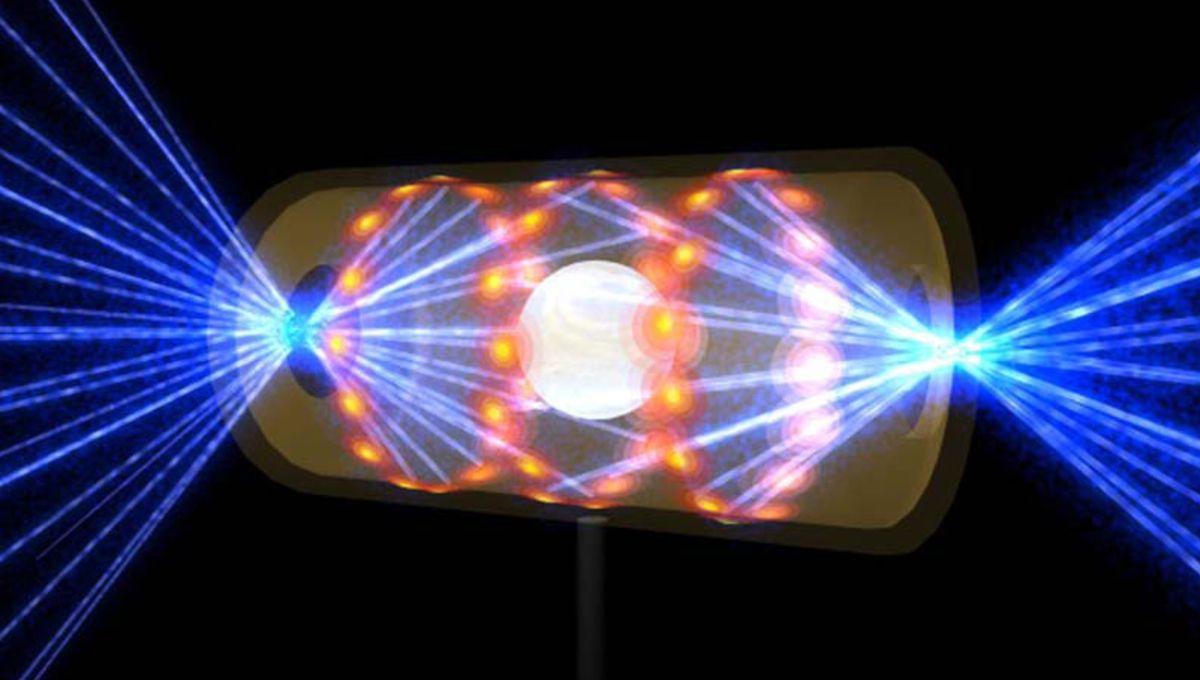
The rest of this article is behind a paywall. Please sign in or subscribe to access the full content. At present, the nuclear power we produce comes from fission reactions. This involves colliding neutrons into larger atoms, which forces them to split into smaller atoms that also release additional neutrons. These neutrons then collide with other atoms and initiate the same physical reaction, eventually creating a chain reaction that releases tremendous amounts of energy. The chain reaction is difficult to sustain, so fission is most often achieved with specific isotopes of uranium (uranium-235) or plutonium (plutonium-239). The energy released by fission is then used in nuclear reactors to heat water to produce steam. This turns a turbine that produces carbon-free electricity. However, fission reactions have a few drawbacks, not least the fact that they produce long-lasting and environmentally dangerous nuclear waste. In contrast, nuclear fusion has the potential to produce cleaner energy while also being safer to operate. Fusion occurs when two colliding atoms merge into a heavier one, such as two hydrogen atoms smashing together to form helium. This process releases far more energy with few harmful byproducts, which makes it a desirable alternative to our existing methods. However, although substantial achievements have been made in this direction, we still lack the technology and ability to create and sustain the conditions that produce fusion. The Lawrence Livermore National Laboratory’s National Ignition Facility (NIF) is home to the world’s most energetic laser system, which they use to experiment with fusion. In one program, referred to as Inertial Confinement Fusion, pellets containing deuterium and tritium – hydrogen isotopes – are placed in a cylinder called the hohlraum. This cylinder is then heated by the lasers, causing it to release powerful X-rays that cause the pellets to rapidly compress. At peak compression, the capsule’s volume is reduced by 10,000 times, producing extreme levels of heat and energy. If all goes well, this generates and propagates fusion that, ideally, puts out more energy than was put in. At present, computer simulations are not good at predicting everything involved in this process. This is due to both limitations with the codes of these models as well as errors introduced by the simulations. At best, the existing predictive approaches take several days to run through all the code. What is produced is an imprecise impression of what is going on, similar to a dodgy map. What this means in real time is that researchers using these maps do not know if there are any errors or issues ahead of them, nor do they know if these errors are part of the research design. Nevertheless, this is all they have to work with, so they have to make a decision based on this limited information, and doing so will always have high costs in terms of the ignition attempt, which is expensive. To overcome this, the team at the NIF created a new way to create these “maps” by merging past data with high-fidelity physics simulations and the knowledge of experts. This was then fed into a supercomputer that ran statistical assessments in the course of over 30 million CPU hours. Effectively, this allows the researchers to see all the ways that things can go wrong and to pre-emptively assess their experimental designs. This saves a lot of time and, more importantly, money. The team tested this approach on an experiment they ran in 2022, and, after a few changes to the model’s physics, was able to predict the outcome with an accuracy above 70 percent. Researchers have been trying to achieve fusion for decades, so while this result doesn’t demonstrate a result in that process itself, it does indicate a way to make testing affordable and more efficient in the future. The study is published in Science.

 English
 Arabic
 French
 Spanish
 Portuguese
 Turkish
 Dutch
Dutch
 Italiano
 Russian
 Romaian
 Portuguese (Brazil)
 Greek
Greek