


The World’s Largest Terrestrial Carnivore Has Clear Fur And Black Skin, But You Wouldn’t Know It
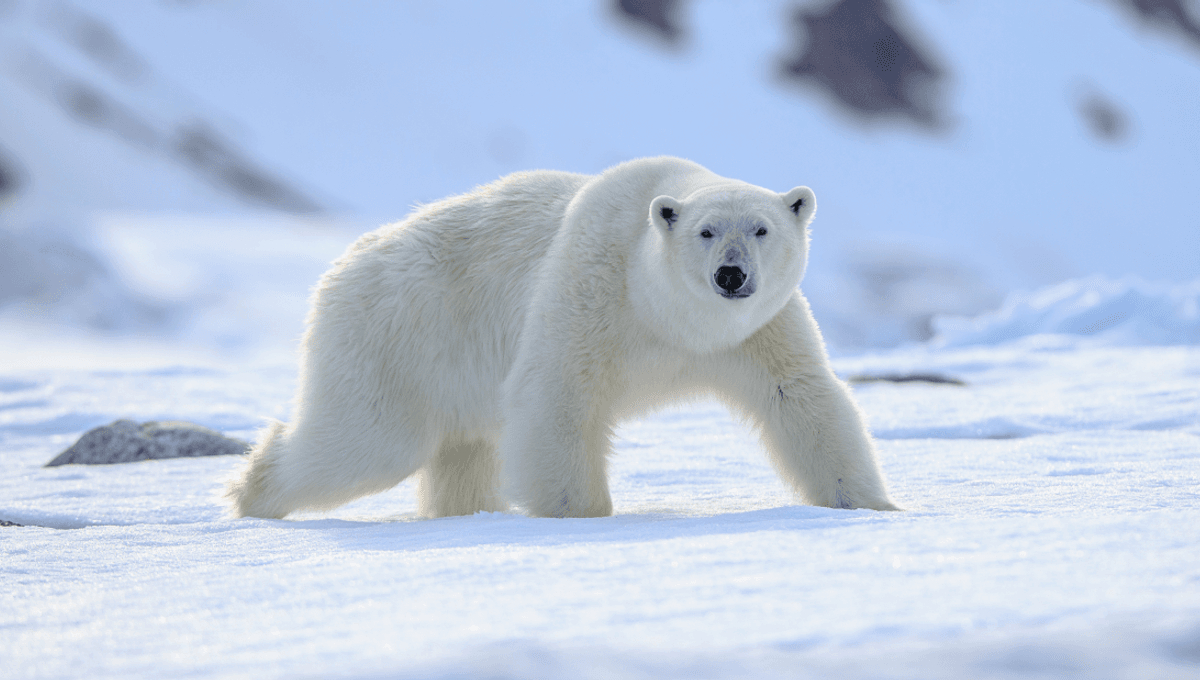
Polar Bears Don’t Have White Fur And Their Skin Is Actually Black, But Nobody Knows Why
Polar bears have become something of an icon for the Arctic. The world’s largest land predators, they are big, they are beautiful, they are – not white, actually. Across their evolution they’ve developed some curious adaptations for life in the cold, and we don’t yet understand all of them.
The rest of this article is behind a paywall. Please sign in or subscribe to access the full content. Polar bears can tolerate extremely cold temperatures, living in regions where the winter can drop to -46°C (-50°F) for weeks at a time. Life-ending stuff for a human, but everything from a polar bear’s skin to its paws and claws is custom-built to their environment. “Polar bear fur is not actually white!” said Polar Bears International’s Director of Conservation Outreach and Staff Scientist Alysa McCall to IFLScience. “The fur is clear so, as the hair scatters light, it appears white to our eyes. Their fur is also mostly hollow, which helps trap heat.” Their fur also has a special type of grease that prevents the hairs from icing up in the cold. Alysa McCall Yes, if you’ve been thinking all this time that polar bears have white fur, I’m afraid you’ve been fooled by a trick of the light. The hairs themselves aren’t white, but clear, and the way that the scattering light makes them appear white makes for excellent camouflage against the snow. This has enabled polar bears to become expert ambush hunters (though the jury’s out on whether or not it helps them throw ice blocks at walruses’ heads). Turns out, there are many cold-tolerance benefits to a polar bear's fur. “Polar bear fur comes in two layers – a dense, thick layer close to the body that acts as a warm sweater, and a longer outer layer that acts more like a raincoat and wicks water away,” said McCall. “These two very dense layers of fur keep polar bears very warm even in extremely cold temperatures. However, fur is not insulating when polar bears are swimming (that’s when their body fat helps!).” “Their fur also has a special type of grease that prevents the hairs from icing up in the cold.” A lot of research has gone in to unraveling the mysteries of polar bears’ magic fur, but there are still some things we don’t understand about their bodies and how it better prepares them for life in the cold. “Polar bear skin is black, but we don’t know why,” said McCall. “We assumed it could help absorb warmth, but early testing seems to indicate that this may not be the case.” Your secret’s safe for now, you sneaky polar bears.

 English
 Arabic
 French
 Spanish
 Portuguese
 Deutsch
 Turkish
 Dutch
Dutch
 Italiano
 Russian
 Romaian
 Greek
Greek