


Sharks Don’t Have Bones To Fossilize, So How Do We Know Megalodon’s Size?
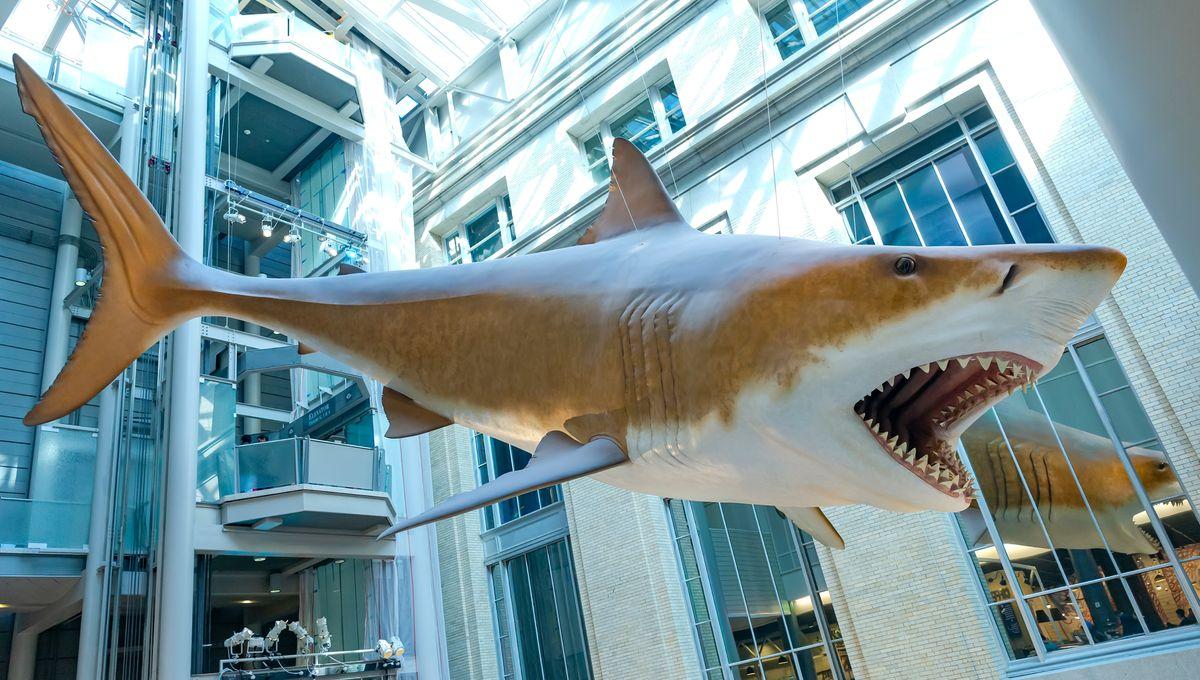
Sharks Don’t Have Bones To Fossilize, So How Do We Know Megalodon’s Size?
Sharks, rays, and chimaeras are collectively known as cartilaginous fish, because instead of bones, they have cartilage material like humans have in our noses and ears. That certainly seems to work out well for them, given their long reign and the diverse niches they occupy, but it’s not so great for humans wanting to draw a picture of ancient sharks.
In particular, it raises the question of how palaeontologists even know sharks evolved 450 million years ago, or are aware of the size of megalodon, the giant shark that lived 23 to 3.6 million years ago. When you read that megalodons were two to four times as long as existing great white sharks, is that just a guess? In fact, there are a few ways sharks leave a presence in the fossil record. The most common and important is their teeth. Dentin in an enamel shell is tougher than bone, so it’s common for most surviving specimens of extinct fish, reptiles, or mammal species to be fossilized teeth. Moreover, sharks famously drop their teeth frequently and grow new ones, so they can leave tens of thousands behind over their lifetime. Most of these fall off in the deep ocean, where we are unlikely to find them, and of course, even the bulk of those left close to shore don’t fossilize. Nevertheless, with so many being dropped, fossil shark teeth are quite common. It’s the discovery of teeth far too large for any modern shark (and almost too large to believe) that has alerted ichthyologists to the giants of the past. Most often, these teeth are found individually, having been dropped by a live shark, but sometimes a mouthful reveals how the extinct individual died. Indeed, megalodon teeth are so common that they’re not all in museums or the homes of super-wealthy collectors like dinosaur fossils. If you have a few hundred dollars spare, you can own your own megalodon tooth; even less if you’re happy to settle for a juvenile or broken version. Although we refer to a particular pattern as “shark tooth”, there are in fact three main shapes to shark teeth, depending on whether they were used for crushing, grasping, or cutting. Thus, fossil shark teeth can also tell us a lot about the diet of the species they came from. Comparing megalodon teeth and those of great whites gives a sense of the difference in scale. Image credit: Mark_Kostich/Shutterstock.com That’s all very well, you might say, but how can we tell that the sharks from which these teeth came really were such giants? Perhaps conditions of the day favored larger teeth, while the shark bodies were similar to those of moderate great whites. It’s true that estimating size based on teeth size alone has its limitations. You can get somewhat different results depending on whether you use upper or lower teeth, for example. Fortunately, although fossil teeth are our greatest source of information on ancient sharks, they’re not our only ones. After all, under the right circumstances, even soft tissue can fossilize, and cartilage is more resilient than brain tissue. Consequently, although cartilage fossilizes less often than bone, rarely does not mean never. The densest parts of the shark skeleton, particularly the centers of vertebrae and jaws, are found occasionally. These allow us to confirm that relationships between tooth and body size are not just a feature of modern times. Indeed, in some exceptional cases, we have something close to a whole Cretaceous ray preserved. Sadly, we don’t have that kind of preservation for the now-famous megalodon, nor its similarly sized predecessor, Carcharocles angustidens. Nevertheless, some megalodon vertebrae have been found. If we hadn’t seen the teeth, we might not know what such giant remnants are, as they provide confirmation that these great fish really did approach 20 meters (66 feet) in length. We have only subtle hints to reconstruct their body shape, however. Finally, there are coprolites – fossil dung. Not surprisingly, sharks poop a lot more than they drop teeth. On the other hand, being soft, feces doesn’t fossilize as well, but we do still have examples. Matching the dropping to the maker isn’t a particularly reliable practice, let alone calculating body size. Nevertheless, the size of some droppings from the megalodon era does provide further confirmation that the sea contained giants in those days.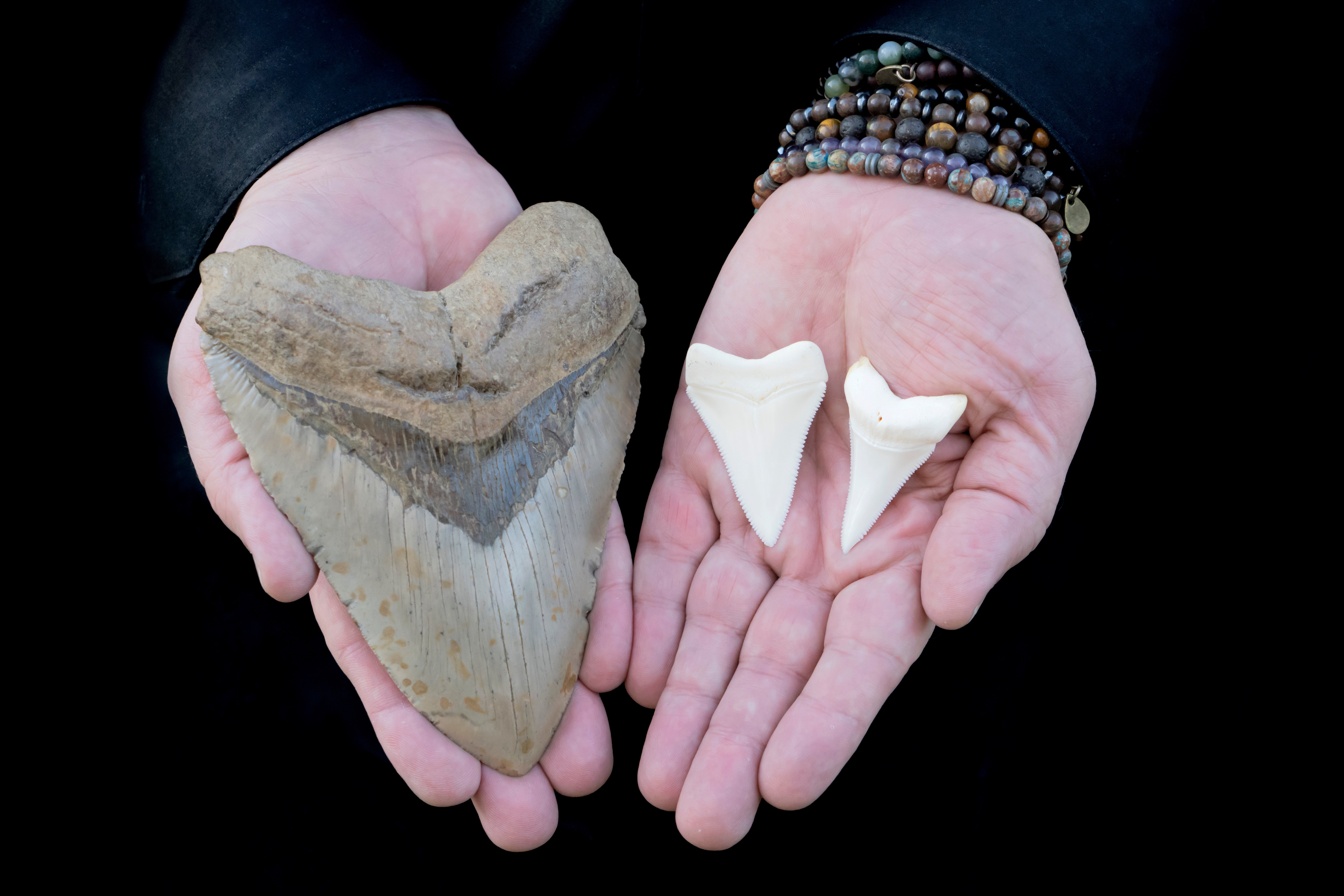

 English
 Arabic
 French
 Spanish
 Portuguese
 Deutsch
 Dutch
Dutch
 Italiano
 Russian
 Romaian
 Portuguese (Brazil)
 Greek
Greek