


Curiosity Turns 13: Why Curiosity Stopped Singing Itself Happy Birthday
Curiosity Turns 13: Why Curiosity Stopped Singing Itself Happy Birthday
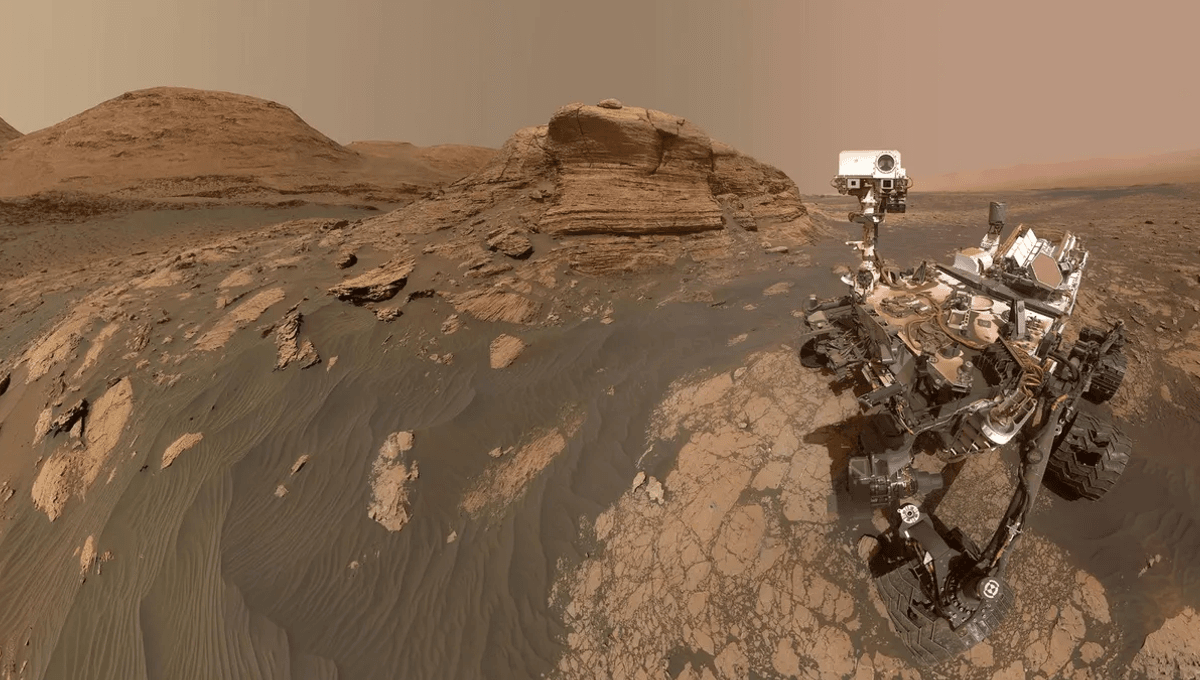
NASA’s Curiosity landed on Mars on August 5, 2012 – a date that has been marked ever since as its birthday. It was the year after, though, when the birthday celebrations took a turn that quickly became viral. The mission team made the rover sing itself Happy Birthday. Maybe saying that everybody loved it is a bit of an exaggeration, but it is definitely difficult to find a negative reaction to it online.
It is a story that has been repeated a lot since. We do love to anthropomorphize space missions. A robot singing itself Happy Birthday was an almost guaranteed to make Curiosity more than just a nuclear-powered rover on another planet. It became a "someone". Since that fateful birthday in 2013, memes have been spread about Curiosity’s loneliest birthday on Mars. The machine has no microphones or speakers. To make the music, it uses its sample-analysis unit, known as SAM. The fact that the SAM could make vibrations that sounded like music was worked out long before the rover went to Mars. Florence Tan, the deputy chief technologist at NASA's Science Mission Directorate (and electrical lead engineer for Curiosity's SAM) and her husband and fellow Curiosity engineer, Tom Nolan, worked out in 2007 that you could make the SAM vibrate into music. Nolan wrote a script to play Twinkle, Twinkle, Little Star. Then, ahead of the 2013 birthday, the team tested the commands for Happy Birthday on the Earthly twin of the SAM on Mars, used for troubleshooting, and asked Paul Mahaffy, the lead scientist on SAM, if they could get Curiosity to sing itself Happy Birthday. And the rover did! The thing that is often missed by the memes is that Curiosity only did it once. It only happened in 2013, and that’s it. There is no lonely rover climbing Mount Sharp in Gale Crater, singing Happy Birthday every August 5. We will let you decide for yourself if it's sadder that it sang to itself or that it sang to itself only once. In an interview with The Atlantic, Tan gave a very pragmatic reason why this only happened once. “The answer to your question will sound rather cold and unfeeling,” she said. “In a nutshell, there is no scientific gain from the rover playing music or singing ‘Happy Birthday’ on Mars.” Curiosity is nuclear-powered and it has a limited lifespan, with an estimated minimum of 14 years. Every choice costs some of that energy, and as time goes on, scientists need to be a lot more careful in what they make the rover do. Singing Happy Birthday is not worth the expense. Curiosity goes on, silent, in a crater that used to be an ancient lake, not aware that it just had another birthday.

 English
 Arabic
 French
 Spanish
 Portuguese
 Deutsch
 Turkish
 Italiano
 Russian
 Romaian
 Portuguese (Brazil)
 Greek
Greek