


Giant Virus With Longest-Ever Tail Lurks In The Pacific Ocean
Giant Virus With Longest-Ever Tail Lurks In The Pacific Ocean
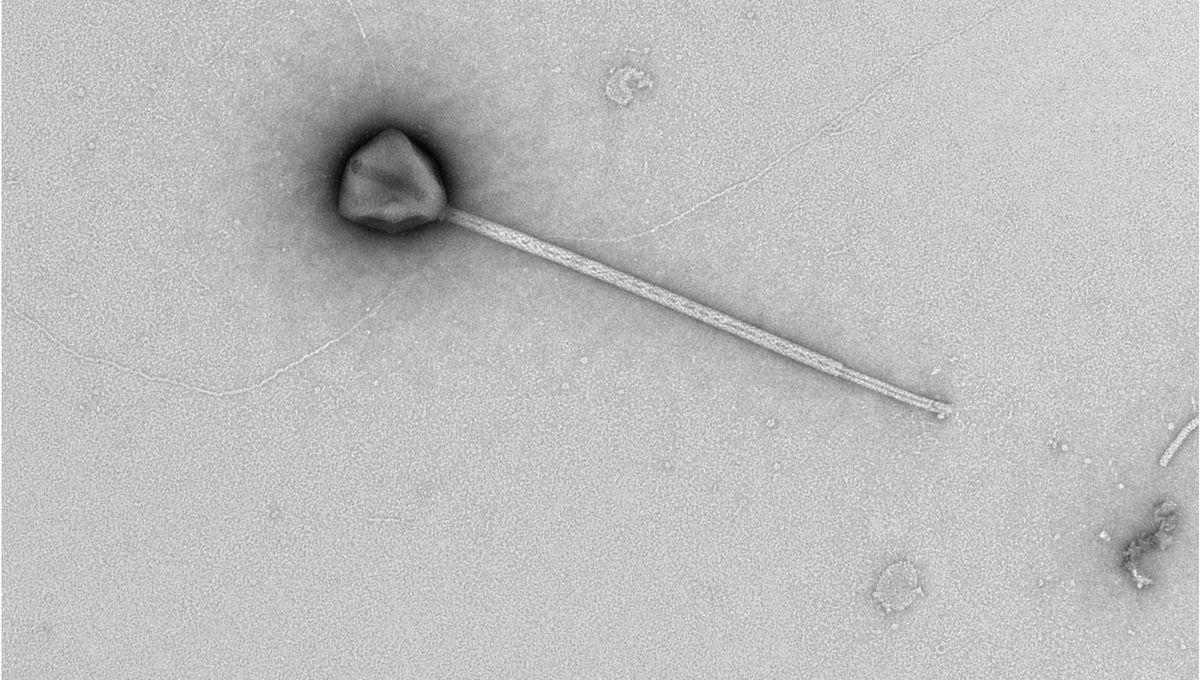
A new giant virus with “unusual” features – including an unprecedentedly long tail – has been discovered in the Pacific Ocean. At 2.3 micrometers long – that’s 0.00023 centimeters – it may not be huge by our standards, but in the viral world, it’s a whopper. In fact, it’s the longest virus appendage described to date.
PelV-1, which infects the marine phytoplankton, Pelagodinium in the North Pacific, is massive in more ways than one. Not only is its tail 19 times larger than the virus that causes COVID, but its main shell – known as its capsid – measures 200 nanometers, far bigger than most regular viruses. It has two appendages, the longest of which is also the thinnest, at 30 nanometers wide, and a shorter, thicker tail with a width of 40–70 nanometers. Very few viruses have tails, and those that do tend to be small and infect bacteria, making PelV-1 even more of an oddity. Its discovery is reported in a preprint paper that is yet to be peer reviewed. The scientists who discovered PelV-1 and its tremendous tail also sequenced its genome, finding genes associated with the metabolism of amino acids, carbohydrates, and lipids, as well as genes encoding a light-harvesting complex, sugar transporters, and a water channel. “This suggests that giant viruses can potentially influence not only the host metabolism but also their behavior,” the study authors write. “The ecological advantages that might be conferred by the extraordinarily long tail and metabolic genes of PelV-1 is unknown,” they add, “but this isolate expands the scope of morphological and metabolic diversity of viruses and suggests many more unusual marine viruses await discovery.” The researchers watched the virus infect its plankton host, finding it uses its tail to attach to its target and appears to then become engulfed by it. After infection, its extreme appendage disappears, implying that the tail develops outside the host. PelV-1 has two tails, the longest of which is 2.3 micrometers long. Image courtesy of Gajigan & Steward Giant viruses were first discovered in 2003, and have continued to surprise us in the 22 years since. Just how giant are we talking? The behemoths can’t be seen with the naked eye, but next to your regular viruses (which measure 20-200 nanometers), they’re comparatively massive. Giant viruses can grow to 2.5 micrometers – that’s 2,500 nanometers – making them up to 125 times bigger than normal viruses, and larger than most bacteria. They also have humongous genomes, containing around 2.5 million base pairs. Previously, giant viruses have been found lingering in all sorts of environments, including ice, sea, soil, and even in humans. This latest addition to the giant virus family was discovered in the North Pacific Subtropical Gyre, infecting the dinoflagellate Pelagodinium, which has a vital role in the ocean ecosystem. “Dinoflagellates are vital in marine symbiosis and algal blooms but only two giant virus isolates have been described with no available genomic resources to date. Thus, this is a significant contribution to the literature on dinoflagellate viruses.” The preprint is available at bioRxiv.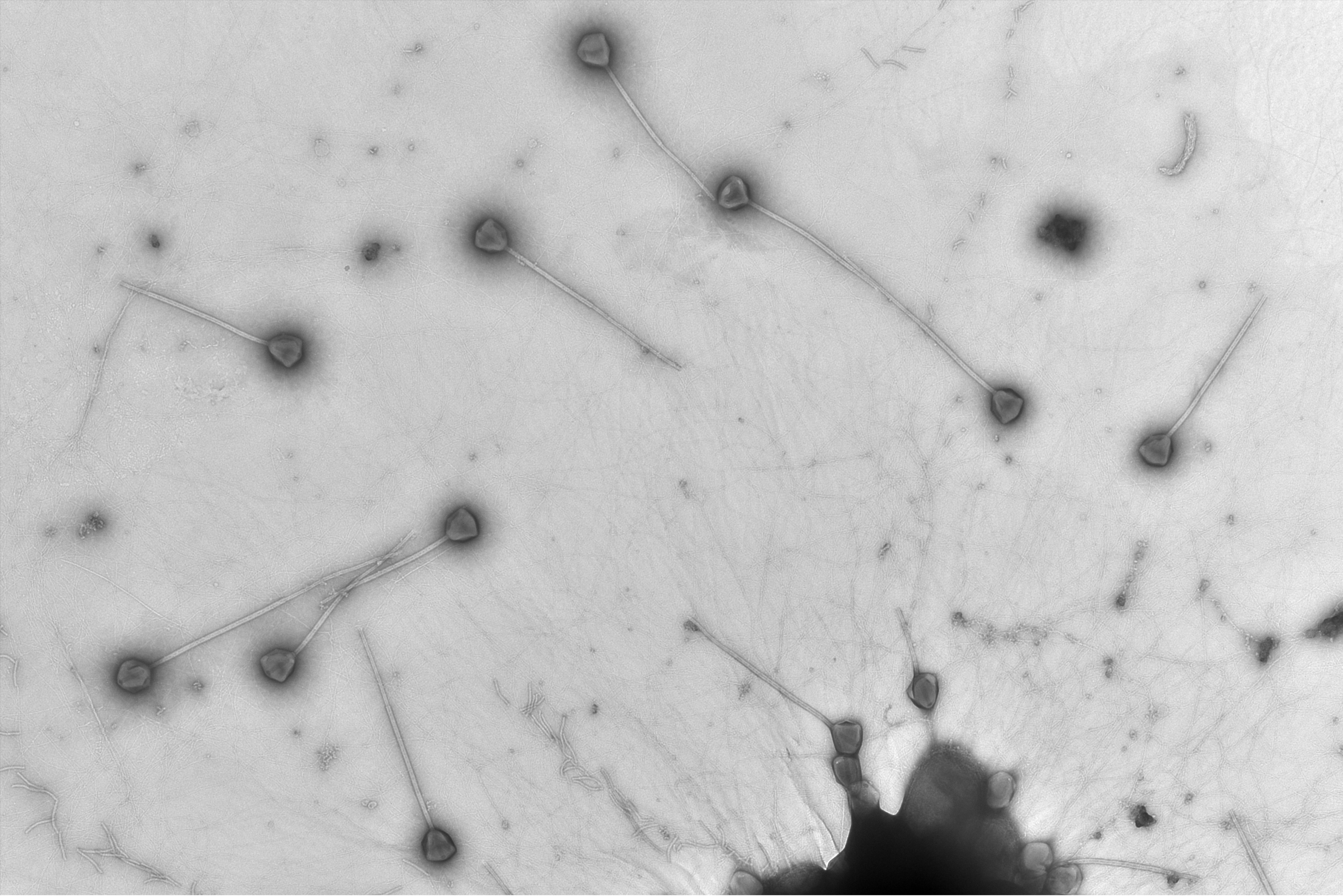

 English
 Arabic
 French
 Portuguese
 Deutsch
 Turkish
 Dutch
Dutch
 Italiano
 Russian
 Romaian
 Portuguese (Brazil)
 Greek
Greek