


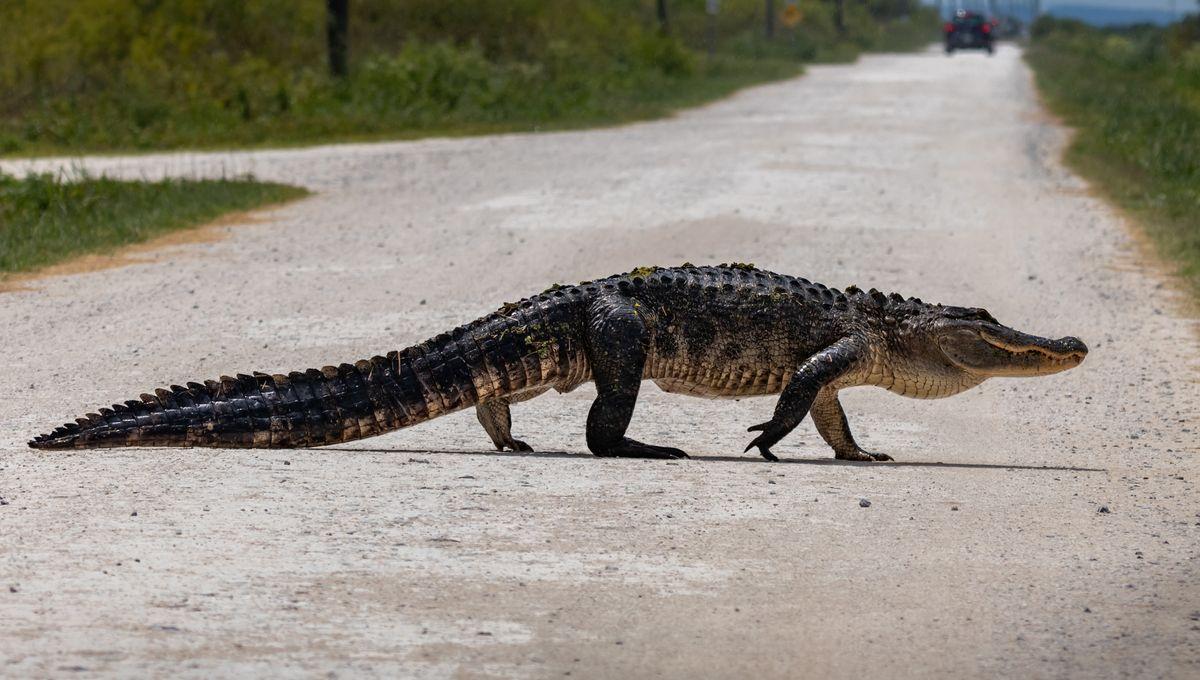

Alligators aren’t picky eaters. Given half a chance, they will consume all kinds of fish, birds, turtles, small mammals, and – rarely, but it has been known – the odd human. But among the more bizarre items found in their stomachs are rocks.
There are many reasons why animals swallow rocks, which are called “gastroliths” by scientists in this context. Some do it to grind down food, some consume them to obtain minerals like calcium, and others to rid themselves of parasites. For certain aquatic animals, the motive might have something to do with buoyancy. The idea that crocodylians swallowed stones to augment their weight was first reported by Indigenous South Americans. To test this centuries-old hypothesis, a team of scientists at the University of Utah ran an experiment in 2019. They brought seven young American alligators (Alligator mississippiensis) into the lab and tested whether the consumption of pebbles impacted the reptiles’ diving behavior. Without rocks in their bellies, the alligators could stay submerged for an average of just under six minutes. However, after swallowing stones, the average dive time was around 11 minutes. In other words, the alligators that had eaten a rock could dive for 88 percent longer than their empty-bellied counterparts. “The duration of the average of the maximum dives also increased with the presence of gastroliths by 117 percent,” the team wrote in their paper. “All the alligators increased the duration of the maximum dive by 305 [seconds] or more when given the gastroliths. Without gastroliths, the longest dive recorded from all the alligators was 883 s (∼14.7 min), compared with 2122 s (∼35.4 min) with gastroliths." They proposed that gastroliths help weigh the alligators down, allowing them to expand their lungs without floating to the surface. This balance gives them a tactical edge: they can stay submerged longer while stalking prey or hold their breath as they drag struggling victims beneath the water. Alligators and their crocodylian cousins aren’t the only creatures to have adopted this stone-gobbling strategy. Paleontologists have uncovered numerous fossilized remains of plesiosaurs from the Jurassic and Upper Cretaceous periods with stones preserved in their abdominal cavities. So many examples have been found that it’s very unlikely to be a coincidence. Instead, it suggests that animals may have been using this unusual method of buoyancy control for millions upon millions of years.


 English
 Arabic
 French
 Spanish
 Portuguese
 Deutsch
 Turkish
 Dutch
Dutch
 Italiano
 Russian
 Portuguese (Brazil)
 Greek
Greek