


These Are The "New Seasons" Scientists Think Are Emerging Because Of Climate Change
These Are The "New Seasons" Scientists Think Are Emerging Because Of Climate Change
What if planet Earth is undergoing such rapid change that the traditional framework of “seasons” no longer makes sense in our everyday experience? This is the bold new idea proposed by a pair of geographers at the University of York and London School of Economics in the UK.
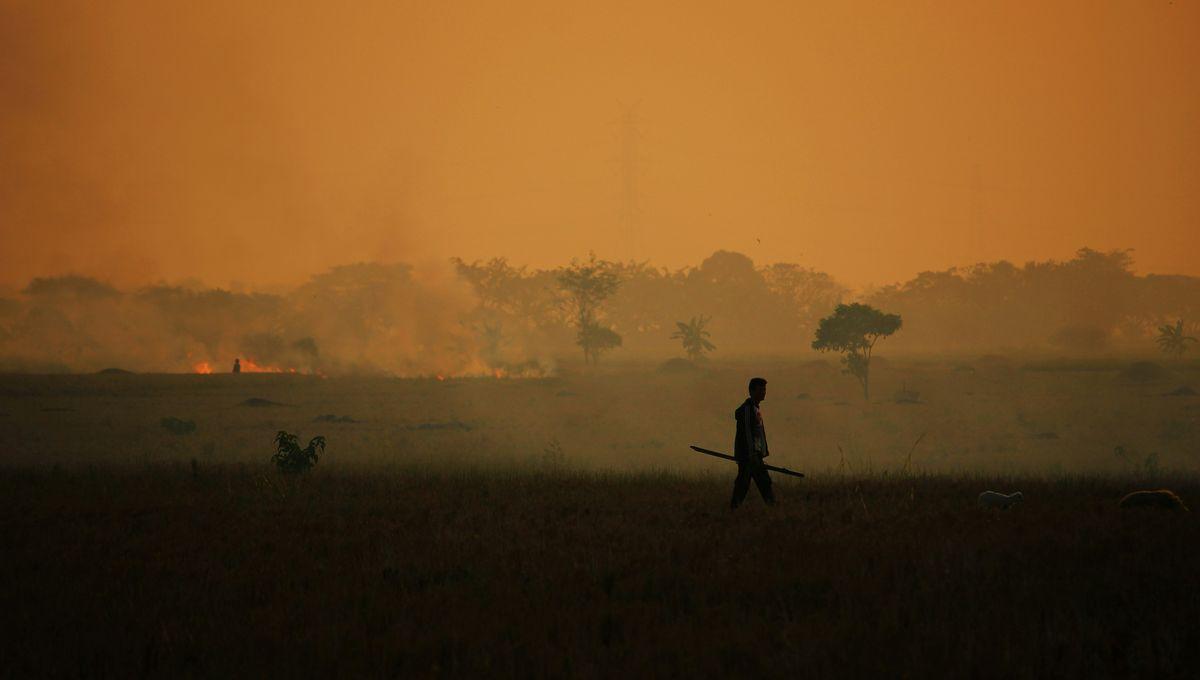
Seasons, in their most conventional sense, refer to the annual pattern of changing temperatures and daylight hours caused by the tilt of the Earth. The Earth's poles are not perfectly aligned with its orbital plane around the Sun. Its axis is tilted at an angle of 23.5 degrees. This means some parts of the Earth, over the course year, will be tilted more towards the Sun and get more of its heat, while others are tilted away and get less heat. This effect is more pronounced in the temperate and polar regions, compared to those near the equator. The new study is not suggesting any of this is changing. Earth is still tilted at a jaunty angle and will continue to see some variation in temperature throughout the year, not to mention changes in the amount of daylight we see as the months pass. Instead, the researchers argue that human-driven climate disruption is altering Earth’s annual rhythms so significantly that the cultural meaning and everyday experience of the seasons are becoming increasingly disconnected from their traditional definitions. To make sense of these emerging patterns, they propose a “conceptual shift” in perspective. The researchers outline four new types of “seasons” that they believe have recently grown in prominence: Some of these ideas might already feel familiar. The study cites other papers that have shown that summers are getting hotter and longer, primarily due to climate change. Winters are also becoming shorter and warmer, while springs appear earlier in the year. “Hurricane seasons” in the Atlantic and Pacific are becoming prolonged, while “wildfire seasons” in California are now almost all year round. One striking example is the emergence of so-called “haze seasons” in Southeast Asia. In countries like Indonesia, Malaysia, and Singapore, communities are increasingly attuned to the annual recurrence of severe air pollution triggered by the burning of tropical peatlands. What was once seen as sporadic environmental disruption is now recognized as a seasonal hazard. This growing public awareness has spurred improvements in air quality forecasting, the widespread adoption of home air filtration systems, and the rollout of targeted public health campaigns. By recognizing the seasonal rhythm of this threat, societies have been able to respond more effectively. The premise of "new seasons" in the Anthropocene won't sit comfortably with some, but the idea is perhaps not as radical as it might seem. This isn’t about scrapping spring or canceling summer. The researchers aren’t rewriting the calendar; they’re suggesting we rethink it on a social level. As climate change continues to meddle with Earth’s rhythms, a more flexible view of the seasons could help us keep pace with a world that’s no longer playing by the same, old rules. The study is published in the journal Progress in Environmental Geography.

 English
 Arabic
 French
 Portuguese
 Deutsch
 Turkish
 Dutch
Dutch
 Italiano
 Russian
 Romaian
 Portuguese (Brazil)
 Greek
Greek