


How To Watch The ISS As It Crosses The US Night Sky In The Next Few Days
How To Watch The ISS As It Crosses The US Night Sky In The Next Few Days
Summer nights are great for watching the sky. The best meteor shower of the year has started, most of the world will get to see a lunar eclipse soon, and even if you live in a city with light pollution, you can still catch the International Space Station (ISS) as it passes overhead.
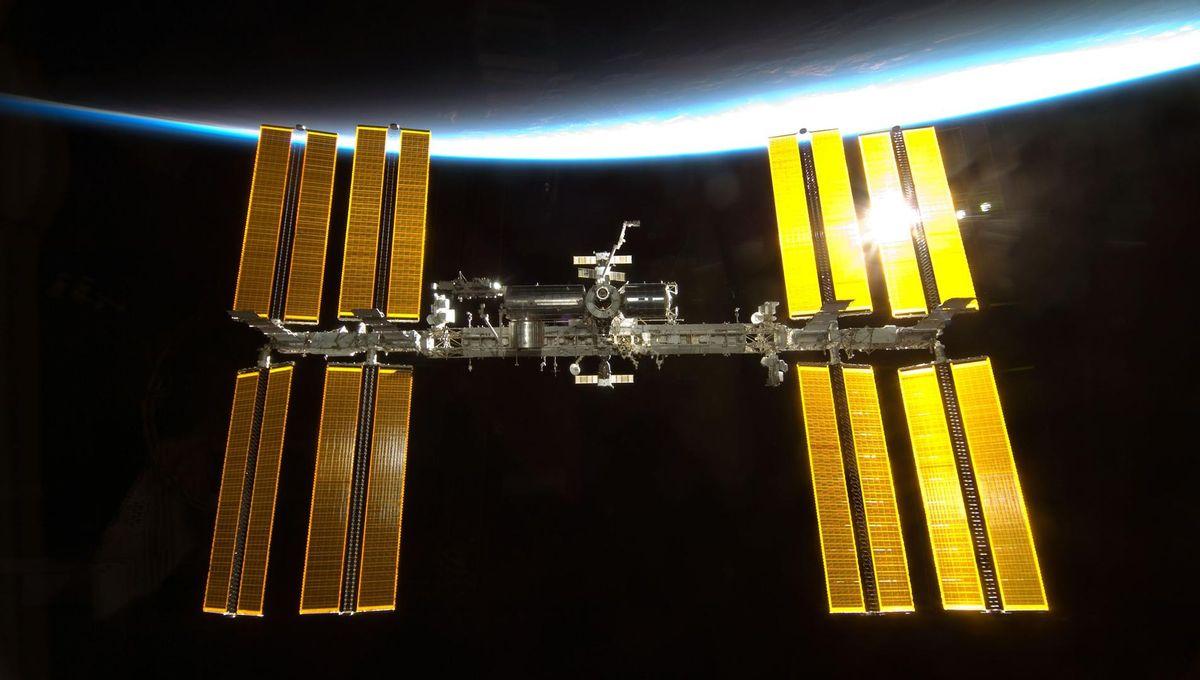
Humans have lived in the ISS for almost a quarter of a century, and it is still going strong. It goes around the planet every 93 minutes, in a peculiar orbit; it has an inclination of 51.6 degrees to Earth's equator, which means it is not passing over the same place over and over again. Well, not immediately. The ISS does 15.5 orbits every 24 hours, covering a lot of Earth, but it is not bright enough to be seen during the day. At night it is easier to spot after dusk or before dawn, when it is still dark here on Earth, but 400 kilometers (250 miles) up, the station's solar panels are still catching sunlight and reflecting it back to us. Sometimes there are periods where you can watch the ISS just once a month, and others where you can try multiple times a week. Right now, if you are in Los Angeles, you are in the latter category. It will be visible twice tonight, at 8:43 pm PT, and then at 10:17, and then tomorrow, at 9:29 pm. On July 27 and 28, it will repeat a similar pattern, just shifted by a few minutes. This won’t be a California exclusive, however. Wherever you are in the US, you will get the chance to see it multiple times this week. In New York, you have tonight and tomorrow at 10:11 pm and tomorrow at 9:22 pm to catch it, then again on July 28 and 30. There are multiple official trackers to let you know where and when to look. The one linked here gives a prediction of direction and brightness. There is also a NASA official tracking app that comes with notifications for when the ISS is above your head. ⓘ IFLScience is not responsible for content shared from external sites. You do not need binoculars or telescopes; the ISS is bright enough to be seen with the naked eye. It might be the length of an American football field (including the end zones), hundreds of kilometers up in the sky, but it is pretty reflective, making it an easy spot. Also, it moves! And not like an airplane does, or a satellite. It will be larger than you are probably expecting, will look quite clearly white, and will be moving fast across the sky in a smooth line at a steady pace. If it's above you, you can't miss it. And if the weather is not good right now for clear skies, don’t worry. The good thing about the ISS is that it comes around again and again.When to see the ISS in the US
How to find the ISS from wherever you are on Earth
How to see the ISS

 English
 Arabic
 French
 Spanish
 Portuguese
 Deutsch
 Turkish
 Dutch
Dutch
 Italiano
 Russian
 Romaian
 Greek
Greek