


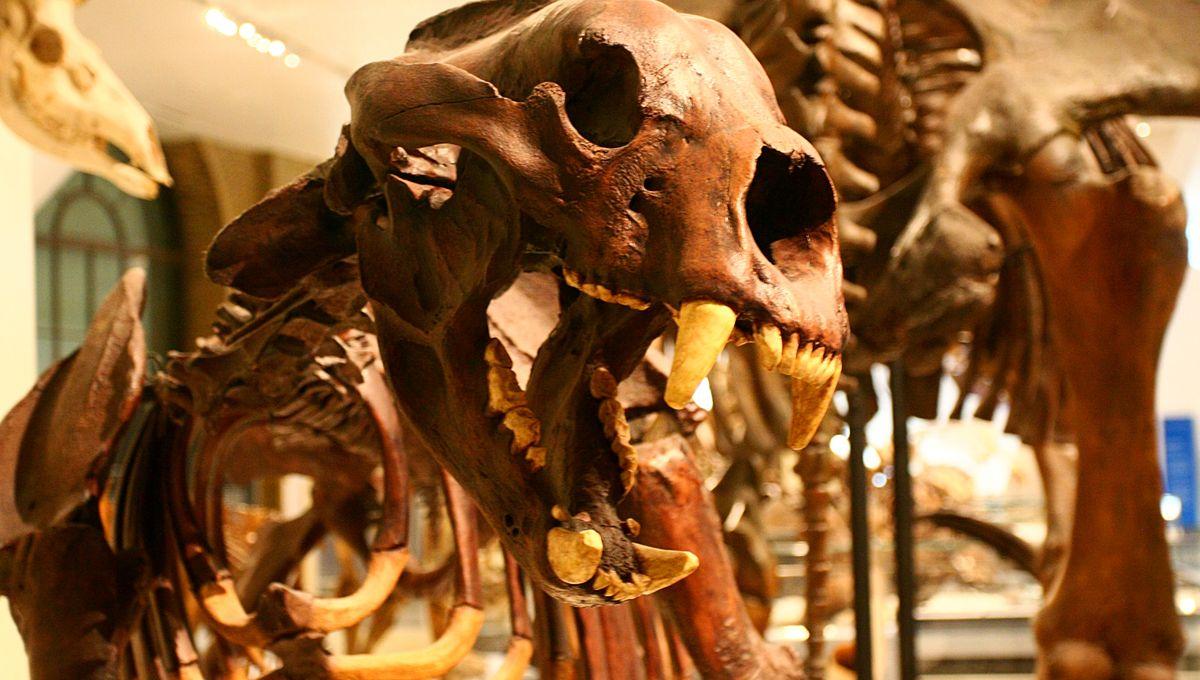

Planet Earth is home to some pretty impressive predators, from mighty killer whales to polar bears and wolves. However one species puts even polar bears to shame and represents the largest mammalian carnivore to ever live in North America. Time to meet the giant short-faced bear.
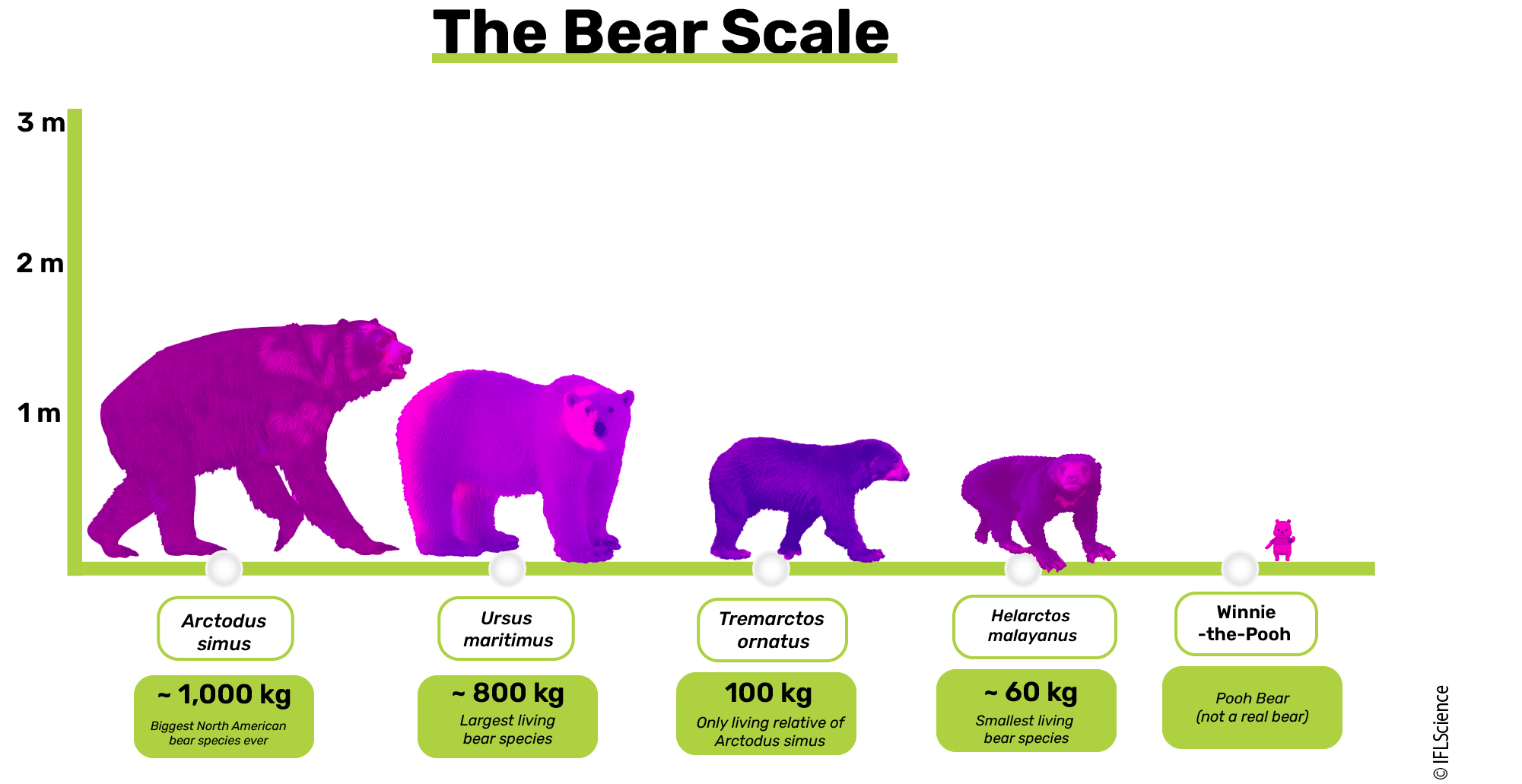
This giant short-faced bear (Arctodus simus) lived in the Pleistocene around 2 million years ago and was thought to have stood at over 3.3 meters (11 feet) tall on its hind legs. To put that in perspective, the world's living two largest bear species, the Kodiak bear and the polar bear, might just reach 3 meters (10 feet) tall on their hind legs. Similarly adult male polar bears can weigh around 600 kilograms (1,323 pounds), while the giant short-faced bear was thought to weigh as much as 1,000 kilograms (2,204 pounds). The IFLScience Bear Scale. Image credit: Tiger Foto/Adilson Sochodolak/Ronnysteve/Catmando/Natalia Golovina/Shutterstock.com; modified by IFLScience. It is even thought that the giant short-faced bear could run at speeds over over 60 kilometers per hour (40 miles per hour), despite weighing so much. The species had toes that pointed straight forwards – unlike modern bear species that have toes that face inwards – which could have helped it run at these speeds. Often listed as the largest mammalian carnivore to have ever lived in North America, the short-faced bear probably would have eaten a range of foods including a high proportion of meat, depending on what was available, and was probably more of an omnivore and a scavenger rather than an active predator. The only living relative of the short-faced bear is the spectacled bear (Tremarctos ornatus), a primarily herbivorous species found in South America that belongs to the same subfamily, Tremarctinae. The short-faced bear went extinct at the end of the Pleistocene around 11,000 years ago, though it is not clear what caused their extinction. This was also around the time that mammoths, dire wolves, and giant sloths went extinct and the first humans began to appear in North America. It is thought that the extinction of larger herbivores, changing climate conditions, and the appearance of humans could have all contributed to their decline. How big was the short-faced bear?
What did the short-faced bear eat?
How did the short-faced bear go extinct?


 English
 Arabic
 French
 Portuguese
 Deutsch
 Turkish
 Dutch
Dutch
 Italiano
 Russian
 Romaian
 Portuguese (Brazil)
 Greek
Greek