


Could Lunar Soil Support A Permanent Base On The Moon?
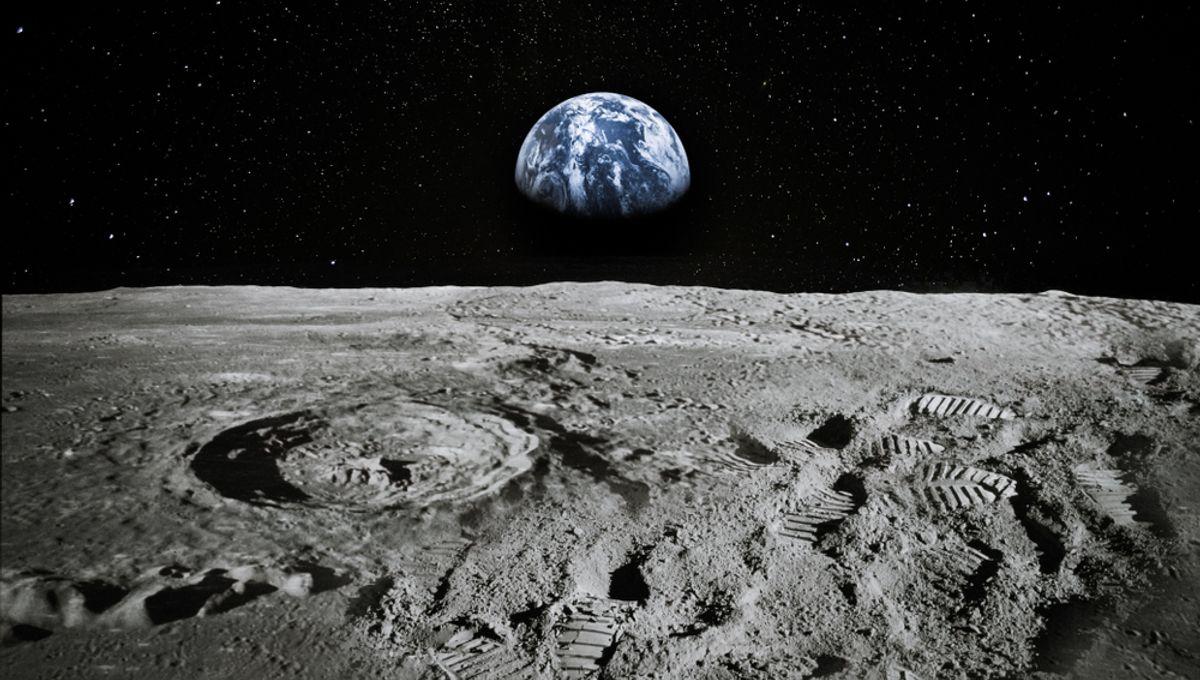
Could Lunar Soil Support A Permanent Base On The Moon?
There are many obstacles that hinder our ability to establish a permanent presence on the Moon. One being the small problem of having to transport basic resources such as water, oxygen and fuel from Earth. Now, scientists have developed a new technique that could harness the satellite’s natural stocks, paving the way for a lunar “supply center.”
“We never fully imagined the ‘magic’ that the lunar soil possessed,” Lu Wang of the Chinese University of Hong Kong, Shenzhen, said in a statement. Living in space doesn’t come cheap. According to the study, published in Joule, it costs $83,000 to send one gallon of water by rocket. With each astronaut requiring between one and four gallons of water per day, depending on your source, for daily necessities like consumption, food prep and hygiene purposes, the bill quickly racks up. And that ignores the additional cost of fuel and food. But one solution to the problem may be found in the Moon’s soil, which is known to contain water. Previously, the process of extracting H2O has been too expensive and required several energy-intensive steps. Now, Wang and his team have developed a technique that will enable astronauts to extract water from the soil while converting the carbon dioxide they exhale into carbon monoxide and hydrogen gas – products that could then be used to generate fuel and oxygen. Doing so solves an additional problem scientists face – the challenge of breaking down carbon dioxide for fuel – killing two birds with one stone. This, the researchers hope, could pave the way for a more energy efficient and cost-effective method that does not involve the logistical challenges of moving huge quantities of essential resources across space. “The biggest surprise for us was the tangible success of this integrated approach,” said Wang. The scientists achieved this feat by utilizing the power of the Sun and the abundant supply of solar energy, turning light into heat. The technology was tested on lunar soil samples collected during the Chang’E mission and simulated lunar samples, which were heated in a batch reactor filled with carbon dioxide. So far, the technology has proved successful in the lab but applying it in situ may require additional challenges. On the lunar surface, astronauts have to contend with temperature fluctuations and radiation as well as low gravity. The researchers also point to technological limitations. More research is still needed but with many calling for a permanent base on the Moon’s surface, the discovery takes us one step closer to establishing a “supply center” on the satellite’s surface. “This work implies that the Moon could provide sufficient water and fuel for the future moon base and deep space exploration,” the study’s authors write. Meanwhile, many other initiatives are also underway to determine ways of extracting water and fuel from our nearest celestial body. The study is published in Joule.

 English
 Arabic
 Spanish
 Portuguese
 Deutsch
 Turkish
 Dutch
Dutch
 Italiano
 Russian
 Romaian
 Portuguese (Brazil)
 Greek
Greek