


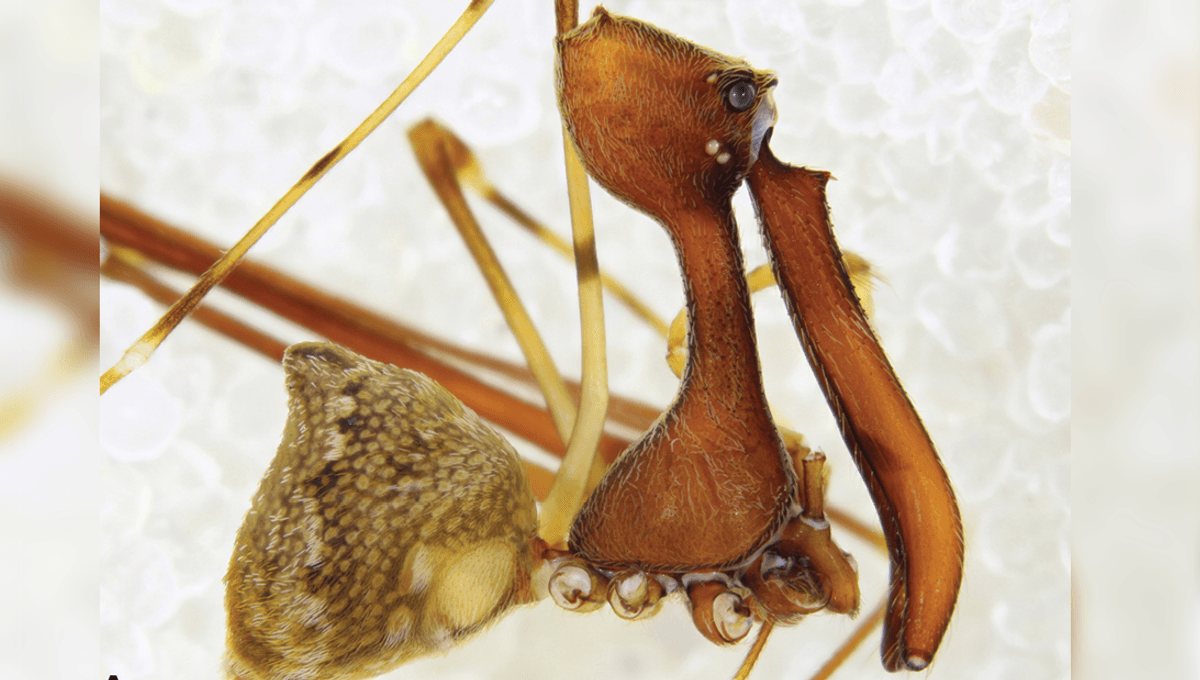

Back in 2018, a bumper crop of new spider assassins was discovered in Madagascar. They represented four new species in the genus Madagascarchaea, as well as 14 new species in the genus Eriauchenius, bringing the total number of species up to six and 20, respectively.
These genera belong to a group called Archaeid spiders, also known as the pelican or assassin spiders, which have lived on Earth since the time of the supercontinent Pangea. First discovered through a species trapped in 50-million-year-old amber, the group was once thought to be totally extinct. However, in 1881, pelican spiders were spotted in Madagascar. Previously thought to be a very widespread group, they are now mostly extinct; the living spiders are now found mainly in South Africa, Australia, and Madagascar. Assassin spiders only prey on other spider species. Image credit: Nikolaj Scharff These spiders are incredible hunters and do not use webs to catch their prey. Instead they have elongated necks and adapted chelicerae that are extremely long, giving them the appearance of a head and neck, and making them look quite different to other spider species. Interestingly, these hunters will only prey on other spider species, using their adapted front appendages and peg teeth to catch them – in a similar way to a pelican catching fish, hence the nickname. “The modified carapace allows for highly maneuverable and elongated chelicerae that can be extended 90° away from the body to attack spider prey at a distance,” explained the authors of the 2018 paper. The new species were discovered in Madagascar in an area of montane rainforest, and were mostly collected from Parc National Ranomafana in central Eastern Madagascar; other species were also obtained from the California Academy of Sciences Collection. The authors explained, “[I]n the current study we propose several taxonomic changes: first, the creation of a new genus Madagascarchaea gen. n., which was previously revised as the “gracilicollis group” (Wood 2008); and second, the transfer of several species to different genera. The current paper also performs a taxonomic revision of Eriauchenius, describing 14 new species, and additionally 4 new species of Madagascarchaea gen. n.” 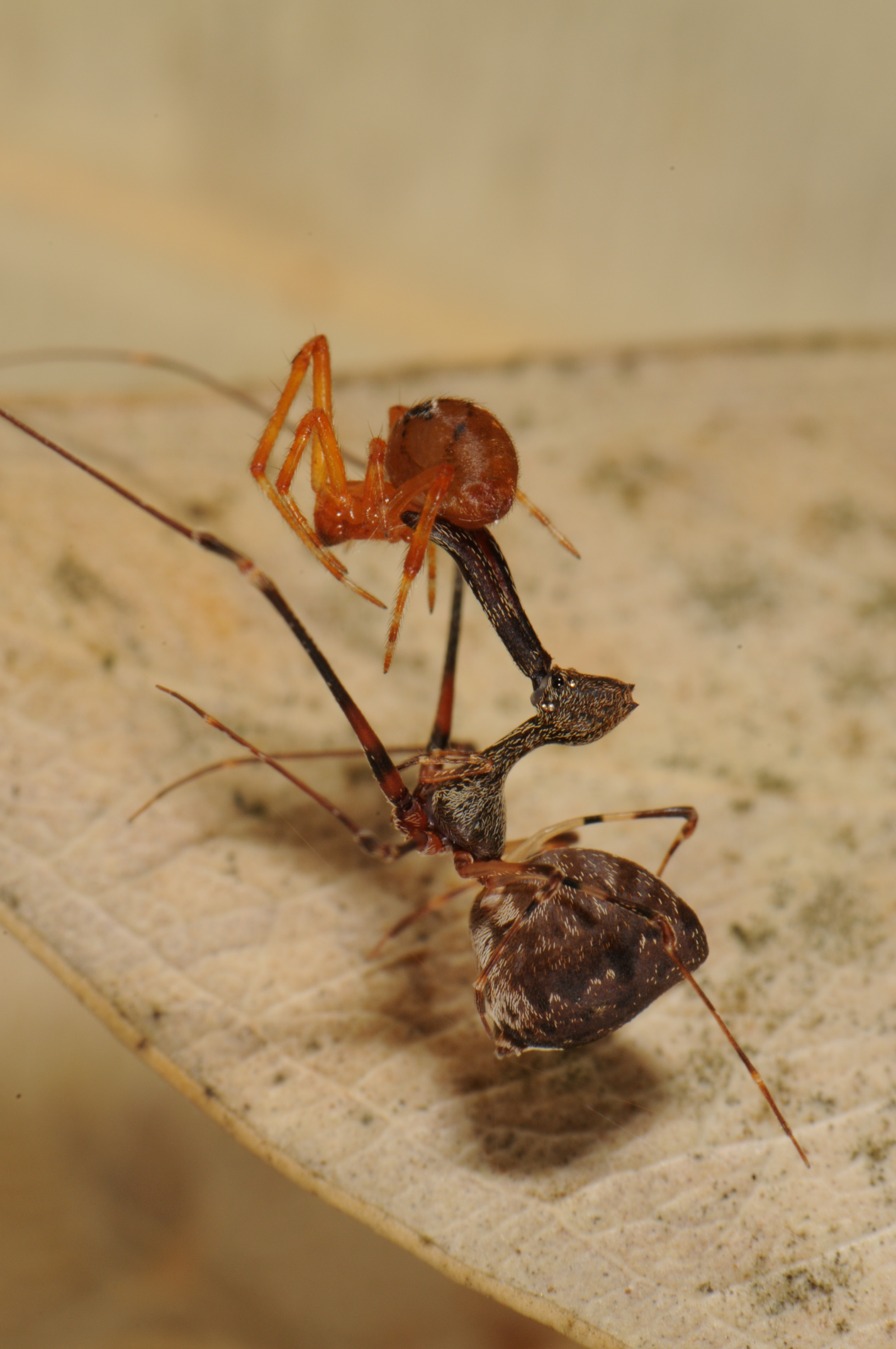


 English
 Arabic
 French
 Spanish
 Portuguese
 Deutsch
 Turkish
 Dutch
Dutch
 Italiano
 Russian
 Romaian
 Portuguese (Brazil)