


Twin Temple on Concert Cancelation, Jack White Support + Album
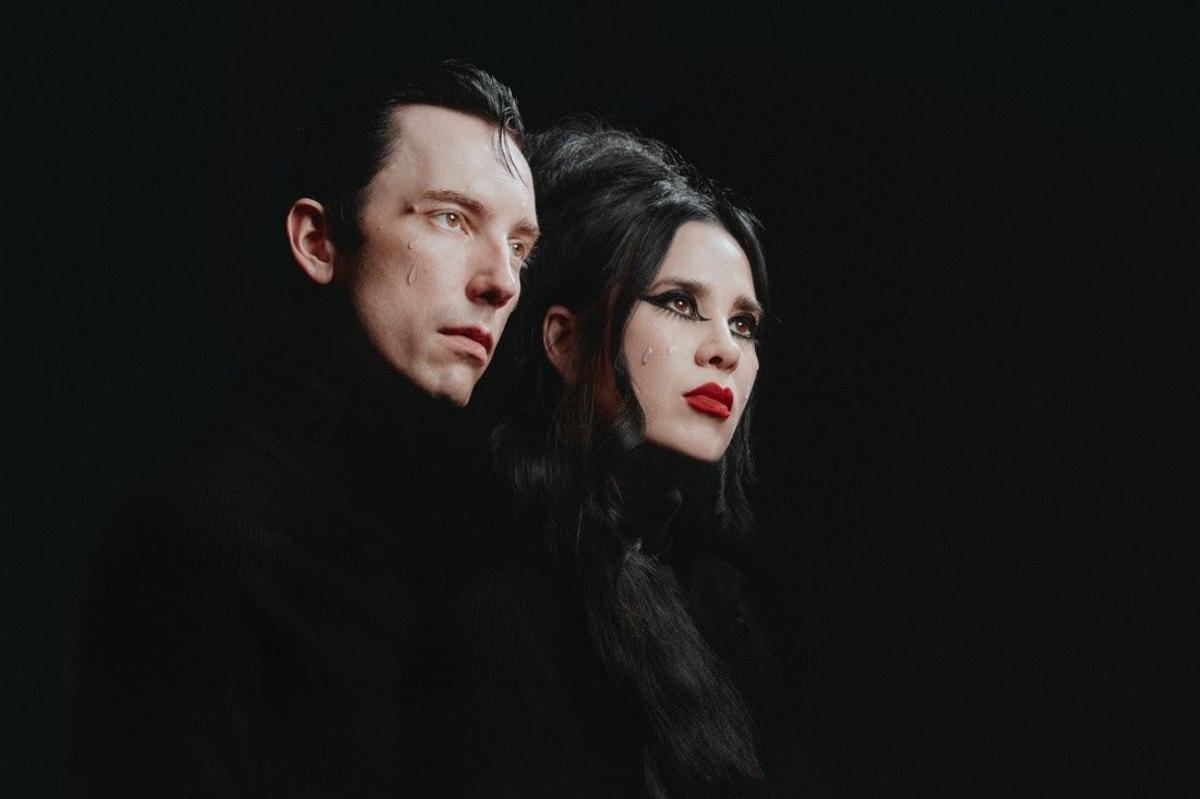
Twin Temple Are So Much More Than Controversial Headlines (Interview)
Twin Temple are speaking out after recently finding themselves at the center of controversy, having been dropped from tour dates over the use of Satanic imagery in their shows. Headliner Charley Crockett made the call, but much to their surprise, Jack White then jumped in with an offer to join one of his shows after hearing about their plight. This all comes as the band ramps up to the release of their fourth studio album, Doomed Lovers.
We recently had a chance to speak with Alexandra and Zachary James about the sudden spotlight surrounding them, and what it meant to have the unsolicited backing of Jack White following the initial stir over Crockett's decision to remove them from his dates.
The couple also discuss how Satanism became part of their lives, both personally and from a creative perspective, and how the rock and metal community has embraced them. They also touch on the countrypolitan influences and hard times that have permeated their new album, Doomed Lovers.
Check out more of the chat below.
Twin Temple are a rather unique band. There's really not anyone doing what you do. I kind of get it from hearing the music, but how did Twin Temple end up on a bill with Charley Crockett, and were you more surprised by the invite or by being dropped?
Zachary James: The offer came in like all offers do. We just received an email from our agent proposing the idea.
Alexandra James: I personally wasn't surprised when the offer came in. We've been fans of Charley's music ourselves for a while, and Shooter [Jennings] produces both of our records.
With Charley, I think the through line, in our opinion, is that he's bringing classic American traditional music into contemporary conversation. I think we share a lot of the same ideals — individualism, freedom, and fighting for spaces for the independent artist in today's landscape.
So we thought it would be a really cool way to actually build bridges. This record has some vintage, early '62-to-'64 countrypolitan Nashville flair. I think Zach can talk all day about the production side, but we just love all the stuff that came out of there — Owen Bradley, Floyd Cramer, Patsy Cline, RCA Records, Roy Orbison. Those references are definitely showing up a lot on this record. So it was like, "Cool, let's build some bridges into some alternative spaces," 'cause I definitely feel a really cool, whole vintage country, traditional country, alt-country scene out there.
We're a weird band, right? The first time we went out with Uncle Acid or Ghost, we were like, "We don't play metal, we play the oldies." So I think everyone had questions like, "Is that going to be weird, to go play with super heavy bands?" But to us, in the end, it's all rock 'n' roll. If you look at Chuck Berry — is he playing country, or is he playing rock 'n' roll? It wasn't about genre.
So we're very much about pushing the boundaries of what music is, and pushing back against strict genres, because a lot of times strict genres just feel like marketing. To us, at the end of the day, music is music, and we see the musical DNA that we share with Charley.
So when they asked us, we were super excited, and we thought it would be a really different but cool lineup. We gladly accepted.
Obviously this caused quite a bit of stir in the public space. Charlie came out strong backing his stance on social media, but he's also deactivated his socials in the pending days as we've seen. But have you been surprised at all by the amount of public reaction this has gotten?
Alexandra: We never expected this level of response. I would say we were surprised with how quickly it all snowballed.
Shortly after you lost the two shows, Jack White stepped up. You got an invite to the Los Angeles date, and I love his line, "Get in front of me, Satan" — very clever. He's also shot down some social media pushback. Have you spoken at all with Jack since his initial invite, and can you talk about your thoughts on his support of you in this situation? [Editor's Note: Since the interview, the band has now been confirmed to open a Sept. 29 date for Jack White at the Hollywood Palladium)
Zachary: Obviously, we were taken aback.
Alexandra: Shooter [Jennings] texted us the screen cap, and I was like, "That's so funny." He's like, "No, it's real."
And I was like, "Oh my God." I actually don't have Instagram — I deleted it a long while ago. But I downloaded Instagram to write back to Jack White, because we've been fans of his music. I've been a fan of his music since I was young.
I own all his records from when they first came out. "Dead Leaves in the Dirty Ground" was literally the second or first guitar song I ever learned. It was the Ramones' "I Wanna Be Your Boyfriend," and then a White Stripes song.
So it meant the world to us, 'cause when you get removed from a show, there's always the fear, as a smaller independent artist, that you're being rejected by the industry. Charley's a pretty well-known — I won't call him mainstream — but he's a much bigger artist than us. So you're always like, "Okay, are other people going to do similar things to us?"
But I think Jack coming in and backing us up meant a lot to us — not only because we've been fans of his for so long, but because him just saying, "Nah, they're alright," [meant something too].
So as stated earlier, Twin Temple, aren't exactly easy to categorize. You've opened shows for heavy bands like Ghost, Rammstein, Uncle Acid, and I know there are Danzig dates coming up. What did it mean, especially early on, to have the hard rock and metal community embrace you? We're those fan bases accepting? Was there any pushback? And why do you feel the heavy music community has embraced you?
Zachary James: There was no pushback. I think there's just a shared ethos — I think that's what connects us all. There's a shared love of subversion. That first tour with Uncle Acid was incredible, because we'd been fans of Uncle Acid prior to the shows. So at that point, to be invited on that tour was a nightmare come true, really.
Going into it, we didn't really know how the crowds were going to react, so seeing their acceptance and their reaction, and understanding the music on a deeper level and seeing that shared ethos, meant a lot to us. And it continues with doing shows with Behemoth — they're black metal, and we get to talk about, "Well, what kind of blood do you use onstage?"
Zachary: That's been pretty surreal. These are bands that we've liked for a very long time. Danzig, Behemoth, Uncle Acid, all these bands. It feels really, really good to be accepted by other artists you respect.
I think that's one of the things that kind of gets me off the most is just having other artists and connecting with them and them voicing their support. That just means the world.
So for both of you, Satanism is something that has bonded you. It's part of your personal life, but it's also something you've made part of your art. Can you talk a little about what initially drew you in this direction? And how has having each other helped you tap into and explore your beliefs and spirituality in that way?
Zachary: We feel that people are born Satanists, so we both just kind of found the vocabulary at the same time, together. We discovered, like, "Oh, there's a name for these things" — these thoughts that we have, these ideas that we harbor, these images that we're drawn to.
Alexandra: We got our start in the punk rock scene, and that's how we came together. And I think a lot of Satanic philosophy, left-hand path philosophy, the occult — it definitely has a lot of through lines to punk rock in terms of nonconformity, individualism, and anti-establishment. Tear the old guard down, break through the walls, push the boundaries, rattle the cages, you know? And the exploration of taboo.
I really think, at the end of the day, we're a lot of things, but a punk rock ethos is very much in line with Satanism.
As far as us starting this project — by that point, we'd been playing in punk bands and different rock bands, and then we got married, and we were like, "What's a way to combine everything that we love into one project?" We didn't really know who it was for.
At that point, we'd been going for a really long time. We actually had management, we had a producer, and all this other stuff, and we'd been writing and writing and writing for over a year, just thinking about how we could combine our mutual interests into this. We call it our magical child, 'cause it was sort of like we got married and we had this child, you know? It was Twin Temple. We didn't really know who it was going to be for.
Zachary: We made it for ourselves. It was just for us. It was for pleasure and joy, and we started playing out locally in L.A., and it resonated with other people. It just grew from there. It was all very organic and natural, and we got to build on the things that we love and do it together.
Alexandra: But yeah, we really didn't know who it was for, because at first we were going to a lot of vintage-guy kind of shows. But I guess we thought it would be for rare vintage record collectors like ourselves. Like, if I went to a record shop and saw something that sounded like The Ronettes but had a black mass on the cover, I would pick that record up so fast, you know what I mean?
So that's why we made it — just to get ourselves off. And very quickly, I think because of the ethos, it was actually the heavy metal scene that stepped up for us.
We were so grateful, because it didn't seem like it would find an audience — we thought it would just be us, and we were fine with that. But the heavy community stepped up, and that rules, because we're huge fans of rock 'n' roll, and we love metal.
Visually, everything from Behemoth and King Diamond and black metal is in there. But we also love traditional pop, and we love classic American music and early rock 'n' roll of the '60s. So that's why we made what we made.
Can you talk about what you put into the live setting, and how you came up with the idea of what you wanted to present? How close is what you're doing now to what your ultimate show would be?
Alexandra: Ooh, it's so far off. We have a long way to go.
Zachary: Lots of ideas for the future that we won't share yet, but I think we felt it was important to incorporate traditional magical ritual into the show?
Alexandra: That's why there's an element of, and a version of, a lesser banishing ritual of the pentagram. And there's this whole really cool history in '60s occult music where occultists from England were getting involved with rock 'n' roll. There's Alex and Maxine Sanders, who were teaching Coven and Black Widow — maybe they didn't mess with Coven, but with Black Widow, they taught them how to do some of these rituals and you could actually see them doing them in their performances.
So that communication between music and magic is super inspiring to us. Obviously, there's tons of precedent there, but we always knew we wanted to have a big theatrical element, 'cause that's just what we love.
READ MORE: See Twin Temple Sacrifice Loudwire Writer to the Devil
We love vintage '60s horror and Hammer Horror films, like Devil Rides Out, anything with a cool ritual scene and a Satanic altar, we're so in. That's just a visual language that resonates with us, so definitely something we wanted to put our own spin on. And I think it's kinda fun, 'cause we get to kinda do everything we like with this band.
Twin Temple, "Satan's a Woman" Live in New Orleans
I'm going to give you a Mount Rushmore of influences on your live show. Do you have four things you'd say, "Okay, these are things that definitely influenced what we wanted to do in terms of our live show and presentation"?
Alexandra: When I was a kid, on my first Walkman, I bought an Elvis cassette and totally fell in love with rock 'n' roll. I don't know if it's because I've got a weird, super-rare vocal register for a woman — I'm a contralto, which is really close to a male tenor, actually. So I feel like, as a kid, when I figured out I loved singing, I just started singing along to all the male tenors of the '50s and '60s, Elvis being the first one I really loved. I just fell in love with the whole ethos of rock 'n' roll.
Also, I think just because of my upbringing as a mixed-race woman, first-generation in America, I always kind of felt like an outsider. I realized very quickly that I was never going to be the prom queen. So I think rock 'n' roll made me feel like, "Nah, it's cool to be part of a subculture and underground art. You don't need to be accepted by the mainstream." In fact, maybe the mainstream is a bunch of middle-of-the-road stuff, and the cool stuff is what not everyone gets behind.
So it made me feel empowered and accepted to get into rock 'n' roll and punk from the get-go, which I've found has always been the most inclusive, accepting, and open-minded group of people, 'cause it's baked into the scene.
Zachary: But really, it's the concept — it's rock 'n' roll, and it's ritual, and we like putting on a big show. We're going to put on bigger and bigger shows — the bigger we can, the better.
Alexandra: I also saw, as a kid, Phantom of the Opera, and the soundtrack definitely rocked hard, but it was the visuals that got me. I remember, as a little kid, the lights go down, people are kind of hushed, and that chandelier comes flying through the ceiling.
As a kid, I was just like, "Wow! How can I do stuff like that?"
As I was listening to the album, I love the throwback vibe of the title track. As I was listening to it, I'm thinking, "Man, I wish David Lynch was still around to make a movie," because this would fit perfectly. I just keep waiting for Roy Orbison to walk out beside you as you're singing the song...
Alexandra: Yes! It's funny you mention that because I love that scene where "Blue Velvet" is playing over the severed ear.
Yes!
That, to me, encapsulates a lot of that image and with the music behind it, definitely encapsulates a lot of our vibe.
Zachary: Yeah. We love the juxtaposition.
Twin Temple, "Doomed Lovers"
So each album is its own thing, but did you have an idea of where you wanted to take the music this time around?
Zachary: Going into it, we knew we wanted to expand on the production and the arrangements, and this time bring in a proper orchestra. We had a DIY string situation on God Is Dead for one tune, and that was just cracking the door open, but now we want to blow the hinges off.
Alexandra: We've always loved all the strings on everything that Phil Spector did. One of Zach's favorite arrangers is Jack Nitzsche — love those string sounds. It's been a creative goal of ours for a really long time, and we just haven't really been able to execute it.
So with this record, we were finally able to bring in a 30-something-piece orchestra, and it felt like Christmas the day before that session. We were up at 4 a.m. I couldn't sleep. I cried hearing the songs with the arrangements we'd worked so hard on played by an orchestra.
So I think, for us, we definitely wanted to push it a little further in terms of production. On our last record, the goal was to make the most period-correct, early-tape-saturated, mono record that maybe sounded a little degraded, and we went really down the rabbit hole with how to capture this really specific fucked up sound. We thought it was cool to have it be a little necrotic, but with this record, I think we wanted to give it a more elevated sound, to a degree.
Shooter had approached us about doing a record, and we did it at Sunset Sound Studio 3, which is just, like ... it's the Cadillac of studios, you know? Everyone — the Rolling Stones, Prince — has been in there. So it was really inspiring to be like, "Wow, what if we make a classic record down there?"
Zachary: And for a couple songs, once we were working with Shooter and, you know, we do love that period of time of like, '62 to '64, where in Hollywood you had Phil Spector at Gold Star Studios with Jack Nitzsche and the Wrecking Crew and simultaneously you had Owen Bradley at RCA Studios with the A-Team doing a very similar thing. So we really love the through lines and there was shared sounds and arrangements between the two.
And especially working with Shooter, we thought it'd be cool for a couple songs to dive a little deeper into that countrypolitan sound of the early '60s. So there's a couple tracks that haven't been released yet that lean a little bit more Patsy Cline. But there's also some tracks that are still very '60s Los Angeles kinda soul doo-wop. So it's really just an expansion and an elevation of all the things we love.
Alexandra: We're still exploring all the same classic American music. I know we call it Satanic doo-wop 'cause it would be too long to be like Satanic doo-wop blues jazz country rock 'n' roll.
Right.
Alexandra: But there's still all of the influences on the other records across a lot of genres, but really just tied through classic American music from the Golden Age.
Zachary: Late '50s, early '60s classic American music — that will always be the well that we draw from.
Alexandra: Absolutely, and it's deep. There's so much good stuff in there, you could spend your entire life just trying to come close to anything that's been made there. So I feel like that's the grail, you know? That's the life's pursuit. It'll keep us busy for the rest of our lives — but obviously, too, through our dark lens.
While we're at it, did you notice yourself lyrically starting to hone in on a particular theme?
Alexandra: We had a really hard last three or four years — maybe even five. The last record label we were with iced the last record for almost four years. We were really depressed, to be honest, over that. And then we were going through a lot of personal stuff, like grief and loss and depression, and I found myself, as I always do, writing songs to try to process and heal.
I think in the past I'd have kept some of those more to myself, to have something just for myself. I think the previous lyrics were still exploring personal things, but maybe more metaphorically. I think this record is a little more raw and direct with some of these things.
They're all, I feel, exploring darkness — but in the sense of a more human darkness, of your own mind and the dark places you can go sometimes when life is beating you down a little bit.
So it's maybe the most confessional, or most personal, record yet, and I was a little nervous. I'm still, honestly, a little bit terrified to share some of these songs. You kind of build up this persona that people think they know, and in some ways it's a little bit of a shield to not really go there.
But I've lost some people that I really loved and was flung into a really deep grief for quite some time that was really difficult to get out of. Shooter lifted us up at our lowest point. I was really depressed — I was having trouble even getting up in the morning.
I felt like I had nothing to really live for at that moment. But we were locked — we couldn't put a record out, we couldn't make any more music. And Shooter was like, "Just get up, get out of bed, come to the studio."
And going to Sunset Sound, little by little, I felt myself coming alive again. Him and his wife, Misty, really carried us through that time. We've told them that — I don't even know if they know how much it meant to us — but just hearing, "Don't worry about it, keep making music, keep getting up," gave us a light. And we started feeling happy again. Making this record really healed us.
He's such a cheerleader and champion, and his wife, Misty, is hilarious. So yeah, I think this record is really, really special — but this one feels special in a different way. It's really about the meaningful connections we made through the record. I think maybe that's the most beautiful thing to come out of it for us.
It actually does come through very much. This record in general is very much about love — you talk about love and loss, and you've lost a couple of people, whom you mention. What did it mean to you to have music as this platform of salvation to help get you through?
Zachary: This record is an exploration of the shadow. Everyone has a shadow, and you have to look into the darkness — it's part of the process. So again, having art, having the ability to make art, to process and to have those moments to face the shadow and externalize it in a song, I think, is very, very important for processing these emotions and experiences.
Alexandra: Twin Temple has always sort of been a love story. It's always been about me and Zach coming together to create this magical child. And I think it's just continuing our interests — my interests, anyway — in these gothic, romantic tropes.
I've always been a romantic. Growing up, I really fell in love with gothic literature. I love Wuthering Heights. When I read that the first time as a teenager, and Cathy is just like, "I am Heathcliff," and he digs up her corpse and defiles it — it just imprinted on me. Like, if I don't have that kind of love where he's exhuming my corpse for necrophilia purposes, then I don't want it. [laughs]
I definitely just feel like I have an all-or-nothing approach to love, and the flip side of that undying love, I feel, is sometimes a little bit of madness, because I'm terrified. That's what Doomed Lovers tackles — when I was in the deepest depths of my depression, thinking, "What if he gets taken away, too? What happens? I'm not going to be able to live anymore." Those were the darkest thoughts that came apart.
I tackled that and explored it in Doomed Lovers, and allowed myself to say things that I wouldn't in everyday life.
I had lost my grandmother a while back, and she was telling my grandpa, like, "Go find somebody new to take care of you," and stuff. And I'm like, "That's what you're supposed to say," but deep down, I just feel this intense jealousy sometimes that I don't like. I don't want him to move on. I expect him to exhume my corpse and literally never get over it. [laughs]
But I think reality in songs — it's a way to express some of these darker thoughts and feelings and fantasies. And sort of like Zach said, I think once you externalize some of these thoughts and face the shadow, it allows you to integrate them better.
Twin Temple Perform "Haunt Me" on The Daily Show
You mentioned being record collectors and I'd be remiss if I didn't ask about a favorite find or favorite thing that you have in your vinyl collection.
Alexandra: I've got an original Alister Crowley seven-inch pentagram La Gitana. It's super rare. It's really cool.
Zachary: We've got an acetate from Gold Star Studios. Today, it's like you go record at a buddy's studio, and they give you a bounce of the session on a CD or whatever — they email it to you now. People don't even use CDs.
But back in the day, they were cutting records at the end of the session, so you'd go listen to the mix at home. We have an acetate single of a Dion and the Belmonts record that Phil Spector produced at Gold Star Studios, with handwriting on it — like "By Phil" at the end of a session. That's one of my favorites.
Alexandra James: It's really cool, too, because the song "Baby, Let's Stick Together" — if you listen to that, the whole percussive hook around that is those claps. That's the part that's really, really sticky. This mix had added claps, and he underlined it three times, 'cause you could tell he was fired up when they figured out the clap thing. So it's cool to think that, prior to that bounce, there probably hadn't been claps. Probably Phil going, "Oh, it's missing something — what do we need?" And he got it. He went and overdid the claps and printed the acetate. I think that's cool, 'cause it just reminds you that, "Hey, nothing ever came out perfect the first time around." Even Phil Spector had to go back to the drawing board and throw some claps on a Dion and the Belmonts song.
Zachary: I think we've got a Beatles But For Babies seven-inch. It's not the 12-inch, but there's a seven-inch version of it.
Alexandra: Yeah. I'm a huge Beatles fan. I grew up absolutely obsessed with The Beatles. They were one of my first loves. Every day I would come home from school and watch The Anthology. I just love that particular cover. And the fact that they basically got so much pushback over it. It always inspired me as a kid to think about people burning Beatles records. Little bit taboo, you know? And that cover is their most metal cover, I guess.
They did a little interview for the BBC and they made a seven-inch for it and we just picked it up at the flea market. Was pretty stoked on that.
Zachary: All right. I'm throwing out one more. Fucking Danzig Does Elvis. I fucking love that record. We rock that record hard. We bought seven copies. It's insane.
Alexandra: We didn't tell Glenn that, but we go and buy his merch online all the time. We're such big fans. But also, we collect a lot of occult records. We actually have that founder of Alexandrian Magick I was telling you about. He's got a record, like, A Witch Is Born, that is his rituals. And we've got some Crowley stuff on vinyl. But yeah, and Anton LaVey records. Lot of Anton LaVey. I don't know. We've got a like, Loretta Lynn, I got a signed copy of Coal Miner's Daughter. That one's special. We have some original press Ronettes and Shangri-Las.
Zachary: We've opened up the floodgates.
Alexandra: But it really is boiled down to cool occult shit and then classic American rock 'n' roll.
Do you bring the Danzig Sings Elvis along with you on this upcoming tour, hoping that maybe the opportunity presents itself?
Zachary: [laughs] Oh, no. We're not bringing any records. We'll get a signed poster from Glenn at the end of the tour. That's about it.
Alexandra: We try not to punish him. But he definitely gave us a signed poster at the end of last tour, which is hanging in our house, and is like a source of pride in our place, one of our most prized possessions. I think it just said, "Alex and Zach, bloody good times."
When all is said and done, what makes an album feel like a success for you? Is it the audience reaction? Do you need a tour to judge? What passes the bar?
Zachary: I think everything you noted, there are different stages.
In the beginning, just writing the song and being thoroughly ecstatically thrilled with the song. And then it's arranging and recording the song, there's another just wave of ecstasy that overtakes us. And really, that's what keeps us going, is just this love of the creation.
Because we're artists, we're going to make art, but we are also performers and we love to bring it to the stage and see the audience reaction and be able to have that participation.
Obviously I don't know what everybody thinks, but there's an average consensus on a record, and I do enjoy that as well and having it be digested by the fans and by people and seeing what they make of it as well.
Alexandra: Music is one of those things where the most beautiful thing about it, at the end of the day, I feel like what it does best more than anything else in the entire world is it brings people together.
I fucking love looking out and seeing drag queens and punk rockers, cowboy hats, kids, grandmas, all being like, "Hail Satan." That just is so thrilling and fun. And our crowds and audiences that come together around this, I feel like are so inclusive and tolerant and kind and respectful to each other. That makes me really proud to see.
Growing up, I didn't see any half Korean women fronting satanic rock 'n' roll bands. But when I found out about The Runaways, I was like, "Oh, maybe I can do this." Joan Jett was a huge inspiration.
So I like to think that maybe a little girl somewhere down the line can look at this and think, "Fuck yeah," like, "I can start a rock 'n' roll band too." You can do it. Everyone can do it.
Zachary: We're doing it for the kids.
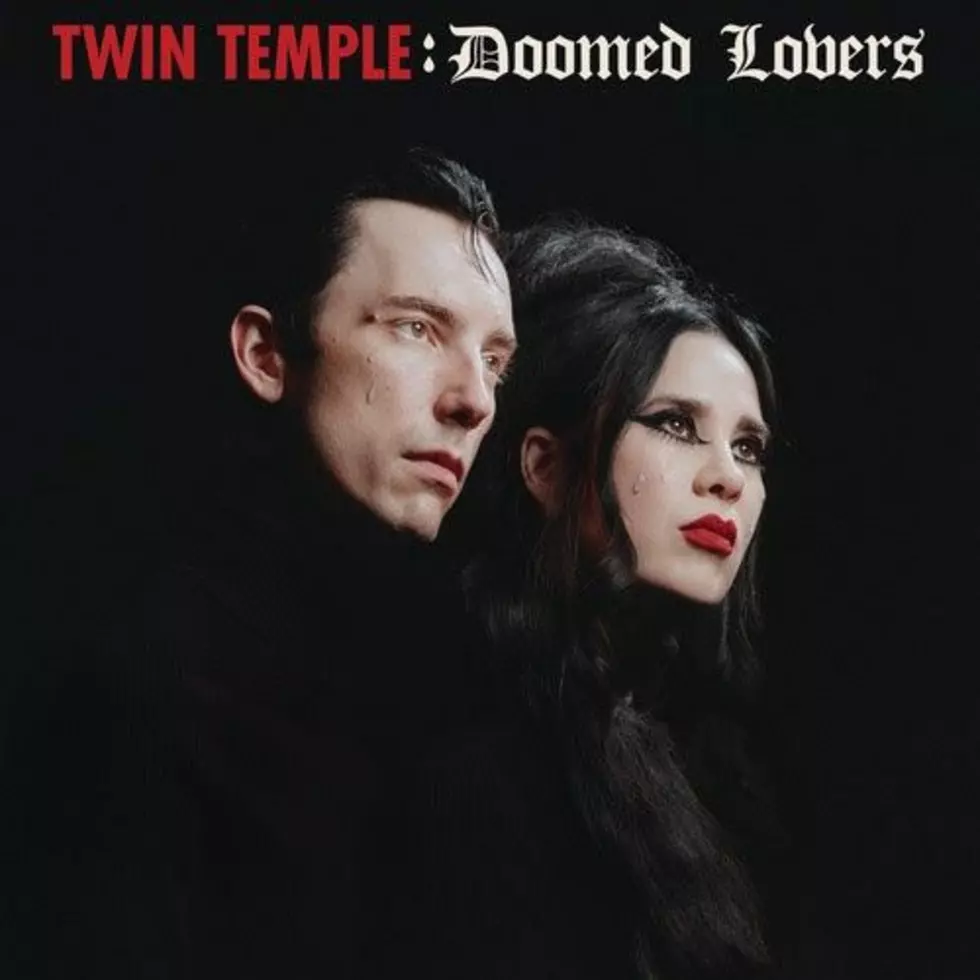
Thanks to Twin Temple's Alexandra and Zachary James for the interview. 'Doomed Lovers' is on track for a Oct. 9 release and is currently available for pre-order. The band also just announced more tour dates (seen below) and ticketing info can be found through their website. Stay up to date with Twin Temple through Facebook, Instagram, YouTube, Spotify and Apple Music and catch their appearance on The Daily Show from last night (July 29) now streaming.
Twin Temple 2026 Tour Dates
Sept. 08 – Albuquerque, N.M. @ Sunshine Theater
Sept. 11 – San Antonio, Texas @ Boeing Center at Tech Port %
Sept. 12 – Houston, Texas @ Bayou Music Center %
Sept. 14 – New Orleans, La. @ Fillmore %
Sept. 16 – Oklahoma, Okla. @ Beer City Music Hall
Sept. 17 – Springfield, Mo. @ The Regency Live
Sept. 18 – Nashville, Tenn. @ The Pinnacle %
Sept. 20 – Grand Prairie, Texas @ Texas Trust Credit Union %
Sept. 22 – Tucson, Ariz. @ La Rosa
Sept. 24 – Ventura, Calif. @ Ventura Theatre
Sept. 26 – Anaheim, Calif. @ Honda Center %
Sept. 28 – Phoenix, Ariz. @ The Van Buren
Sept. 29 - Los Angeles, Calif. @ Hollywood Palladium $
Sept. 30 – San Francisco, Calif. @ The Castro Theatre
Oct. 02 – Santa Cruz, Calif. @ The Catalyst
Oct. 04 – Portland, Ore. @ Crystal Ballroom
Oct. 05 – Vancouver, British Columbia @ Vogue Theatre
Oct. 06 – Seattle, Wash. @ Neptune Theatre
Oct. 08 – Sacramento, Calif. @ Ace of Spades
% Danzig
$ Jack White
Below, see 12 rock and metal artists often mistakenly labeled as Satanic.
12 Rock + Metal Artists Wrongly Labeled As Satanic
These rock and metal artists were wrongly labeled as satanic due to their imagery.
Gallery Credit: Lauryn Schaffner

 English
 Arabic
 French
 Spanish
 Portuguese
 Deutsch
 Turkish
 Dutch
Dutch
 Italiano
 Russian
 Romaian
 Portuguese (Brazil)