



In the autumn of 1962, a Soviet submarine officer sat in a vessel so battered by American depth charges that the crew believed war had already begun above them. The air inside was poisonous, the temperature unbearable, and his hand rested near the controls of a nuclear torpedo. The world did not know how close it came. For decades afterward, neither did most historians.
History Written From the Far Shore

That submarine — B-59, running blind beneath the Caribbean during the Cuban Missile Crisis — is the kind of detail that haunts the margins of Cold War history. The men who lived it could not tell the full story. The governments involved would not. And the historians who tried to reconstruct what happened were working with partial archives, classified files, and the distorting lens of a conflict that had not yet ended. For forty years, Cold War history was written by people who still did not know how the story would finish.
Then the Soviet Union collapsed, the archives cracked open, and a Yale professor named John Lewis Gaddis did something most historians had not done: he waited, read everything, and then sat down to write the whole story from the far shore, after the smoke had finally cleared. The result was The Cold War: A New History — not another textbook, not another policy memoir, but something closer to a verdict delivered by a judge who had finally seen all the evidence.
Who Is John Lewis Gaddis?
Gaddis holds the Robert A. Lovett Professorship of History at Yale University. Robert Lovett was one of the architects of American postwar policy — a man who helped design the national security state from the inside. To occupy the chair named for him, and then to write a history of the era Lovett helped create, is its own kind of historical symmetry.
What separates Gaddis from the crowded field of Cold War writers is not credentials alone — it is timing and access. After 1991, Soviet, Chinese, and Eastern Bloc archives began opening in ways that had been simply impossible before. Suddenly, historians could read what Stalin’s advisors actually wrote, what Chinese Communist Party officials actually believed, what East German intelligence actually feared. Gaddis worked through those archives with the patience of someone who understood that the truth of the Cold War could only be told from both sides of the Iron Curtain simultaneously.
The book was published in 2005 and received wide attention, including an NPR feature in February 2006, roughly fifteen years after the Soviet collapse. That distance mattered enormously. Close enough to living memory that the human texture of the era was still recoverable; far enough away that the outcome was no longer in doubt and the analysis could be honest.
What the Book Is — and Who It Was Written For
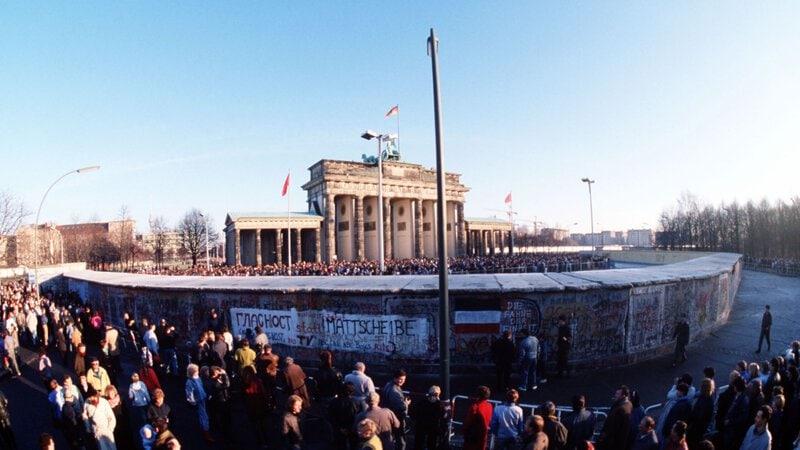
Gaddis was explicit about his intended audience. The Cold War: A New History was written chiefly for a new generation of readers for whom the Cold War was never current events — people who know the Berlin Wall fell but never felt the particular dread of not knowing whether it would. They grew up after the ending, which means they inherited the consequences without inheriting the fear. Gaddis set out to give them both.
The book spans the full arc of the conflict: from origins rooted in the dynamics of World War II as early as 1941, through the superpower confrontations of the 1950s and 1960s, the proxy wars and ideological battles of the 1970s, and all the way to the Soviet Union’s dissolution. Unlike the dense academic tomes that preceded it, the book is lean, readable, and structured around ideas rather than chronological bureaucracy. For anyone searching for serious Cold War history that does not sacrifice readability for scholarly rigor, it sits near the top of almost every authoritative list — and has for nearly two decades.
The Central Argument

Gaddis’s most debated claim is deceptively simple: the West won the Cold War not primarily through military might or economic pressure alone, but because its system of governance — messy, contentious, sometimes embarrassing democracy — proved more adaptable over time than the Soviet command state. Capitalism’s chaos was, paradoxically, its greatest strength. The Soviet Union’s enforced order was, paradoxically, its fatal flaw.
He traces how the conflict’s origins reveal that the Cold War was baked into the postwar order almost before World War II had ended. Stalin’s paranoia and expansionism, Gaddis argues, were not primarily a reaction to Western aggression. They were structural features of Soviet power — the inevitable expression of a system that could only understand the world in terms of threat and control.
Perhaps most controversially, Gaddis reassesses Ronald Reagan, long dismissed by many academic historians as ideologically reckless. In Gaddis’s reading, Reagan was a genuine strategic actor whose sustained pressure on the Soviet system — economic, ideological, and military — helped accelerate internal contradictions the USSR could not resolve. This argument was not widely popular in academic circles when the book appeared, and it remains contested. Gaddis makes it carefully, with evidence, rather than partisanship.
He also holds the mirror up to American failures with unflinching clarity — Korea, Vietnam, covert interventions in Iran and Guatemala, the propping up of brutal client regimes across three continents. Winning the Cold War, he insists, did not mean the West was always right. It meant only that its system could eventually correct its own errors in ways the Soviet Union structurally could not.
The Human Texture of the Era

What elevates this book above a standard Cold War overview is Gaddis’s eye for what the era actually felt like from the inside. He is not merely interested in summit-level policy decisions — he is interested in what it meant to live in Budapest in 1956, in Havana in 1962, in Hanoi through decades of a war fought partly as a proxy battle between superpowers who could not confront each other directly.
His treatment of ideology is particularly sophisticated. Gaddis takes Marxist-Leninist doctrine seriously as a historical force — not as mere propaganda, but as a genuine belief system that shaped Soviet decision-making in ways that ultimately proved catastrophic. Leaders who truly believed history was on their side were structurally incapable of reading the signs that it was not.
His argument about nuclear deterrence is among the book’s most striking and counterintuitive. The bomb, terrifying as it was, may have been the Cold War’s strangest stabilizer. Two powers too afraid of each other to fight directly channeled their aggression into proxy conflicts, covert operations, and ideological competition — destructive and often murderous in their own right, but not the thermonuclear exchange that, on at least a handful of documented occasions, came dangerously close to happening. The very weapon that made the Cold War so frightening may be a significant reason it never became a hot one.
These layered arguments — historical, psychological, structural — are why readers and educators keep returning to this book. Reader discussions on Goodreads consistently surface it in conversations about Cold War histories that read like something other than a policy briefing.
What Gaddis Got Right That Earlier Historians Could Not
Earlier Cold War histories were written inside the event. Their authors were constrained by classified archives, national loyalty, and the fundamental problem that they did not yet know how the story ended. A historian writing in 1975 about the Cold War was in the position of a novelist trying to write a final chapter before knowing what it contained. Gaddis writes from the finish line, and it shows on every page.
He correctly identified that the Soviet collapse was not an accident, not simply the product of Western pressure, and not primarily the result of any single leader’s decisions. It was a systemic failure — the slow death of a system that could not process information honestly, that punished internal dissent so thoroughly it lost the capacity to adapt, and that therefore could not respond to the signals of its own decay until it was too late.
His insistence on taking the Cold War global also anticipated what later historians would confirm and extend. This was not a bilateral standoff between Washington and Moscow. Africa, Southeast Asia, Latin America, the Middle East — these were active theaters where superpower competition played out in the lives of millions of people who had little say in the matter. Gaddis refuses to let readers forget them.
For anyone trying to orient themselves in the vast landscape of Cold War scholarship, assessments from professional historians and general readers alike consistently reach the same conclusion: this book stands apart because Gaddis asks not just what happened, but why the outcome was the one that happened — and his answer is persuasive, unsettling, and honestly argued.
Why the Book Still Matters Now
The Cold War did not end cleanly. Its structures, its anxieties, and its power rivalries persist — in the tensions between the United States and Russia, in the strategic competition with China, in the way nuclear arsenals continue to shape international politics decades after the Soviet flag came down over the Kremlin. Gaddis’s analytical framework, built to explain a conflict that supposedly concluded in 1991, turns out to be remarkably useful for understanding the world that followed.
A new generation encountering this history for the first time — for whom 1991 is as remote as 1945 was for their parents — needs exactly what Gaddis provides. Not just a chronology of events, but the logic of an era: the way fear, ideology, miscalculation, and occasional human courage combined to hold the world on a knife’s edge for four decades, and the way one side’s system, for all its real failures, proved just capable enough of honest self-examination to outlast the other.
There is also a more uncomfortable lesson the book leaves with careful readers. The qualities that allowed the West to win — tolerance for dissent, institutional self-correction, the capacity to admit failure — are not automatic. They require active maintenance. Gaddis never states this directly, but it runs beneath the surface of every chapter like a quiet warning.
The Cold War: A New History remains in print and widely available — a reliable signal that it has passed the first test of enduring historical writing. Readers keep returning to it not for nostalgia but for understanding. If you want to grasp how the world we live in was shaped, if you want to feel the Cold War rather than merely memorize it, John Lewis Gaddis wrote the book that makes that possible. He waited until he could see clearly, and then he told the truth about what he saw.

 English
 Arabic
 French
 Spanish
 Portuguese
 Deutsch
 Turkish
 Italiano
 Russian
 Romaian
 Portuguese (Brazil)
 Greek
Greek