


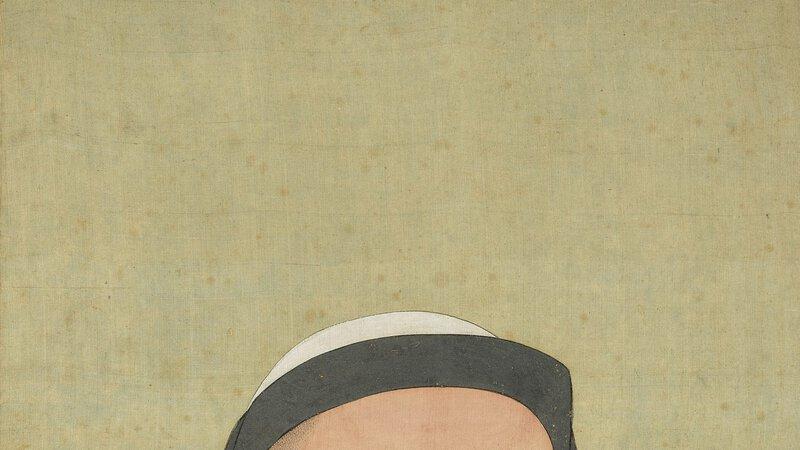

In the summer of 1281, the most powerful ruler on earth pointed the largest armada ever assembled at the islands of Japan — and the sea itself fought back. This is the story of Kublai Khan: the grandson of Genghis, the founder of a dynasty, and the man whose grandest ambitions were twice swallowed by the waves.
Born Into the Shadow of Genghis Khan (1215)

Kublai Khan arrived in the world in 1215 — the very year his grandfather Genghis Khan put the Jin dynasty’s capital, Zhongdu, to fire and sword. From his first breath, he inhabited a world already mid-transformation: a vast Eurasian steppe empire tearing down the old order and replacing it with something brutal, fast, and entirely new. As the fourth son of Tolui and a grandson of the Great Khan, his bloodline placed him near the center of that storm.
Yet Kublai was never simply a conqueror in the mold of his ancestors. While other young Mongol princes sharpened their instincts on the hunt and the battlefield, Kublai developed a restless curiosity about the sedentary civilizations his family had conquered — their art, their philosophy, their ways of organizing millions of people across a densely populated landscape. That openness, unusual among the Mongol elite, would ultimately define everything he became.
His Brother’s Trust Hands Him China’s Frontier (1251)

When Möngke Khan rose to become Great Khan in 1251, he needed someone he could trust to manage the sprawling, volatile Mongol-held territories in northern China. He chose Kublai. The role demanded something different from the cavalry charges and siege engines of classic Mongol warfare — it demanded the ability to govern, to negotiate, and to hold a restless population without burning it to the ground.
Kublai threw himself into the task with characteristic enthusiasm, surrounding himself with Chinese advisors, Confucian scholars, and Buddhist monks. He absorbed the logic of Chinese statecraft: taxation, bureaucracy, the legitimacy that came from being seen as a just ruler rather than merely a feared one. Back on the steppe, traditionalists muttered that he was going soft. In reality, he was assembling the intellectual toolkit that would one day make him the greatest successor of Genghis Khan.
Seizing the Throne in a Disputed Succession (1260)

Möngke’s death in 1259 left a power vacuum, and two brothers rushed to fill it. Both Kublai and his younger brother Ariq Böke declared themselves Great Khan, plunging the Mongol Empire into civil war. The conflict was more than a family quarrel — it was an ideological clash between those who wanted to keep the empire rooted in steppe traditions and those, like Kublai, who had come to see China as its beating heart.
Kublai prevailed by 1264, but the fracture never fully healed. The western khanates — the Golden Horde, the Ilkhanate, the Chagatai Khanate — went their own ways, acknowledging Kublai’s supremacy in name while pursuing independent agendas in practice. The unified Mongol Empire that Genghis Khan had envisioned was effectively over. What Kublai ruled was something new, centered not on the steppe but on the ancient civilizations to the south and east.
Founding the Yuan Dynasty and Remaking an Empire (1271)

In 1271, Kublai made his transformation official. He proclaimed the Yuan dynasty, adopting the Chinese concept of the Mandate of Heaven and positioning himself not merely as a Mongol conqueror occupying a defeated civilization, but as a legitimate Chinese emperor — the first Mongol to rule over China. He constructed Khanbaliq, his magnificent new capital on the site of present-day Beijing, designed to project authority to both his Mongol warriors and his hundreds of millions of Chinese subjects.
The Yuan dynasty was a genuinely novel creation: Mongol military power fused with Chinese administrative tradition, foreign merchants welcomed at court, and religious tolerance enshrined as policy. Kublai Khan’s empire became a crossroads of the medieval world — the destination where the Venetian merchant Marco Polo would eventually arrive and where the Silk Road carried more traffic than it had seen in generations.
The First Invasion of Japan — Stopped by a Storm (1274)

Japan had been ignoring Kublai’s diplomatic letters for years — letters that were, in truth, thinly veiled ultimatums demanding submission. In November 1274, he stopped sending letters. A fleet of roughly 900 ships carrying an estimated 23,000 Mongol and Korean troops struck the Japanese island of Kyushu, landing at Hakata Bay. The samurai defenders, accustomed to individual combat and formal dueling conventions, were shocked to face massed arrow volleys, explosive projectiles, and the coordinated tactics of a battle-hardened professional army. The Mongols pushed them back from the beaches.
Then, overnight, the sea intervened. A violent storm struck the fleet at anchor, sinking hundreds of ships and killing thousands of men before a second day of fighting could begin. The survivors withdrew. In Kublai’s court it was recorded as a setback. In Japan it was received as something more — a sign, perhaps, that the islands enjoyed a special protection. That idea would return, with far greater force, seven years later.
Completing the Conquest of Southern China (1275-1279)

Even as he brooded over Japan, Kublai was finishing a campaign that had consumed Mongol energy for decades. The Southern Song dynasty had refused to fall quietly, its navy fighting on long after its armies had crumbled. It took until 1279 and the naval Battle of Yamen — a desperate last stand on the water off the Guangdong coast — before the final Song resistance was extinguished. Historical accounts describe a loyalist official named Lu Xiufu who, refusing to allow the child emperor to be captured, carried the boy into the sea rather than surrender.
With the Song gone, Kublai stood as undisputed ruler of all China — the most populous and productive territory on earth. The victory was the capstone of the Mongol world-conquest that Genghis had begun six decades earlier. It also convinced Kublai that the ocean was simply the next frontier. If all of China had fallen, why not Japan? Why not everywhere?
The Largest Naval Invasion the World Had Ever Seen (1281)

The second invasion of Japan was staggering in its ambition. Kublai assembled two separate fleets: roughly 900 ships from Korea carrying around 40,000 troops, and a larger armada from southern China estimated at 3,500 ships bearing some 100,000 soldiers. The sheer logistical effort of supplying and coordinating that force across open ocean was itself a remarkable feat of Yuan administration — and a reflection of how completely Kublai had absorbed the Chinese bureaucratic machinery he had once studied from the outside.
Japan had not been idle in the intervening seven years. Stone walls now lined Hakata Bay, purpose-built to deny the Mongols an easy beachhead. Japanese defenders fought fiercely through weeks of coastal combat, raiding the anchored fleet by night in small boats and bleeding the invasion force while the two armadas waited to fully unite. The deadlock held. And then the sky darkened.
A Single Night, 4,000 Ships, and the Birth of ‘Kamikaze’ (August 1281)

In late August 1281, a powerful typhoon struck the combined Mongol fleet where it sat anchored off Kyushu. In the catastrophe that followed, a substantial portion of the fleet was sunk or wrecked and vast numbers of men drowned or were cut down on the beaches. The Mongol invasion of Japan in 1281 did not end in battle — it ended in the dark, in the water, in chaos that no army could fight its way out of.
Japanese survivors called the storm kamikaze — divine wind — and the word lodged itself permanently in the national consciousness as evidence that Japan existed under heavenly protection. Centuries later, in the final desperate months of World War II, Japanese military planners would reach back to that same word and that same idea when organizing one-way aircraft missions against Allied warships. The storm’s legacy was as durable as the destruction it caused. Archaeological surveys of Imari Bay have since recovered anchors, weapons, and preserved timbers of Mongol vessels, giving physical substance to what the chronicles described: a catastrophe as complete as any in the history of naval warfare.
A Catalogue of Failed Campaigns Beyond Japan (1282-1293)

Japan was the most spectacular of Kublai’s military failures, but far from the only one. His armies invaded the kingdom of Đại Việt — roughly modern Vietnam — three separate times and were repelled each time by guerrilla tactics, punishing terrain, and disease. A naval expedition dispatched to Java in 1293 achieved initial landings before being outmaneuvered by the local Majapahit kingdom and forced into a costly retreat. Each failed campaign drained a Yuan treasury already strained by the costs of conquest and administration, and compounded the resentment of Chinese peasants taxed heavily to fund distant adventures.
These failures share a revealing common thread: the Mongol way of war, devastatingly effective on open steppe or against walled cities on flat ground, translated poorly to tropical forests, rice paddies, and open ocean. The empire that had seemed limitless began to reveal its limits. Historians generally read these years as the opening chapter of a long, slow unraveling — the point at which the Yuan dynasty’s momentum faltered and the legitimacy Kublai had so carefully constructed began to erode.
The Death of the Last Great Khan (February 1294)

Kublai Khan died in February 1294, approximately 78 years old. His final years were difficult: gout, obesity, and heavy drinking had ravaged a body that had once ridden across continents, and grief had worn him down following the deaths of his beloved wife Chabi in 1281 and his chosen heir Zhenjin in 1285. The man who had reinvented an empire spent his last years withdrawing from the world he had made.
He left behind the largest contiguous land empire in history — and a dynasty that would outlast him by only 74 years, collapsing under the weight of internal rebellion and the catastrophic population losses of the fourteenth-century plague. Marco Polo, who had spent years at his court, described him as the greatest lord of lords. The assessment was not wrong. No ruler before or since assembled quite the combination of territorial scale, administrative ambition, and transformative reach that defined the reign of Kublai Khan — the grandson of Genghis who tried to conquer the sea, and came closer than anyone had any right to expect.
From the typhoon-scattered timbers of Imari Bay to the stone walls of a rebuilt Beijing, Kublai Khan’s story is ultimately a human one: of a man who bent the world further than almost any other, and discovered, in the end, that wind and water answer to no emperor.

 English
 Arabic
 French
 Spanish
 Portuguese
 Deutsch
 Turkish
 Dutch
Dutch
 Italiano
 Russian
 Portuguese (Brazil)
 Greek
Greek