


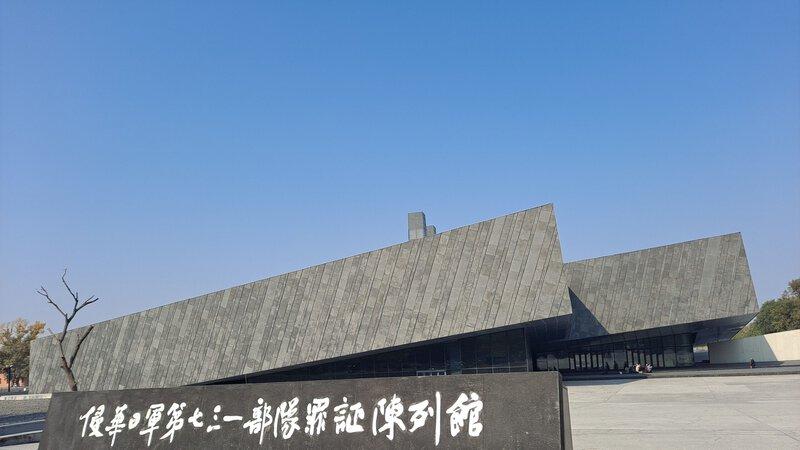

In the autumn of 1945, while Nazi doctors were being loaded onto transport planes bound for the Nuremberg dock, a Japanese general named Shirō Ishii was sitting quietly at home — protected, comfortable, and entirely free. The men who shielded him were American.
The Man Who Walked Free

Ishii had commanded the most sophisticated biological warfare program in recorded history. Under his direction, thousands of human beings had been infected with plague, frozen alive, and dissected without anesthesia in a fortress compound buried in the Manchurian countryside. By any standard applied at Nuremberg — where his German counterparts were being sentenced to death for strikingly similar crimes — Ishii was a war criminal of the first order. Instead, U.S. intelligence handlers quietly absorbed him into a postwar arrangement that would remain classified for decades.
He died of throat cancer in 1959. He was never charged. The data his prisoners died producing was funneled into American bioweapons research, and the moral ledger of what that bargain actually cost was left permanently open.
The central question that haunts the history of Unit 731 is not simply what Japan did in Manchuria between 1935 and 1945. It is what America chose to do with the knowledge afterward — and what that choice says about the price the Cold War was willing to put on human life.
A City Built for Murder

To understand the scale of what happened, you have to picture the Pingfang complex not as a laboratory but as a small city. Sprawling across six square kilometers on the outskirts of Harbin in Japanese-occupied Manchuria, the facility was officially designated a “water purification unit.” It had its own railway spur, its own power plant, housing for roughly 3,000 staff, dedicated autopsy theaters, and aircraft hangars for the bombers that would eventually carry its products into the field. The disguise was almost insulting in its thinness, but in wartime Manchuria, nobody in a position to object had the authority to do so.
The complex became operational in the mid-1930s and reached its most intense period of activity between 1940 and 1945. Its prisoners were Chinese civilians, Korean captives, Soviet soldiers, and Allied POWs — anyone the Japanese military machine swept up in its occupation of northeastern China. Guards did not use their prisoners’ names. They called them maruta: logs. The dehumanization was deliberate and total, a psychological infrastructure that made what followed easier to carry out and easier to record with clinical detachment.
The record-keeping was meticulous. Ishii demanded it. Every experiment was logged, every outcome measured, every body catalogued. Those logs — the same ones that would later make him valuable to American intelligence officers — were the bureaucratic skeleton of an industrial atrocity.
What They Actually Did to Human Beings

The experiments conducted at Unit 731 defy easy summary, not because they are obscure but because describing them in plain language requires holding the full weight of what “prisoner” meant in that place. These were not research subjects in any ethical sense of the word. They were people kept alive specifically so that disease could progress through their bodies under conditions that could not be replicated in animal trials.
Prisoners were deliberately infected with plague, cholera, typhoid, and anthrax. Researchers tracked the progression of disease through living bodies, and when the data they needed had been gathered, subjects were vivisected — operated on while conscious, without anesthesia — so that organs could be harvested in an uncontaminated state before natural death could alter the tissue. The logic was framed as scientific. The act was torture followed by murder.
Other experiments tested the limits of the human body in ways that served weapons development rather than any medical purpose. Frostbite trials immersed prisoners’ limbs in ice water or exposed them to sub-zero temperatures until tissue froze solid, then thawed and refroze them to study damage progression. Pressure chamber experiments drove bodies to catastrophic failure to understand how altitude and compression affected combatants. The experiments were systematic, documented, and carried out by trained researchers who understood exactly what they were doing.
The verified death toll from in-facility experiments between 1940 and 1945 alone exceeds 3,000 — not including branch facilities. The broader figure for all prisoners who died at Pingfang reaches at least 10,000 — and that number does not include the dozens of branch facilities Unit 731 operated across occupied China, where the same methods were applied at smaller scale.
Biological Warfare in the Field: The Deaths Beyond the Walls

What makes Unit 731 more than a story about laboratory atrocity is what Ishii’s program did with its results. The facility was never purely a research institution. It was the development arm of an operational weapons program, and its products were deployed against civilian populations with the full authorization of the Imperial Japanese military.
In 1940, ceramic bombs packed with plague-carrying fleas were dropped over the Chinese city of Ningbo. Similar attacks followed at Changde. In both cases, plague outbreaks erupted in the civilian population within days. Researchers traveled from Pingfang to the affected areas to document the results — measuring, in the field, the effectiveness of what they had engineered in the laboratory. Water supplies in occupied territories were contaminated with typhoid and cholera cultures. The pipeline from experiment to deployment ran with terrible efficiency.
Unit 731’s biological warfare operations are estimated to have caused approximately 200,000 deaths across China — a figure that places the deaths inside Pingfang’s walls in their full, horrifying context. The laboratory and the field campaigns were not separate endeavors. They were consecutive stages in the same weapons program, with Chinese civilians as the intended end target.
The Cover-Up Begins: August 1945

When Japan’s surrender became inevitable in August 1945, Ishii moved quickly. He ordered the Pingfang complex dynamited, surviving prisoners executed, and records burned. Staff members were personally briefed on a unified cover story. Within days, much of the physical infrastructure of the largest biological warfare program in history had been reduced to rubble and ash.
The Soviets, advancing into Manchuria, captured personnel from Unit 731’s branch facilities and eventually tried them publicly at the 1949 Khabarovsk War Crimes Trial, handing down sentences that named the program and documented its crimes in open court. The United States dismissed these proceedings as Communist propaganda — a characterization that was politically convenient given what American intelligence officers were simultaneously doing in Tokyo.
Those officers, operating under General Douglas MacArthur’s Supreme Commander for the Allied Powers command, had arrived in Japan within weeks of surrender and begun conducting quiet interviews with Unit 731 veterans. What they decided to do with what they found would shape the historical memory of the Pacific War for the rest of the twentieth century.
The Immunity Deal: America’s Faustian Bargain

The arrangement that declassified documents later confirmed was explicit: U.S. authorities granted Ishii and his core research team immunity from war crimes prosecution in exchange for exclusive access to their biological warfare data. The decision ran through MacArthur’s command, was ratified in Washington, and was justified on Cold War grounds that American bioweapons planners found entirely persuasive at the time.
The logic, reduced to its essentials, was this: the Soviet Union was presumed to be building its own biological warfare capabilities. Ishii’s program represented years of human-trial data that no ethical research program could have produced. Absorbing that data was framed as a strategic necessity. Japan’s own official acknowledgment of the unit’s crimes would not come until decades later, but American officials understood what they were trading for from the beginning.
The moral determination, stated in plain institutional terms, was that the intelligence value of the program outweighed the justice owed to its victims. That determination was made not by rogue actors but through channels extending from Tokyo to Washington, and it was maintained as policy for decades. The parallel to Operation Paperclip — through which the U.S. simultaneously recruited Nazi rocket scientists and quietly suppressed their wartime records — was not coincidental. It reflected a consistent postwar doctrine: atrocity committed by a defeated enemy could be monetized by the victor, provided the paperwork was handled carefully.
Reckoning Denied: Why Unit 731 Still Haunts East Asia
Japan’s government did not officially acknowledge Unit 731’s crimes until the 1990s. No member of the unit was ever prosecuted by Japanese or American courts. Chinese survivors and their descendants pursued civil lawsuits in Japanese courts for decades, consistently losing on procedural grounds — the legal system functioning, in effect, as a quieter and more bureaucratic erasure of the same people the original program had stripped of names and called logs.
Survivors who spoke publicly about what they witnessed did so against sustained denial and social pressure. The men who carried out the experiments returned to civilian life — some to careers in Japanese medicine and academia — without ever facing formal accountability. The institutional silence was not passive. It required active maintenance across governments, decades, and borders.
What makes the Unit 731 immunity deal permanently unresolved is not only that justice was withheld. It is that the data exists, that its use shaped subsequent research in ways now difficult to fully trace, and that the thousands of people who died inside Pingfang’s walls producing it have never received so much as an official apology from either the government that killed them or the government that quietly decided their deaths were useful.
Shirō Ishii walked free. The Nuremberg precedent — that crimes against humanity carried consequences regardless of the nationality of the perpetrator or the victim — turned out to have a Cold War exception built into it from the start. That exception was never written into any public document. It was simply applied, and then buried, and the burial held for a very long time.

 English
 Arabic
 French
 Spanish
 Portuguese
 Deutsch
 Turkish
 Dutch
Dutch
 Italiano
 Romaian
 Portuguese (Brazil)
 Greek
Greek