


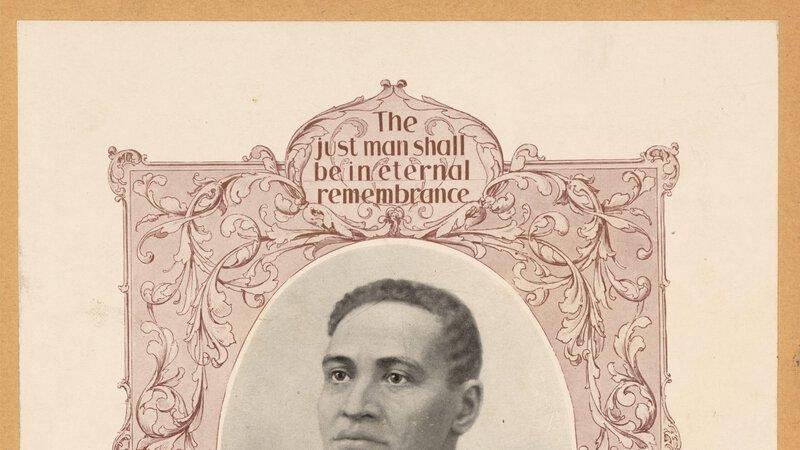

On the night of March 5, 1770, a tall, broad-shouldered man pushed to the front of an angry crowd on King Street in Boston — and when the British muskets fired, he was the first to fall. His name was Crispus Attucks, and the story of who he really was remains one of the most extraordinary, most contested, and most necessary in all of American history.
The Night Boston Exploded

Winter had stretched Boston’s tensions to a breaking point. British redcoats had been quartered in the city since 1768, a constant, galling presence that locals met with insults, thrown ice, and simmering fury. By the evening of March 5, that fury had a location: the Custom House on King Street, where a small detachment of soldiers stood guard. A crowd gathered — dockworkers, apprentices, sailors, men who had spent months watching British soldiers undercut their wages and swagger through their streets. They came armed with clubs, oyster shells, and rage.
Among them, conspicuous by his height and his nerve, was Crispus Attucks. Witnesses later described him at or near the head of the crowd, pressing forward as the soldiers raised their muskets. When the guns discharged in a ragged, panicked volley, Attucks took two musket balls in the chest. He was dead before the smoke cleared — the first of five colonists to die in what would become immortalized as the Boston Massacre.
The other victims — Samuel Gray, James Caldwell, Samuel Maverick, and Patrick Carr — died in the minutes that followed. But it was Attucks who fell first, and his identity made the entire event something far more complicated than a clean story of colonial martyrdom. The man who became the massacre’s most iconic victim was almost certainly a formerly enslaved person of mixed African and Native American descent, and his presence on that street was an act of defiance nearly two decades in the making.
A Life Lived in the Margins of the Record

The documentary record of Crispus Attucks’s life is thin — not by accident, but by the logic of a society that kept poor records of those it considered property. He was born around 1723, likely of mixed African and Native American descent, with ties to the Natick Wampanoag people of Massachusetts. In a colonial world that sorted human beings into rigid legal categories, Attucks fit neatly into none of them, which made him both vulnerable and, in certain ways, invisible to official record-keeping.
The clearest evidence of his enslaved past comes from a 1750 advertisement in the Boston Gazette, which historians widely believe describes Attucks. It announces the escape of a tall man and warns that he “may try to pass for a free man.” After that notice, Attucks vanishes from the historical record for nearly twenty years — reappearing only in death. Scholars read that gap not as absence but as accomplishment: he apparently succeeded in building a life outside the reach of those who claimed to own him, most likely working at sea.
It is worth being clear about the ambiguity here. Whether Attucks held any recognized legal freedom at the time of his death in 1770 remains uncertain. Historians have noted that the precise legal status he held on that Boston night cannot be confirmed from surviving records. That uncertainty does not diminish his story — it deepens it. He was a man who had seized freedom on his own terms, in defiance of a system that had claimed ownership of his body, and who then died confronting the authority of empire.
The Sea as Sanctuary

For a man escaping enslavement in eighteenth-century New England, the maritime economy was one of the few places where a person could rebuild an identity. Ships departed from Boston, Salem, and New Bedford carrying crews of every background — Black sailors, Indigenous men, mixed-race dockworkers — and a capable hand could reinvent himself port by port. The sea was not egalitarian, but it was porous in ways that landlocked colonial society was not. It offered something close to anonymity, and anonymity, for Crispus Attucks, was survival.
According to the National Park Service, Attucks worked as a sailor and in maritime trades during the years between his escape and his death — work that placed him squarely in Boston’s roughest and most politically combustible waterfront world. By 1770, he was reportedly connected to the rope-making trade out of Boston, living and working alongside the dockworkers and laborers who clashed most violently and most frequently with the British garrison over jobs, wages, and dignity.
This context matters enormously. Attucks was not a passive bystander who wandered into history by accident. He was a man who had spent nearly two decades navigating a society that had tried to reduce him to property, finding community among the marginalized men of the waterfront, and living in the city that would become the crucible of American rebellion. When he stepped toward the front of the crowd on King Street, he was not acting out of character. He was doing what he had always done: refusing to yield.
King Street, Nine O’Clock — What Actually Happened

The events of March 5, 1770 did not begin as a massacre. They began as an argument — a confrontation between a young wigmaker’s apprentice and a British soldier outside the Custom House that escalated, as Boston confrontations so often did, with terrifying speed. Church bells rang out, which in colonial Boston typically signaled fire; men poured into the streets and converged on King Street, where Private Hugh White stood alone and badly outnumbered.
Captain Thomas Preston arrived with a small relief party of soldiers. The crowd, by now numbering in the dozens and still growing, pelted the redcoats with ice, rocks, oyster shells, and profanity. Attucks, witnesses later testified, was at or near the front — some called him a ringleader, others described him as simply the most visible man in a churning mass of people. The precise sequence of what happened next remains disputed. When the soldiers fired, Attucks absorbed the first shots. His death came in the same moments as a volley that killed four more men.
Paul Revere’s famous engraving of the massacre, which circulated as anti-British propaganda in the weeks that followed, told a sanitized version of events: orderly victims, a neat line of fire, a scene of calm martyrdom rather than chaos. The engraving’s visual logic — its erasure of the crowd’s multiracial complexity — would shadow Attucks’s legacy for generations. PBS’s Africans in America project examines Attucks’s role in the massacre and its complicated aftermath in detail.
The Trial, the Propaganda, and the Contested Legacy

What followed the massacre revealed, with extraordinary clarity, exactly how inconvenient Crispus Attucks was to the story the Patriots wanted to tell.
John Adams took on the defense of Captain Preston and the British soldiers — a decision he later called one of his finest hours, a testament to the rule of law. His defense strategy required vilifying the crowd, and he did so with precision, describing the mob as a “motley rabble of saucy boys, negroes and mulattoes, Irish teagues and outlandish jack tars” led by a dangerous agitator. The soldiers were acquitted. Adams’s characterization was legally effective and historically revealing: the most threatening thing about Crispus Attucks, in the eyes of a Patriot lawyer who believed in liberty, was exactly what he was — Black, mixed-race, legally ambiguous, and unafraid.
Meanwhile, Samuel Adams and the radical Patriots did something different with the same death. Attucks and the other victims lay in state at Faneuil Hall; thousands attended the funeral procession in a display of interracial public mourning Boston had never quite seen before. The massacre became propaganda, and Attucks became a martyr — but a carefully managed one, his identity blurred at the edges to fit a narrative about colonial liberty that had no comfortable place for a man who had once been someone’s legal property.
The tension between the two Adamses encapsulates the central contradiction of the American Revolution: a fight for liberty waged and mythologized by men who would not acknowledge what Attucks’s presence in that crowd actually meant. He had died in a confrontation that helped spark a nation, and that nation, even after it won its independence, would not have been obligated to recognize him as free.
How Black America Reclaimed Crispus Attucks

For decades after 1770, mainstream American memory allowed Attucks to fade. The new republic found him awkward — the first person killed in what became the Revolution was a man of mixed African and Indigenous descent who had escaped enslavement, and that fact sat poorly with a founding mythology that preferred its martyrs to be straightforwardly free and straightforwardly white.
It was antebellum Black abolitionists who refused to let him disappear. In the 1850s, activists including historian and abolitionist William Cooper Nell argued that Attucks’s sacrifice was the founding act of the American freedom struggle — that his blood gave Black Americans a foundational claim to citizenship and to the rights that a revolution fought partly in their midst had denied them. Historians writing for the Age of Revolutions journal have traced how this sustained reclamation effort reshaped Attucks’s place in public memory.
In 1858, Boston’s Black community established an annual Crispus Attucks Day — a commemoration that doubled as a direct protest against the Fugitive Slave Act. The irony was pointed and intentional: the same legal apparatus that, had it existed in 1750, could have returned Attucks to bondage, was now being challenged in his name. His martyrdom became an argument, and the argument was about whether America’s founding promises meant anything at all.
The Crispus Attucks Monument on Boston Common was unveiled in 1888, after years of organized resistance from those who preferred a whiter founding story. It stands there still — a permanent rebuttal to erasure, in the city where he died. The Crispus Attucks Museum continues to preserve and extend this history for new generations.
The Framingham Connection
One dimension of Attucks’s story that often goes unexamined is his likely connection to Framingham, Massachusetts, where he is believed to have been enslaved before his escape. The town of Framingham maintains historical resources documenting this connection, including the tradition that he was held by a man named William Brown — the same name attached to the 1750 runaway advertisement in the Boston Gazette. That local history grounds Attucks’s story in the specific geography of colonial Massachusetts slavery, a reminder that enslavement in New England was not an abstraction but a practiced, legal institution with named people on both sides of its ledger.
Why Crispus Attucks Still Matters
Crispus Attucks forces a reckoning that American history has never quite completed. His story demands that we hold two truths at once: the Revolution was a genuine struggle for human liberty, and that struggle was built in part on the labor, the suffering, and the systematically excluded hopes of people exactly like him — formerly enslaved, multiracial, legally precarious, stubbornly alive until they were not.
He is not a footnote to the Boston Massacre. He is its moral center. The first person killed in what became the American Revolution was a man the new nation would not have been required to recognize as fully free — and that fact does not diminish the Revolution so much as it clarifies it, strips away the comfortable myth, and forces the question that his life and death have always posed: whose sacrifice gets written into the founding story, and whose gets quietly set aside?
Consider again that cold Boston street in March of 1770. A tall man steps forward into the dark, toward raised muskets and the certainty of violence. He has already spent roughly twenty years reconstructing his own freedom, port by port, season by season. He is not naive about what power does to men like him. And still he does not step back. That choice — made by a man whom history had to be pressured, repeatedly and over generations, to remember — is among the most consequential acts in the story of American liberty. The fact that we still have to argue for its centrality is proof that the confrontation he walked into on King Street has never truly been resolved.

 English
 Arabic
 French
 Spanish
 Portuguese
 Deutsch
 Turkish
 Dutch
Dutch
 Italiano
 Romaian
 Portuguese (Brazil)
 Greek
Greek