


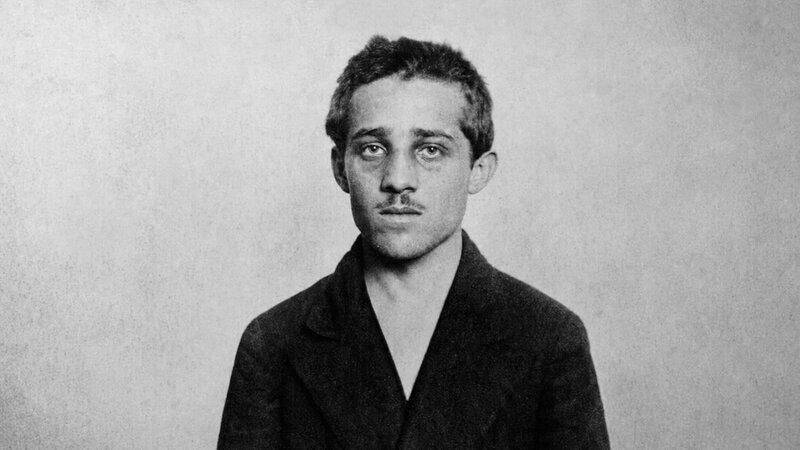

On the morning of June 28, 1914, a teenage nationalist stood dejected outside a Sarajevo delicatessen, convinced he had missed his moment — and then history lurched toward him on four wheels and a wrong turn. The story of Gavrilo Princip is less a tale of careful conspiracy than of chaos, hesitation, and the terrifying randomness through which world-altering events can unfold. Understanding him means grappling with a question that still divides historians: was he a terrorist, a freedom fighter, or simply a desperate young man caught inside forces far larger than himself?
Born Into the Empire He Would Help Destroy

Gavrilo Princip was born on July 25, 1894, in Obljaj, a remote village in western Bosnia — a land absorbed into the Austro-Hungarian Empire in 1878 and given no meaningful voice in that arrangement. His family were Bosnian Serbs working the land under grinding poverty. He was the second of nine children born to Petar and Marija Princip; only three of those children survived infancy. That relentless proximity to death was not an abstraction for Gavrilo — it was the texture of daily life before he was old enough to read.
Growing up in a region governed by a distant imperial power, the question of self-determination was never purely political. The empire that administered his home was foreign in language, Catholic in its dominant faith, and indifferent to the Orthodox Slavic peasantry it ruled. Princip absorbed that distance as something close to a personal wound, and it would shape every choice he made afterward.
A Young Man Radicalized: Princip and Young Bosnia

When Princip left home to study in Sarajevo, he found others who shared his simmering resentment. He was drawn into Young Bosnia, a loose movement of students and intellectuals united by a single conviction: Austro-Hungarian rule over Bosnia and Herzegovina had to end. Young Bosnia was not a tightly organized revolutionary cell but something more diffuse — an atmosphere charged with Serbian nationalism, pan-Slavic idealism, anarchist literature from Western Europe, and a romantic faith in dramatic, decisive action as a vehicle for historical change.
Princip read widely and idolized figures who had struck down rulers in the name of national liberation. In his developing worldview, political violence was not crime but sacrifice — the price a serious person paid to shift the fate of a people. It was a seductive and dangerous ideology, and by 1913 it was looking for a target. That year, Princip had actually attempted to enlist in Serbian guerrilla forces fighting in the Balkan Wars but was turned away as too small and too young — a rejection that, rather than cooling his militancy, appears to have intensified it.
The Black Hand Supplies the Weapons

By early 1914, Princip and a close circle of fellow conspirators — most of them young, tubercular, and convinced they had little to lose — had made contact with the Black Hand, a secretive Serbian nationalist organization with roots inside Serbian military intelligence. Its leader, Colonel Dragutin Dimitrijević, known as Apis, provided what the young men conspicuously lacked: FN Model 1910 semi-automatic pistols, hand grenades, and cyanide capsules intended for use if capture became inevitable.
Armed and briefed, the group slipped back across the border into Bosnia through a clandestine network of nationalist sympathizers — a chain of complicity that would later give Austria-Hungary the pretext it needed to hold Serbia institutionally responsible for what followed. Seven conspirators in total were positioned along the published route of Archduke Franz Ferdinand’s motorcade through Sarajevo on June 28, 1914. On paper the plot looked formidable. In practice it would nearly collapse entirely before Princip fired a single shot.
The Archduke Arrives in Sarajevo — June 28, 1914

Archduke Franz Ferdinand, heir to the Austro-Hungarian throne, chose June 28, 1914 for his official visit to Sarajevo. The date was Vidovdan — St. Vitus’s Day — a date of enormous symbolic weight in Serbian memory, marking the 1389 Battle of Kosovo. To many Bosnian Serbs, scheduling an imperial display of authority on that particular day felt like a calculated provocation. Security arrangements, meanwhile, were astonishingly inadequate: the motorcade route had been published in local newspapers days before, and the Archduke and his wife, Sophie, Duchess von Hohenberg, would ride in open-topped cars through streets lined with crowds and only lightly policed.
As the procession rolled along the Appel Quay that warm Sunday morning, each of the seven conspirators stationed at intervals along the route had a clear opportunity. The stage appeared perfectly set. What followed was not the clean execution of a plan but a cascade of hesitation, human error, and compounding accident.
The First Attempt Fails: A Grenade Bounces Off the Car

The first conspirator to act was Nedeljko Čabrinović, who hurled a grenade at the Archduke’s car as it passed his position. The driver, seeing the object in the air, accelerated sharply. The grenade struck the folded convertible roof and bounced into the road, detonating beneath the following vehicle. Several members of the entourage were wounded by shrapnel and a number of bystanders were hurt, but Franz Ferdinand was untouched.
Čabrinović, following the pre-arranged plan, bit down on his cyanide capsule and threw himself into the Miljacka River — only to discover that the poison was degraded and inert, and that the river at that point barely reached his knees. He was hauled out, beaten by the crowd, and arrested within minutes. The motorcade raced on toward the Town Hall, and along the quay the remaining conspirators — Princip among them — dispersed into the crowd, most concluding that the mission had failed beyond recovery.
Princip Gives Up — Then a Wrong Turn Changes Everything

Believing the attempt finished, Princip drifted away from his post and came to a stop near Schiller’s Delicatessen on Franz Josef Street, close to the Latin Bridge. He stood there in the late morning sun, a loaded pistol still tucked inside his coat, with no clear plan and no remaining role. History, it seemed, had moved on without him.
Then came the wrong turn. After the Town Hall ceremony, Franz Ferdinand — characteristically insisting on visiting the soldiers wounded in the morning’s grenade attack — set out for the hospital. His driver was apparently not clearly informed of the route change. He turned onto Franz Josef Street by habit, following the original planned path. When the lead car ahead corrected the error and stopped, the driver braked and began to reverse — stalling the open car almost directly in front of Princip, with no crowd between them and perhaps five feet of open pavement separating a nineteen-year-old revolutionary from the heir to an empire.
Two Shots at Point-Blank Range

Princip did not hesitate. He stepped forward, drew his FN Model 1910 pistol, and fired twice into the stationary car at nearly point-blank range. The first shot struck Franz Ferdinand in the jugular vein; the second struck Sophie in the abdomen. The car was driven forward toward the Governor’s residence, where both the Archduke and his wife died of their wounds within the hour. The assassination of Archduke Franz Ferdinand was complete — two shots, two deaths, and the beginning of a sequence of events that would remake the world.
Princip immediately attempted to turn the pistol on himself and then reached for his cyanide capsule, but the crowd surged over him before he could use either. He was seized, disarmed, and taken into police custody — alive, nineteen years old, and about to become the most consequential assassin in modern history.
Too Young to Hang: Princip’s Trial and Imprisonment

When Austro-Hungarian law was applied to Princip, it encountered a precise and consequential fact. The empire’s legal code required a defendant to be at least twenty years of age at the time of the offense to be eligible for the death penalty. Princip had been born on July 25, 1894; the assassination had occurred on June 28, 1914. He was nineteen years, eleven months, and three days old. The court sentenced him instead to the maximum term available for a minor: twenty years of hard labor, to be served at the fortress prison of Theresienstadt in Bohemia — the same complex that would later, under Nazi occupation, become the Theresienstadt concentration camp.
The Austro-Hungarian authorities, denied the option of execution, made the conditions of his imprisonment as punishing as the law permitted. Princip was held in solitary confinement, kept in chains for extended periods, and subjected to the bone-deep cold and damp of a medieval fortress. His health, never strong — he had shown signs of tuberculosis before the assassination — deteriorated rapidly under these conditions.
The Shots That Started World War I

Austria-Hungary moved with deliberate fury in the weeks after June 28. Holding Serbia responsible for arming and facilitating the conspirators, the empire — with Germany’s explicit backing — issued an ultimatum to Belgrade on July 23 that was engineered from the outset to be unacceptable. Its ten points demanded, among other things, that Austro-Hungarian officials participate directly in Serbia’s internal judicial proceedings — a demand incompatible with Serbian sovereignty. Serbia’s carefully worded reply accepted most of the terms but balked at that central provision. Austria-Hungary declared it insufficient and declared war on July 28, 1914, exactly one month after the shots in Sarajevo.
What followed was the activation of the interlocking alliance system that had been tightening across Europe for decades. Russia mobilized in support of Serbia; Germany declared war on Russia and then France; Britain entered the war after Germany violated Belgian neutrality. Within six weeks of Princip’s two pistol shots, the major powers of Europe were at war. The conflict that followed killed approximately seventeen million people — military and civilian — wounded tens of millions more, destroyed four empires, and set the political conditions for a second, even more destructive world war twenty years later.
Historians have long debated how much weight to assign Princip’s act versus the structural forces — imperial rivalry, interlocking alliances, arms races, and nationalist pressure — already pushing Europe toward catastrophe. The assassination did not cause the war by itself; it provided the occasion. But occasions matter, and this one mattered more than most.
Death in Prison: April 28, 1918

Gavrilo Princip died on April 28, 1918, in Theresienstadt, aged twenty-three. Tuberculosis, accelerated by cold, chronic malnourishment, and prolonged isolation, had destroyed his body so comprehensively that his right arm had been amputated in a desperate attempt to halt the spread of bone tuberculosis — a procedure that failed to save him. He died as the war he had helped ignite was entering its final exhausted months, unaware of its outcome.
He also died not knowing whether the South Slavic state he had sacrificed everything to help bring into existence would actually materialize. It did — the Kingdom of Serbs, Croats and Slovenes was proclaimed in December 1918, evolving into Yugoslavia. Whether that outcome vindicated Princip, or whether anything could, has never been resolved. In Serbia he has been remembered at various moments as a national hero; in Bosnia, Croatia, and Austria his memory remains deeply and understandably contested. His legacy continues to provoke argument precisely because the consequences of his actions were so vast and so devastating that no simple moral verdict has ever been adequate to contain them.
How History Remembers Gavrilo Princip

What makes Princip so difficult to place in the historical record is the gap between the modesty of his act — two shots fired by a sick, desperate teenager on a Sarajevo street corner — and the enormity of what followed. He did not plan the First World War. He could not have foreseen it in the form it took. He was one instrument inside a conspiracy organized by older men with their own strategic agendas, and he was himself a product of genuine colonial grievance in a region that had real, substantive reasons to resent imperial rule.
None of that diminishes the fact that he chose to kill, and that the people he killed — Franz Ferdinand and Sophie — were human beings whose deaths were not inevitable or just. The Archduke himself had held relatively moderate views on the question of Slavic representation within the empire, and some historians have argued that his death actually removed one of the figures most capable of managing the crisis peacefully.
From a childhood of poverty under an empire’s heel, to two gunshots that tilted the entire world toward catastrophe, the life of Gavrilo Princip is a study in the terrifying leverage that history sometimes hands to individuals at precisely the wrong moment — and a reminder of how much can turn on a single driver making a single wrong turn.

 English
 Arabic
 French
 Spanish
 Portuguese
 Deutsch
 Turkish
 Dutch
Dutch
 Italiano
 Romaian
 Portuguese (Brazil)
 Greek
Greek