


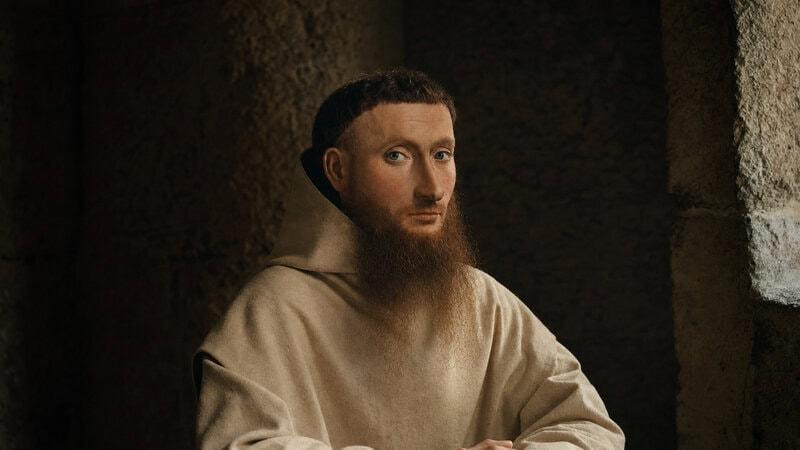

He sat in a stone chamber in Seville, the year 1483, hands folded, heart hammering — a converso merchant who had lit Sabbath candles in secret and whispered the old prayers under his breath while publicly attending Mass. The black-robed inquisitors across the table held what felt like his life in their hands. What he almost certainly did not know, and what five centuries of mythology have buried ever since, is that the moment he genuinely recanted, the execution order — if one was ever even contemplated — would dissolve like smoke. The Spanish Inquisition was not, at its structural core, a killing machine. The archive proves it. But the archive also reveals something more unsettling than the myth: what the institution actually was may be harder to dismiss than what it wasn’t.
The Converso Problem: Why the Inquisition Existed at All

To understand what the Spanish Inquisition actually was, you have to stand in Spain in 1478 and feel the particular anxiety of a kingdom that had spent generations absorbing mass conversions under duress. Tens of thousands of Jews and Muslims had converted to Catholicism — some by genuine conviction, many under enormous social and physical pressure during waves of anti-Jewish violence in 1391 and afterward. These converts, known respectively as conversos and moriscos, occupied an uneasy middle ground: baptized Christians in the eyes of the Church, but perpetual suspects in the eyes of their neighbors. Were they sincere? Or were they lighting candles on Friday night and bowing toward Mecca before dawn?
Pope Sixtus IV’s 1478 authorization gave Ferdinand and Isabella the power to investigate exactly that question. The Inquisition’s original and primary mandate was jurisdictionally narrow: it had authority only over baptized Christians suspected of secretly practicing their former faiths. Unbaptized Jews and Muslims were, by the institution’s own rules, entirely outside its reach. This is a fact almost never included in popular retellings, and it changes the entire shape of the institution. The Spanish Inquisition was not a mechanism for hunting non-Christians. It was a judicial body — with codified rules of evidence, a formal appeals process, and access to legal counsel — designed to police the boundary between sincere conversion and what the Church called heresy. In its procedural ambitions, it resembled a religious court far more than a death squad.
Shadowing the whole apparatus was the concept of limpieza de sangre — purity of blood — a social obsession that would metastasize through Spanish society for centuries. A single conviction did not merely destroy the accused; it attached hereditary stigma to children and grandchildren, poisoning marriage prospects and professional advancement for generations. That radiating contamination, spreading outward from one courtroom verdict, would prove to be among the institution’s most durable and damaging features — and one that required no executions at all to function.
How the Machine Actually Worked

A typical Inquisition case began with a denunciation — a neighbor’s whisper, a servant’s report, a grudge dressed in theological language. The accused was arrested, informed of the charges in general terms, and then walked through a process that was, by the brutal standards of 15th-century justice, deliberately iterative. There were multiple hearings. There were opportunities, offered repeatedly, to confess and reconcile. The theological logic was explicit: a genuinely repentant sinner could not, under Church doctrine, be executed. Death was reserved for the relapsed heretic — the person who had confessed, been reconciled, and was then caught practicing the forbidden faith again. In the Inquisition’s own doctrinal terms, every execution represented an institutional failure, proof that the court had not managed to save the soul before it was too late.
Torture existed in this system, and it would be dishonest to minimize it. But it was regulated in ways that distinguished it from the rougher practices of many secular courts of the same period. Inquisition guidelines prohibited drawing blood, causing permanent injury, or repeating a torture session. Crucially, any confession extracted under physical duress had to be ratified freely by the accused the following day, without coercion, to be considered valid. Those rules were not always followed. But the fact that they existed at all — codified, written down, on the record — tells us something about the institution’s self-understanding as a legal body bound by procedure, rather than a mere engine of repression operating without constraint.
For most of the accused, the outcome was not fire. It was humiliation. The sanbenito — a yellow penitential garment worn publicly — marked the reconciled sinner as someone who had strayed and been brought back. Fines, short imprisonment, and mandatory religious instruction were the mundane penalties that filled the majority of Inquisition dockets. The auto-da-fé, the public act of faith that has become the institution’s signature image in the popular imagination, was far more often a ceremony of reconciliation than of execution. The burnings happened. They were real and they were awful. But they were the exception, not the rhythm of daily proceedings.
Three and a Half Centuries, Thousands of Trials — How Many Actually Died?

Here is where the archive becomes revelatory. The Inquisition kept records with an almost compulsive thoroughness — trial transcripts, denunciations, sentences, appeals, the entire paper machinery of a bureaucratic judicial system. When historians in the latter half of the 20th century gained systematic access to those records, the numbers that emerged were startling. Scholars including Henry Charles Lea and Henry Kamen, along with research teams who worked through roughly 44,000 surviving trial records in major archival projects, arrived at a consensus estimate: somewhere between 3,000 and 5,000 executions across the entire 356-year span of the institution, from its founding in 1478 to its final abolition in 1834. The Encyclopædia Britannica’s overview of the Spanish Inquisition reflects this modern scholarly consensus.
Sit with that figure for a moment. Across three and a half centuries, across all of Spain and its territories, the best scholarly estimate works out to roughly 10 to 15 executions per year on average. That is a grim number. Those were real people — real families shattered, real lives cut short for the content of private belief. Nothing about that corrected figure makes the institution admirable or its victims less real. But it is a universe away from the hundreds of thousands of victims claimed by 18th- and 19th-century Protestant polemicists, whose inflated estimates still circulate with confidence in online comment sections and popular histories.
The profile of victims also shifted across the institution’s long life. Conversos were the primary target in the early decades. By the early 1500s, humanist and Erasmian thinkers came under pressure — intellectuals whose ideas about Church reform made the authorities nervous. After the Reformation took hold in northern Europe, suspected Lutherans became a focus. The Inquisition was not a static machine; it turned its attention wherever the theological threat of the moment seemed sharpest, which is why understanding the full arc of its history requires tracking those shifting targets decade by decade rather than treating it as a single, monolithic campaign.
Where the Monster Myth Came From

The gap between the archive’s numbers and popular imagination did not open by accident. It was engineered. In the 16th and 17th centuries, Dutch and English Protestant propagandists — locked in existential military and commercial conflict with Catholic Spain — seized on every Inquisition atrocity they could document and invented or wildly embellished a great many more. The goal was not historical accuracy. It was delegitimization: of Spain as a colonial and military power, of Catholicism as a civilized faith. Historians call this sustained campaign La Leyenda Negra — the Black Legend — and its effects on European and American perception of Spain persisted for centuries.
The single most influential number in the mythology came from Juan Antonio Llorente, a former Inquisition secretary who collaborated with Napoleon’s occupying government and published a history of the Inquisition in 1817 claiming roughly 341,000 total victims. That figure was not derived from systematic archival research. Llorente later acknowledged it was extrapolated from fragmentary data using assumptions that did not withstand scrutiny. But the number lodged itself in the popular imagination with extraordinary tenacity, recycled through 19th-century Protestant histories, Gothic novels, and eventually the visual vocabulary of cinema — iron maidens, robed fanatics, and walls of orange flame.
Monty Python’s famous sketch — “Nobody expects the Spanish Inquisition!” — is the cultural capstone of this tradition: so perfectly constructed, so deeply embedded in shared reference, that millions of people can recite its punchline while having genuinely no idea what the institution actually did, how it operated, or how many people it killed. The joke is five centuries of propaganda compressed into a catchphrase. It is funny precisely because the underlying myth feels solid. That solidity is the problem.
The Damage That Isn’t About Body Counts

Correcting the death toll is not the same as rehabilitating the institution. Three to five thousand executions is not a small number, and every one of those deaths represents a moral catastrophe — a human being killed for the content of their private belief. The Inquisition deserves its dark reputation. It simply deserves an accurate one, because the accurate version reveals harms that the sensationalized version actually obscures.
The Index of Forbidden Books suppressed humanist and scientific thought in Spain precisely during the decades when the Renaissance was remaking intellectual life elsewhere in Europe. Works that circulated freely in Italy, France, and the Dutch Republic were confiscated in Castile. The cumulative effect on Spanish intellectual culture — on its universities, its publishing houses, its capacity to participate in the emerging scientific revolution — was profound and measurable in the long arc of Spanish intellectual history.
And then there was the social terror, which required no executions at all to function. The threat of denunciation; the public shame of the sanbenito hung in the local church for generations as a permanent record of family disgrace; the hereditary stigma that could destroy a grandchild’s marriage prospects a hundred years after the original conviction — these were the instruments that held entire communities in a state of wary, exhausting self-censorship. The Inquisition’s most powerful tool was not the flame. It was the neighbor who might be watching, and the knowledge that even private devotion could become evidence.
It is also worth noting what the Inquisition itself did not technically carry out: the expulsion of the Jews. The Alhambra Decree of 1492, which forced practicing Jews who refused baptism to leave Spain, was a royal act signed by Ferdinand and Isabella — not an Inquisitorial sentence. The distinction is legally real and historically important. It does not make 1492 any less catastrophic for the hundreds of thousands of people it displaced. But it illustrates how the full horror of this period in Spanish history was distributed across multiple institutions and royal decisions — and how flattening all of it onto the Inquisition alone distorts the picture in ways that ultimately let other actors off the hook. For readers who want to go deeper into this layered history, Joseph Pérez’s scholarly study The Spanish Inquisition: A History remains one of the most rigorous and accessible accounts available.
Why Getting This Right Actually Matters

Historical accuracy about the Spanish Inquisition is not apologetics. It is a necessary corrective to a body of propaganda created quite deliberately to serve geopolitical agendas — and repeating inflated numbers uncritically means staying inside someone else’s 500-year-old information war. The Black Legend was a weapon. Wielding it today, even unintentionally, does not serve truth or justice for the institution’s actual victims.
But the corrected picture also forces an uncomfortable question: if the Inquisition was not primarily a killing machine, what kind of machine was it? The answer that emerges from the archive is, in some ways, more instructive than the myth. It was a machine for producing fear, shame, conformity, and silence — one that achieved enormous social control while keeping its actual body count, relative to the mythology, relatively contained. That is not a reassuring lesson. It is, if anything, a more troubling one. It suggests that the most durable instruments of repression do not necessarily announce themselves through spectacular violence. They operate through surveillance, stigma, bureaucratic procedure, and the knowledge that the court is always potentially watching.
That lesson does not belong only to the 15th century.
Circle back, then, to the converso merchant in that stone chamber in Seville in 1483. The most likely outcome of his case — if the archive’s proportions hold — is that he walked out of that room alive. Perhaps wearing a yellow garment that announced his transgression to every person he passed on the street. Perhaps with a fine that strained his household accounts for years. Certainly with a mark on his family’s name that his children would carry long after he was gone. He was not burned. He was, in the language of the institution, reconciled. And that, the meticulous records tell us, was the far more common story — a story of slow, grinding, reputational ruin that is harder to dramatize than fire, and in many ways harder to forget.

 English
 Arabic
 French
 Spanish
 Portuguese
 Deutsch
 Turkish
 Dutch
Dutch
 Italiano
 Romaian
 Portuguese (Brazil)
 Greek
Greek