



On the morning of July 24, 1911, an eleven-year-old boy named Pablito Richarte took the hand of a Yale lecturer and walked him up a fog-drenched ridge in the Peruvian Andes — leading him, with the patience of someone showing a stranger around his own neighborhood, to the stone terraces where his family grew their crops.
The Boy Who Led a Yale Professor Up a Mountain

Hiram Bingham III was not an ordinary visitor. A charismatic Yale historian and lecturer with a taste for adventure and the institutional backing to pursue it, Bingham had come to Peru with the Yale Peruvian Expedition — partly supported by National Geographic — on a systematic search for significant Inca sites. He hired a local farmer named Melchor Arteaga to guide him across the Urubamba River and up a ridge so steep and cloud-soaked that Bingham later wrote he half-expected the whole enterprise to come to nothing. Arteaga then handed him off to Pablito Richarte, who led the way without ceremony.
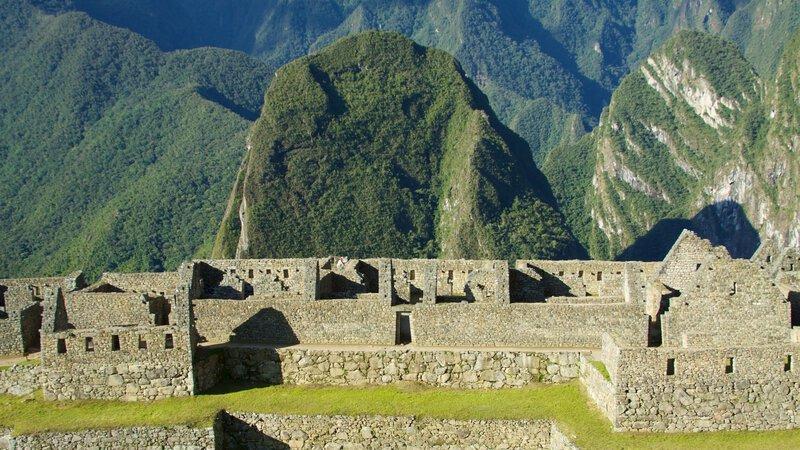
What Bingham found when the boy parted the curtain of jungle growth was something that stopped him mid-stride: stone terraces materializing from the mist, fitted walls rising in courses so precise they appeared machine-made, temples and plazas and stairways emerging from centuries of encroaching green. He reached for his notebook. He did not yet know the full significance of what he was seeing, but he understood it was extraordinary.
The word discovery, however, was already a distortion before his pencil touched the page. Pablito Richarte’s family lived on those terraces. They farmed them. Other families — the Álvarez family among them — had been cultivating the site for decades, possibly generations, tending the ancient agricultural platforms as practical, productive land. The site had a name: Machu Picchu, meaning “Old Peak” in Quechua. The communities of the Sacred Valley had never stopped using it. What Bingham experienced that July morning was a genuine encounter with something magnificent — but it was a Western introduction, not a discovery. The Andean world had quietly kept this place alive all along.
Stone City in the Sky: What Machu Picchu Actually Is

Machu Picchu sits at 2,430 meters — roughly 7,970 feet — above sea level, perched on a narrow mountain ridge in Peru’s Eastern Cordillera with the Urubamba River coiling far below on three sides. A tropical mountain forest swallows the stonework in layers of green; cloud and canyon conspire to make the city feel suspended between earth and sky, and on certain mornings the mist rolls in so thick that the terraces appear to float.
The citadel comprises roughly 200 structures — temples, residences, ritual platforms, and agricultural terraces — constructed without mortar. The stones were cut and fitted so precisely that a knife blade cannot slide between them. That joinery has survived earthquakes that have leveled more modern construction nearby, suggesting the Inca understood something about flexible, interlocking architecture that structural engineers still study today.
The central question — what, exactly, was Machu Picchu for — has driven scholarly debate for more than a century. Was it a royal estate? A religious sanctuary? An astronomical observatory? Most archaeologists now believe the answer is probably all three simultaneously, layered together in the way Inca society blended the political, the sacred, and the cosmological into a single, indivisible worldview. That the question remains genuinely open, even after a century of excavation, is part of what makes this one of the most intellectually alive archaeological sites on earth.
The Empire That Built It — and the Collapse That Preserved It

To understand Machu Picchu’s creation, you have to understand the ruler most historians credit with ordering it built. Pachacuti — whose name translates roughly as “He Who Shakes the Earth” — became Sapa Inca around 1438 and proceeded to transform what had been a modest regional chiefdom into Tawantinsuyu, the largest empire in pre-Columbian America. Stretching approximately 4,000 miles along the spine of the Andes, from present-day Colombia south through Chile and Argentina, the Inca Empire represented a feat of administrative and engineering ambition without parallel in the Western Hemisphere.
Machu Picchu is believed to have been constructed shortly after Pachacuti’s rise to power, most likely during the 1450s and 1460s. A remote mountain ridge above a river canyon might seem an unlikely location for an imperial showpiece, but for the Inca it made perfect sense — spiritually, strategically, and aesthetically. Mountains were sacred beings. Rivers were sacred veins. A city built where both converged, wrapped in cloud and accessible only by deliberately engineered paths, announced power in the language the Inca spoke most fluently: stone and landscape.
When Spanish conquistadors shattered the Inca Empire in the 1530s, Machu Picchu was abandoned by its elite inhabitants — the priests, the chosen women, the royal retinue who had given the place its ceremonial life. Crucially, the Spanish never found it. They never looted it, never converted its temples into churches, never dismantled its walls for building material, as they did in Cusco and dozens of other Inca sites. The stones stayed exactly where Pachacuti’s engineers had placed them, slowly draped in forest.
The surrounding Indigenous communities did not forget the ridge existed. They farmed its terraces, walked its paths, and passed the knowledge down through generations of colonial rule. The site was “lost” only to European cartographers and institutions — a distinction that matters enormously when we consider what happened in 1911.
Hiram Bingham and the Mythology of Discovery

None of this is meant to dismiss Bingham entirely. His expedition was systematic and serious, his photographic documentation genuinely valuable, and his work brought Machu Picchu to a global audience that would otherwise have remained unaware of it. National Geographic’s coverage of the 1911 expedition reached millions of readers and began the process of making Machu Picchu an internationally recognized landmark. That has real, lasting consequences.
But the full picture is considerably more complicated. Peruvian researcher Agustín Lizárraga had visited the site in 1902 — nine years before Bingham — and scratched his name into a temple wall, a calling card that Bingham noticed and later downplayed in his accounts. Local landowner Anacleto Álvarez had reportedly visited before that. Bingham was not first. He was simply the one with the institutional backing, the publishing connections, and the cultural infrastructure to make his version of the story the version the world received.
More damaging still was what Bingham took with him when he left. Thousands of artifacts — ceramics, human skeletal remains, bronze objects, personal ornaments — were shipped to Yale University, a removal that Peru contested for decades. The dispute became a formal diplomatic and legal battle that Peru finally won: Yale returned the collection to Cusco in 2012, where it is now housed and studied on Peruvian soil.
The framing used by Western media — Bingham “discovering” a “lost city” — did something subtler but equally significant: it erased the continuous Andean presence from the story entirely. If Machu Picchu was lost, then the Quechua-speaking farmers who lived and worked there simply did not count as knowers. Historians of colonialism have identified this pattern across centuries of European encounter with non-European places, and Machu Picchu is one of its clearest examples.
‘We Never Lost It’: The Indigenous Keepers of the Site

The families that Bingham encountered on the ridge in 1911 — the Richartes, the Álvarez family — were not curious passersby. They were essential. Without their guidance, without Pablito’s patient walk up the mountain path, Bingham would have seen nothing. The explorer’s famous encounter was, at its most literal level, an act of local generosity toward a foreigner who did not know the way.
Behind those families stretched an unbroken line of Quechua-speaking communities who had maintained knowledge of the site across four centuries of colonial rule. They had watched the Spanish empire rise and fall. They had navigated the Peruvian Republic. They had continued farming the terraces that Pachacuti’s workers carved from the mountainside. The knowledge never disappeared — it simply existed in a form that European institutions did not recognize as knowledge.
Modern Indigenous scholars and Peruvian historians have pushed back forcefully against the discovery narrative, arguing that framing 1911 as the moment Machu Picchu entered history is a form of epistemic erasure — the implication that knowledge only becomes real when recorded by Western institutions. The Inca built this city. Quechua communities maintained it. And an eleven-year-old boy named Pablito showed the way, through the intermediary of a Yale professor who received most of the credit.
Peru designated Machu Picchu a UNESCO World Heritage Site in 1983, and in recent decades has increasingly centered Indigenous heritage and Quechua cultural continuity in how the site is officially narrated and managed — a shift that reflects a broader global reckoning with whose history gets told, and how.
What Archaeology Has Learned — and Still Doesn’t Know

A century of excavation, and more recently LiDAR surveys and isotopic analysis of skeletal remains, has dramatically complicated — and enriched — our understanding of who lived at Machu Picchu and why. Isotopic studies suggest that individuals buried at the site originated from across the vast Inca Empire: from the coast, from the highlands, from distant regions. This points toward Machu Picchu functioning as something more cosmopolitan than a remote elite retreat — a ceremonial and administrative hub drawing people from the empire’s far reaches.
The astronomical intelligence embedded in the architecture continues to astonish researchers. The Intihuatana stone — whose name translates loosely as “hitching post of the sun” — tracks solar events with notable precision. The Temple of the Sun is oriented so that at the June solstice sunrise, light enters through a specific window and falls on a specific stone, a calendrical alignment that required both deep astronomical knowledge and extraordinary construction skill. The city, it seems, was also a clock, a calendar, and a statement about the Inca relationship to cosmic time.
The most urgent concerns today are not scholarly but physical. Overtourism, landslides, and climate-driven erosion are placing increasing pressure on stonework that has survived half a millennium. Peru has implemented visitor caps and ongoing conservation work continues to reveal new details about Inca engineering — including sophisticated drainage systems designed to manage the torrential rainfall of the Andean cloud forest — that help modern teams protect what remains. How to balance global access with long-term preservation is now one of the defining management challenges facing the site.
The Deeper Mystery: Reading a City Built in Stone and Sky
The ongoing uncertainty about Machu Picchu’s purpose is itself a profound lesson in the limits of how we understand the past. The Inca left no written records in the European sense; they encoded information in khipus — knotted cords — and in the architecture of their buildings, the alignment of their temples, the deliberate placement of their stones. Decoding the city means learning to read a different kind of text, one in which stone and sky and landscape function as language, and accepting that some of what was once known may survive now only in the oral traditions of the communities who have been there all along.
The truer story of Machu Picchu — Pachacuti’s imperial vision, the collapse of Tawantinsuyu, four centuries of Indigenous communities quietly tending the terraces through colonial rule, the boy who walked a Yale professor to the top of a mountain — is far more extraordinary than any lone-explorer myth. It is a story about continuity and resilience, about the way knowledge survives even when the institutions that produced it are violently dismantled. It is, at its heart, a story about what it means to remember.
Go back to that July morning in 1911. The mist over the terraces. An eleven-year-old pointing the way up a path his family had walked for decades. What Bingham saw when the green parted was real, and overwhelming, and it deserved every photograph he took. But it was not lost. It had simply been waiting — tended by people who knew exactly where it was — for the rest of the world to catch up.

 English
 French
 Spanish
 Portuguese
 Deutsch
 Turkish
 Dutch
Dutch
 Italiano
 Russian
 Romaian
 Portuguese (Brazil)
 Greek
Greek