


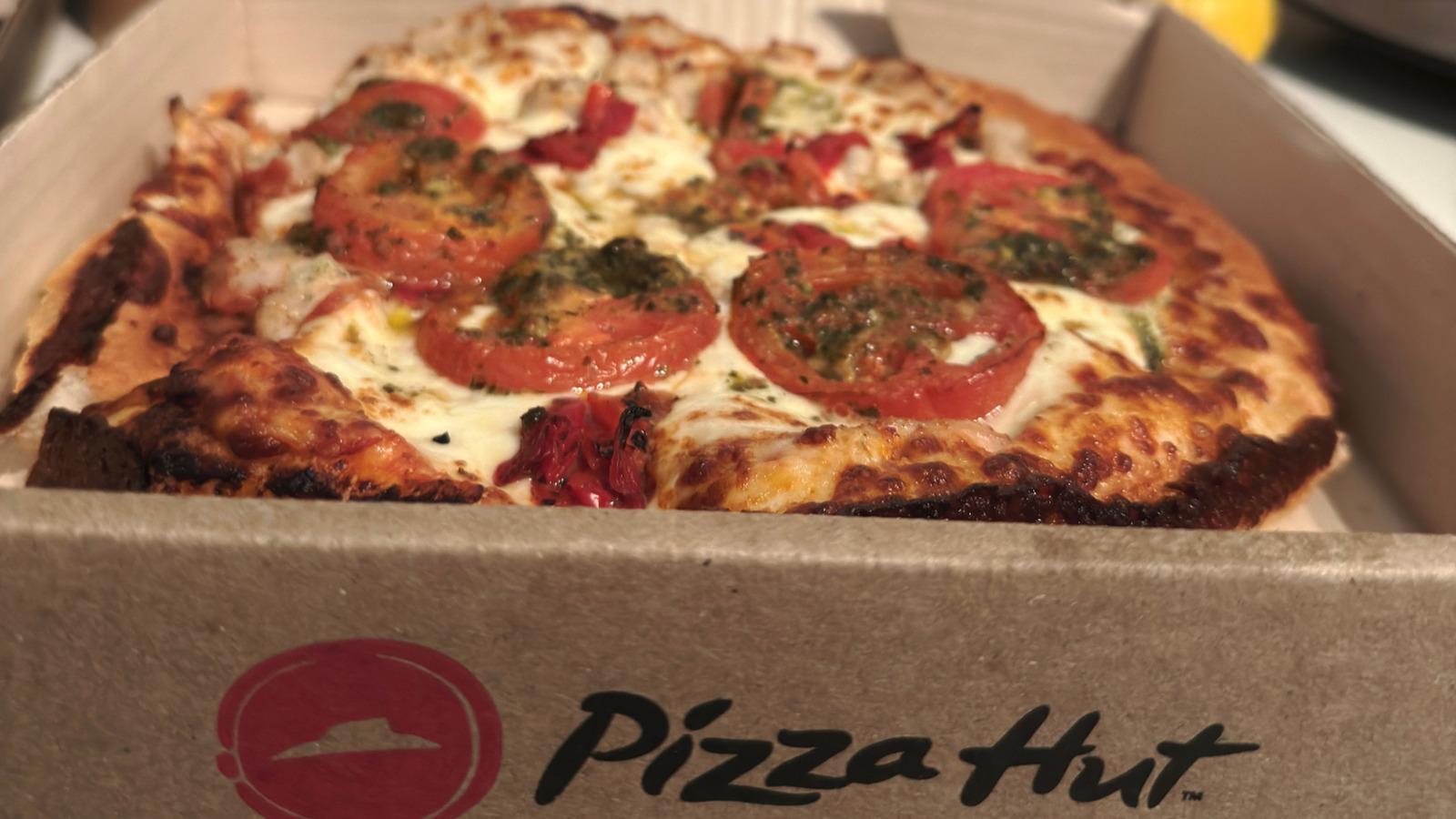
Pizza Hut Does This With Its Leftovers
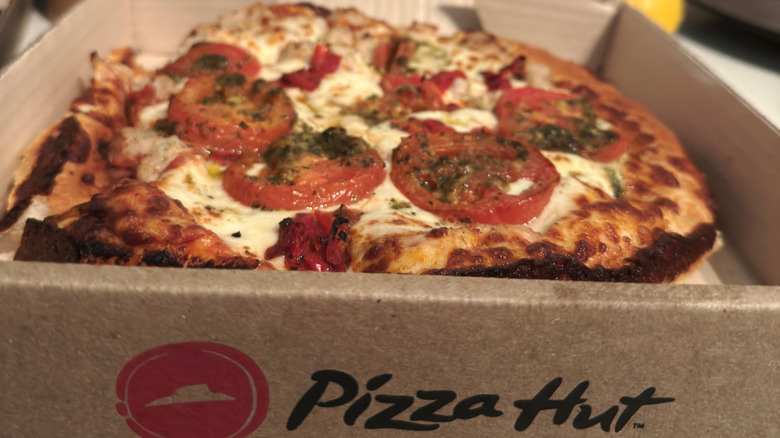
Pascal Huot/Shutterstock
When thinking of leftover pizza, reheating slices remaining from Friday night's dinner might come to mind. For restaurant chains, though, leftover food is a significant issue. Large-scale food service operators often face having prepared-but-unsold food, and each chain handles its leftovers differently. At Pizza Hut, a corporate initiative introduced decades ago has hit notable milestones in diverting food waste from landfills to people who benefit from it.
That's through Pizza Hut's Harvest Program, which the chain launched in 1992. Through the Harvest Program, Pizza Hut donates food that's perfectly good but hasn't been or can't be sold — not half-eaten pizzas that restaurant customers leave behind, but pizzas made with errors, takeout orders that a customer never picked up, and prepared foods nearing the end of their shelf life. These food items are distributed to local charities and food rescue organizations.
At the Harvest Program's 25th anniversary in 2017, Pizza Hut announced it had donated over 100 million meals through the program, per a press release. (That's an average of slightly fewer than 11,000 meals a day.) Pizza Hut's parent company, Yum Brands, now administers the Harvest Program, and by 2024 had donated a total of 215 million pounds of food across various brands worldwide.
Pizza Hut partners with Food Donation Connection to distribute the surplus meals
The realities of food supply and demand in the United States are hard to ignore. The USDA estimates that around 30% to 40% of the country's food supply is wasted. Consider, too, that in 2024 nearly 48 million Americans lived in food-insecure households according to the USDA (that is, households that did not always have access to or ability to buy enough nutritious food to feed the entire household). Still, many food companies don't donate for a variety of reasons ranging from transportation challenges to legal liability.
Pizza Hut and Yum Brands have a system to overcome those challenges, and an important corporate partner. Yum Brands' restaurants, which also include KFC and Taco Bell, pack up unsold food in airtight bags and freeze it until it can be picked up by a local food organization. That coordination isn't handled by Yum Brands itself, but instead by a partner called Food Donation Connection, founded in 1992 by a former Pizza Hut executive. Food Donation Connection also works with multiple other well-known food chains such as Whole Foods, Olive Garden, Chipotle, Chick-fil-A, and Wawa.
Food Donation Connection estimates that it distributes, on average, a little more than two meals per second. Its most recent statistics available, from 2021, show the company works with more than 14,000 food service locations (including restaurants, hotels, airports, hospitals, and other establishments) across 1,300 businesses. Food Donation Connection isn't a nonprofit; instead, it's funded by the donor companies.

 Arabic
 French
 Spanish
 Portuguese
 Deutsch
 Turkish
 Dutch
Dutch
 Italiano
 Russian
 Romaian
 Portuguese (Brazil)
 Greek
Greek