


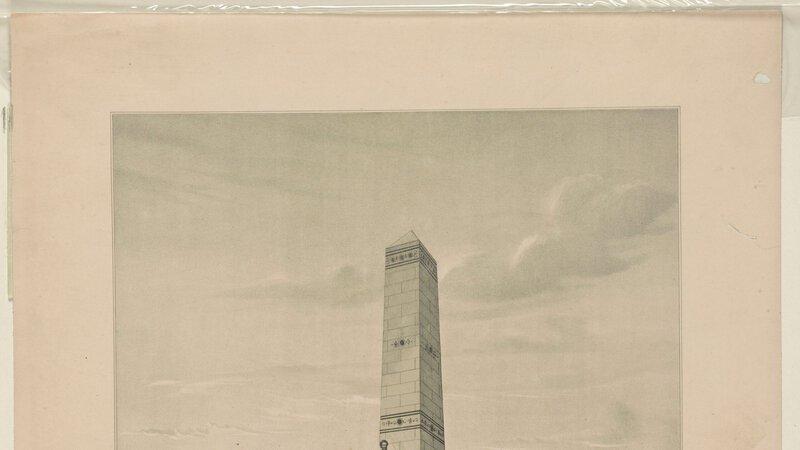

On the night of November 7, 1876, two men stood inside the Lincoln Tomb in Springfield, Illinois, a crowbar already working against the white marble sarcophagus that held the body of the assassinated president — and they came within minutes of pulling off one of the most audacious crimes in American history.
The Night They Almost Took Lincoln

The date had been chosen with cold precision. It was Election Night, the country riveted by the fiercely contested Hayes-Tilden presidential race, and the gang calculated that crowds gathering to hear returns would mask any unusual noise near Oak Ridge Cemetery. A third man waited outside with horses. The plan was brutally simple: remove the body, hide it in the Indiana sand dunes, and hold it hostage until the federal government agreed to release a prize prisoner and hand over a reported $200,000 in cash — a sum worth several million dollars by today’s measure. Eleven years after his assassination, Abraham Lincoln’s corpse had become, in the cold arithmetic of the criminal underworld, a bargaining chip.
The ringleader was a Chicago counterfeiting boss known as Big Jim Kinealy. This was not legend or barroom rumor. Secret Service files, court records, and the sworn testimony of a planted informant documented every step of what happened that night, making it one of the most thoroughly verified criminal conspiracies of the Gilded Age.
A Long Journey to a Permanent Home

To understand what Kinealy’s men were reaching for, it helps to trace how Lincoln came to rest in Springfield at all. After his assassination in April 1865, Lincoln’s body traveled more than 1,600 miles by funeral train through mourning cities — Baltimore, Philadelphia, New York, Cleveland, Chicago — before arriving in Illinois. Crowds lined the tracks at every stop. The nation conducted a kind of extended collective grief, stretched across days and geography.
When the body finally reached Springfield, it was not placed immediately in a permanent home. Lincoln and his son Willie, who had died in the White House in 1862, were placed in a temporary vault at Oak Ridge Cemetery while the permanent monument was still being designed and constructed. The Lincoln Tomb, anchored by a 117-foot granite obelisk, was completed in 1874. It became the final resting place not only of the president but of Mary Todd Lincoln and three of their sons — a family monument wrapped inside a national shrine.
But in the 1870s, the tomb was nowhere near as secure as its granite bulk suggested. A single caretaker managed the grounds. Lighting was minimal. The public could walk the cemetery freely, and the tomb attracted a steady stream of visitors who came and went with little oversight. For a man with Kinealy’s calculating mind, those conditions looked less like a memorial and more like an opportunity.
The Counterfeiter’s Calculus

The scheme had its origins in a prison cell. In 1875, federal agents arrested Benjamin Boyd, widely considered the finest counterfeit-plate engraver in the American underworld. Boyd’s capture was a genuine catastrophe for Kinealy’s operation — without a skilled engraver, the plates were worthless and the money stopped flowing. Boyd was sentenced to ten years in Joliet Prison, and Kinealy needed him back.
The plan that emerged was ghoulish in its logic: steal Lincoln’s corpse, conceal it in the Indiana sand dunes, and send word to Washington. The ransom demand would be Boyd’s release, plus the cash payment. Kinealy would remain at a careful distance while two men from his circle, Terrence Mullen and Jack Hughes, carried out the physical work at the tomb.
Body-snatching was not an entirely alien concept to the Gilded Age public. Medical grave-robbing — the theft of fresh corpses for anatomy study — was common enough that newspapers covered it regularly. Kinealy was proposing a more spectacular variation on a crime that already lived in the public imagination. The audacity was in the target, not the method.
The Secret Service Plants a Man Inside

What Kinealy did not know was that a small-time criminal named Lewis Swegles had been deliberately inserted into his gang by Secret Service agent Patrick Tyrrell. Swegles was an informant, and his infiltration of the conspiracy represents one of the earliest documented undercover operations in the history of American federal law enforcement. He earned the gang’s trust, attended their planning sessions, and relayed details back to Tyrrell with careful regularity.
When the date was set, Tyrrell assembled a small team of Secret Service agents and Pinkerton detectives and positioned them inside the Lincoln Tomb itself, hidden in the darkness, waiting. The plan called for Swegles to accompany Mullen and Hughes to the tomb, then slip away under a pretext to signal the agents. It was a tight, well-designed trap — except that it nearly fell apart in execution.
Inside the Tomb: How Close They Came

Mullen and Hughes broke the padlock on the tomb’s entrance and moved inside. They located Lincoln’s white marble sarcophagus, worked to cut through the lead-lined case, and succeeded in partially dislodging the coffin. They were making real progress. By investigators’ later reconstruction, had they continued undisturbed for just a few more minutes, they would have extracted the body and been gone into the Illinois night.
What stopped them was almost farcical. One of the hidden agents, moving in the pitch dark of the tomb’s interior, accidentally discharged his weapon. The gunshot cracked through the stone chamber. Mullen and Hughes bolted, sprinting out of the monument and disappearing into the darkness of Oak Ridge Cemetery.
The agents rushed out after them and found nothing. The would-be thieves had vanished into the night. Swegles, playing his role faithfully to the end, had already slipped away to signal the waiting men, and his information ultimately led to Mullen and Hughes being tracked down and arrested days later at a Chicago saloon. Examiners confirmed that the coffin had been moved. The attempt had been real, and it had come terrifyingly close to succeeding.
The Aftermath: A Law With a Gap, and a Tomb With a Secret

The legal resolution was nearly as strange as the crime itself. Illinois, it turned out, had no statute against stealing a corpse — the dead were not property that could be stolen in the traditional sense. Mullen and Hughes were ultimately convicted only of conspiring to steal the coffin, which was treated as personal property, and each received a sentence of just one year in prison. For nearly snatching the body of an assassinated president, they served twelve months.
Lincoln’s custodians drew their own conclusions about what needed to change. In the months and years that followed, the coffin was quietly moved to a concealed location within the tomb’s basement, its exact position largely unannounced. For years, visitors paid their respects above a space that no longer held what they thought it held, and almost nobody knew. The secrecy was its own form of protection.
The final chapter came in 1901. According to the documented timeline of the tomb’s history, Lincoln’s remains were re-interred in a manner designed to make any future theft essentially impossible. The coffin was encased in a cage of steel rebar and buried beneath ten feet of poured concrete. Before the vault was sealed, more than two dozen witnesses gathered to view the open coffin and confirm that the body inside was indeed Abraham Lincoln — looking upon the preserved face of the president some thirty-six years after his death. Then the concrete was poured, and the question of security was answered permanently.
What the Lincoln Tomb Holds Today
The Lincoln Tomb at Oak Ridge Cemetery in Springfield, Illinois, draws hundreds of thousands of visitors each year, making it one of the most visited presidential burial sites in the country. The 117-foot granite obelisk rises above the treeline of the surrounding cemetery. At the monument’s entrance, a bronze bust of Lincoln’s face has been worn smooth and bright by generations of visitors who rub its nose for luck — a peculiar, affectionate tradition that speaks to how Americans have always related to the man. Inside the quiet burial chamber, Mary Todd Lincoln and three of the Lincoln sons rest alongside the president, the family gathered at last in permanent stone.
The structure is a designated National Historic Landmark, maintained by the Illinois Department of Natural Resources and protected in ways the single caretaker of the 1870s could not have imagined. The story of Election Night 1876 — the broken padlock, the crowbar, the accidental gunshot, the men vanishing into the dark — is part of the site’s official history, told to visitors who are routinely startled to learn that any of it happened at all.
Perhaps it shouldn’t be surprising. The attempt on Lincoln’s grave is, at its core, a story about value — about how profoundly one man can matter to a nation, and how that meaning can be weaponized by those willing to treat history as leverage. The counterfeiters who nearly stole Lincoln’s body understood, in their mercenary way, that what lay inside that marble sarcophagus was worth more than money. The republic understood it too, which is why Lincoln now rests beneath steel and concrete, beyond the reach of anyone who might try again.

 English
 Arabic
 French
 Spanish
 Portuguese
 Deutsch
 Turkish
 Dutch
Dutch
 Italiano
 Romaian
 Portuguese (Brazil)
 Greek
Greek