


Ink N Propeller/Shutterstock
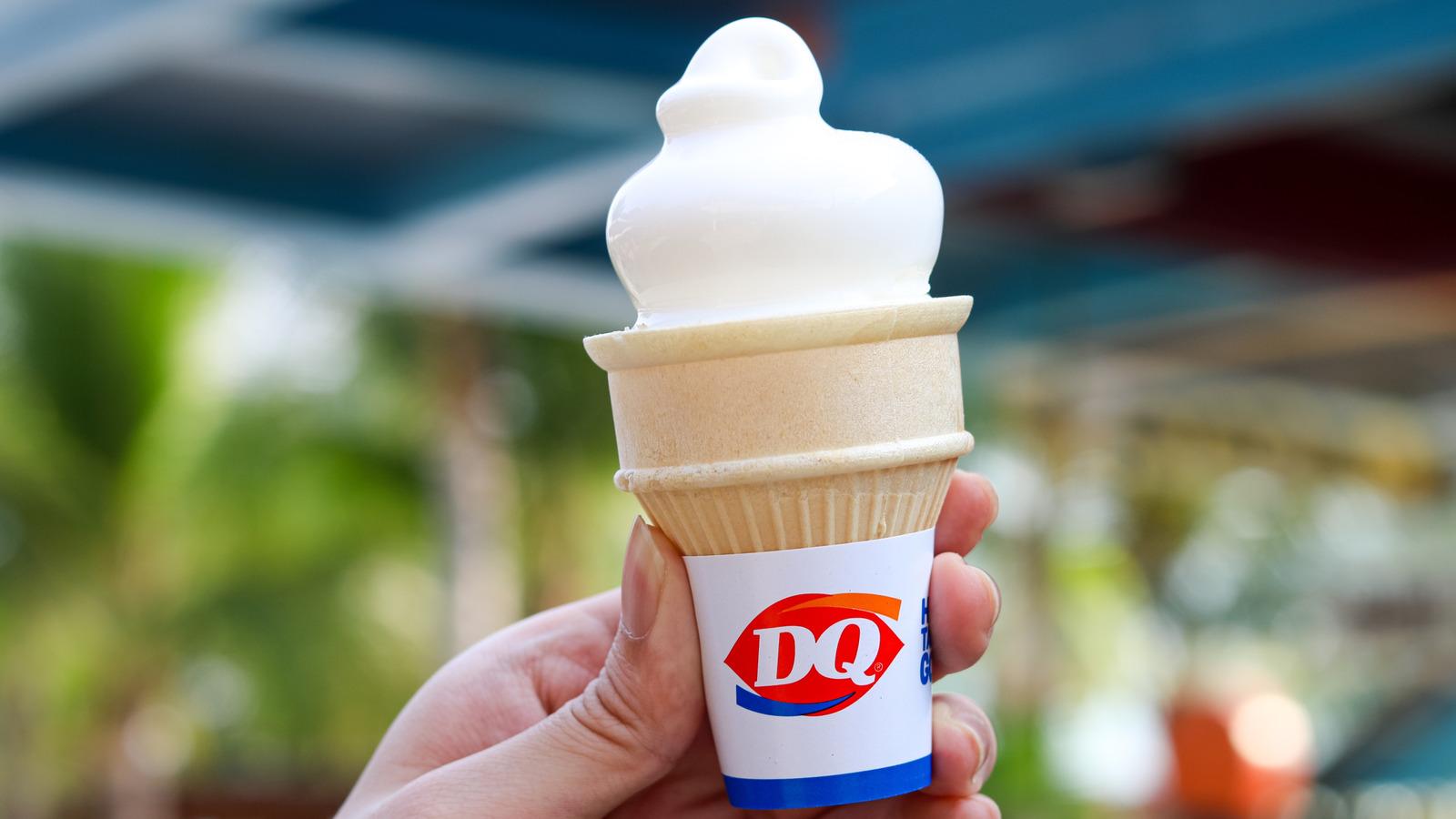
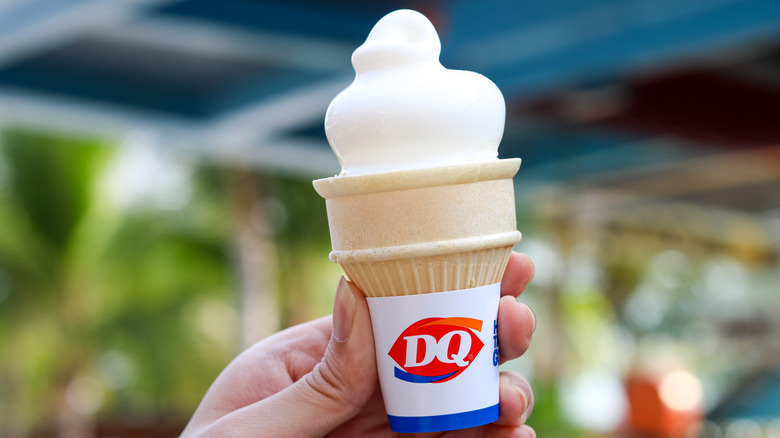
When most people think about frozen dairy desserts, they probably imagine ice cream. Or do they? Is what we generally think of as ice cream really ice cream? According to the U.S. Department of Agriculture (USDA), not always. By definition, ice cream must be "constituted of not less than 10% milkfat." Any percentage of milkfat below that is not, strictly speaking, ice cream. This means that one little-known fact about Dairy Queen is that it does not serve real ice cream.
How is that possible? Dairy Queen's ice cream is what is commonly called soft-serve ice cream or just soft serve. The difference between soft serve and real ice cream is twofold. First, soft serve typically contains between 3% and 6% milkfat, thus defying the USDA's definition of ice cream. This is one reason for the lighter texture. It also contains more overrun, the amount of air that is mixed into the ice cream as it freezes. More overrun means a softer, fluffier texture. Soft-serve ice cream ranges between 70% and 100% overrun. Premium hard ice cream sold in stores is between 40% and 60%. In contrast, gelato has an overrun of 25% to 35%, which is why gelato is denser and creamier than ice cream.
How do other chains compare?
Kei Shooting/Shutterstock
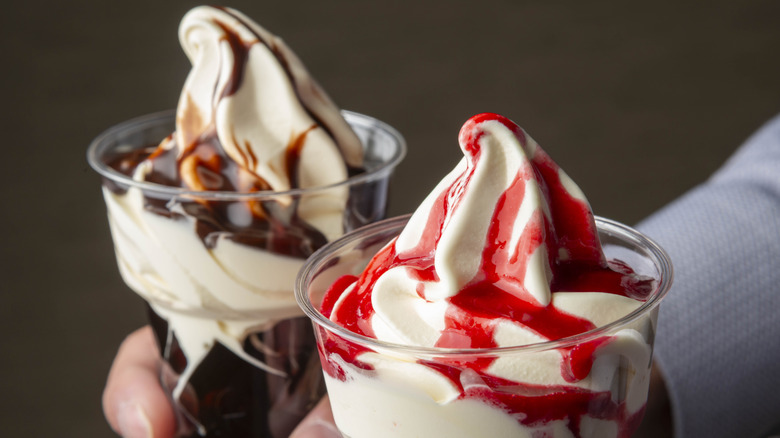
The core ingredients in soft serve are the same as you would find in hard ice cream: milkfat, milk solids, and sugar. But due to the USDA stipulation about milkfat percentage, many restaurants have to call their frozen dairy dessert soft serve rather than ice cream. Like Dairy Queen, McDonald's soft serve also lacks the proper amount of milkfat to be called ice cream.
What Culver's serves may look like the same soft-serve ice cream you get from other fast-food chains, but it is something different entirely: frozen custard. Frozen custard has the same core ingredients as soft serve and hard ice cream, and, like true ice cream, contains 10% or more milkfat. What sets it apart is the addition of at least 1.4% egg yolk solids. (Less than that and it is still considered ice cream.) Overrun is also much lower than with soft serve, typically between 15% and 30%, placing it closer to gelato in density.

 English
 Arabic
 French
 Spanish
 Portuguese
 Deutsch
 Turkish
 Dutch
Dutch
 Russian
 Romaian
 Portuguese (Brazil)
 Greek
Greek