


Drazen Zigic/Getty Images
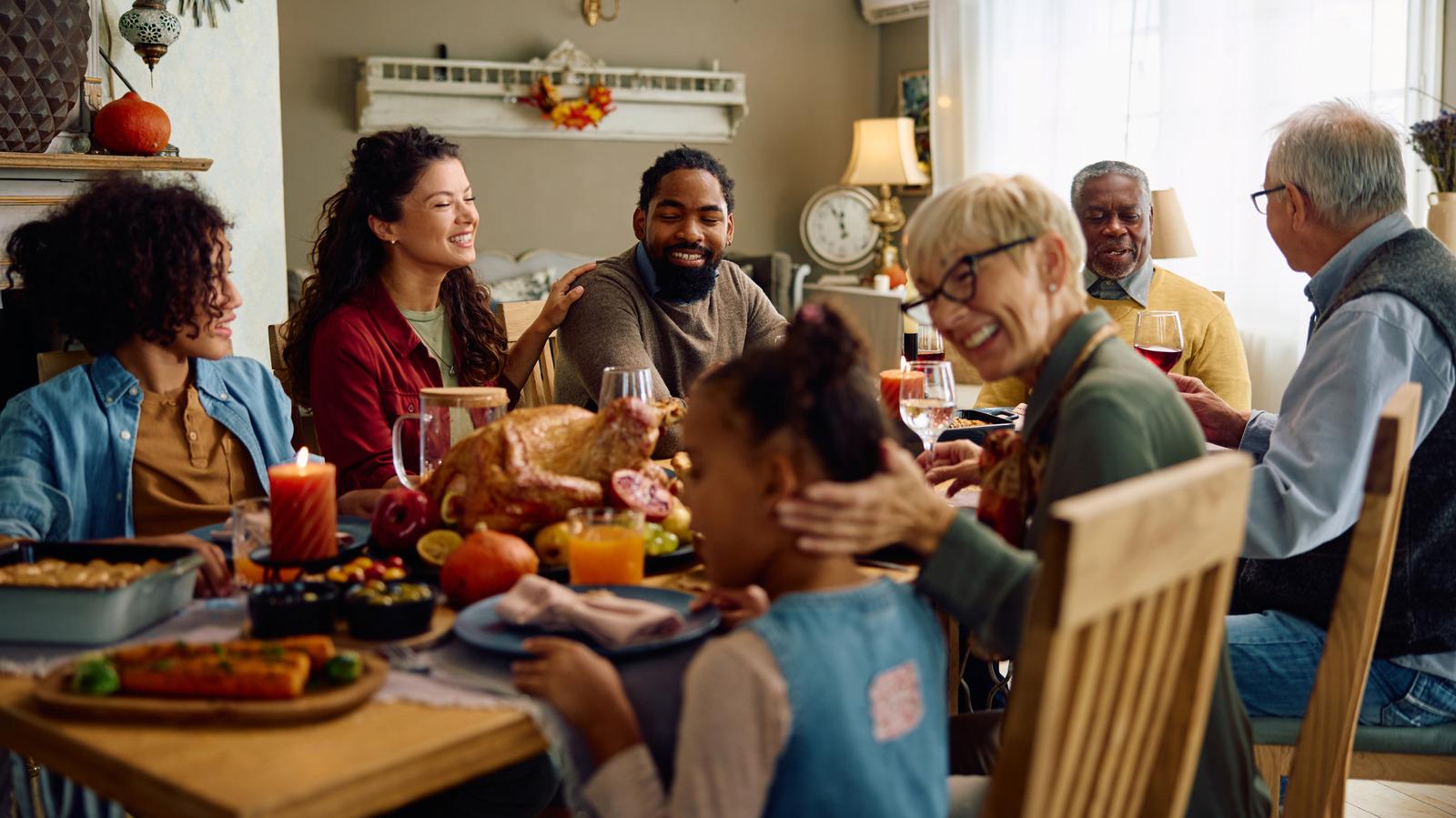
From "Titanic" to "Pretty Woman" to "The Princess Diaries," there are plenty of movies that have made folks sweat when they imagine joining a formal dinner party. Choosing the right fork, holding the wine glass properly, and placing the napkin in a polite position are just a few of the many etiquette rules that have become rarer. Nowadays, many people make a big mountain of food on their plate, plop down on the couch in front of the TV, and go to town like happy pigs at the feeding trough.
There's definitely a hedonistic quality to this ritual. It's fun, and it helps people shift into a lower gear after a stressful workday. However, by doing this, we've also lost valuable things, such as meaningful discussions at the dinner table. It's hard to imagine going back to a less casual way of enjoying dinner, but some Americans still hold on tightly to their family's longstanding traditions.
It's true, some rules do seem needlessly strict looking back, but many of them helped children form good manners, social skills, personal hygiene, and more. What were dinners like in America a couple of generations ago? Read on to travel to the past and imagine what it would be like if your own family still followed the most common old-school dining rules.
1. Always wash your hands before sitting at the dinner table

PeopleImages/Shutterstock
Looking back even just 20 years ago, before smartphones swept the nation, kids used to spend a lot more time outside. As a result, they got up to all kinds of messy shenanigans. Rolling around in the dirt may be good for your immune system, but sharing a meal with someone caked in mud is far from appetizing. This is why washing your hands before sitting down at the table was a non-negotiable in many households. Parents and grandparents would quiz the kids and even perform a visual examination to verify they weren't fibbing before serving the meal.
For folks who still live in rural areas and do a lot of outdoor work, this rule still applies. In fact, farmers often wash up to their elbows to ensure nothing on the table will get grimy. Not only does this rule demonstrate respect for the host or parent, but it also ensures that the meal is as tasty as possible. Who wants to dig into a juicy burger and taste dirt anyway?
2. Don't rest your elbows on the table

Katarzynabialasiewicz/Getty Images
Nowadays, most Americans haven't been in a rigid environment where posture is monitored and corrected while eating. We can put our elbows on the table, throw an arm around the back of the chair, rest our heads while waiting or taking a break from eating, and more. The vibe is totally laid-back in most spaces.
If you ask your parents or grandparents about not being allowed to put their elbows on the table, they may have plenty of stories to share. This rule used to be much more common because it tied into showing respect. It's helpful to consider the context of family sizes and even dining room sizes. If you look back at the 1800s, women tended to have around seven kids. If elbows were all over the place, fights were likely to break out because the tables were cramped enough already. The rule doesn't make much sense now if a family of three or four is sprawled out on a big couch or has a spacious table.
3. Obey assigned seating

Solstock/Getty Images
It's no secret that humans are creatures of habit, which leads to all kinds of silly quirks. One is the fact that many families sit in the same spot every day, and any slight change to the seating chart could feel apocalyptic. Some families vocalized where each child was supposed to sit, while others had to learn the unspoken assigned seating. At rectangular dinner tables, the father or grandfather of the household would sit on one end, while the mother or grandmother would sit on the opposite end. From this angle, the heads of the households could see the whole family and feel like they were in a respected position.
In an endearing Reddit thread, many people chimed in with experiences of formal assigned seating when they were younger and the silly rules they enforce now as adults. Instead of focusing on positions of power, lots of folks simply want to minimize chaos. One commenter shared their strategy of seating the two youngest kids opposite each other since they weren't tall enough to kick each other under the table. The parents disperse themselves among the kids to discourage bickering.
4. Don't wear a hat at the dinner table

LightField Studios/Shutterstock
Hats are quite the fashion statement today, from sports teams and funny expressions to stunning designs. Yes, they can keep the sun off your head or help you stay warm when it's chilly, but plenty of people wear hats for style rather than practicality. This isn't to say that Americans weren't interested in fashion several decades ago, but they viewed hats more as outdoor garments.
When you enter a home, it's polite to remove dirty shoes, hats, coats, and other garments to get comfortable. If you sat down with your hat still on, you were silently conveying disinterest in the entire meal as if you couldn't wait to scarf everything down and head outside again. Meals with family and friends were supposed to be slow and enjoyable. Everyone would chat about how their day was going and savor the dish. Removing the hat made mealtimes more intentional since you were expressing a desire to settle in and enjoy the company.
5. Wait until everyone is served and the cook starts eating before joining
Guillermo Spelucin R/Shutterstock
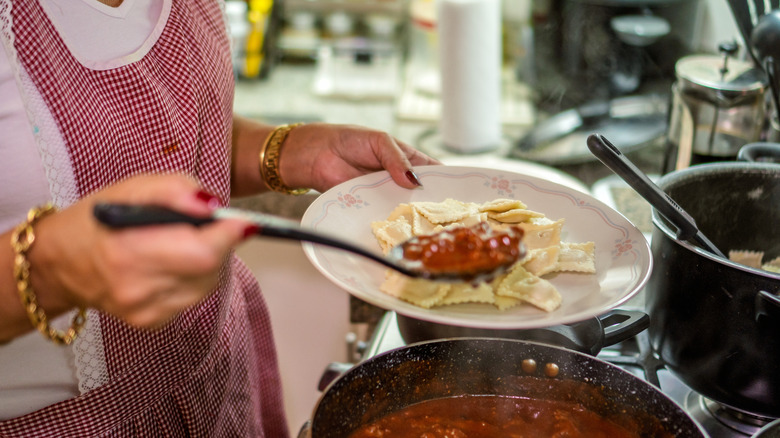
Thanks to the internet, we have an endless supply of 30-minute recipes that save time in the kitchen. Cooking doesn't have to be extravagant when you're juggling a full-time job, kids' hectic schedules, a social life, chores, hobbies, and more. However, back when it was more common and feasible to live well on a single income, the stay-at-home parent was expected to cook meals that seemed more elaborate. Roasted chicken, a slow cooked pot roast, and meatloaf with lots of fixings are just a few examples of nice home cooking.
Kids who were smelling these delicious meals cooking for hours may have built up a ferocious appetite and wanted to dig in immediately. However, they were instructed to wait for the cook to finish serving everyone, including themselves, and start eating before they could even touch their utensils. The cook put so much effort into preparing a beautiful meal, so it was only right to wait a couple of minutes so they could enjoy that glorious first bite.
6. Put a napkin in your lap
Taras Grebinets/Getty Images
Take a moment to close your eyes and imagine your favorite old-school budget meals from your childhood. Sloppy joes, pigs in a blanket, and beef stew are examples of comfort foods that are both high-risk and high-reward. They hit the spot, but they could also lead to some gnarly messes while eating them. Soups that drip and dishes you eat with your hands are just begging for trouble. Luckily, with enough napkins on hand, crises could be averted. You could use them to mop grease and sauce from your face and hands or even tuck one into your collar to protect your shirt.
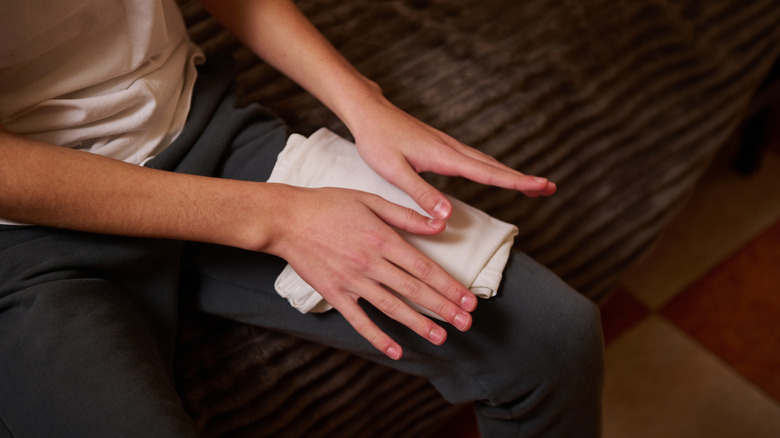
When dinners were more formal, families expected everyone in the household to eat with a napkin on their laps, even if the dish wasn't prone to making a mess. It looks elegant and proper. Some folks still place a napkin on their lap when they're at a nice restaurant with cloth napkins, but this certainly isn't an everyday experience for most.
7. Chew with your mouth closed
Seiya Kawamoto/Getty Images
There's nothing cuter than seeing a dog or any other animal blissfully chomping away at an apple or another crunchy treat. These videos go viral on social media all the time, and, funnily enough, the comments are always flooded with folks pondering why they love seeing animals eat sloppily, because they'd go into a blackout rage if a person ate the same way.
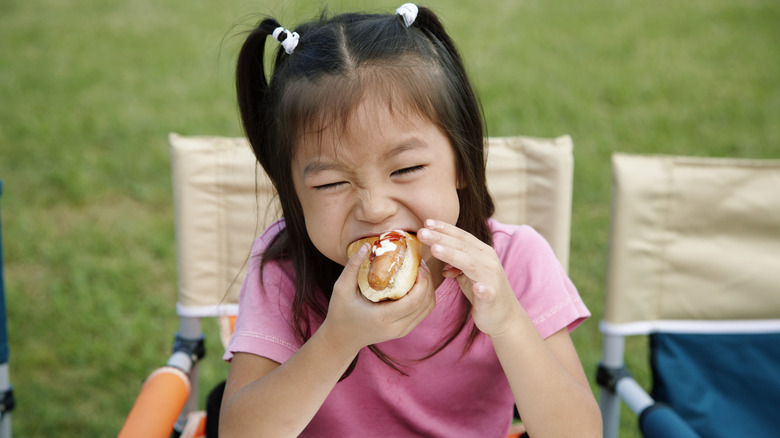
Back in the day, many kids were scolded when they were caught chewing with their mouths open, or worse, talking with their mouths open. Teaching kids that this was an unappealing habit has likely saved countless people from losing their appetites when sharing a meal with them throughout their lives. Unfortunately, some table manners like this aren't as common nowadays.
Some foods are tricky to tackle. Grilled corn on the cob is the epitome of summer, but it's loud, and the juices are explosive. Whenever you're eating something a bit unwieldy, do your best to keep your mouth closed and consider putting some soft background music on to help muffle any gross chewing sounds. Your meals will feel a lot more relaxing and welcoming as a result.
8. Ask someone to hand you a dish instead of reaching for it
Freshsplash/Getty Images
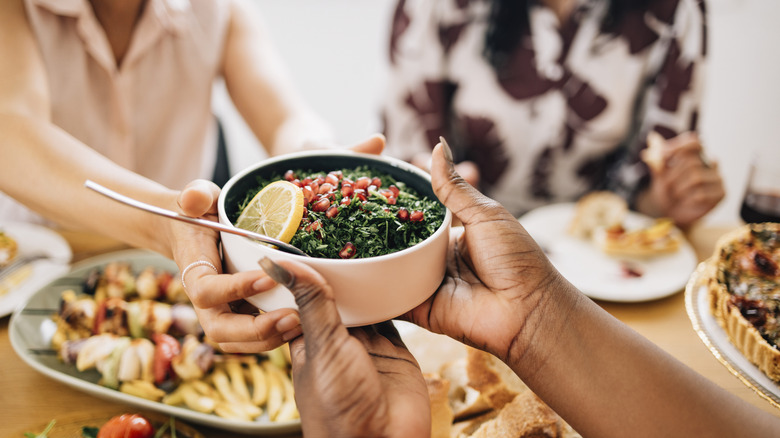
There are plenty of interesting classic Sunday dinners your grandparents loved that have disappeared from the modern dinner table. Many of these meals had lots of side dishes and accoutrements that the family had to pass around the table. No one dared to reach across to grab a dish, as it was considered incredibly rude. Plus, there was the risk of knocking over a glass and potentially ruining a plate of food.
Everyone was expected to politely ask the person closest to the dish to pass it to them, then thank them afterward. Of course, they also had to be willing to immediately set their fork down and hand a dish to anyone else who needed their help.
Doing this made each meal feel extremely communal. A willingness to help everyone may have created a warm space that encouraged each family member to open up and contribute to the conversation while they ate together.
9. Don't use your fork as a shovel
Irina WS/Shutterstock
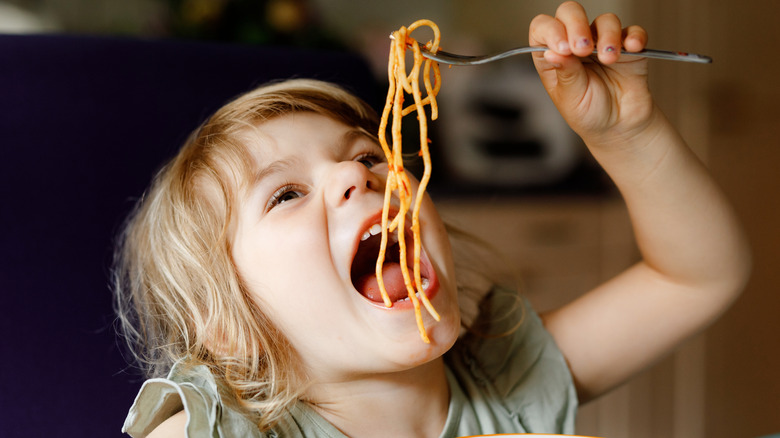
It's always nice to get complimented on your cooking, especially if you worked hard on a particular dish for a couple of hours. Watching everyone devour their food and go in for seconds can make you feel so accomplished. However, there was definitely a certain line that shouldn't have been crossed when it came to eating speed in the past. Family members weren't allowed to use their forks as shovels, no matter how yummy the food was.
Instead, forks were meant for piercing. If you were eating a tasty rice pilaf or something else that was hard to wrangle onto the fork, you were supposed to use the knife to help gather everything for a bite. You definitely couldn't hunch over your plate and try to stuff as much food into your mouth as possible.
Folks on Reddit shared varying rules for utensil placement when they were taking a break or had finished eating. Some had to place both the fork and knife together in the center of the plate, while others were expected to rest them on the side of the plate.
10. Don't play with your food

Marcus Chung /Getty Images
Many of us know that presentation is everything when it comes to food. Fresh herbs, delicate food placement, a slice of lemon or lime, and a nice dish for sauces or gravy can really level up your meal. Any parent can tell you that kids are an entirely different beast during mealtimes, though. It doesn't matter how elegant or wholesome a plate looks. Lots of kids are delighted by making a mess and playing with their food. If you've never known the joy of making a volcano out of mashed potatoes and gravy, you have to try it as an adult. Besides, with so many kid-friendly foods, like dinosaur-shaped chicken nuggets and mac-and-cheese noodles shaped like cartoon characters, how could anyone resist the urge to play with their food?
Several decades ago, this type of whimsy was certainly more frowned upon. Kids usually ate whatever the adults ate, and they were expected to maintain good manners to show respect for the cook. Pushing food around on the plate could've been perceived as it not tasting good, and dilly-dallying would've held up everyone else, since many families enjoyed starting and ending their meals together.
11. Tear pieces of bread instead of biting into it whole
Kalashnikov Dmitrii/Shutterstock
Bread used to be a staple at dinner because it helped feed the much larger families that were the norm back then. Expensive meats and seasonal vegetable crops that may not have been as abundant as hoped could still come together as a satisfying meal with the help of bread. Given this, it makes sense that families used to be stricter about bread etiquette.
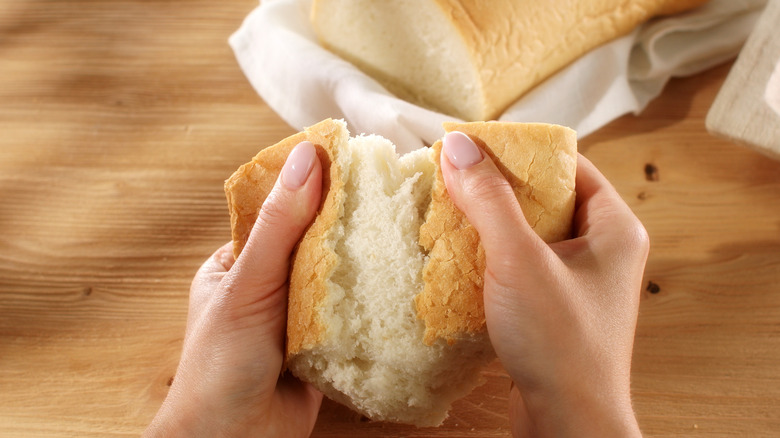
Many Americans got their bread manners from British ancestry or learning about proper rules that stemmed from the Medieval era and possibly beyond. The most basic rule was to never gnaw on homemade dinner rolls whole. It was classy to tear one piece at a time that would fit comfortably in your mouth. You also couldn't tear the entire roll apart into bite-sized pieces in advance or use your knife, which was reserved for cutting meat, to slice it open.
If families wanted to be even more strict, they had to be mindful of how they indulged in butter as well. The proper way to serve butter was to spread a serving on the side of their plates, then use the knife to spread a little onto each bite.
12. Never season your food before tasting it
Bymuratdeniz/Getty Images
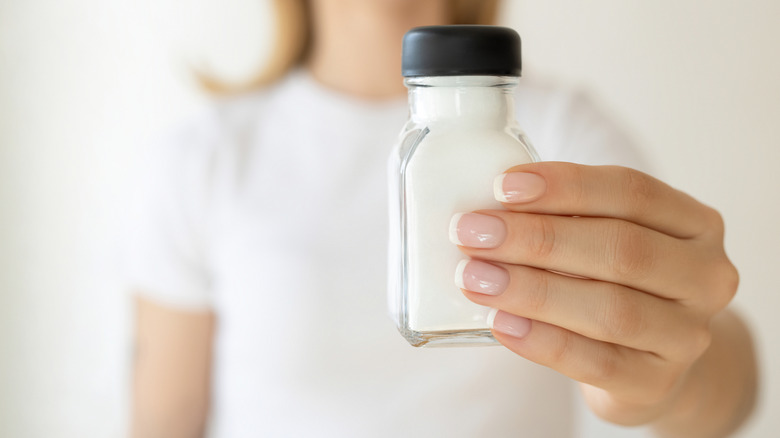
Are you the type of person who tops a perfectly cooked steak with A1 sauce or drowns pizza in ranch sauce? The internet may collectively tease you about that, but ultimately, these preferences aren't that big a deal. A major faux pas in the past was sprinkling salt and pepper on a dish, especially before you've even had the chance to taste it first. Doing this communicates to the chef that you don't trust them to get the seasoning right and that it must taste bland.
People could still raise their eyebrows at you if they witnessed this today, but most folks aren't tuned in to what others are doing at the table unless it's blatantly outrageous. Still, it's best to take a bite before you adjust the seasoning, whether you're cooking or someone else has served you. Not only could you save yourself from something that turns your mouth into a desert, but your heart will also thank you for keeping your sodium in check.
13. Clean your plate before you leave
New Africa/Shutterstock
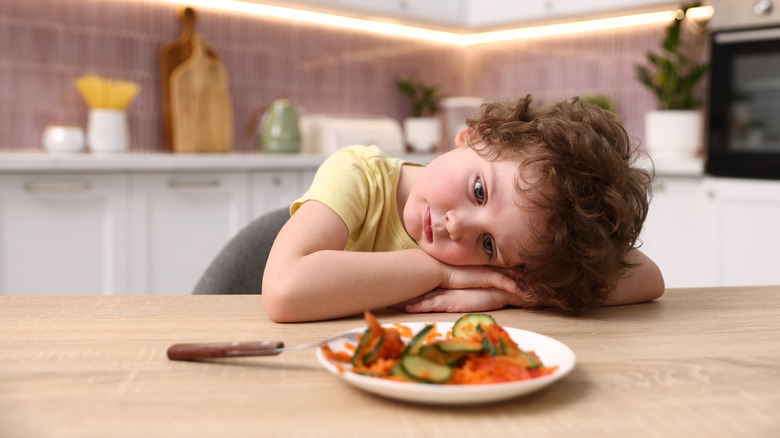
Most old-school dining rules aimed to raise polite adults who were a joy to invite over for dinner. Many of us can agree that the world would be a better place if we clung to certain rules, like chewing with your mouth closed, but some niceties were actually quite harmful. Demanding that a child clean their plate before they could be excused taught generations of children to ignore their bodies' hunger cues and force food down even when they were full.
The lifespan of this rule marks a shift in society where food became more abundant, so waste was less of a concern. Also, our viewpoint on leftovers is quite positive nowadays. Many people feel lucky when there's enough food for lunch at work the next day. Some home cooks even seek out easy recipes that are guaranteed to have leftovers so they can make their lives easier during the week.
In the past, children needed to learn proper serving sizes to avoid throwing away good food. If they were eating with their eyes instead of their stomachs when serving themselves, they had to learn a tough lesson and swallow every bite. This prevented them from taking too much in the future, which someone else who was still hungry could've enjoyed instead. This is simply an example of good intentions having a dangerous outcome for folks who struggle with food as adults.
14. Keep your utensils in the correct hand
Anna Lurye/Shutterstock
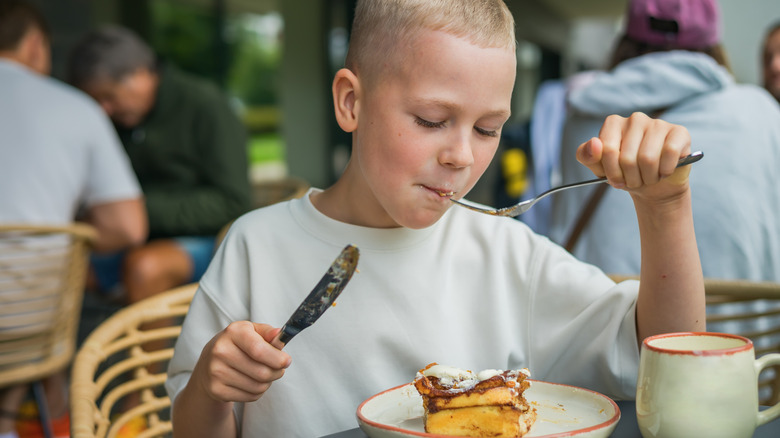
Kids growing up around the mid-19th century or earlier may have gotten a dressing-down at the dinner table if they weren't mindful of how they were using their utensils. Several Redditors discussed their family dining experiences with grandparents, and there was some overlap regarding cutlery. In many households, kids always had to hold the fork in their left hand and the knife in their right.
This placement was supposed to be helpful for right-handed people, particularly when cutting tougher types of meat, like steak. However, this rule made lefties' lives more nightmarish. Don't even get a left-handed person started on the woes of bumping elbows with right-handed folks at the table. Sadly, the world and many of our strange customs were designed for right-handedness.
If you're the type of person who likes to take care of business so you can focus on enjoying your meal, don't dine with old-fashioned people who still uphold these types of rules. They wouldn't take kindly to your rudeness because cutting your entire protein, setting the knife down, and switching the fork back into your right hand was unsightly.
15. Ask permission to leave the dinner table, and then help clean up
Vgajic/Getty Images
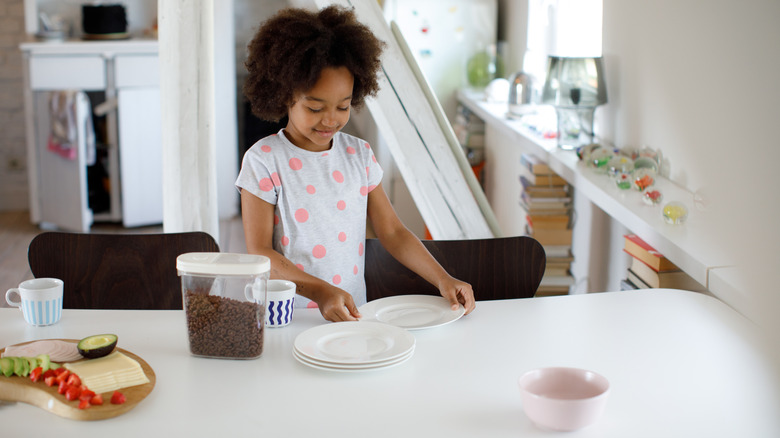
One phrase that many children said daily decades ago was "May I be excused?" If a child wanted to get back to playing after finishing their meal, they could never just get up and go. They always had to politely ask permission to leave before moving. Most parents know that kids have a hard time sitting still when all they're thinking about is playing, so they graciously excuse them.
However, if guests were over or something important was being discussed, the kids might have to suffer through more conversation. This rule taught kids always to speak up if they wanted something, but they also needed to accept the adults' answer, even if it wasn't what they were hoping to hear. Once the child was excused, they were also expected to help clear the table or, at the very least, bring their dishes to the sink.

 English
 French
 Spanish
 Portuguese
 Deutsch
 Turkish
 Dutch
Dutch
 Italiano
 Russian
 Romaian
 Portuguese (Brazil)
 Greek
Greek