


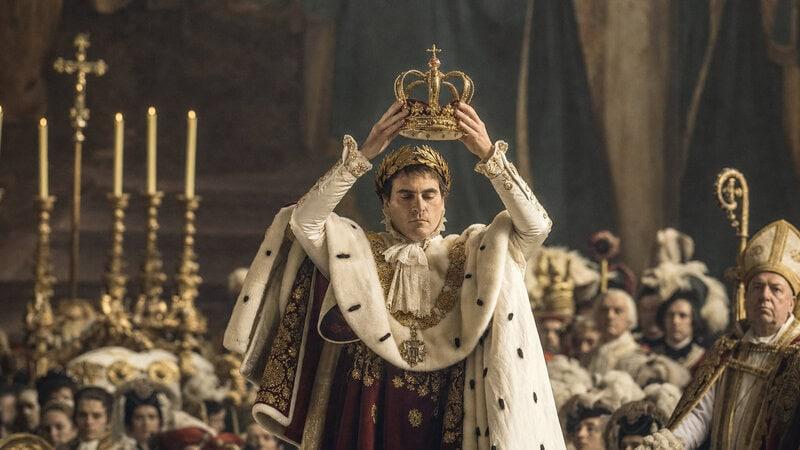

Picture a cold December morning in 1804, Notre-Dame Cathedral blazing with candlelight, and a man in ceremonial robes reaching to place a crown on his own head. That image is one of the most studied moments in European history — and almost every popular assumption attached to it, from the height of Napoleon’s boots to the meaning of his grey coat, rests on myth, unit-conversion errors, and two centuries of wartime caricature. Here is what the historical and material record actually shows.
Napoleon’s Bicorne Hat Was a Battlefield Branding Decision, Not a Height Compensator

Napoleon wore his bicorne hat sideways — perpendicular to his shoulders, rather than front-to-back as his officers did — for a single practical reason: instant recognition. In the smoke and chaos of a Napoleonic engagement, that distinctive silhouette could be picked out across hundreds of metres of battlefield. His troops needed to know where he was. The sideways hat told them.
The idea that the hat was a compensatory reach for altitude does not survive contact with the evidence. At roughly 5 feet 6 or 7 inches in modern Imperial measurement, Napoleon stood at or slightly above the average height for a French man of his era. The image of a tiny, furious Napoleon was largely the invention of British caricaturists — above all James Gillray, whose pen turned a competent-sized general into a pocket-sized tyrant for two centuries of English-speaking audiences. His marshals loomed over him in portraits partly because they were drawn from the Grande Armée’s most physically imposing veterans, which says more about his army’s selection criteria than about his own stature.
The “5 Foot 2” Record Is a Unit-Conversion Error
This is the myth with the clearest paper trail and the most embarrassing origins. Napoleon’s height was recorded as “5 pieds 2 pouces” in French units — but a French pouce was not the same length as a British inch. When converted accurately into Imperial measurement, the figure lands at approximately 5 feet 6 or 7 inches, comfortably within the average range for a French man of his generation. The error is a measurement mistake that has been dressed up as biographical fact for over two centuries.
British soldiers who encountered Napoleon in person — including those stationed at St. Helena during his final exile — consistently described him as average or slightly above average in height. The “short” characterization was a propaganda weapon, sharpened most effectively by Gillray’s caricatures. The myth proved so durable that it generated its own psychological terminology: the “Napoleon complex,” used to describe aggressive behaviour in short men, is named after a man who was not, by the standards of his time, short. It is a misconception built on a measurement error, weaponized by wartime ridicule, and preserved by cultural inertia.
Napoleon’s Everyday Dress Was a Study in Deliberate Plainness

Walk the halls of Versailles and you might assume any self-respecting emperor spent his days draped in ermine and embroidery. Napoleon did own those robes — the lavish coronation costume commissioned for the 1804 Notre-Dame ceremony, heavy with gold thread and imperial symbolism — but he treated them as theatrical props rather than daily wear. In the field, and on most ordinary days, he chose the plain grey overcoat his soldiers called the petit capote and a simple green colonel’s uniform of the Chasseurs à Cheval, finished with unadorned leather boots.
The contrast was calculated. By showing up to a battle looking like any other soldier in a drab coat, Napoleon collapsed the social distance between emperor and infantryman. Veterans of the Grande Armée wrote of spotting “the little grey coat” moving along the line under fire as one of the campaign’s great morale events, because it meant the Emperor had not retreated to some distant hilltop while they bled in the mud. The overcoat functioned as a kind of anti-uniform: instantly recognizable to his own men not because it announced rank but because it denied it. Most people, imagining an emperor’s wardrobe, picture something designed to project power upward and outward. Napoleon’s overcoat projected it inward, toward the men around him — which was, in its own way, a far more effective exercise of it.
Napoleon’s Military Uniform Was Not Covered in Medals

Stand Napoleon next to Joachim Murat — his most flamboyantly dressed marshal, who appeared in the field wearing fur-trimmed hussar jackets, skin-tight breeches, and so many decorations he resembled a travelling jewellery display — and the contrast is almost comic. Napoleon in campaign dress was a study in restraint, typically wearing only the cross of the Légion d’honneur and the Iron Cross of the Italian Kingdom. He had no patience for the decorative excess he associated with the aristocratic ancien régime he had swept away.
This restraint was principled, not accidental. Napoleon founded the Légion d’honneur in 1802 specifically to replace the old royalist system of orders and distinctions with something meritocratic — an award given for service rather than birth. Festooning himself with a previous era’s honours would have undermined the entire point. The image of Napoleon as a medal-laden conqueror belongs to popular imagination and to the men around him, not to the man himself.
The Hand-in-Waistcoat Pose Was a Conventional Portrait Grammar, Not a Personal Tic

The convention of tucking one hand into a coat or waistcoat was circulating in European formal painting long before Napoleon sat for his first official portrait. Art historians trace the gesture through the late eighteenth and early nineteenth centuries across dozens of subjects who shared nothing with Napoleon except access to a fashionable painter. It communicated restrained authority, calm composure, and a classical gravity — qualities any wealthy or powerful patron would have wanted to project.
Later writers, hungry for biographical colour, invented medical explanations: a stomach ulcer pressing against his ribs, a skin condition requiring constant soothing. None of these explanations is supported by contemporary documentation, and none accounts for the fact that the gesture appears on men with no recorded stomach complaint. Napoleon was following a visual grammar his era had already written, not drafting a new one out of personal neurosis.
Napoleon’s Coronation Robes Looked to Charlemagne, Not to Rome

Napoleon’s iconography is so saturated with eagles, laurel wreaths, and imperial titles that the assumption his 1804 coronation robes looked toward Augustus seems almost inevitable. But the costume designed by the painter Jean-Baptiste Isabey told a different political story. The ermine-lined red velvet mantle, the crown modeled on Carolingian relics, and the golden bees embroidered across the fabric were all chosen to evoke Charlemagne and the medieval French monarchy — not Rome.
The distinction mattered enormously in 1804. By reaching back to Charlemagne rather than Caesar, Napoleon was arguing that his empire was a continuation of French national tradition, a European Christian monarchy with roots in French soil rather than a pagan revival of a foreign ancient power. The coronation costume was, in the most literal sense, a political manifesto expressed in cloth and thread: every ermine stripe and embroidered bee was an argument about legitimacy, continuity, and where exactly this new empire believed it belonged in history.
What Ridley Scott’s 2023 Film Got Right — and Wrong — About the Costumes

When Ridley Scott’s Napoleon arrived in cinemas in 2023, critics quick to dismiss its historical costumes as fantasy were in for a partial correction. Costume designers Janty Yates and David Crossman approached the project with serious archival intent, consulting surviving garments and period records to reconstruct both the coronation robes and the military dress Joaquin Phoenix wore throughout the film. The material research extended to sourcing a vegan alternative fabric made from tree bark as a substitute for period materials that could not ethically or practically be replicated today. In interviews, the costume team described grounding every decision in documentary evidence rather than dramatic convenience.
That authenticity, however, existed inside a larger narrative that drew sharp criticism from historians. A King’s College London historian reviewing the film found it “disjointed, rushed, and inaccurate,” a reminder that a meticulously dressed Napoleon can still be made to do and say things the historical record does not support. Accurate cloth does not automatically make accurate history.
Phoenix himself stands at roughly 5 feet 8 inches, placing him slightly taller than the historical Napoleon in modern measurements. The film was developed under the working title Kitbag — a reference to the Napoleonic-era soldiers’ saying that “there is a marshal’s baton in every soldier’s kitbag” — and it was built around Phoenix’s natural physicality. No effort was made to miniaturize him on screen, because none was needed. The fact that audiences arrived expecting to see a tiny man is itself the story: that is what two centuries of British propaganda can do to a reputation.
What Napoleon’s Real Costume Choices Reveal

Strip away the caricatures, the measurement errors, and the Hollywood assumptions, and a coherent picture emerges. Napoleon understood dress as a form of argument. The grey overcoat argued that he shared his soldiers’ conditions. The coronation robes argued that he belonged on a throne. The Légion d’honneur cross argued that merit, not birth, defined distinction. The Carolingian crown argued that his empire had legitimate European roots. Every garment was a claim, chosen with the same deliberateness he brought to a battle plan.
The tiny raging figure in the oversized hat that British caricature handed down to history is almost entirely fictional. The actual Napoleon — average height, plainly dressed in the field, wielding cloth and symbol with precision — was a considerably more sophisticated, and considerably more interesting, figure than the cartoon replacement that took his place.

 Arabic
 French
 Spanish
 Portuguese
 Deutsch
 Turkish
 Dutch
Dutch
 Italiano
 Russian
 Romaian
 Portuguese (Brazil)
 Greek
Greek