


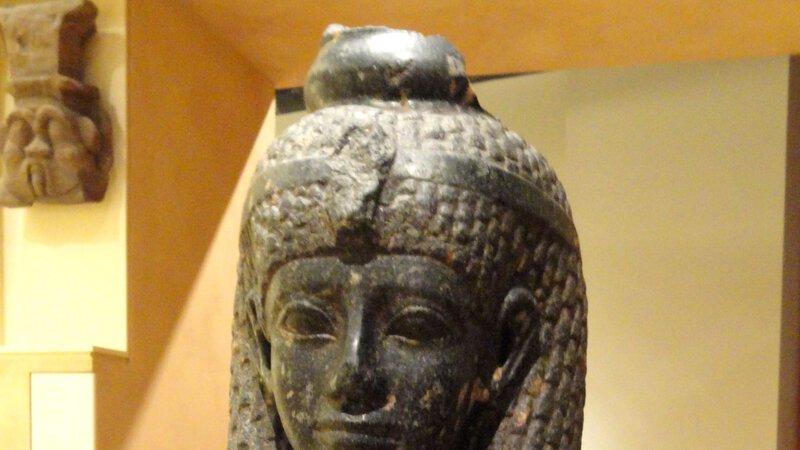

Picture a queen who spoke nine languages, ruled the wealthiest kingdom in the Mediterranean world, and traced her bloodline not to the pharaohs of the Nile but to a hard-bitten Macedonian general who once rode beside Alexander the Great. Almost everything the popular imagination believes about Cleopatra and her dynasty turns out to be wrong — and the corrections are far more fascinating than the myths.
Myth 1: Cleopatra and Her Dynasty Were Egyptian

When most people imagine Cleopatra, they picture someone deeply, ancestrally Egyptian — a daughter of the desert and the Nile. The reality is strikingly different. The Ptolemaic dynasty was Macedonian Greek in origin, descended from one of Alexander the Great’s most capable generals, with no pharaonic Egyptian blood in the founding line whatsoever. For nearly three centuries the family married largely within itself or forged alliances with other Hellenistic royals, jealously guarding their Greek identity even as they governed one of the world’s oldest civilizations.
Cleopatra VII — the famous one, the last one — stood apart from every ruler who came before her in one remarkable way: she almost certainly learned to speak Egyptian, adding it to a repertoire of reportedly nine languages that included Ethiopian, Hebrew, Aramaic, and several others recorded by the ancient biographer Plutarch. In a dynasty that had governed Egypt for nearly three hundred years, she was apparently the first to think the language of her own subjects was worth mastering. That single fact captures the cultural distance the Ptolemies habitually kept from the people they ruled.
Myth 2: Ptolemy I Was a Native Egyptian Who Rose Through the Ranks
Ptolemy I was born in Macedonia, raised at the court of Philip II, and spent his career as one of Alexander’s most trusted companions — a peer of the conqueror, not a subject. When Alexander died in Babylon in 323 BCE and his empire began to splinter among his quarreling generals, Ptolemy moved with characteristic shrewdness, maneuvering to claim Egypt as his personal prize in the wars of the Diadochi. He governed first as satrap, then declared himself king outright in 305 BCE.
Ptolemy I Soter was about as Egyptian as Julius Caesar — a foreign strongman who recognized that Egypt, with its unmatched agricultural wealth and natural defenses, was the prize worth seizing. He brought Greek language, Greek courtiers, and Greek institutional ambitions to the banks of the Nile. From that transplanted root an entirely new royal dynasty grew, one that would outlast every rival born from Alexander’s empire.
Myth 3: The Ptolemies Ruled Egypt for Just a Generation or Two
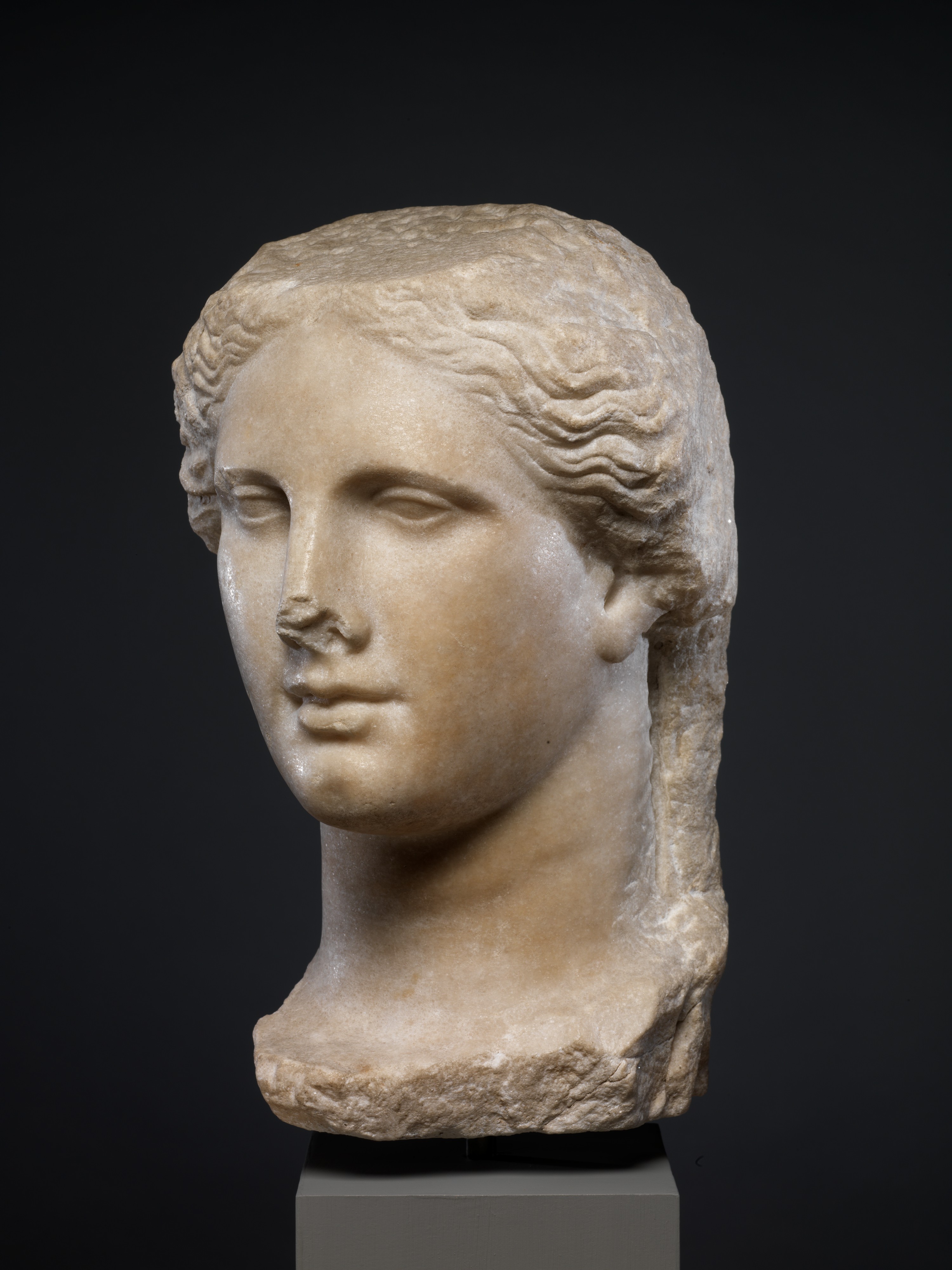
The Ptolemaic dynasty is routinely underestimated in sheer staying power. From Ptolemy I’s coronation in 305 BCE to Cleopatra VII’s death in 30 BCE, the family held Egypt for a remarkable 275 years — longer than the United States has existed as an independent nation. Across that span, fifteen rulers bearing the names Ptolemy, Cleopatra, Berenice, or Arsinoe governed the kingdom, navigating court intrigue, sibling rivalries so vicious they routinely turned murderous, and the relentless pressure of a rising Rome.
What makes that longevity still more impressive is the competition it outlasted. Every other kingdom carved from Alexander’s empire — the Seleucids ruling the east, the Antigonids holding Macedonia — crumbled before Rome’s advance. The Ptolemaic Kingdom was the last of the successor states standing, the final chapter of the Hellenistic world before Rome extinguished it entirely.
Myth 4: Ptolemaic Egypt Was a Minor Player in the Ancient World

Far from being a backwater, Ptolemaic Egypt was the economic and intellectual superpower of the Hellenistic age. From the mid-third century BCE onward it was the wealthiest of all Alexander’s successor states, its treasury fed by the extraordinary productivity of the Nile Delta’s grain fields, a near-monopoly on papyrus production, and commanding control of lucrative Red Sea trade routes reaching toward Arabia and India. Rome, for all its military muscle, could not treat Egypt carelessly — the empire’s grain supply depended on it.
Culturally, Alexandria was without rival. The Great Library and the Mouseion — an ancient research institution whose name eventually gave us the modern word “museum” — drew the finest minds of the Greek-speaking world: mathematicians such as Euclid, astronomers such as Eratosthenes, and physicians who made the city a beacon of learning that no other Mediterranean metropolis could match. To dismiss Ptolemaic Egypt as peripheral is to overlook the institution that preserved and advanced much of classical scholarship.
Myth 5: The Ptolemies Only Controlled the Land We Would Call Egypt Today

The Ptolemaic realm at its height was a Mediterranean power in the fullest sense, not merely a Nile valley kingdom. Its reach extended from Libya in the west across the Sinai and into the Levant, south into Nubia, and east toward the Arabian Peninsula. The island of Cyprus, held as a prized strategic possession, gave the Ptolemies a stranglehold on eastern Mediterranean sea lanes and established them as a genuine naval force capable of projecting power across open water, not just along the river.
Ptolemaic influence also extended into parts of coastal Anatolia and the Aegean, making the dynasty a participant in Greek politics as well as African and Near Eastern ones. This was an empire of considerable geographic ambition, assembled and maintained by a family that understood sea power, diplomacy, and the strategic value of controlling the chokepoints of ancient commerce.
Myth 6: The Ptolemies Dismissed Egyptian Religion as Superstition

A Greek dynasty ruling a fiercely traditional society faced a clear choice: ignore local religion and invite constant unrest, or embrace it and purchase loyalty. The Ptolemies chose the latter, and they did so with conspicuous investment. They bankrolled Egyptian temples on a grand scale, cultivated the powerful priestly class whose cooperation was essential to stable governance, and during the first three reigns of the dynasty undertook ambitious temple building projects — including the great temples at Edfu, Dendera, and Philae — that blended pharaonic iconography with Hellenistic aesthetics in monuments that still stand today. This was not piety; it was politics, executed with considerable finesse.
Their most inventive stroke was the promotion of Serapis, a deliberately manufactured deity who fused attributes of the Egyptian gods Osiris and Apis with qualities associated with Greek gods including Zeus and Asclepius. Serapis gave the dynasty a unifying cult that could speak to both their Greek settlers and their Egyptian subjects simultaneously — theology deployed as statecraft. The result was a religious landscape that was neither purely Greek nor purely Egyptian but something new, carefully engineered to bind a diverse population to the crown.
Myth 7: The Ptolemies Broke With the Pharaonic Tradition of Kingship
When Ptolemy I took the throne, he did not announce a Greek-style dispensation or reframe Egypt as a Hellenistic colony governed by foreign rules. He stepped directly into the pharaoh’s role — adopting the ancient royal titles, assuming the expected religious duties, and presenting himself as the legitimate continuation of a three-thousand-year-old institution. On temple walls across Egypt, Ptolemaic rulers were depicted in the unmistakable pharaonic idiom: the striding pose, the double crown, the ceremonial smiting of enemies before the gods, rendered in a style virtually indistinguishable from carvings made a millennium earlier.
This was calculated theater of a very high order. Greek kings performing an Egyptian script for an Egyptian audience, because the Ptolemies understood something fundamental: you cannot govern a deeply traditional civilization by asking it to abandon everything it has ever understood about kingship. The pharaonic role was not discarded — it was borrowed, worn like a costume that, over generations, became something rather more than a disguise.
Myth 8: The Ptolemies Were the First Dynasty to Rule Ancient Egypt
By the time Ptolemy I crowned himself in 305 BCE, Egypt had already endured roughly three thousand years of dynastic rule and more than thirty royal houses, from the legendary unifiers of the Early Dynastic Period through the New Kingdom pharaohs who raised the great temples at Karnak and Abu Simbel. The Ptolemies were not a beginning in any meaningful sense — they were an ending, the final chapter of the longest continuous royal tradition in human history, newcomers who inherited an almost incomprehensibly ancient stage.
That weight of history is part of what makes Cleopatra VII’s death so resonant. When she died in 30 BCE, she was not merely the last ruler of her own Greek dynasty; she was the last independent ruler of ancient Egypt, full stop. Three thousand years of pharaonic civilization ended not with a great battle or a natural catastrophe but, according to ancient sources, in a private room in Alexandria, with a queen who refused to become a Roman trophy.
Myth 9: Egypt’s Absorption Into Rome Was a Peaceful, Inevitable Transition
There was nothing quiet or inevitable about the end. The final act of the Ptolemaic dynasty was violent, dramatic, and saturated with deliberate choice. Cleopatra and Mark Antony were defeated by Octavian at the Battle of Actium in 31 BCE, and Antony died by his own hand shortly after. Cleopatra’s own death in 30 BCE — however exactly it occurred, the famous asp story being actively disputed by modern historians, with some ancient sources suggesting poison administered by other means — was not surrender. Ancient accounts consistently frame it as a calculated refusal to be displayed in chains through Rome’s streets in Octavian’s triumphal procession.
Octavian left nothing to chance. Caesarion — Cleopatra’s son by Julius Caesar and the last heir with any plausible claim to the Ptolemaic throne — was hunted down and executed, ensuring that no surviving claimant could become a rallying point for resistance. Egypt became a Roman province, treated as the personal property of the emperor rather than a standard territory governed by the senate, and its grain flooded Roman markets within a generation. The dynasty did not fade quietly; it was methodically erased.
The Ptolemaic story is ultimately one of the ancient world’s great paradoxes: a Macedonian Greek family who never entirely became Egyptian, ruling for nearly three centuries over a civilization far older and more deeply rooted than their own, and leaving behind temples, libraries, and legends that still shape how we imagine the ancient world today.

 English
 Arabic
 French
 Spanish
 Portuguese
 Deutsch
 Turkish
 Dutch
Dutch
 Italiano
 Romaian
 Portuguese (Brazil)
 Greek
Greek