


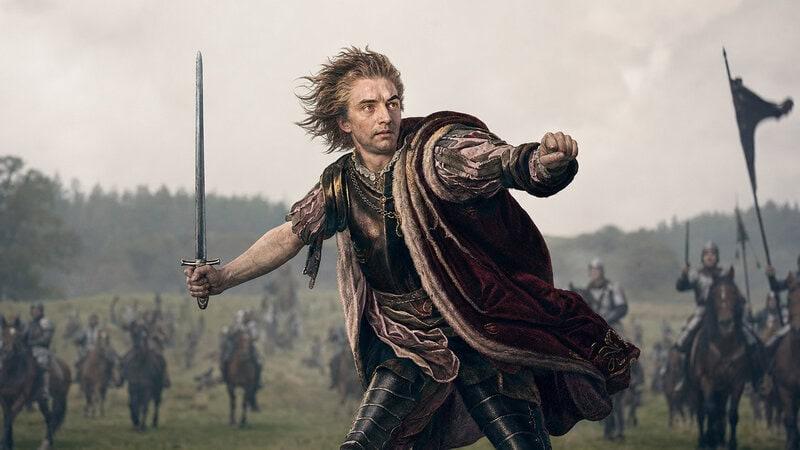

On the morning of August 22, 1485, a Welsh exile with a threadbare claim to the English throne stood on a Leicestershire field while the last Plantagenet king made a decision that would echo for centuries. Richard III spotted Henry Tudor lightly guarded at the battle’s edge, levelled his lance, and charged — and in the minutes that followed, a dynasty that had no business existing was born from the dust, the treachery, and the blood of Bosworth Field.
A Crown Found in a Thornbush

The image that haunts the Tudor story is almost too vivid to be entirely true, yet historians have never fully dislodged it: after the fighting ended and Richard III lay dead in the mud — the last English king to die in battle, the last Plantagenet to rule — his crown was discovered in a hawthorn bush nearby. Lord Thomas Stanley, so the tradition holds, retrieved it and placed it on Henry Tudor’s head on the field itself. A dynasty was inaugurated not in Westminster Abbey with solemn ceremony, but in August heat, surrounded by corpses, with a battered circlet lifted from a thornbush.
That founding image matters because it tells you everything about what the House of Tudor actually was: improvised, improbable, and forged under pressure rather than inherited by right. Henry Tudor had spent years in exile, mostly in Brittany and France. He had never governed so much as a county. His claim to the throne was, by almost any rigorous measure, desperately weak. And yet this man would found a dynasty that held England’s throne for 118 years, producing five monarchs whose personalities, decisions, and obsessions would reshape the nation’s religion, politics, and identity in ways still visible today.
The Tudors were not inevitable. They were an accident of timing, treachery, and one catastrophic cavalry charge. Understanding that accident is the key to understanding everything that followed.
The Dynasty That Nearly Never Existed: Tudor Origins
To appreciate just how unlikely the Tudor dynasty was, you have to trace the bloodline — and when you do, it unravels quickly into something closer to a legal argument than a royal pedigree. The Tudors were of English and Welsh origin, their Welsh roots running back through generations to Ednyfed Fychan, a formidable thirteenth-century statesman who served the princes of Gwynedd in medieval Wales. Ednyfed was powerful and respected, but he was not royal. He was a nobleman in a Welsh context, not a stepping stone to the English throne.
The connection to English royalty came through a union that was scandalous by the standards of its day. Owen Tudor, a Welsh courtier in the household of the dowager queen, secretly married — or at minimum formed an intimate relationship with — Catherine of Valois, widow of the great Henry V. The match was almost certainly illegal under the laws governing the remarriage of dowager queens, and it produced, among other children, Edmund Tudor. Edmund was Henry VII’s father. That relationship between a Welsh courtier and a French queen’s widow was the sole thread connecting the Tudors to Lancaster.
Henry VII’s Lancastrian claim came through his mother, the formidably intelligent Lady Margaret Beaufort, and it was a claim that should have given medieval constitutional lawyers considerable pause. The Beaufort line descended from John of Gaunt’s relationship with Katherine Swynford — a union that was later legitimised by Parliament, but with an explicit clause barring the Beauforts from succession to the throne. Henry’s right to rule was, legally speaking, gossamer-thin. He was not the inevitable next king. He was one claimant among several, and arguably not the strongest one.
Before the Tudors, the Plantagenet dynasty had ruled England for over three hundred years. They were not easily displaced. What created the opening for the Tudors was not superior blood — it was superior chaos.
The Wars of the Roses: The Conflict That Created an Opening

The Wars of the Roses — the decades-long civil conflict between the Houses of York and Lancaster — had bled the English nobility dry and left the country exhausted, frightened, and hungry for stability. Noble families that had flourished under the Plantagenets had been destroyed in a generation of attainders, battles, and judicial murders. The throne had changed hands multiple times within living memory. Into this wreckage, Henry Tudor stepped — or rather, was carefully nudged — as a symbol of Lancastrian hope.
He had spent most of his formative years in Brittany and France, a political refugee maintained partly because he was too obscure to be worth the diplomatic cost of eliminating, and too useful as a potential bargaining chip for foreign courts to hand back to the Yorkist kings who wanted him. He was, for most of his exile, less a king-in-waiting than a pawn that nobody had yet found a use for.
That changed in 1485. When Henry landed at Milford Haven on the Welsh coast on August 7 with a force of French mercenaries and English exiles, he was betting everything on two things: Welsh loyalty and English noble betrayal. The march through Wales gathered recruits partly on the strength of something that no military strategist would normally count as a resource — Welsh bardic prophecy. For generations, Welsh poets had spoken of a mab darogan, a “son of prophecy,” a man of Welsh blood who would reclaim sovereignty over Britain. Henry Tudor, with his Welsh lineage and his red dragon standard snapping in the summer wind, allowed the myth to do its own recruiting.
By the time he reached the English Midlands, he had enough of an army to force a battle. Whether he had enough to win one was another question entirely.
Bosworth Field: The Fifteen Minutes That Changed England

Richard III arrived at Bosworth with the larger army and the stronger position. He was an experienced commander, a veteran of the battles that had defined his political career. On paper, Henry Tudor should have lost.
What Richard could not control was the Stanley family. Sir William Stanley and Lord Thomas Stanley commanded thousands of troops and had positioned themselves on the field’s flanks, committed to neither side — watching, calculating, waiting. Their loyalty was available to whoever could convince them it was worth giving. It was a characteristically medieval calculation, and it would prove catastrophic for the king.
Richard spotted the problem: Henry Tudor was lightly guarded, positioned at the battlefield’s edge, seemingly vulnerable. In a moment of boldness — or desperation — Richard made his choice. He would end the battle by ending Henry personally, driving through the pretender’s position and collapsing the rebellion in a single stroke. He assembled his household knights and charged.
It was an audacious gamble. It very nearly worked. Richard’s cavalry crashed toward Henry with terrifying momentum, cutting down men who stood in their path, getting close enough that Henry’s personal guard was engaged in hand-to-hand fighting. For a few extraordinary seconds, the entire Tudor dynasty hung on the swords of a handful of men keeping Richard III away from one unproven exile.
Then Sir William Stanley committed. The Stanley forces swept into Richard’s charging cavalry from the flank, surrounding the king’s household knights and cutting off retreat. Richard III was killed in the fighting — precisely how remains debated, but archaeological analysis of his remains, discovered beneath a Leicester car park in 2012, has confirmed the violence of his end: multiple fatal wounds to the skull consistent with close-quarters combat. He was the last English king to die in battle. He was also the last Plantagenet king.
Had the Stanleys held back for another few minutes, the charge might have broken through. The Tudor dynasty would have ended in that Leicestershire field before it properly began. Everything that followed — the Reformation, the Elizabethan age, the entire cultural and religious revolution of Tudor England — hung on those seconds and on the Stanley family’s cold-blooded calculation that Henry Tudor was the better investment.
Henry VII: The Unlikely Architect of a Dynasty

The man who walked off Bosworth Field as king was not the sort of figure who dominates historical imagination. Henry VII — born in 1457, raised in exile, shaped by perpetual insecurity — was reserved, financially obsessive, and relentlessly cautious. He was nothing like the swaggering monarchs his dynasty would later produce. He survived by being careful rather than charismatic, and he built his dynasty the same way.
His first and most important political act came not on a battlefield but in a church. Marrying Elizabeth of York in January 1486 was a masterstroke that no amount of military victory could have achieved alone. It united the warring houses, allowed the Tudor dynasty to claim both Lancastrian and Yorkist legitimacy, and produced one of history’s most effective pieces of political branding: the Tudor rose, combining the red rose of Lancaster and the white rose of York into a single symbol that announced, visually and instantly, that the civil wars were over.
Henry VII reigned from 1485 to 1509, spending those twenty-four years doing the unglamorous work that dynasty-building actually requires. He methodically reduced the power of the over-mighty nobility that had made England ungovernable. He filled the royal treasury through efficient, sometimes ruthless fiscal management — deploying agents such as his ministers Richard Empson and Edmund Dudley to extract revenues through bonds and recognisances in ways that generated lasting resentment. He suppressed Yorkist pretenders — Lambert Simnel, who claimed to be the Earl of Warwick, and Perkin Warbeck, who claimed to be one of the murdered Princes in the Tower — with a combination of military force and careful political management. He left his son one of the healthiest royal finances in English history.
Without Henry VII’s disciplined, unromantic consolidation, his son Henry VIII would have had no stable throne to inherit and no treasury to fund his ambitions. The flamboyant, larger-than-life Tudors we remember from portraits and dramas were made possible by the cautious, watchful one we tend to forget. For a fuller account of Tudor dynasty history and its monarchs, Henry VII’s reign reveals a ruler whose greatest skill was survival itself.
Five Monarchs, One Extraordinary Century

The five Tudor monarchs who succeeded one another across 118 years of English history form one of the most extraordinary sequences of personalities ever to occupy a single throne. Each reign deserves examination in its own right, because together they form a cumulative revolution rather than a simple succession.
Henry VIII (r. 1509-1547) inherited a stable kingdom and a full treasury, and proceeded to use both with spectacular recklessness and world-altering consequence. Frustrated by Catherine of Aragon’s failure to produce a surviving male heir, and infatuated with Anne Boleyn, Henry sought an annulment from Rome that Pope Clement VII — politically beholden to Catherine’s nephew, the Holy Roman Emperor Charles V — refused to grant. Henry’s response was to detach the Church of England from Rome entirely, declaring himself its Supreme Head through the Act of Supremacy of 1534. The dissolution of the monasteries that followed between 1536 and 1541 transferred enormous wealth and land to the crown and to a new class of Protestant gentry, permanently altering English society’s economic and religious landscape. Of his six wives — Catherine of Aragon, Anne Boleyn, Jane Seymour, Anne of Cleves, Catherine Howard, and Catherine Parr — two were executed on his orders. Anne Boleyn was beheaded in 1536 on charges of adultery and treason that most historians now regard as fabricated; Catherine Howard followed in 1542. Henry’s reign produced the long-sought male heir in Edward, born to Jane Seymour in 1537, but at the cost of a religious and constitutional settlement that remained violently contested for generations.
Edward VI (r. 1547-1553) came to the throne at nine years old, governed first by his uncle Edward Seymour as Lord Protector and then by John Dudley, Duke of Northumberland. Despite his age, Edward was a committed Protestant, and his reign accelerated the Reformation with the introduction of the first Book of Common Prayer in 1549 and the more radically Protestant second version in 1552. Edward died of tuberculosis in July 1553 at fifteen, having been persuaded by Northumberland to alter the succession in favour of the Protestant Lady Jane Grey — his cousin — bypassing both his half-sisters. Jane Grey’s reign lasted nine days before Mary I swept her from power. Jane was executed the following year.
Mary I (r. 1553-1558) was the daughter of Henry VIII and Catherine of Aragon, and her reign was the Reformation’s counter-blow. She restored papal authority in England, repealed her father’s and brother’s Protestant legislation, and married Philip II of Spain in 1554 — a deeply unpopular union that provoked Wyatt’s Rebellion and raised fears of England becoming a Spanish satellite. Between 1555 and 1558, nearly three hundred Protestants were burned at the stake under the heresy laws she had revived, earning her the epithet “Bloody Mary” that history has never fully set aside, though modern historians increasingly note that the scale of her executions was comparable to religious persecution elsewhere in Europe. Her reign ended with the loss of Calais — England’s last continental possession — and her own death in November 1558, without an heir.
Elizabeth I (r. 1558-1603) inherited a kingdom divided by religion, drained by war, and uncertain of its place in Europe. What she built over forty-five years was one of the most durable political settlements in English history. The Elizabethan Religious Settlement of 1559 re-established the Church of England on broadly Protestant terms while retaining enough ceremonial structure to avoid driving moderate Catholics into outright rebellion — a deliberate ambiguity that was itself a form of statecraft. Her court became a centre of cultural brilliance: the era of Shakespeare, Marlowe, Spenser, and Sidney; of Francis Drake circumnavigating the globe; of Walter Raleigh’s early attempts to establish English presence in the Americas. The defeat of the Spanish Armada in 1588 — the great fleet Philip II sent to invade England — became the defining myth of Elizabethan England, though Protestant storms did as much damage to the Armada as English ships. Elizabeth’s deliberate refusal to marry or name an heir was both a source of political anxiety throughout her reign and, paradoxically, a source of her power: suitors could not be disappointed, factions could not cluster around a named successor, and the mystique of the Virgin Queen became a form of propaganda in its own right. She died in March 1603 without a child, the Tudor line ending with her.
Each of these monarchs was, in their own way, downstream of Bosworth. The religious convulsions that England endured under the Tudors were partly products of Henry VII’s need to legitimise a weak claim, and Henry VIII’s desperate need for a male heir to secure a dynasty that always felt more fragile than it appeared. The founding insecurities of 1485 rippled through the entire Tudor era in England, shaping decisions that shaped centuries.
For a concise guide to the personalities and relationships of all five monarchs, the Tudors: Who’s Who overview offers a useful reference point alongside the longer narrative.
Tudor London: The Dynasty and Its Physical World
The Tudors did not only reshape England’s religion and politics — they left a physical mark on the landscape that is still legible today. Greenwich was perhaps their most personal royal residence: Henry VIII was born there, as were Mary I and Elizabeth I. The palace at Greenwich, long since demolished but commemorated at the site now occupied by the Old Royal Naval College, was the dynasty’s home in a way that Westminster never quite was. Its position on the Thames made it accessible by royal barge, central to the pageantry of Tudor court life, and strategically close to the royal dockyards at Deptford and Woolwich where Henry VIII built the navy that would eventually underpin English sea power. The Tudors at Greenwich Palace illustrates how deeply the dynasty’s personal and political life was woven into the fabric of a single place.
Beyond Greenwich, Tudor power expressed itself in the great building projects of the age. Hampton Court, begun by Cardinal Wolsey and seized by Henry VIII, became the most lavish palace in England. The dissolution of the monasteries transferred hundreds of religious buildings into secular hands, some converted to grand country houses, others left to crumble into the picturesque ruins that still punctuate the English countryside. The Tudors also invested in coastal defences — the Device Forts built under Henry VIII along the southern coast, squat and angular in the new Italian style, designed to resist artillery rather than siege — which represent the earliest purpose-built artillery fortifications in England.
The Tudor Legacy: The Accident That Made Modern England
The Tudor dynasty’s history is not merely pageant and portraiture. It is the crucible in which the Church of England was forged, in which parliamentary power began its slow, grinding rise against the crown, and in which an island nation started its transformation into a maritime power with eyes on the wider world. The ways the Tudor dynasty shaped modern Britain reach into the present in the form of the Anglican church, the constitutional precedents established by Tudor parliaments, and a national mythology that still draws millions of visitors to English castles and cathedrals every year.
The irony that holds the whole story together is hard to miss: the Tudors, who had the weakest hereditary claim of any English royal house in the medieval period, became perhaps the most symbolically powerful dynasty in English history. Their portraits saturate galleries. Their dramas fill stages and screens. Their myth — the six wives, the break with Rome, the Virgin Queen — remains embedded in popular culture five centuries after the last Tudor drew breath.
The dynasty ended as it began: with dynastic accident. Elizabeth I died in 1603 without an heir, the Tudor line dying with her, the throne passing to James VI of Scotland, who became James I of England. A dynasty born from a thornbush ended without a child to inherit it, its 118 years bookended by two moments of radical contingency. You can read the full arc of the Tudor dynasty through to Elizabeth I and feel that quality of improvisation running beneath every reign.
But perhaps the most important thing the Tudors teach us is something about history itself. They were not the logical outcome of English history working its way toward some predetermined destination. A different wind at Milford Haven in August 1485 might have scattered Henry’s French mercenaries before they landed. A Stanley family loyal to Richard III would have meant a different England entirely. A charge that broke through Henry’s guard at Bosworth, and there is no English Reformation, no Elizabeth I, no Spanish Armada — or at least, not in the forms we know them.
History is not a conveyor belt of inevitability. The Tudors remind us of that every time we look at the picture: Henry Tudor kneeling in a Welsh field in the August heat while a battered crown is lifted from a hawthorn bush and settled on his head — the moment a dynasty with no right to exist became the one that defined a nation.
The Tudors were an accident. They were also, arguably, England’s most consequential royal family. Sometimes history’s greatest stories begin with a cavalry charge going catastrophically wrong.

 English
 Arabic
 French
 Spanish
 Portuguese
 Deutsch
 Turkish
 Dutch
Dutch
 Russian
 Romaian
 Portuguese (Brazil)
 Greek
Greek