


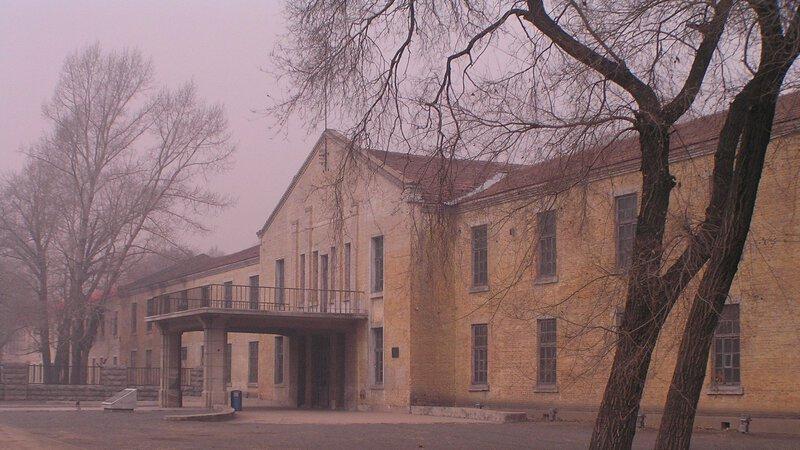

On a winter morning in Harbin, 1942, a prisoner was stripped of his clothing and walked into air so cold it burned. Men in white coats watched from a distance, noting the time, recording observations with the measured patience of scientists conducting important work. They were waiting for frostbite to set in — and when it did, they would decide what to do next.
That scene was not the work of rogue soldiers acting outside orders. It was government-sanctioned science, conducted inside one of the most deliberately engineered facilities for human destruction in the history of modern warfare. It unfolded inside Unit 731 — and for decades afterward, almost no one outside a small circle of historians and survivors knew it had happened at all.
What Unit 731 Was and Where It Operated

Unit 731 was a covert biological and chemical weapons research division of the Imperial Japanese Army, headquartered near Harbin in Japanese-occupied Manchuria. It operated from 1936 to 1945, and its mandate was explicit: develop weapons capable of mass biological and chemical destruction, and use human beings to do it. The full name — the Epidemic Prevention and Water Purification Department of the Kwantung Army — was a deliberate fiction, the kind of bureaucratic camouflage that makes atrocity look administrative.
The physical compound was staggering in scale and intentionality. Spread across a remote stretch of Manchurian territory, it functioned as a self-contained city — laboratories, holding cells, operating theaters, crematoria, and airstrips, all constructed so that nothing that entered could easily leave. The architecture of secrecy was literal. It was built into the walls.
The program did not confine its operations to the main compound. Branch facilities extended across occupied China, multiplying its reach and its death toll well beyond Harbin. The geography of Japanese biological warfare in World War II was not a single atrocity but a distributed network of them — a fact that matters enormously when trying to account for the scale of what happened.
Inside the program, prisoners were referred to as maruta — the Japanese word for logs. It was not slang. It was policy, a term of deliberate dehumanization that allowed credentialed physicians to walk into an operating room, pick up a scalpel, and open a living person without anesthesia in the name of data collection. The people who ran Unit 731 were not, by conventional measures, fringe actors. Many held advanced medical degrees. They published research. They understood themselves to be scientists engaged in work of military and medical importance.
The Experiments: Scope and Method

What happened inside those facilities resists clean summary, but it demands to be named with precision. The categories of human experimentation conducted at Unit 731 included deliberate infection with plague, cholera, typhoid, and anthrax — pathogens introduced into living bodies so researchers could chart disease progression under controlled conditions. There were pressure-chamber experiments designed to determine at what point the human body’s organs fail under depressurization. There were surgeries performed without anesthesia, not to heal but to observe — to record organ function, blood loss rates, and physiological responses to specific forms of trauma.
The frostbite studies were among the most systematically documented. Prisoners were exposed to extreme cold — sometimes outdoors, sometimes through direct application of ice — and researchers then tested rewarming techniques, tracking which methods produced tissue recovery and at what point cell death became irreversible. The data was meticulous. The suffering was incalculable.
Victims included men, women, and children. They were predominantly Chinese and Korean civilians, as well as Russian nationals and Allied prisoners of war. The breadth of the subject population was not incidental — it was methodological, reflecting a belief that a diverse range of human subjects would produce more generalizable data. Historians estimate that at least 3,000 people were subjected to experimentation, with at least 10,000 prisoners killed across the program. These are not abstractions. Each represents a person who entered the compound alive and did not leave.
Inside the program’s internal logic, all of this was medicine. Survival curves were tracked. Infection rates were charted. Surgeries were framed as contributions to military preparedness. The moral framework was not absent — it had been carefully inverted, reoriented so that the efficiency of data collection became the governing ethical standard, and the humanity of the subject became a variable to be controlled for rather than a limit to be observed.
Biological Warfare Beyond the Laboratory
Unit 731 was not only a research program. It was an active weapons operation, and its scientists understood that the laboratory and the battlefield were not separate domains but stages in a single pipeline. The experiments inside the compound fed directly into field deployment — producing knowledge that was then used to kill at scale.
Plague-infected fleas were dispersed over Chinese cities using low-flying aircraft. Water supplies were deliberately contaminated. Food was laced with cholera agents and distributed to civilian populations. The operational logic was explicit: the laboratory established what quantities and delivery methods of biological agents produced specific lethal effects under controlled conditions; field operations deployed those agents against real populations. As the history of Unit 731’s weapons operations makes clear, the human experimentation and the mass civilian casualties were not parallel programs. They were one program with two phases.
Estimates attribute more than 200,000 deaths across China to biological warfare campaigns associated with Unit 731 and related units. That figure — staggering in its magnitude — reflects casualties from the deliberate deployment of disease as a strategic weapon. It places Unit 731 among the deadliest weapons programs in the history of modern conflict, responsible for a scale of death that exceeds many conventional military campaigns of the same era.
The legal vocabulary to describe what happened barely existed at the time. Japan’s biological warfare operations extended well beyond existing prohibitions on chemical weapons and into territory the international community had not yet built frameworks to prosecute. It was mass atrocity conducted in a legal vacuum — and that vacuum, as events would show, proved convenient for everyone who came after.
The American Decision: Immunity for Data

In 1945 and 1946, as US military investigators examined the remnants of Japan’s wartime apparatus, they encountered substantial evidence of what had occurred in Manchuria. The documentation was extensive. The crimes were apparent. By any standard being applied simultaneously at Nuremberg — where Nazi physicians were being prosecuted under international law for experiments nearly identical in character — this material constituted a war crimes case of the first order.
It did not become one. What happened instead was a transaction — one of the most morally consequential and carefully concealed decisions of the postwar period. American officials in the Army’s biological warfare division recognized that the data accumulated by Unit 731 represented years of research the United States had never conducted and could not ethically replicate. The records on plague dispersion, biological agent lethality, and human physiological responses to extreme conditions were, from a particular angle, enormously valuable intelligence.
Unit 731’s commander, Shirō Ishii, and his senior researchers offered their findings in exchange for immunity from prosecution. US authorities accepted. The immunity arrangement was negotiated at senior levels of the American military and government, and it was kept classified for decades. The men who had designed and administered the frozen courtyard walked away — not into a courtroom, but into civilian life.
The moral weight of this decision is difficult to overstate. The United States was, at that precise historical moment, standing before the world at Nuremberg and arguing that certain acts are so fundamentally contrary to human dignity that no military necessity, no scientific value, and no political calculation can justify them. It was making that argument about German physicians while simultaneously guaranteeing that Japan’s equivalent perpetrators would face no trial, no public accounting, and no legal consequence of any kind. The contradiction was not a failure of principle. It was a choice.
Careers Built on Silence
The immunity arrangement was sustained through secrecy that persisted for decades. US government records pertaining to Japanese biological warfare remained classified long after the war ended. American officials publicly denied the program’s existence when pressed. The silence was not passive — it was maintained actively by an institutional apparatus that understood precisely what acknowledgment would cost.
No member of Unit 731 was ever prosecuted for wartime experimentation or biological weapons deployment. Many returned to Japan and resumed careers in medicine, academic research, pharmaceuticals, and public health. Some rose to prominent positions. The expertise they had acquired — however they had acquired it — transferred without apparent friction into the structures of postwar Japanese professional and civic life.
It was not until the 1980s that researchers, journalists, and surviving witnesses began forcing the historical record open in any sustained way. The contrast with the legacy of Nazi medical experimentation is stark and instructive. The crimes committed in the name of German military medicine are embedded in global legal and ethical consciousness — taught in schools, codified in international law, cited in every foundational text in modern bioethics. Unit 731 remained largely unknown outside specialist circles for four decades after the war ended. Not because the evidence was thin. Because the people with the greatest influence over postwar historical memory had institutional reasons to keep it quiet.
In 1999, US legislation mandated a declassification effort to make government records on Japanese war crimes more accessible to researchers and the public. It was a belated and incomplete institutional acknowledgment — a formal admission, however partial, that the decades of silence had been a policy choice rather than an accident of historical circumstance.
Accountability Deferred: The Ongoing Consequences

The immunity deal did not occur in isolation, and its consequences did not end when classified files eventually became available to researchers. It established a precedent with durable weight: that geopolitical utility can override accountability for mass atrocity, and that the question of who faces justice after a war is determined less by the gravity of what was done than by the strategic interests of those who survived it. That tension has not resolved. It continues to shape the politics of war crimes prosecution and historical reckoning into the present.
Survivors and the families of victims — concentrated primarily in China and Korea — have pursued legal recognition and official apology through Japanese courts for decades, with limited success. The path toward formal acknowledgment has been narrow, contested, and largely unrewarding. The human dimension of this history is not solely a matter of the past. It persists in the lives of people who are still waiting for a verdict the 20th century chose not to deliver.
The asymmetry between Nuremberg’s global legacy and Unit 731’s relative obscurity is not the natural result of historical distance or incomplete records. It is a political artifact — the product of deliberate decisions made by specific governments at a specific moment, enforced over time by institutional silence and the practical power of those with the most to lose from disclosure. The history of Unit 731 is not a story that was forgotten. It is a story that was buried, and the distinction matters when we talk about how nations decide what to remember, what to memorialize, and what to let quietly disappear.
In the end, the frozen courtyard in Harbin was never examined by any court. The researchers who stood there, clipboards and stopwatches in hand, went home. They built careers. Some lived to old age, professionally respected and legally untouched. The prisoners who stood in the cold did not. And the silence that descended over everything that happened there — deliberate, sustained, and institutionally enforced — remains the only verdict the postwar world ever formally offered.

 English
 Arabic
 French
 Portuguese
 Deutsch
 Turkish
 Dutch
Dutch
 Italiano
 Russian
 Romaian
 Portuguese (Brazil)
 Greek
Greek