


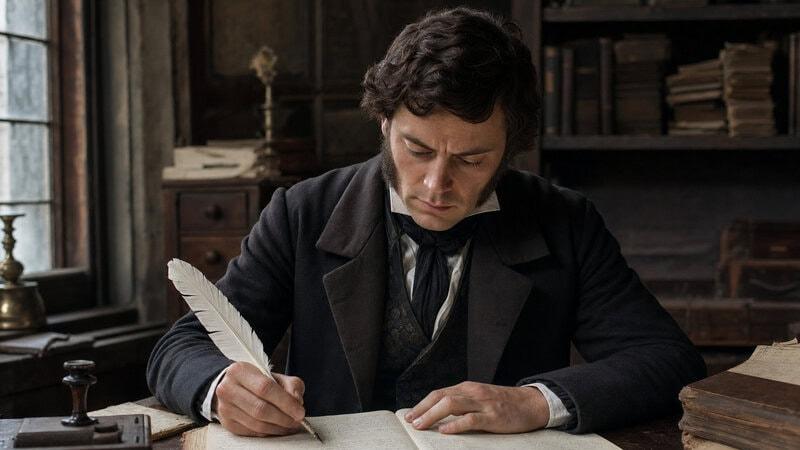

In an 1847 New York parish register, a clerk dipped his quill and wrote, without apparent irony, the name Preserved Fish Jr. — son of Preserved Fish Sr., a prosperous merchant who had himself survived into adulthood bearing that name and seemingly suffered no lasting damage to his dignity. That single entry is a portal into a world where the rules of naming a child were simultaneously more rigid and more gloriously strange than anything we practice today.
What Victorian Naming Culture Actually Looked Like

The Victorian era — roughly 1837 to 1901, bookended by a queen who gave it her name and her temperament — produced a naming culture that looked, from a distance, like a wall of brown wool: sober, conventional, respectable. Look closer and the wool is shot through with electric thread. The same decade that produced three Johns and two Elizabeths in every parish also produced children named Freelove, Thankful, and Fanny Cock. None of these parents thought they were doing anything remarkable. That gap between their nonchalance and our astonishment is precisely what makes Victorian baby names so worth exploring.
The full spectrum runs from the era’s load-bearing classics — names so common they practically held up the walls of Victorian society — through sentimental flowers and gemstones, past earnest virtue-announcements, and straight into the collision zone where perfectly ordinary first names met perfectly ordinary surnames and produced combinations that would make a modern registrar wince. All of it made sense to the people living it. That’s the story.
The Bedrock: Names So Common They Wallpapered Every Household

Start with the foundation. Classic names like John, William, Elizabeth, and Sarah formed the sturdy spine of Victorian naming — safe, Protestant, legible across every social class, and carrying the implicit guarantee that no schoolmaster, employer, or magistrate would ever stumble over them. These were names that functioned like a firm handshake: they communicated reliability before the child had said a word.
Then came the monarch herself. Queen Victoria, crowned in 1837 at eighteen years old, made her own name feel like both patriotic statement and genuine fashion within a generation. The U.S. Social Security Administration records 1,440 babies named Victoria in the 1880s alone — a remarkable figure reflecting only registered American births, meaning the British tally would have been considerably higher. Gladys and Louisa each recorded 1,420 uses in that same decade, which tells you something important: even a fashionable Victorian name looks modest beside today’s blockbusters. In an era before television and the internet, naming trends traveled at the speed of a newspaper column, which meant the charts stayed more intimate, more local, more varied.
Nameberry’s archive of more than 400 Victorian-era names shows the popular tier also included Alice (boosted considerably by Lewis Carroll’s 1865 novel, which gave the name a shimmer of literary magic), Florence (Florence Nightingale’s wartime reputation did real and lasting work for that name), Clara, Mabel, Arthur, Oscar, and Ezra. What these names share is a story attached. Victorians loved a name with provenance, with a reason that could be explained at dinner. A name that carried narrative was a name worth having.
The Sentimental Layer: Flowers, Gems, and the Natural World as Nursery Inspiration

The Victorians were obsessed with symbolic language in a way that now seems almost exhausting in its thoroughness. Flowers carried coded meanings — a whole sub-genre of books existed to tell you what a violet meant versus a daisy. Gems carried moral qualities. Colors had character. It was almost inevitable that this symbolic fever would migrate from the parlor into the birth register.
Gemstone names like Opal and Ruby appear in genuine Victorian-era records as deliberate given names, not pet names or flights of fancy. They reflected a widespread belief that a child named for something beautiful and rare might, in some way, absorb those qualities. It sounds whimsical to us; to a Victorian parent steeped in the language of symbolism, it was almost logical.
Floral and nature names followed the same current. Violet, Ivy, Daisy, and Hazel all appear in Victorian registers with the same frequency as their botanical counterparts appeared in wallpaper patterns and embroidery samplers. The Arts and Crafts movement, which positioned the English countryside as a moral antidote to industrial grime, gave these names an additional layer of meaning: to name a daughter Violet was to make a small, quiet argument about beauty in an age of coal smoke and factory whistles.
And then there were the diminutives — Lula, Etta, Alma — recorded not as nicknames but as standalone baptismal names. Victorian formality coexisted, tenderly, with genuine softness in the nursery. The same culture that dressed children in stiff collars and expected them to be seen rather than heard also pressed small, rounded, affectionate names into the official record, as if tucking a note into a coat pocket.
The Ambition Names: When a Baby Was a Walking Mission Statement

Preserved Fish was not an accident or a joke. He was a tradition. Puritan virtue names — Preserved, Patience, Mercy, Comfort, Experience, Thankful, Increase — had been traveling through New England families since the seventeenth century, and they survived, in certain households, well into the Victorian era because they were doing real social and theological work. A child named Thankful announced, before she could speak, that her family understood life as a gift from God requiring formal acknowledgment. A child named Increase told the congregation that his parents expected divine blessings to multiply. These were not eccentric choices; they were piety made portable.
The pattern extended beyond Puritan holdovers. Freelove appears in Victorian-era registers — not as anything salacious, but as an expression of freely given divine love, the kind of name a devout family might choose with complete sincerity and zero awareness that later centuries would read it entirely differently. Ancestral piety was social currency in New England well into the 1800s, and carrying a forebear’s virtue name was a form of inheritance as serious as land or silver.
Political tribute names were equally earnest. Boys christened after Gladstone, Disraeli, or Lincoln in the 1860s and 1880s were their parents’ declarations of allegiance — broadcasting politics in an age before yard signs or social media, before any mechanism existed for announcing your convictions except, apparently, your child’s name. The practice reveals something any modern parent will instantly recognize: the name as parental self-expression. The difference is only in content. Where Victorian parents broadcast faith and politics, we tend to broadcast aesthetics and literary taste. The impulse is identical.
The Collision Names: When Convention Crashed Into Accident

Here is where Victorian naming culture becomes genuinely, helplessly funny — and where it also becomes most instructive. Fanny Cock was not chosen to shock. In the mid-nineteenth century, Fanny was a perfectly respectable diminutive of Frances, carried by duchesses and vicars’ daughters without a flicker of impropriety. Cock was an entirely ordinary English surname rooted in occupational history and nothing else. Nobody in 1860 read those two words together the way a modern reader does. That reading came later, as slang evolved and certain meanings became dominant, leaving the original bearers of these names stranded on the wrong side of linguistic history.
Victorian naming conventions, combined with the era’s rich stock of occupational and place-based surnames, created accidental comedy at considerable scale. Parish records contain combinations that scandalize us today but would have genuinely baffled their bearers. These were not oversights by careless parents; they were the perfectly logical products of a system where first names and surnames were chosen from entirely separate traditions, with no mechanism for checking how they would sound stacked together on a school register.
The lesson is linguistic drift. The most cringe-inducing Victorian combinations were simply victims of words whose meanings shifted beneath their feet. There is a class dimension worth noting, too: working-class households were least likely to scrutinize the optics of a name combination, because names were inherited reflexively from grandparents and passed down without revision, with no social anxiety about the result and no one positioned to advise otherwise.
The Forgotten Tier: Names That Were Normal Then and Sound Alien Now

Perhaps the most disorienting category of all is this one: names that were not eccentric, not laden with meaning, not accidental collisions — just normal. Archibald, Gertrude, Ida, and Clyde were solidly respectable Victorian choices, the kind of names that appeared in professional directories and on church committees, communicating stability and good standing. Today they sound, depending on your ear, either stuffy, comic, or — increasingly — ripe for revival.
Otto arrived in American registers via German immigrant communities and the era’s fascination with Continental sophistication; it sat alongside Clyde (carrying a whiff of Scottish river pride) and Louis (French glamour, reliably durable) as markers of cosmopolitan aspiration in a rapidly globalizing world. These were aspirational names in the original sense — parents reaching slightly beyond their immediate geography toward something that felt larger.
Short, punchy girl names — Ida, Alma, Etta — functioned as the Victorian equivalent of today’s minimalist choices like Mae or Wren: modern-feeling in their moment, retro-feeling in ours, and quietly queuing for rediscovery. The deeper point is unsettling in the best way: every generation has its Archies and Gertrudes, names that feel permanent until, suddenly and inexplicably, they don’t. Victorian naming culture holds that mirror up and won’t let you look away.
Which Victorian Names Are Coming Back — and Why
The current wave of Victorian revival names is no accident of fashion. Oscar, Arthur, Florence, Mabel, and Ida carry the patina of an era that felt both morally serious and romantically detailed — qualities that millennial and Gen X parents find genuinely appealing after decades of invented spellings and names generated from a software prompt. There is a solidity to old Victorian names, a sense that they have been tested by time and survived, which is exactly what parents in an uncertain century are looking for.
Ruby and Opal have both re-entered contemporary top-name charts, completing a full century-long arc from Victorian novelty to mid-century obscurity to present-day trendiness. A mother in 1885 who named her daughter Opal was making a choice that her grandchildren would consider embarrassingly dated, her great-grandchildren would find charmingly old-fashioned, and her great-great-grandchildren would put on a birth certificate with pride. That is the full generational cycle, visible in a single gemstone name.
The stranger Victorian names — Preserved, Freelove, Thankful — are almost certainly not coming back, and that is entirely appropriate. They serve a different function now. They are historical documents encoded in human beings, carrying the anxieties and faiths and accidental collisions of a specific moment when a child arrived in the world. A name is a timestamp as much as it is an identity, and Victorian names are among the most readable timestamps we have.
When you meet an Ida or an Oscar today, you are shaking hands, at some remove, with the Victorian era — with the parlors and the parish registers and the symbolic flower arrangements and the perfectly sincere parents who named their son after a prime minister and their daughter after a gemstone and thought, with complete justification, that they were doing something entirely reasonable. And when future historians comb through 2020s birth records full of Liams and Olivias and Noahs, they will find our era just as legible, our choices just as explicable, and our accidental collisions — there are always accidental collisions — probably just as funny.

 English
 Arabic
 Spanish
 Portuguese
 Deutsch
 Turkish
 Dutch
Dutch
 Italiano
 Russian
 Romaian
 Portuguese (Brazil)
 Greek
Greek