


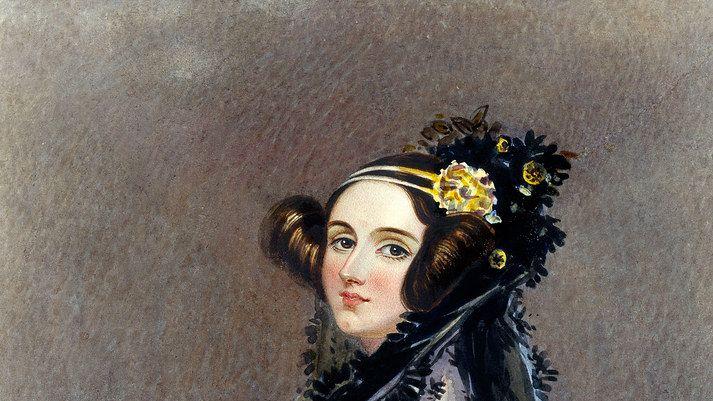

In the summer of 1843, a twenty-seven-year-old woman sat in London surrounded by manuscript pages, writing annotations so extensive they dwarfed the original text she had been asked merely to translate. What she produced across those nine months was not a footnote to someone else’s idea — it was the world’s first computer program, written for a machine that existed only in blueprints, roughly a century before anyone would actually build one.
Who Was Ada Lovelace?

Augusta Ada Byron was born in 1815 carrying one of the most complicated inheritances imaginable. Her father was Lord Byron — the scandalous, brilliant poet who was already the most famous man in England for all the wrong reasons. Her mother, Anne Isabella Milbanke, separated from Byron when Ada was just a month old and spent the years that followed trying to inoculate her daughter against his influence. The prescription was mathematics: rigorous, rational, unarguable. What Anne Isabella did not anticipate was that Ada would absorb both parents simultaneously — the disciplined analytical mind her mother cultivated and the soaring imaginative reach her father embodied.
By her teens, Ada was already exceptional. She studied under some of the finest scientific minds of the age, including the mathematician and logician Augustus De Morgan. The moment that would define her life came in 1833, when she was seventeen and attended a London salon hosted by the polymath Charles Babbage. There, Babbage demonstrated a small working section of his Difference Engine — a brass calculating machine designed to automate the production of mathematical tables. Most guests admired it as a clever novelty. Ada recognized it as a glimpse of something entirely new in the world.
What made Ada unusual was precisely the combination her mother had tried to prevent. She possessed what she herself called “poetical science” — the capacity to see patterns, meanings, and latent possibilities in abstract systems, and to think in metaphors that illuminated rather than obscured mathematical truth. In an era when the word “computer” referred not to any machine but to a human being — typically a poorly paid clerk — hired to grind through calculations by hand, Ada’s conceptual reach was extraordinary. She could imagine what a machine might do that its own inventor had not yet fully articulated.
Britannica’s biography of Ada Lovelace provides a thorough account of her early education and the intellectual influences that shaped her thinking.
Babbage’s Dream Machine: The Analytical Engine

By the 1830s, Babbage had moved beyond the Difference Engine to something far more ambitious. He was designing the Analytical Engine — a proposed mechanical general-purpose computer that, had it ever been completed, would have been a remarkable feat of engineering. It would have clanked through calculations that would have taken teams of human computers days to complete.
What separated the Analytical Engine from everything that had come before was a single audacious idea: it would be a general-purpose machine. The Difference Engine could perform one class of calculation reliably. The Analytical Engine, by contrast, could be programmed — via sequences of punched cards, borrowing directly from the Jacquard loom technology used in textile manufacturing — to perform any calculation its operator could specify. It incorporated something resembling a memory, something resembling a processor, and a mechanism for conditional operations. In conceptual terms, it was a computer. In physical terms, it was never finished.
Babbage was a visionary, but he was also famously difficult, perpetually underfunded, and constitutionally unable to stop improving the design long enough to actually complete it. He could envision every gear and lever of his machine in his mind; articulating its deeper significance to skeptical government officials was another matter entirely. The project languished. Then, in 1842, an Italian mathematician named Luigi Menabrea attended a lecture Babbage gave in Turin and published a summary of the Analytical Engine in French. Babbage asked Ada to translate it into English. That request became the fulcrum of computing history.
The Translation That Became a Manifesto

Ada did not simply translate Menabrea’s article. She interrogated it, extended it, and ultimately transcended it. Her annotations — organized into sections labeled Notes A through G — grew to nearly three times the length of the original paper. Babbage, reviewing her work, reportedly suggested she simply write her own paper. Ada pressed forward with the Notes instead, and in doing so produced something that would not be fully understood for over a century.
The most consequential of her additions was Note G, in which she laid out a detailed, step-by-step method for using the Analytical Engine to calculate Bernoulli numbers — a complex sequence with deep applications across mathematics. This is recognized today as the world’s first computer program. What made it a true algorithm rather than a vague description was its precision: Ada specified inputs, defined the sequence of operations, and included what we would now recognize as loops and conditional branching — the logical mechanism by which a program makes decisions based on intermediate results. These structures are the foundation of every piece of software ever written.
Her own language in the Notes crackles with intelligence and metaphor. Ada described the Analytical Engine as being capable of “weaving algebraical patterns just as the Jacquard loom weaves flowers and leaves” — a comparison so exact in its implications that it still appears in computing textbooks and lectures today. She was not describing mere mechanical arithmetic. She was describing symbolic manipulation: the engine of all modern computation.
The Max Planck Society’s account of Ada Lovelace examines Note G and its significance in detail, placing her algorithmic work in the broader context of nineteenth-century science.
The Deeper Vision: What Ada Saw That Babbage Did Not

Ada Lovelace’s contribution extends beyond writing an algorithm. She developed a more abstract and philosophically complete picture of the Analytical Engine than its own inventor had articulated. Babbage thought primarily in terms of calculation — the machine as an accelerated, automated arithmetic tool. Ada thought in terms of process. She grasped that the machine, given the right sequence of instructions, could follow a program — a sequence of instructions — to perform tasks its creator had not specifically anticipated. The instructions — the program — were separable from the machine itself. That insight is the conceptual definition of software.
She also issued a warning that has grown only more prescient with time. Ada wrote that the Engine “can only do whatever we know how to order it to perform.” It could not originate. It could not think. It was a supremely powerful executor of human intention, and nothing beyond that. Philosophers and computer scientists are still debating the precise boundary between executing instructions and genuine cognition — the central question of artificial intelligence research today. Ada drew that line in 1843.
The National Institute of Standards and Technology has noted that Ada’s observations about the limits of machine intelligence anticipated debates about artificial intelligence by more than a century — a remarkably precise assessment from someone who had never seen a working programmable machine.
In trying to explain what the Analytical Engine could and could not do, Ada was articulating the philosophy of computation itself — the conceptual framework that Alan Turing, John von Neumann, and the founders of modern computing would rediscover and formalize nearly a hundred years later.
A Century Ahead of Her Time

The timeline alone is striking. Ada Lovelace wrote her program in the 1840s. Konrad Zuse designed the first programmable computing machine approximately a century later. Between those two dates lies nearly a century during which an idea waited for the world’s manufacturing capability and collective ambition to catch up with one woman’s imagination.
The gap existed for a concrete reason: the Analytical Engine was never built. Babbage could not secure sustained funding or the precision manufacturing the machine required, and he died in 1871 with his greatest project unrealized. Ada’s program, therefore, was never run. It existed only on paper — theoretically correct, practically dormant.
When Alan Turing began formalizing the theory of computation in the 1930s, producing the conceptual architecture that underlies every modern computer, he was working largely from first principles and contemporary mathematics. The tradition connecting back through Babbage’s machine to Ada’s Notes had, in practical terms, been lost. Her work was only rediscovered and properly credited in the mid-twentieth century, when researchers revisiting the history of computing realized that a Victorian mathematician had beaten them all to the essential insight.
Ada’s claim to have written the first computer program is not merely symbolic or honorific. Computer scientists who have examined Note G have confirmed that her Bernoulli number algorithm contains verifiable, logically complete structures — it is a real program, not a conceptual sketch. The Wikipedia entry on Ada Lovelace provides a thorough account of the scholarly debate around the algorithm’s completeness and her standing as the first programmer, including the nuances and counterarguments that serious historians have raised.
What the Historical Record Actually Shows — and Where Scholars Disagree

It is worth being precise about what Ada Lovelace did and did not do, because the historical record is more textured than popular accounts often allow. She did not invent the Analytical Engine, conceive of the stored-program concept independently, or work in isolation from Babbage, with whom she maintained an active and substantive correspondence throughout the translation project. Some historians, most notably Bruce Collier, have argued that Babbage contributed more to the Notes than has sometimes been credited, and that the extent of Ada’s independent insight has occasionally been overstated in popular retellings.
What the scholarly consensus does affirm is this: Ada produced Note G’s algorithm, she understood the Analytical Engine’s general-purpose potential more clearly and expressively than anyone else of her era, and she articulated the philosophical boundary between computation and cognition at a moment when no one else was asking that question. Those contributions are substantial on their own terms and do not require embellishment.
Why Ada Lovelace’s Legacy Still Matters
Every line of code written today — every smartphone application, every streaming recommendation algorithm, every AI system generating text or images — descends from the conceptual framework Ada Lovelace described in annotations published in an obscure scientific journal in 1843. Her story is not a charming historical footnote. It is a genuine origin point for the digital world, which is now the world most people inhabit every day.
Ada Lovelace died in 1852 at the age of thirty-six — the same age at which her father Lord Byron died. She published exactly one major work in her lifetime: those Notes. A single concentrated act of intellectual ambition, produced across nine months of effort, and it echoed forward for centuries.
Recognition has accumulated slowly but with growing force. Ada Lovelace Day, observed each October, highlights the contributions of women in science, technology, engineering, and mathematics around the world, using her story as evidence of what overlooked brilliance can accomplish. In the 1980s, the United States Department of Defense named its newly developed programming language Ada in her honor — perhaps the most fitting tribute possible: a working language carrying her name into the machine world she first imagined.
The Association for Women in Science’s profile of Ada Lovelace captures why her example continues to resonate for scientists and engineers today, nearly two centuries after she picked up her pen.
The closing image is simple and, considered carefully, almost vertiginous in its combination of precision and isolation: a young woman in Victorian London writing exact, step-by-step instructions for a machine that existed nowhere except in someone else’s drawings — instructions that were logically sound, algorithmically complete, and entirely impossible to run. She wrote them anyway. She was right. And the machine the whole world now lives inside is, in some foundational sense, still executing the kind of thinking she first made legible.

 English
 Arabic
 French
 Portuguese
 Deutsch
 Turkish
 Dutch
Dutch
 Italiano
 Russian
 Romaian
 Portuguese (Brazil)
 Greek
Greek