



In the autumn of 96 CE, an old man sitting at the center of the world’s most dangerous job made a decision that no Roman emperor before him had quite managed: he chose competence over blood. Nerva — elderly, physically frail, installed by a Senate still trembling after the assassination of the tyrannical Domitian — looked past every dynastic instinct and adopted the Spanish-born general Trajan as his heir. That single act of political unselfishness launched nearly a century of governance so stable and so comparatively humane that historians are still arguing about whether anything like it has been repeated since.
What Made a Roman Emperor “Good”?

Before ranking anyone, it is worth establishing the criteria — because Roman standards of good rulership were specific and not always what a modern reader might expect. Ancient sources, senatorial opinion, and the long-term verdict of later emperors all weighed roughly the same factors: fiscal discipline that kept the treasury solvent without crushing the provinces; military competence that held the borders without provoking ruinously expensive wars of vanity; a functional relationship with the Senate that stopped short of either craven subservience or massacre; public infrastructure and grain supply that kept the urban population fed and employed; and, perhaps most critically, an absence of political terror — the midnight arrest, the trumped-up treason charge, the senator dragged off on a whisper. By those measures, the era spanning 96 to 180 CE produced the highest concentration of successful rulers the Roman world ever saw.
That era is defined by five men: Nerva, Trajan, Hadrian, Antoninus Pius, and Marcus Aurelius. The eighteenth-century historian Edward Gibbon famously called it the period in all of human history during which the condition of the human race was most happy and prosperous. That claim deserves scrutiny — millions of enslaved people lived within Rome’s borders, frontier warfare never truly ceased, and what looked like prosperity from the imperial palace looked rather different from the edge of a legionary camp in Dacia or Britain. But measured against the available alternatives — the paranoid terror of Caligula, the erratic cruelty of Domitian, the chaos of the Year of the Four Emperors in 69 CE — the achievement is genuinely striking. The Five Good Emperors cleared a bar that most of their predecessors and successors failed to reach, and they did it consecutively, across nearly a century, without a civil war between them.
Augustus: The Indispensable Foundation
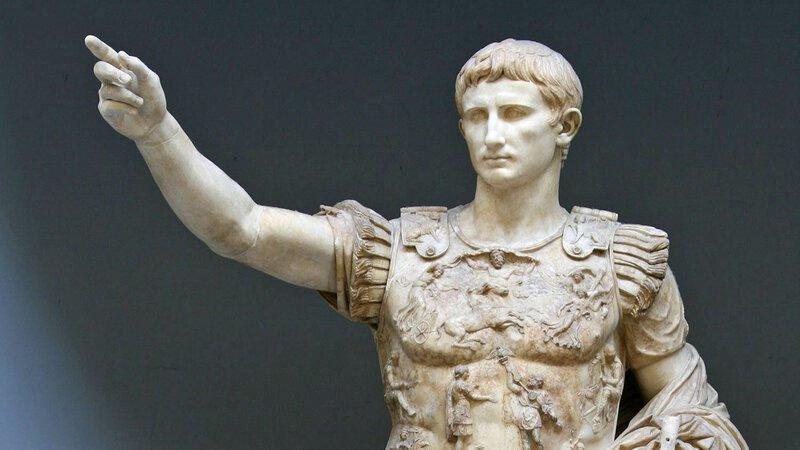
No serious list of Rome’s greatest emperors omits Augustus, even though he ruled a full century before the Five Good Emperors and operated in a political environment so different it almost constitutes a separate subject. Born Gaius Octavius in 63 BCE, he emerged from the wreckage of the late Republic and the catastrophic civil wars that followed Julius Caesar’s assassination to become, by 27 BCE, the unchallenged ruler of the Roman world — careful enough to call himself princeps, first citizen, rather than king or dictator, words that had gotten his adoptive father killed.
What Augustus built was not simply personal power but a durable institutional framework: the Principate, a system that preserved the outward forms of Republican government while concentrating real authority in one man’s hands. He reorganized the legions, established a permanent professional army with fixed terms of service and guaranteed retirement benefits, reformed the tax system, and launched a building program in Rome so comprehensive that he reportedly boasted of finding the city in brick and leaving it in marble. His reign also inaugurated the Pax Romana, the long stretch of relative internal peace that the later Good Emperors inherited and extended.
His succession planning was less successful — a long series of chosen heirs predeceased him, and the dynasty he eventually established, the Julio-Claudians, produced Caligula and Nero alongside the more capable Tiberius and Claudius. But the framework he created proved robust enough to survive even those disasters, which is itself a measure of how well it was built. Augustus is best understood not as a moral exemplar but as an architect: the man who designed the structure that later, better men would inhabit.
Nerva and Trajan: The Adoption Gambit That Worked

Nerva reigned for barely two years, from 96 to 98 CE, and for much of that time his grip on power was genuinely precarious. The Praetorian Guard, still loyal to the memory of Domitian, forced him into a public humiliation not long after he took the throne. He was old. He had no son. And Rome, which had just passed through years of fear under a ruler who executed senators on whim, badly needed a signal that the climate had changed. Nerva’s answer was the adoption of Marcus Ulpius Traianus — Trajan — a battle-hardened general commanding legions on the Rhine frontier. The message was unmistakable: the next emperor would be chosen for what he could do, not for whose blood ran in his veins.
Trajan, who ruled from 98 to 117 CE, vindicated that bet extravagantly. He pushed Rome to its greatest territorial extent, fighting two hard campaigns in Dacia — modern Romania — that broke a kingdom which had long raided across the Danube and extracted tribute from previous emperors. The wealth flowing from those wars funded an extraordinary building program in Rome: Trajan’s Forum, with its vast colonnaded piazza, and the famous column that still stands today, its carved spiral relief narrating the Dacian campaigns in unprecedented narrative detail. He also introduced the alimenta, a welfare program that used interest on state-backed loans to fund food for poor children in Italian towns — a policy so practically minded it surprises anyone who assumes ancient rulers thought only about conquest and spectacle.
Trajan’s reputation as optimus princeps — the best ruler — proved so durable that later Senates developed a standard blessing for newly crowned emperors: felicior Augusto, melior Traiano, may you be luckier than Augustus and better than Trajan. It was the highest compliment the Roman world knew how to give. Like Nerva before him, Trajan had no biological son, which meant that when the time came to name a successor, he was forced — or perhaps freed — to think clearly about the empire rather than sentimentally about family. He chose Hadrian, his ward and distant relative, a decision whose exact circumstances were disputed even in antiquity: Trajan died in Cilicia in 117 CE, and the official announcement of the adoption was made by his wife Plotina, leading some ancient writers to question whether it had actually occurred before his death.
Hadrian: The Emperor Who Drew a Line

Rome was accustomed to emperors who conquered. Hadrian, who ruled from 117 to 138 CE, was something rarer and more confusing to his contemporaries: an emperor who looked at Trajan’s freshly won eastern territories and decided, coolly and almost immediately, to give most of them back. The province of Mesopotamia was relinquished. The frontier was pulled in toward more defensible positions. Generals who had bled for those territories were furious. But Hadrian had done the arithmetic of empire — the cost of garrisoning overextended frontiers against populations that would never fully submit — and chosen consolidation over glory.
He then spent roughly half of his twenty-one-year reign traveling the provinces in person, a habit no previous emperor had maintained so systematically. He inspected legions, corrected local abuses, commissioned buildings, reformed legal administration, and embedded himself in the daily reality of the territories Rome claimed to govern. His reign saw significant legal reforms, including restrictions on masters’ ability to kill enslaved people arbitrarily — a modest humanitarian step by later standards, but meaningful within the Roman context. The most enduring monument to his governing philosophy is the wall that still bears his name, stretching 73 miles across northern Britain not as a frontier waiting to be pushed further north but as a declared boundary — a statement that Rome had decided where it ended.
His relationship with the Senate was permanently damaged by the executions of several senators early in his reign, deaths Hadrian attributed to conspiracy but which contemporaries found at least partially suspicious. He never entirely recovered that goodwill. But his administrative record was careful and reformist, and his succession planning was almost baroque in its layered foresight. When his first chosen heir, Lucius Aelius Caesar, died of illness in January 138 CE before Hadrian himself, Hadrian adopted Antoninus Pius — with an explicit condition attached: Antoninus must in turn adopt the teenage Marcus Aurelius alongside Lucius Verus. It was a chess move designed to extend Hadrian’s intentions across decades he would never live to see.
Antoninus Pius: The Quiet Reign That Deserves More Credit

Antoninus Pius ruled for 23 years, from 138 to 161 CE — longer than any of the other four — and he did it with so little drama that ancient sources genuinely struggle to fill a chapter on him. No foreign catastrophe, no political purge, no great literary output: just sustained, competent administration. The treasury held a significant surplus when he died. Senators were not being dragged off to execution. The empire’s roads, aqueducts, and grain supply functioned. His reign recorded the fewest senatorial executions of any emperor in Roman history — a statistic that sounds modest until measured against the alternatives.
His nickname, Pius, most likely honored his successful effort to persuade the Senate to grant Hadrian posthumous deification — a politically necessary act of loyalty that also smoothed his own legitimacy, since his legal claim to power rested on Hadrian’s adoption. He did push Rome’s British frontier slightly beyond Hadrian’s Wall by constructing the Antonine Wall across central Scotland, though Rome would eventually withdraw to Hadrian’s original line within a generation. Even the quietest emperors managed a state under constant external pressure.
The larger argument for taking Antoninus seriously, however, is what he preserved rather than what he created: the stable, solvent, administratively functional empire that Marcus Aurelius inherited. Every major crisis Marcus faced came from outside — plague, Germanic invasion, the grinding attrition of the Danube frontier — rather than from internal damage accumulated at home. That inheritance was Antoninus’s gift, and it was not a small one. An empire handed to its next ruler in sound condition is an underrated form of greatness.
Marcus Aurelius: Philosophy Under Impossible Pressure

Of all the greatest Roman emperors, Marcus Aurelius is perhaps the most purely compelling — not because his reign was peaceful, which it absolutely was not, but because of the sustained gap between the man he was privately trying to be and the circumstances history relentlessly handed him. His personal journals, known as the Meditations, were written in Greek and never intended for any audience. They are not triumphalist imperial memoirs. They are a man arguing with himself, in the margins of a military campaign, about how to remain decent under impossible pressure. That they survived at all is one of antiquity’s genuine accidents. That they remain in continuous print and serious conversation nearly two millennia later says something about what Marcus was actually grappling with.
His reign, from 161 to 180 CE, opened with an immediately notable act: he elevated Lucius Verus — the other heir Hadrian had planned for through the layered adoption — to the position of co-emperor, making them joint rulers with equal formal authority. It was a gracious act that honored the spirit of Hadrian’s arrangement, and it functioned tolerably well until Verus died in 169 CE, almost certainly from the Antonine Plague. That epidemic — probably smallpox, though ancient descriptions are insufficiently precise for certainty — had begun burning through the empire around 165 CE after Verus’s armies brought it back from campaigns in the east. It killed millions across multiple decades, strained the supply and manpower systems that kept the legions functional, and fundamentally altered the strategic situation Marcus inherited.
He spent most of his later years not in Rome but camped on the Danube frontier, fighting Germanic incursions — primarily from the Marcomanni and Quadi — that the plague’s demographic damage had made significantly harder to contain. He wrote his philosophical reflections between campaigns, in a military tent, in a language most of his soldiers could not read. The Meditations record no self-congratulation. They record instead a man repeatedly reminding himself not to be irritable, not to waste time on things outside his control, not to mistake position for virtue. The contrast between the private text and the public role it accompanied is one of the more remarkable things antiquity left us.
He appears near the top of almost every serious ranking of Roman emperors not because fortune was kind to him — it demonstrably was not — but because he bore its weight with observable, documented seriousness across nineteen years. And then, on the single most consequential decision of his reign, he made a very human exception.
The One Mistake: Commodus and the End of an Era
For eighty years the system had worked for a specific structural reason: each emperor who used it had no compelling biological alternative, or chose to look clearly past one. Nerva had no son. Trajan had no son. Hadrian arranged succession by necessity after his chosen heir died. Antoninus honored a plan laid before he took power. Marcus Aurelius had a biological son, Commodus, born in 161 CE — the first emperor in the sequence to be so situated — and in 177 CE he named him co-emperor. It was the first time since 96 CE that blood had defeated merit at the moment of succession, and it ended the most successful consecutive run of governance the Roman world ever produced.
Commodus, who ruled alone from 180 to 192 CE, has become a byword in discussions of Roman imperial history for a particular kind of catastrophic misrule — not the cold, administrative terror of Domitian but something more personally unhinged. He renamed Rome after himself, calling it Colonia Commodiana. He declared himself the reincarnation of Hercules, appeared in the arena to fight in staged gladiatorial bouts, and had the months of the year renamed after his various titles. He neglected the Danube frontier his father had spent years holding at serious personal cost. He worked through a succession of favorites and killed real and imagined enemies with increasing arbitrariness. His reign ended only when a conspiracy involving his chamberlain, his mistress Marcia, and members of his inner household arranged to have him strangled by a wrestler named Narcissus on the last day of 192 CE.
The historical question this raises is genuinely unresolved: was Commodus simply a destructive personality who would have been disastrous in any position of authority, or did the Five Good Emperors’ model contain a structural flaw that was always going to become visible eventually — that it depended on the absence of a biological heir, a condition that could never be legislated or institutionalized? Marcus Aurelius, who wrote in the Meditations about the corrupting effects of inherited power, about the obligation to see clearly rather than wish conveniently, chose to believe his son could carry what he had spent nineteen difficult years building. A father’s hope overrode a philosopher’s judgment. It is, in its way, a very human failure — made by a man who had spent a lifetime arguing, in writing, that we should rise above very human failures.
What the Era Actually Proved
The Five Good Emperors were not a system in any institutional sense. They were not a constitutional arrangement that could be written into law, enforced by precedent, or guaranteed by design. They were a sequence of fortunate choices, made by men who largely lacked easy biological alternatives, in circumstances that happened to reward clear judgment over dynastic sentiment. The era they collectively produced — nearly a century of relative internal peace, expanding infrastructure, solvent finances, and governance that fell well short of mass political terror — stands as one of the more remarkable stretches in the long and frequently brutal history of Roman imperial rule.
It ended not with an external invasion, not with an economic collapse, and not with a military coup, but with a single sentimental exception to a rule that had never been formally written down, in part because no one had thought to codify it while it was working. That detail is perhaps the most instructive thing the period leaves behind: the best stretch of Roman governance was not the product of good institutions. It was the product of good men operating within bad ones. The difference matters, because good men run out, and institutions — when properly designed — do not.
For readers who want to explore how historians and classicists have approached the problem of ranking Roman emperors more systematically, the full sweep of Rome’s greatest emperors extends well beyond these five, encompassing figures like Augustus, Diocletian, and Constantine whose achievements and methods raise equally complex questions about what greatness in an autocracy actually means.

 English
 French
 Spanish
 Portuguese
 Deutsch
 Turkish
 Dutch
Dutch
 Italiano
 Russian
 Romaian
 Portuguese (Brazil)
 Greek
Greek